


Re: Terry's Astronomy Thread.
What's in the sky tonight?
November 24, 2013
Astro Picture of the Day:
November 24, 2013
Source:
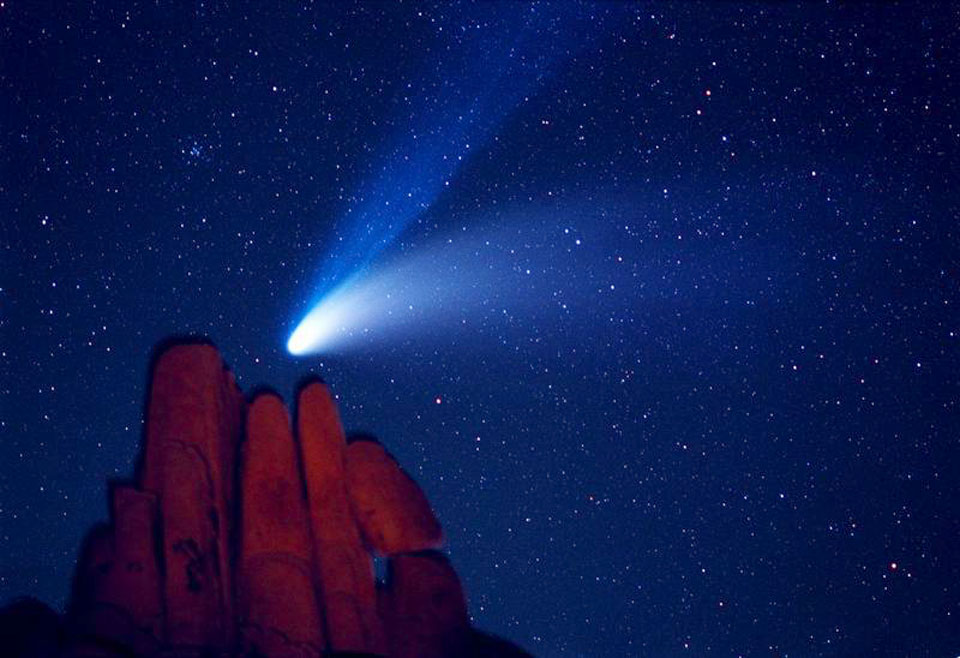
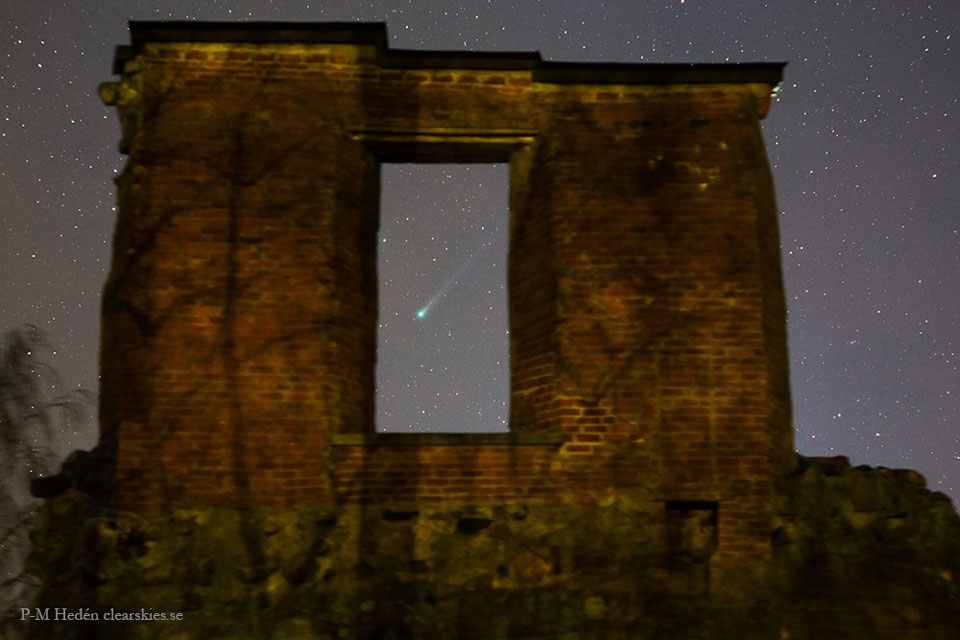
Comet Hale-Bopp, the Great Comet of 1997, was quite a sight. In the above photograph taken on 1997 April 6, Comet Hale-Bopp was imaged from the Indian Cove Campground in the Joshua Tree National Park in California, USA. A flashlight was used to momentarily illuminate foreground rocks in this six minute exposure. An impressive blue ion tail was visible above a sunlight-reflecting white dust tail. Comet Hale-Bopp remained visible to the unaided eye for over a year before returning to the outer Solar System and fading. As Comet ISON approaches the Sun this week, sky enthusiasts around the Earth are waiting to see if its tails will become even more spectacular than those displayed by Comet Hale-Bopp.
What's in the sky tonight?
November 24, 2013
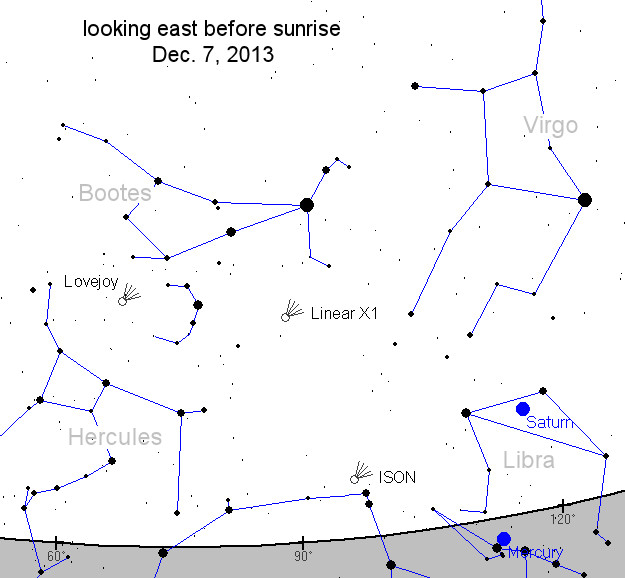
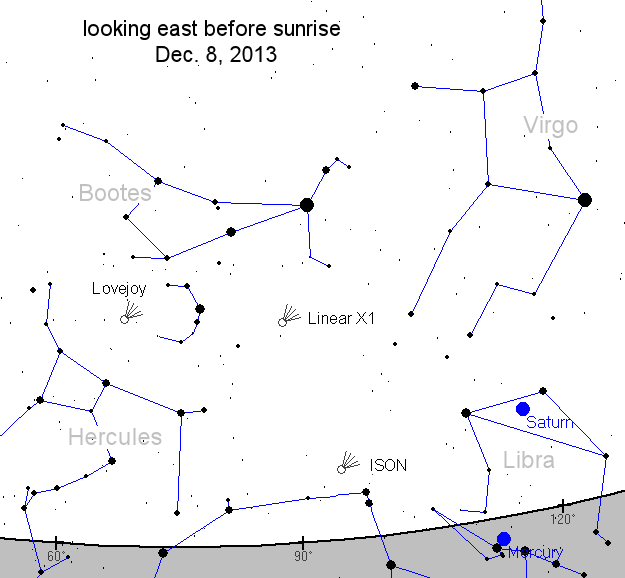
-During dawn Monday and Tuesday mornings, when you're preparing to use binoculars or a telescope to make one last pre-perihelion try for Comet ISON barely above the bright horizon, you'll find Mercury and fainter Saturn shining to the naked eye just 3/4° apart (at the times of dawn in North America). They're well above the spot to look for the comet: by 7° on Monday, 9° on Tuesday.
-In a telescope, Mercury will be a tiny, slightly gibbous disk 5.6 arcseconds in diameter (no bigger than Mars, high in the southeast), while Saturn is dimmer but much larger: 34″ across its rings. They're a nice consolation prize!
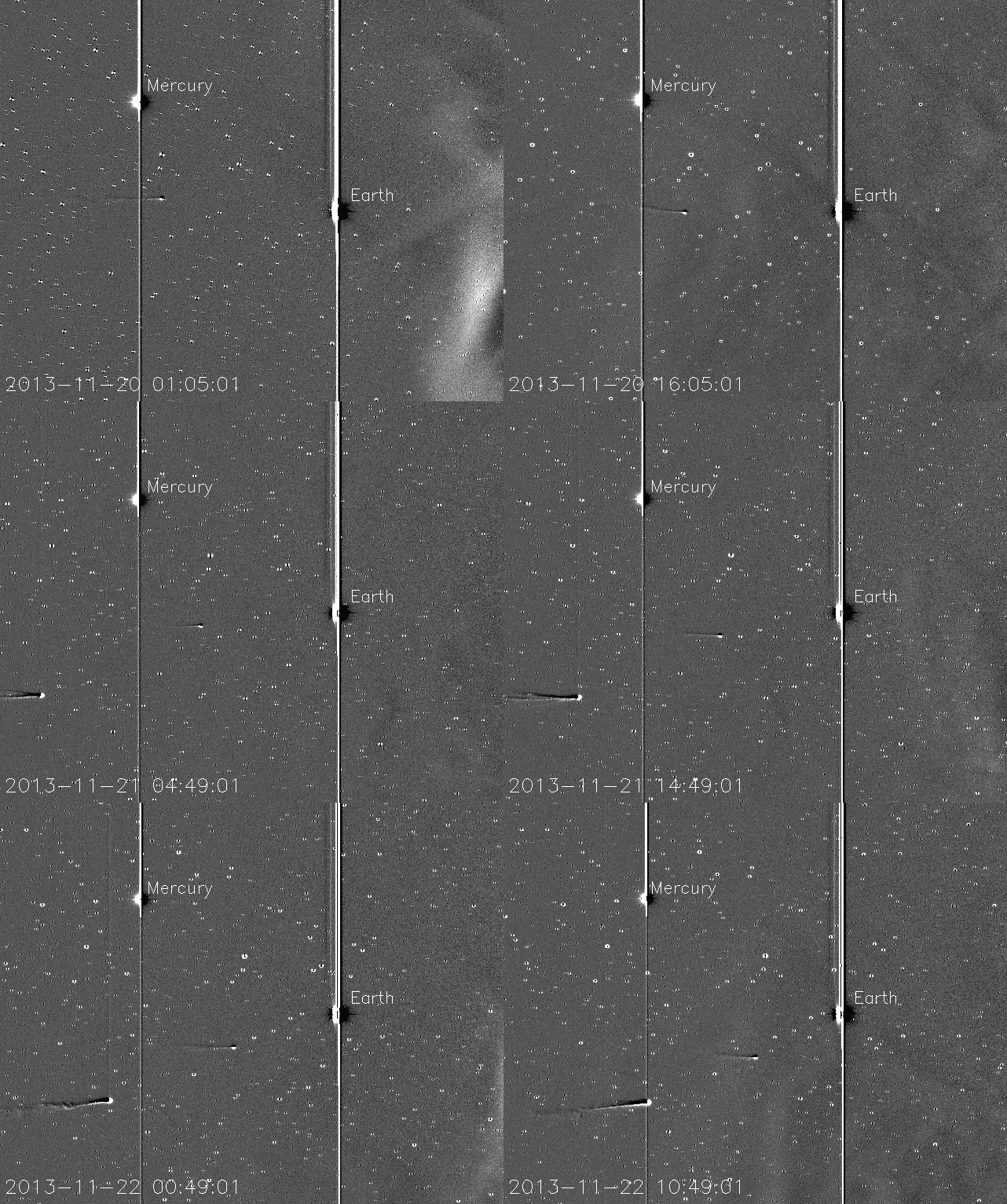
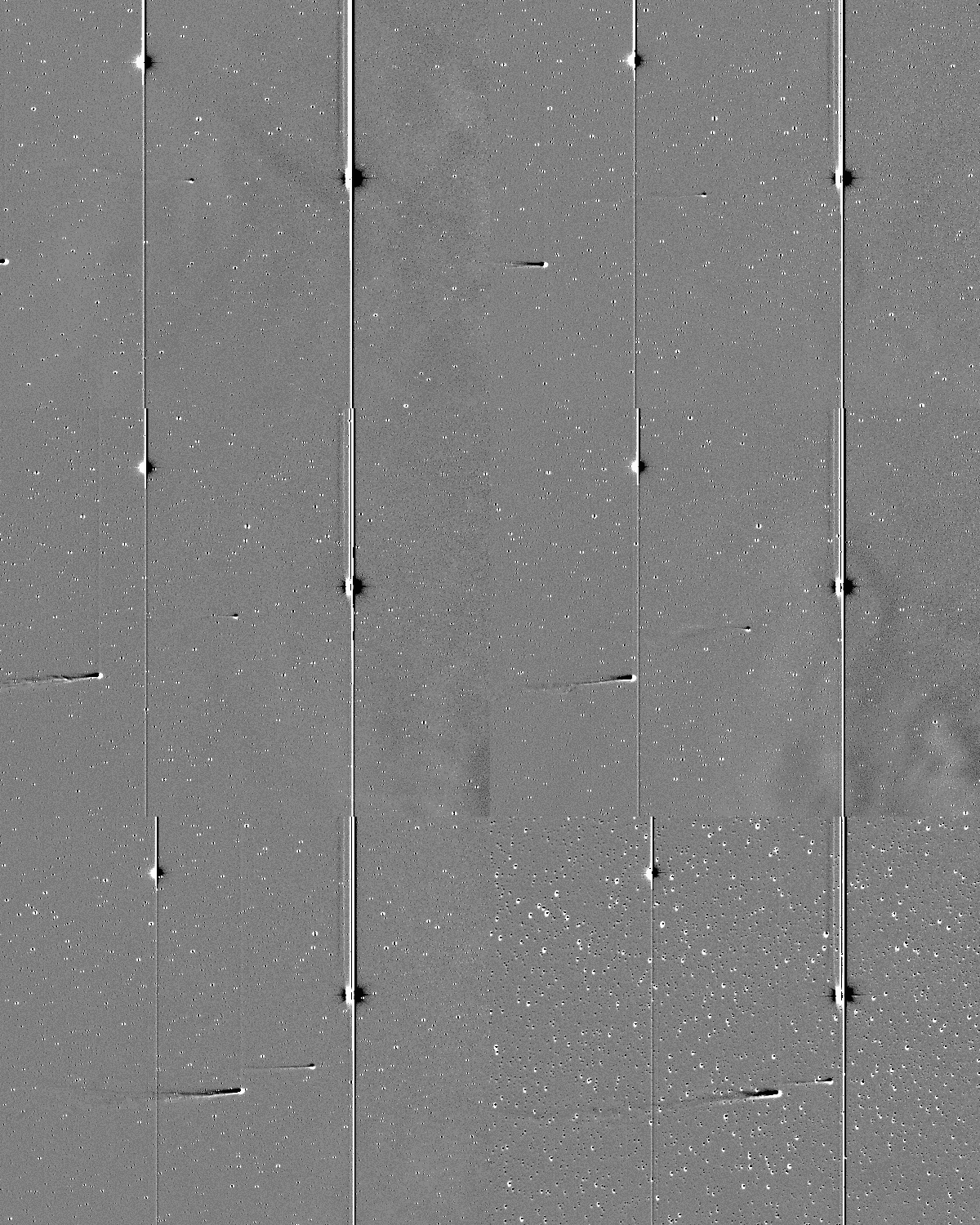
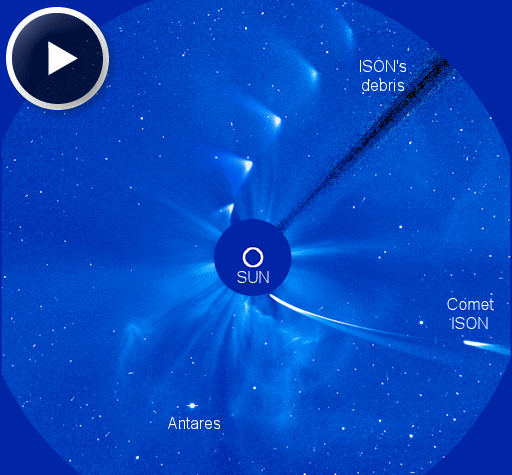
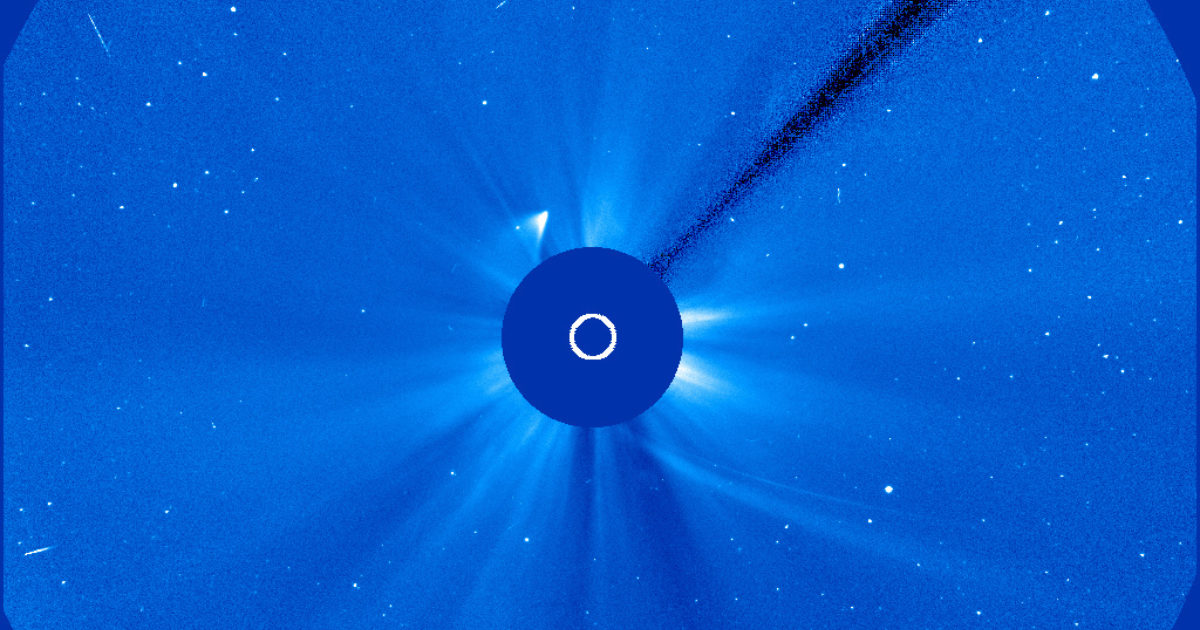
-NASA's STEREO-A spacecraft is monitoring Comet ISON as it approaches the sun for a close encounter on Nov. 28th. The latest movie from the spacecraft's Heliospheric Imager captures not only Comet ISON but also Earth, Mercury, and Comet Encke. In the movie, which spans a two day period from Nov. 19 to Nov. 22, the sun is to the right, off-screen. "The dark 'clouds' coming from that direction are density enhancements in the solar wind, and these are what are causing the ripples you see in the comet tails," explains Karl Battams of NASA's Comet ISON Observing Campaign.
Although the two comets seem to be experiencing the same solar wind, their tails ripple differently. "Encke has kind of long waves in the tail, whereas ISON's seems almost like high-frequency puffs," points out Battams.
Appearances notwithstanding, the two comets might be in two different streams of solar wind. "The most likely explanation is that ISON is in a faster stream," he comntinues. "Imagine holding a flag on a slightly breezy day. The flag will waft gently in the breeze. Now imagine holding it in really strong winds. The flag will be rippling violently, but those ripples will be smaller in amplitude."
-In a telescope, Mercury will be a tiny, slightly gibbous disk 5.6 arcseconds in diameter (no bigger than Mars, high in the southeast), while Saturn is dimmer but much larger: 34″ across its rings. They're a nice consolation prize!
-NASA's STEREO-A spacecraft is monitoring Comet ISON as it approaches the sun for a close encounter on Nov. 28th. The latest movie from the spacecraft's Heliospheric Imager captures not only Comet ISON but also Earth, Mercury, and Comet Encke. In the movie, which spans a two day period from Nov. 19 to Nov. 22, the sun is to the right, off-screen. "The dark 'clouds' coming from that direction are density enhancements in the solar wind, and these are what are causing the ripples you see in the comet tails," explains Karl Battams of NASA's Comet ISON Observing Campaign.
Although the two comets seem to be experiencing the same solar wind, their tails ripple differently. "Encke has kind of long waves in the tail, whereas ISON's seems almost like high-frequency puffs," points out Battams.
Appearances notwithstanding, the two comets might be in two different streams of solar wind. "The most likely explanation is that ISON is in a faster stream," he comntinues. "Imagine holding a flag on a slightly breezy day. The flag will waft gently in the breeze. Now imagine holding it in really strong winds. The flag will be rippling violently, but those ripples will be smaller in amplitude."
Astro Picture of the Day:
November 24, 2013
Comet Hale-Bopp, the Great Comet of 1997, was quite a sight. In the above photograph taken on 1997 April 6, Comet Hale-Bopp was imaged from the Indian Cove Campground in the Joshua Tree National Park in California, USA. A flashlight was used to momentarily illuminate foreground rocks in this six minute exposure. An impressive blue ion tail was visible above a sunlight-reflecting white dust tail. Comet Hale-Bopp remained visible to the unaided eye for over a year before returning to the outer Solar System and fading. As Comet ISON approaches the Sun this week, sky enthusiasts around the Earth are waiting to see if its tails will become even more spectacular than those displayed by Comet Hale-Bopp.






Comment