

Re: Terry's Astronomy Thread.
Daily Suspicious0bserver's Weather Post:
April 26, 2014
What's in the sky tonight?
April 26, 2014

News Posted Today:
April 24, 2014
Jupiter’s Not-So-Great Red Spot

Astro Picture of the Day:
April 26, 2014
Source:
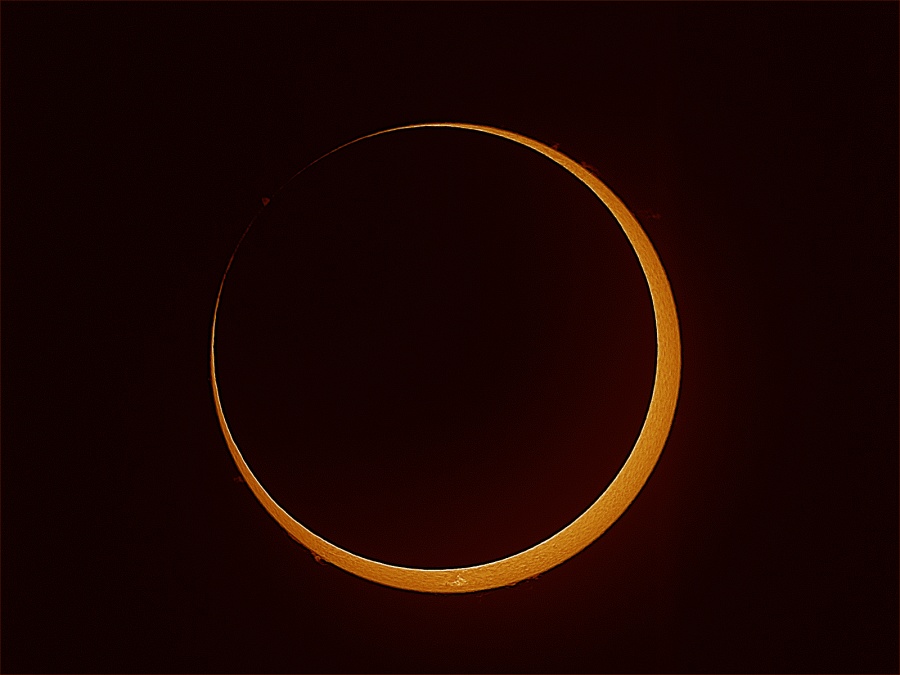
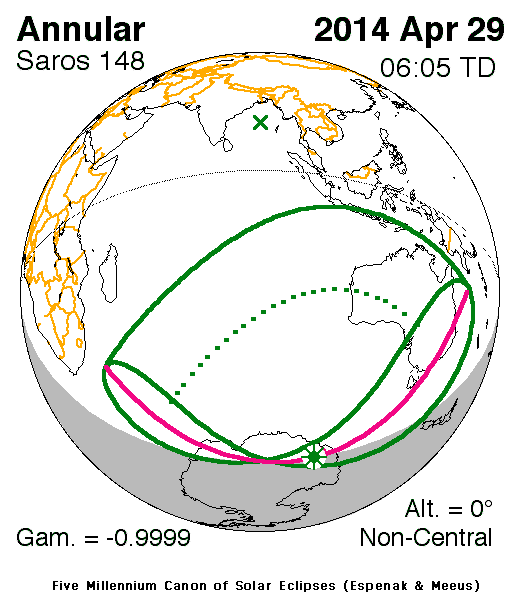
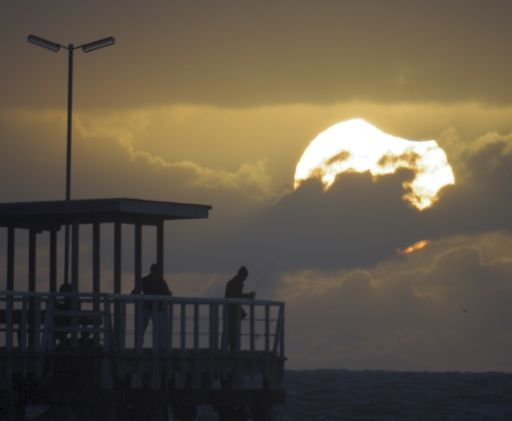
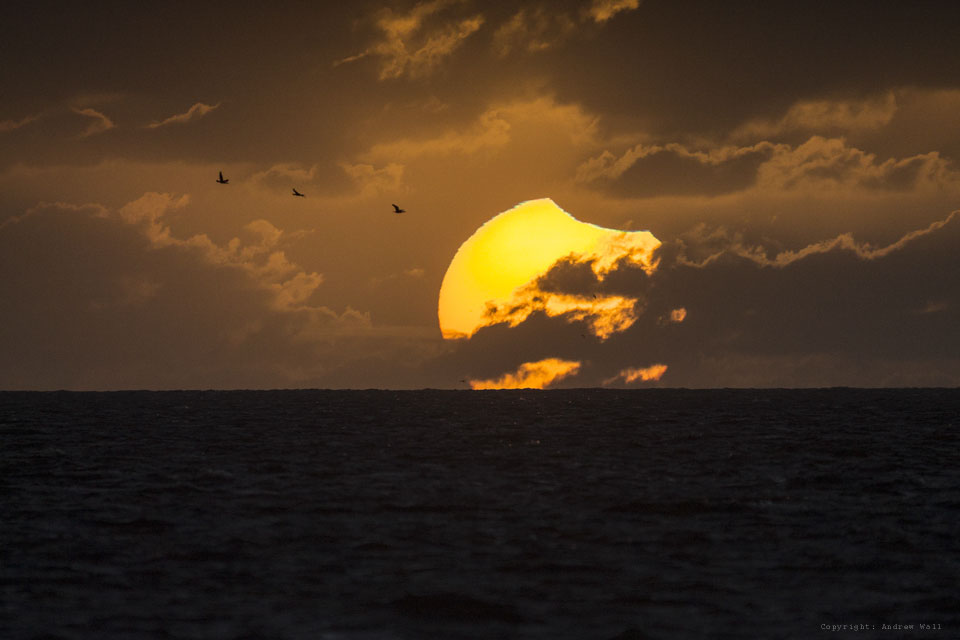
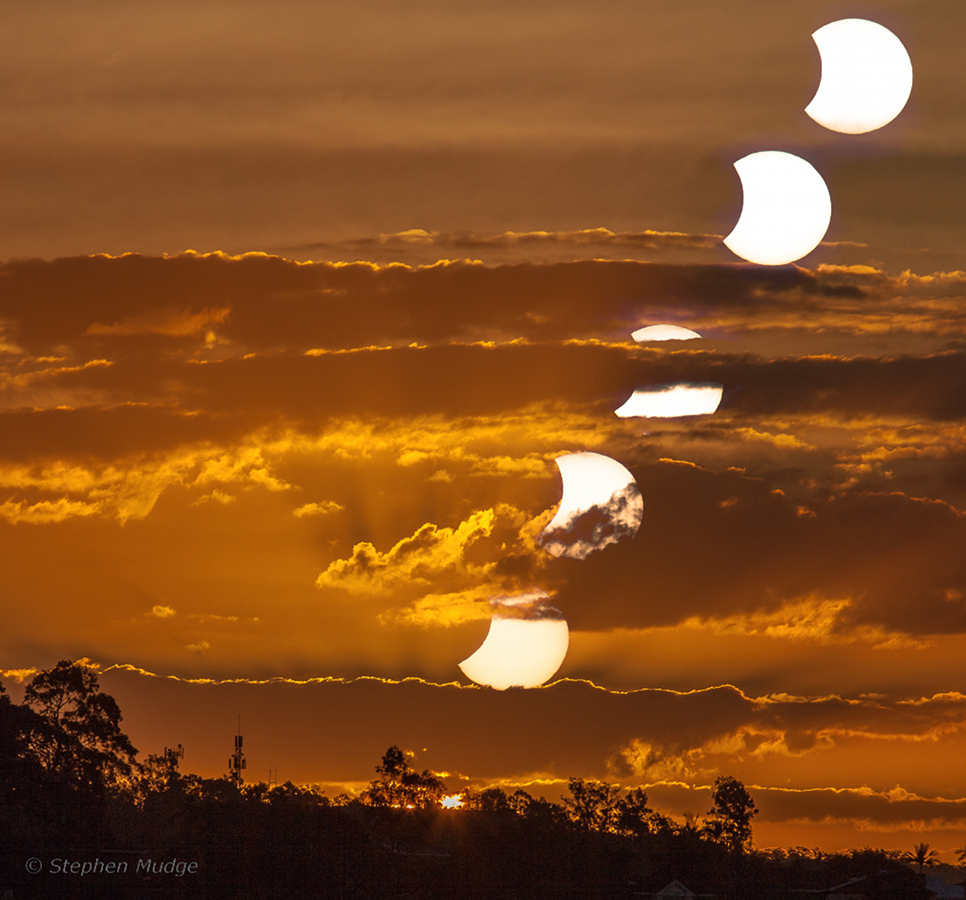
It's eclipse season, and on April 29 around 06:00 UT the shadow of the new Moon will reach out and touch planet Earth, though only just. Still, if you're standing on the continent of Antarctica within a few hundred kilometers of 79 degrees 38.7 minutes South latitude and 131 degrees 15.6 minutes East longitude you could see an annular solar eclipse with the Sun just above the horizon. Because the Moon will be approaching apogee, the most distant point in the elliptical lunar orbit, its apparent size will be too small to completely cover the solar disk. A rare, off-center eclipse, the annular phase will last at most 49 seconds. At its maximum it could look something like this "ring of fire" image from last May's annular solar eclipse, captured by a webcast team operating near Coen, Australia. Otherwise, a partial eclipse with the Moon covering at least some part of the Sun will be seen across a much broader region in the southern hemipshere, including Australia in the afternoon.
Daily Suspicious0bserver's Weather Post:
April 26, 2014
What's in the sky tonight?
April 26, 2014
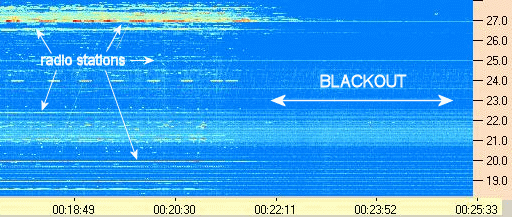
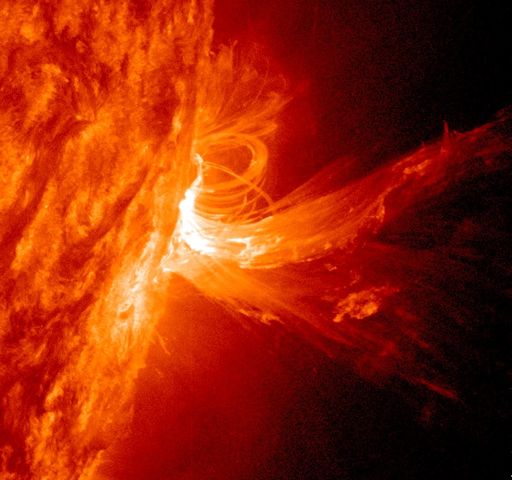
-An X-class solar flare on April 25th irradiated Earth's upper atmosphere with extreme ultraviolet radiation. Waves of ionization rippled around the dayside of the planet, causing a widespread blackout of shortwave radio transmissions. Radio astronomer Dick Flagg recorded the event at his observatory at the Windward Community College on Oahu. "This is a dynamic spectrum," explains Flagg. "The vertical axis is frequency (MHz) and the horizontal axis is time (UTC)." All of the horizontal lines corresponding to terrestrial radio stations vanished in the aftermath of the flare.
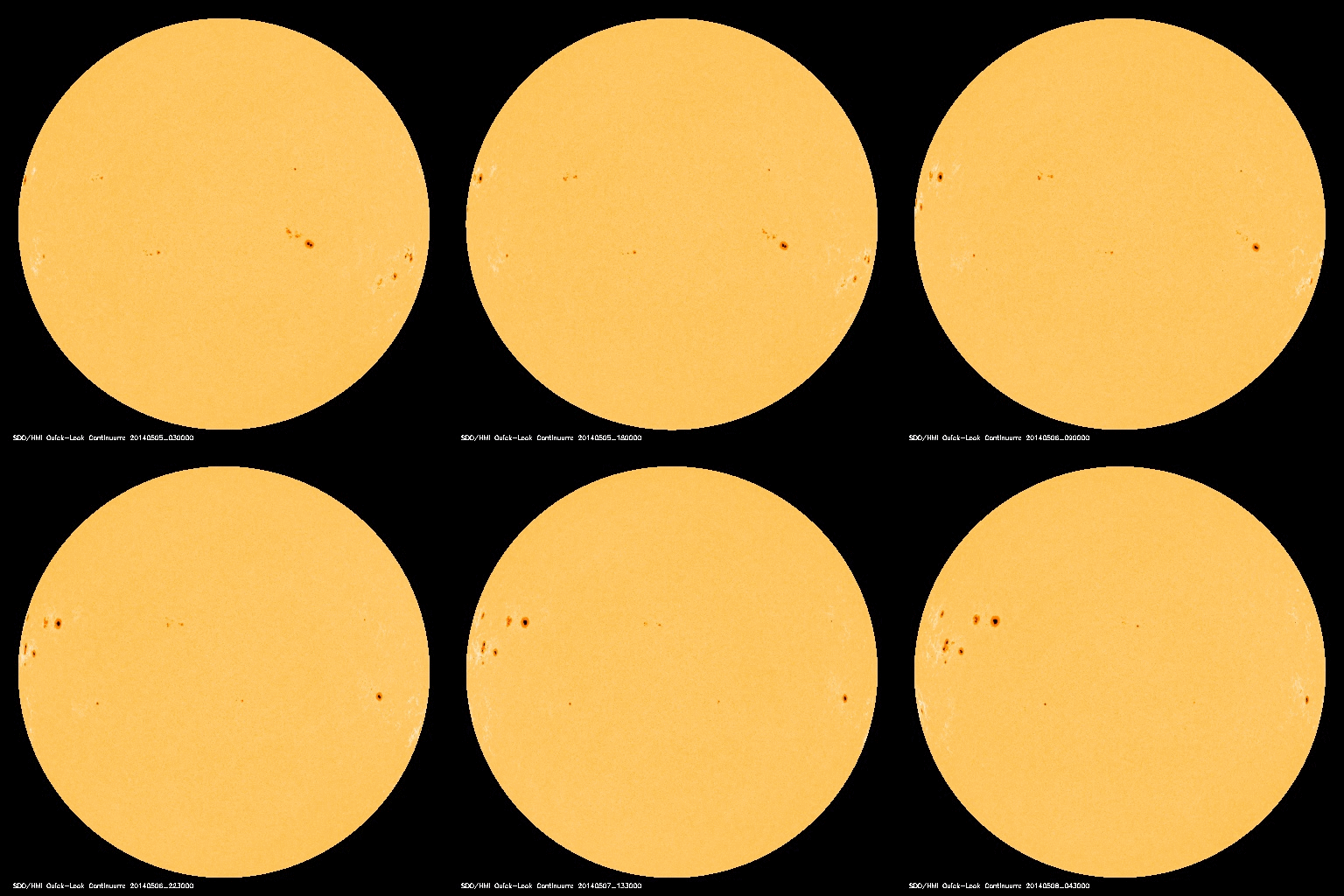
The active region responsible for the flare rotated off the solar disk yesterday, so even if it flares again, another radio blackout is unlikely this weekend. NOAA forecasters estimate the odds of an X-flare on April 26th to be a scant 1%.
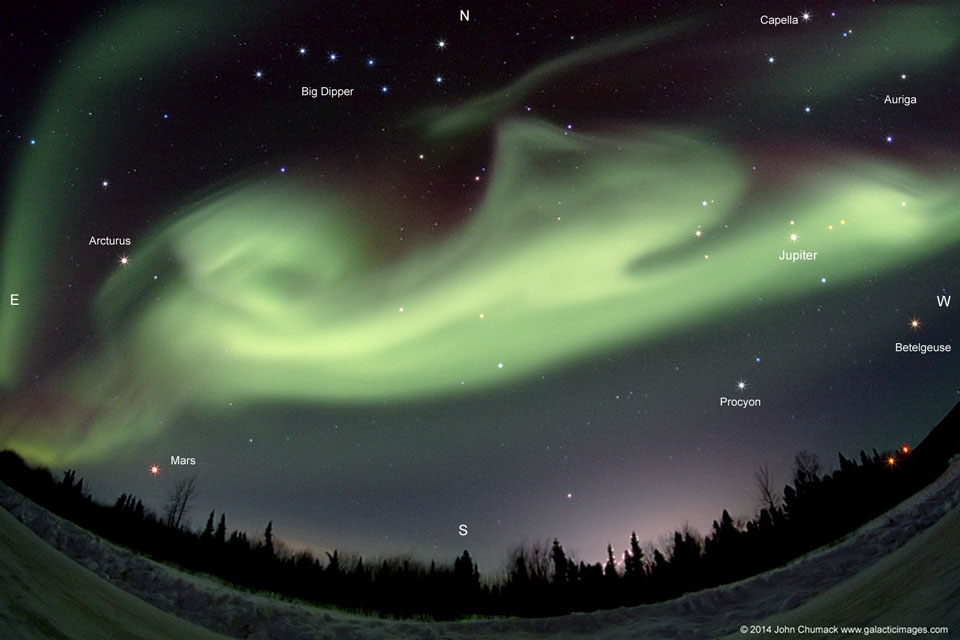
-Brilliant Mars, shining in the southeast after dusk, has been drawing closer to Gamma Virginis (Porrima), magnitude 2.7. Look for the little star about 2° to Mars's upper right. They'll appear closest (1.4° apart) on May 4th and 5th. Gamma Vir is a fine, tight telescopic double with a current separation of 2.1 arcseconds. Take a look at it with your scope at high power after you're done with Mars!
The active region responsible for the flare rotated off the solar disk yesterday, so even if it flares again, another radio blackout is unlikely this weekend. NOAA forecasters estimate the odds of an X-flare on April 26th to be a scant 1%.
-Brilliant Mars, shining in the southeast after dusk, has been drawing closer to Gamma Virginis (Porrima), magnitude 2.7. Look for the little star about 2° to Mars's upper right. They'll appear closest (1.4° apart) on May 4th and 5th. Gamma Vir is a fine, tight telescopic double with a current separation of 2.1 arcseconds. Take a look at it with your scope at high power after you're done with Mars!
News Posted Today:
April 24, 2014
Jupiter’s Not-So-Great Red Spot
Astro Picture of the Day:
April 26, 2014
It's eclipse season, and on April 29 around 06:00 UT the shadow of the new Moon will reach out and touch planet Earth, though only just. Still, if you're standing on the continent of Antarctica within a few hundred kilometers of 79 degrees 38.7 minutes South latitude and 131 degrees 15.6 minutes East longitude you could see an annular solar eclipse with the Sun just above the horizon. Because the Moon will be approaching apogee, the most distant point in the elliptical lunar orbit, its apparent size will be too small to completely cover the solar disk. A rare, off-center eclipse, the annular phase will last at most 49 seconds. At its maximum it could look something like this "ring of fire" image from last May's annular solar eclipse, captured by a webcast team operating near Coen, Australia. Otherwise, a partial eclipse with the Moon covering at least some part of the Sun will be seen across a much broader region in the southern hemipshere, including Australia in the afternoon.





Comment