

Re: Terry's Astronomy Thread.
Daily Suspicious0bserver's Weather Post:
January 31, 2014
What's in the sky tonight?
January 31, 2014

Astro Picture of the Day:
January 31, 2014
Source:
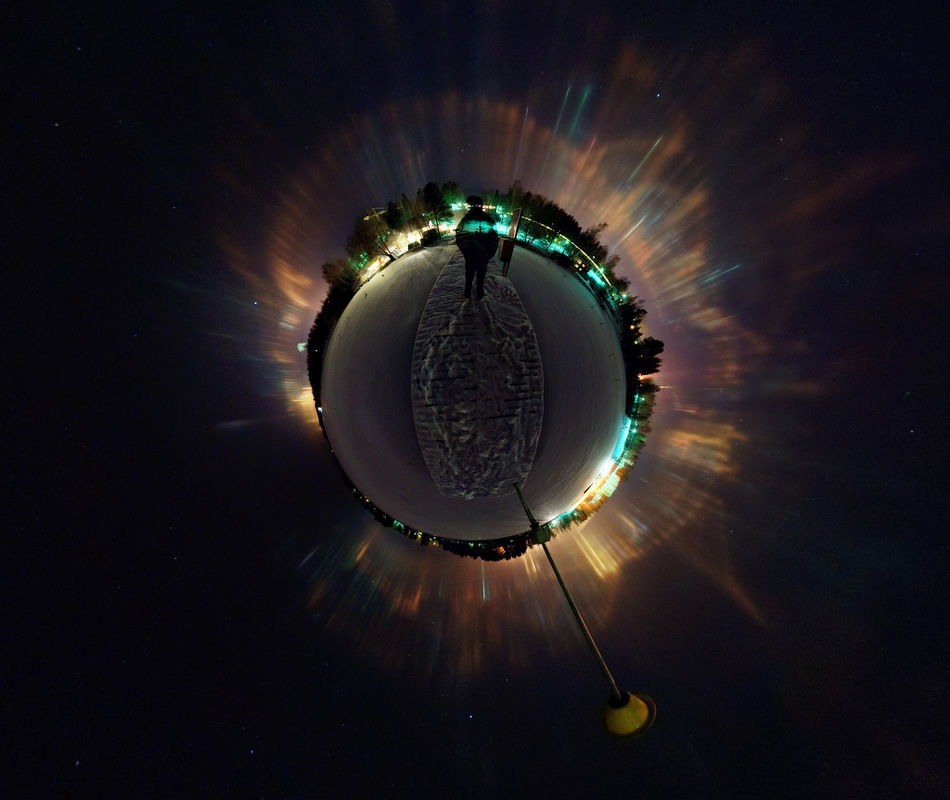
Eerie pillars of light ring the edges of this snowy little planet. Of course the little planet is planet Earth, shown in a nadir-to-zenith, around-the-horizon, little planet projection. The spherical panoramic image mosaic maps a view from Siilinjärvi in eastern Finland. Flat ice crystals, like those more often found in high, thin clouds, are gently fluttering in very cold air near the surface. The pillars of light appear as their briefly horizontal facets reflect upward directed light from ground sources downward, toward the observer. In fact, the fluttering crystals produce an effect analogous to the shimmering columns of moonlight or sunlight reflected by surface waves across water.
Daily Suspicious0bserver's Weather Post:
January 31, 2014
What's in the sky tonight?
January 31, 2014
-The Moon is back in the evening sky, as a thin waxing crescent to the lower right of Mercury. Look very low above the west-southwest horizon in twilight.
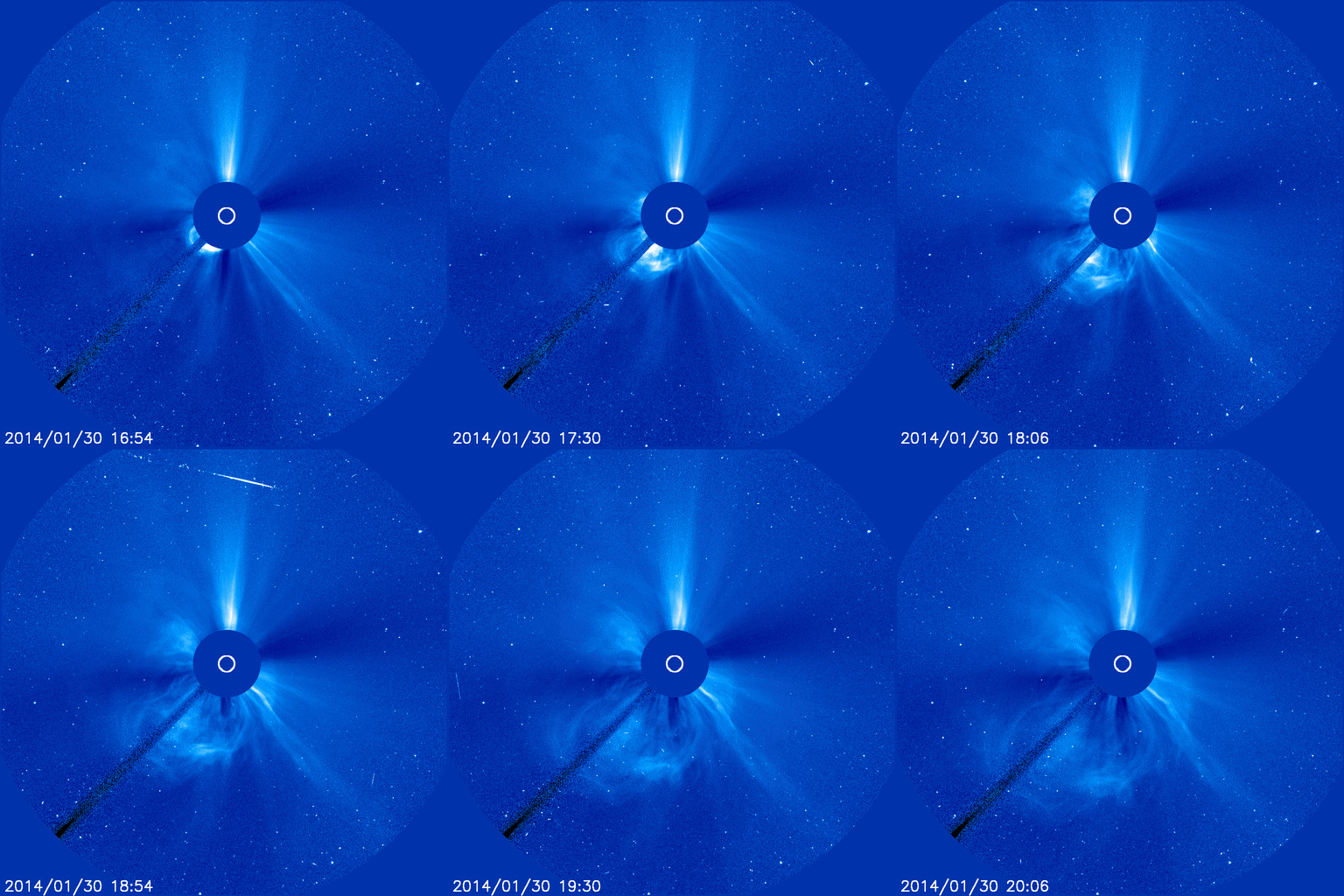
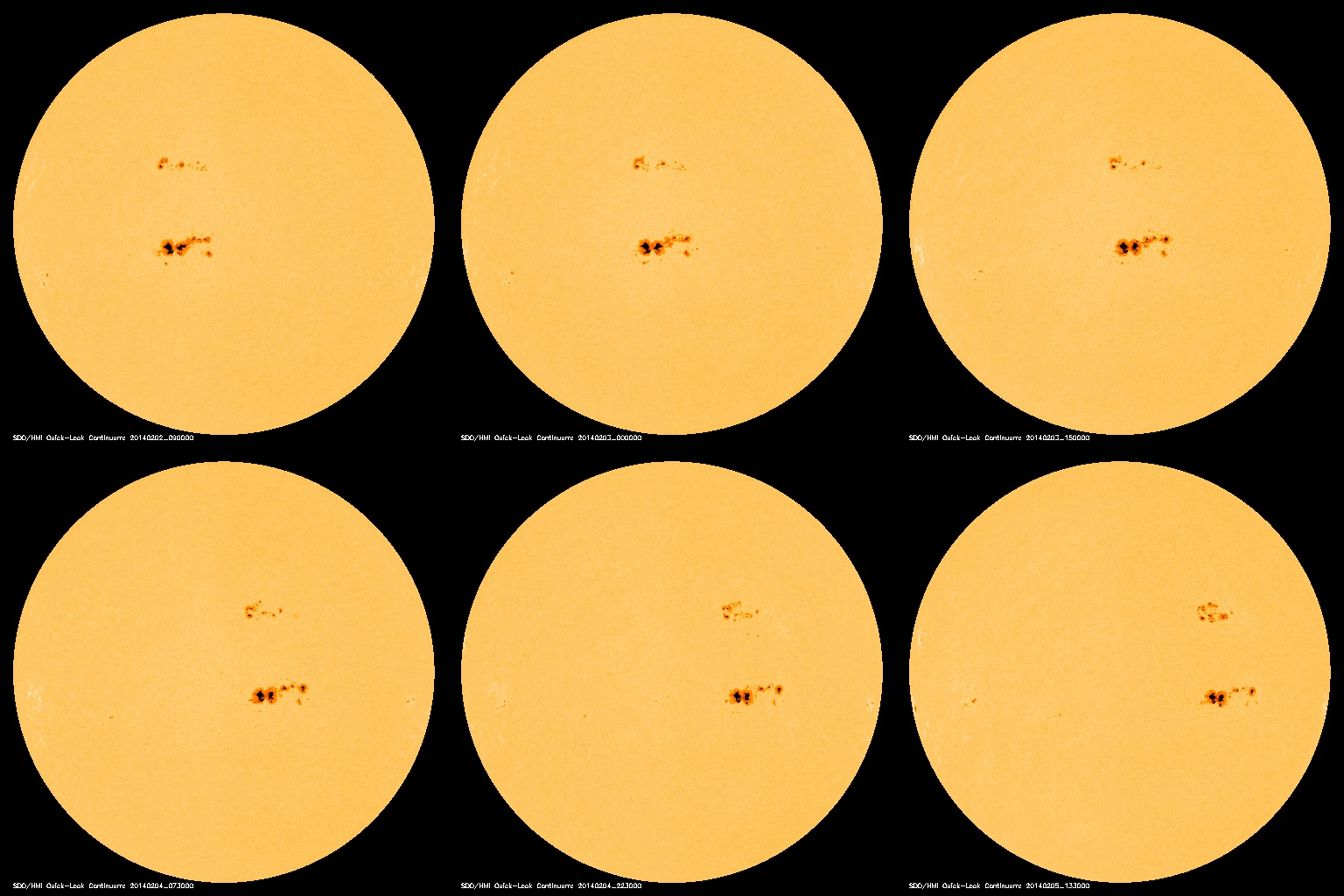
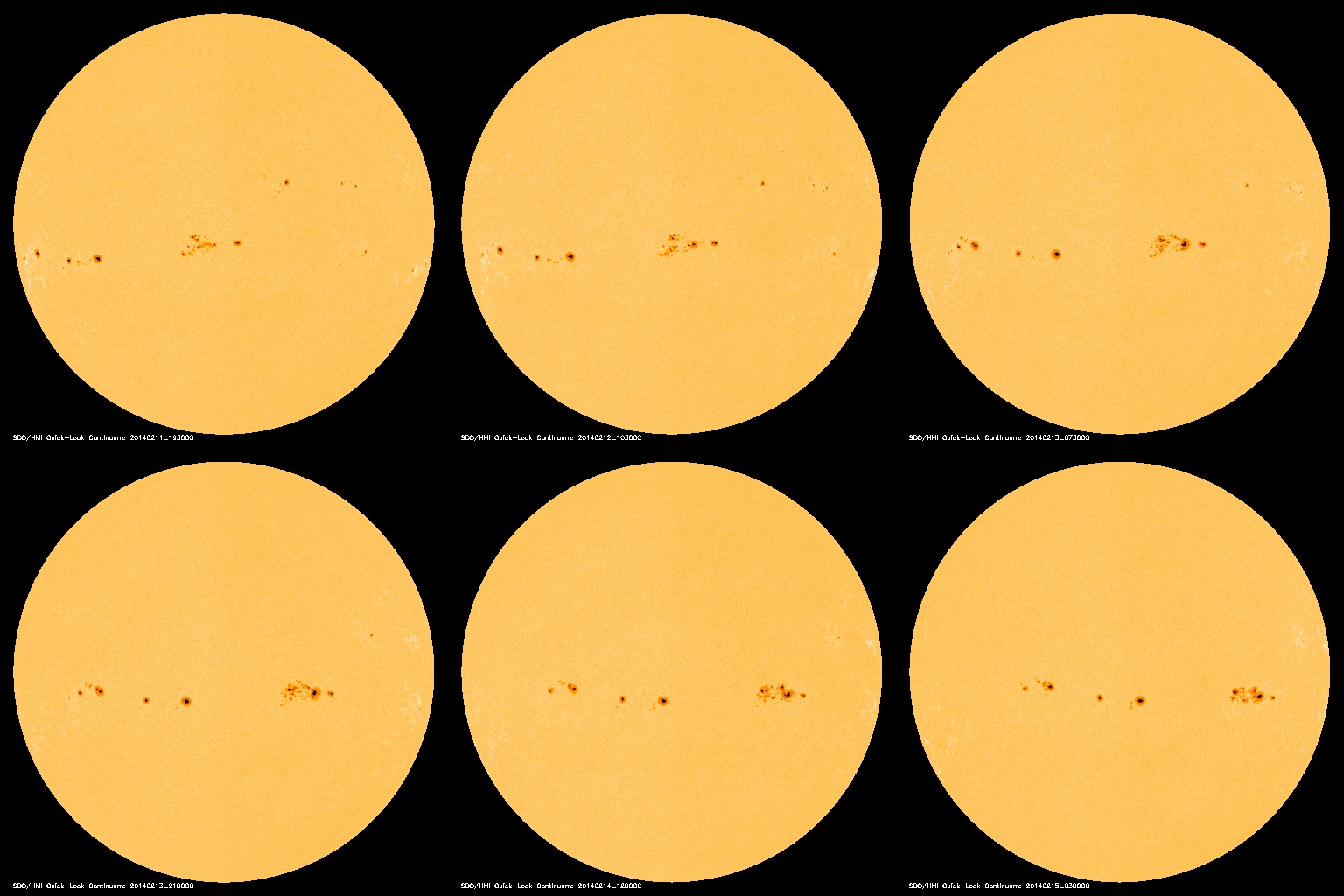
-Yesterday, Jan. 30th, big sunspot AR1967 unleashed a strong M6-class solar flare. The explosion sent a CME racing away from the blast site faster than 1400 km/s (3 million mph). The cloud appears to have an Earth-directed component, and could deliver a glancing blow to our planet's magnetic field on Feb 1st.
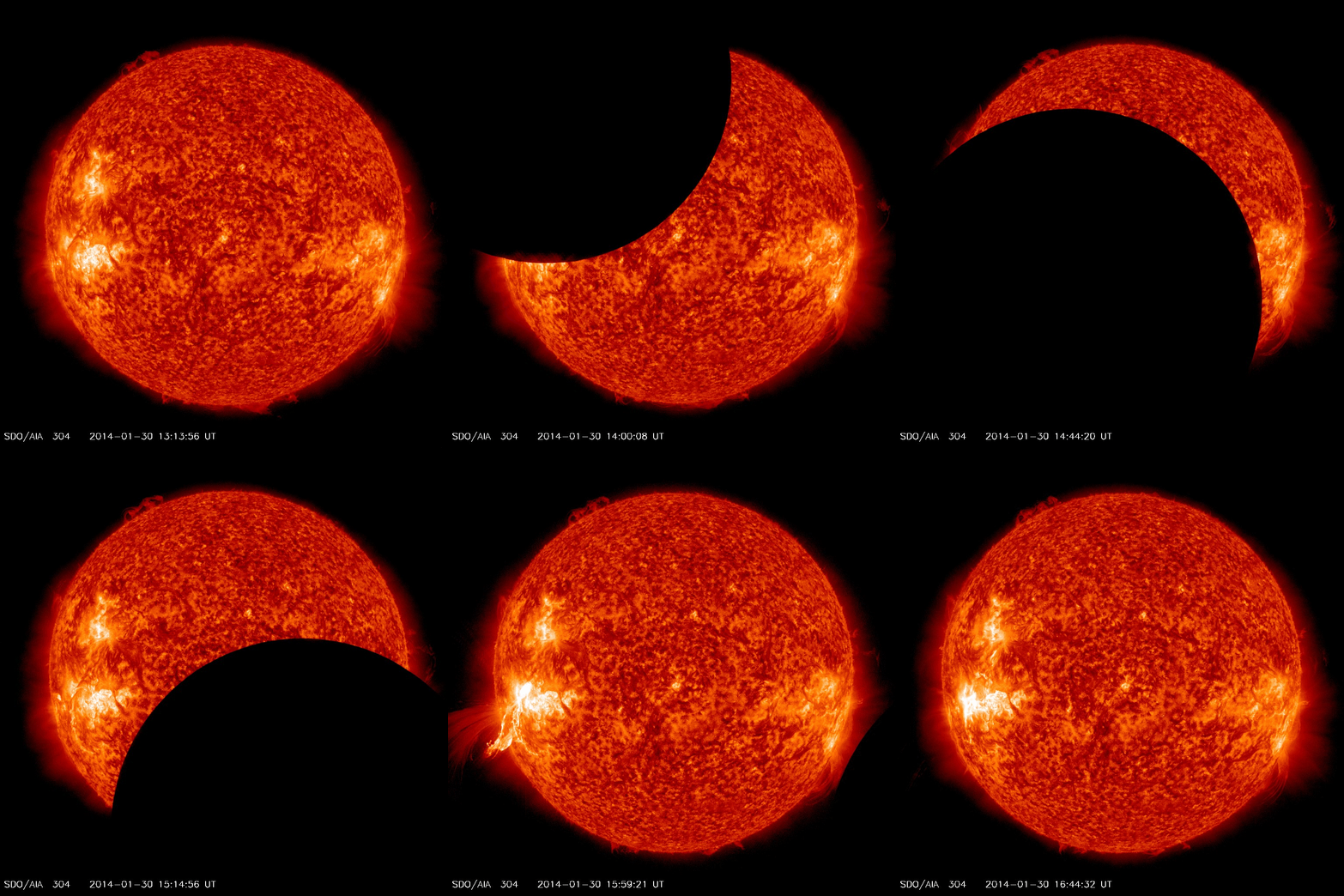
-On Jan. 30th, the Moon passed almost directly in front of the sun. No darkness fell on Earth, however, because the "lunar transit" was only visible from space. NASA's Solar Dynamics Observatory (SDO) recorded the entire passage from geosynchronous orbit.
At maximum eclipse as much as 90% of the sun was covered. SDO is solar powered, but it did not "brown out" because mission controllers put an extra charge on the spacecraft's batteries ahead of time. Every year, SDO observes multiple lunar transits. This one, lasting almost 2.5 hours, was the longest in the history of the spacecraft's 4 year mission.
A highlight of the movie occurs just after the eclipse is finished when sunspot AR1967 erupts. A plume of hot plasma flies away from one side of the sun just as the Moon is exiting the other. That eruption is the source of the CME that could deliver a glancing blow to Earth's magnetic field on Feb. 1st.
-Yesterday, Jan. 30th, big sunspot AR1967 unleashed a strong M6-class solar flare. The explosion sent a CME racing away from the blast site faster than 1400 km/s (3 million mph). The cloud appears to have an Earth-directed component, and could deliver a glancing blow to our planet's magnetic field on Feb 1st.
-On Jan. 30th, the Moon passed almost directly in front of the sun. No darkness fell on Earth, however, because the "lunar transit" was only visible from space. NASA's Solar Dynamics Observatory (SDO) recorded the entire passage from geosynchronous orbit.
At maximum eclipse as much as 90% of the sun was covered. SDO is solar powered, but it did not "brown out" because mission controllers put an extra charge on the spacecraft's batteries ahead of time. Every year, SDO observes multiple lunar transits. This one, lasting almost 2.5 hours, was the longest in the history of the spacecraft's 4 year mission.
A highlight of the movie occurs just after the eclipse is finished when sunspot AR1967 erupts. A plume of hot plasma flies away from one side of the sun just as the Moon is exiting the other. That eruption is the source of the CME that could deliver a glancing blow to Earth's magnetic field on Feb. 1st.
Astro Picture of the Day:
January 31, 2014
Eerie pillars of light ring the edges of this snowy little planet. Of course the little planet is planet Earth, shown in a nadir-to-zenith, around-the-horizon, little planet projection. The spherical panoramic image mosaic maps a view from Siilinjärvi in eastern Finland. Flat ice crystals, like those more often found in high, thin clouds, are gently fluttering in very cold air near the surface. The pillars of light appear as their briefly horizontal facets reflect upward directed light from ground sources downward, toward the observer. In fact, the fluttering crystals produce an effect analogous to the shimmering columns of moonlight or sunlight reflected by surface waves across water.








Comment