

Re: Terry's Astronomy Thread.
What's in the sky tonight?
October 14, 2013
News Posted Today:
October 13, 2013
Warm Glow from an Orphaned Planet

Astro Picture of the Day:
October 14, 2013
 Source:
A pair of sunspot groups in the sun's southern hemisphere poses a threat for Earth-directed eruptions. They're photogenic, too. Alex Dzierba took this picture of the sunspots rising over Koko crater in Honolulu, Hawaii, on Oct. 13th. He used a Coronado Personal Solar Telescope with a Ca/K filter. Ca/k or "Calcium K" filters are sensitive to light from ionized calcium in the sun's atmosphere. This kind of light reveals the bright magnetic froth around sunspots - and these sunspots are very frothy indeed. Sunrises in the week ahead could be punctuated by eruptions. NOAA forecasters estimate a 40% chance of M-class flares and a 10% chance of X-flares on Oct. 14th.
What's in the sky tonight?
October 14, 2013
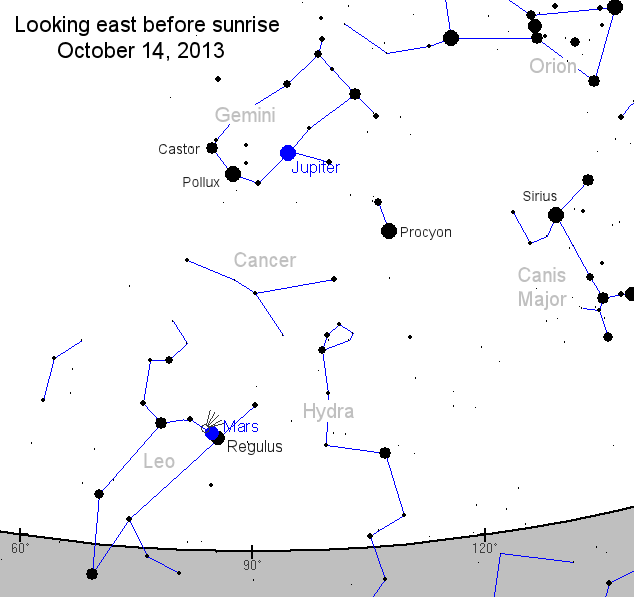
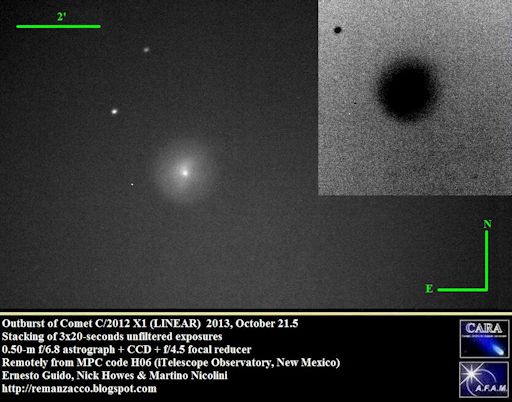
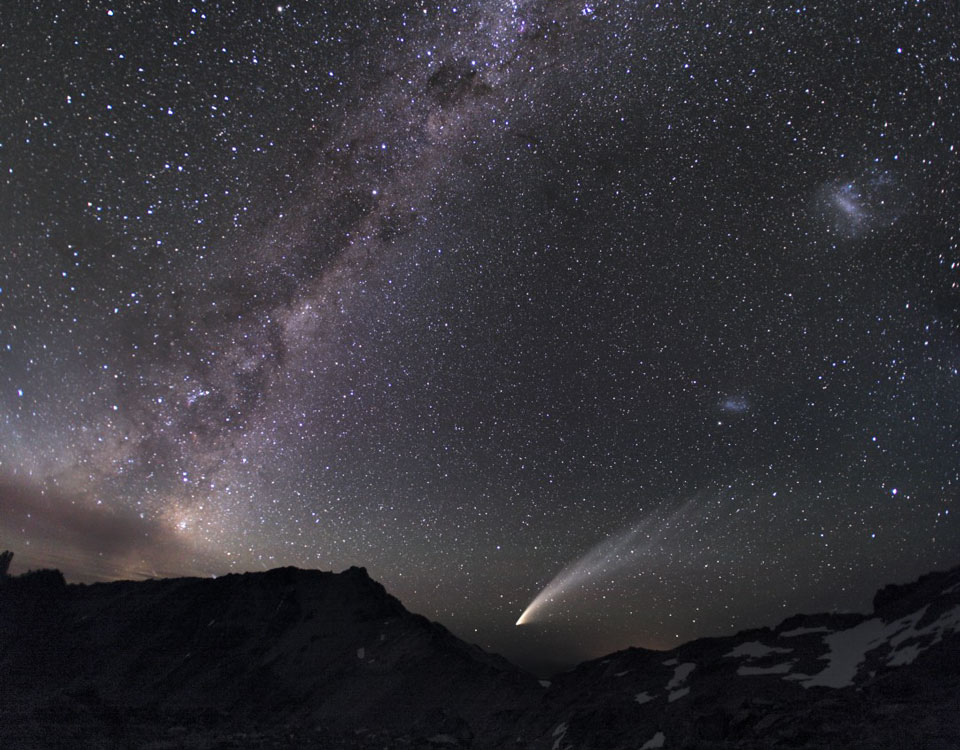
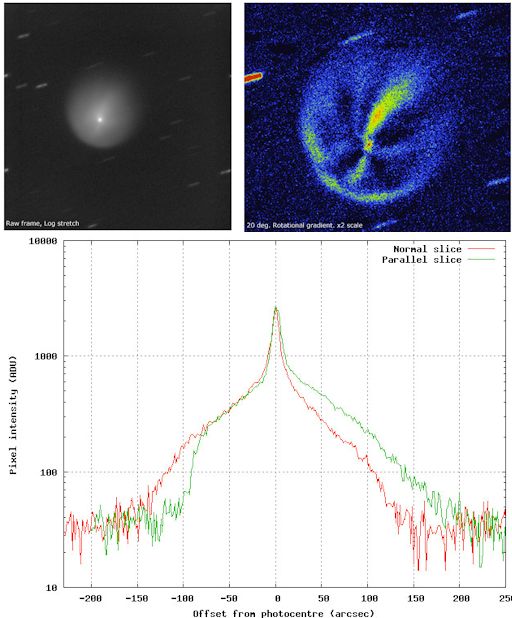
-Mars, the 1st-magnitude star Regulus, and Comet ISON have gathered together in the pre-dawn sky only a few degrees apart. Comet ISON is invisible to the naked eye, but Mars and Regulus are bright enough to see without optics. They form a pretty red-blue "double star" that can lead telescopic observers to the comet.
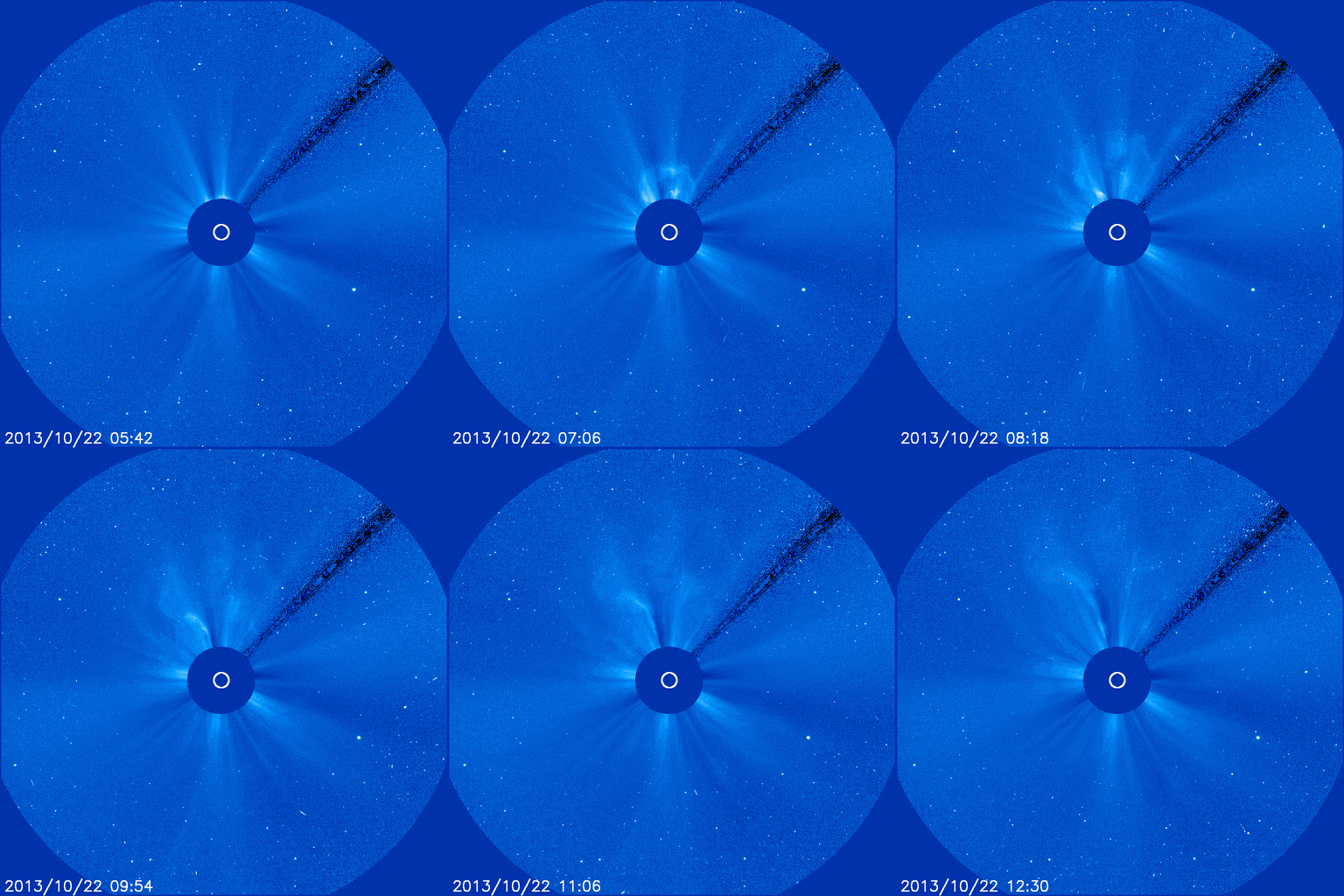
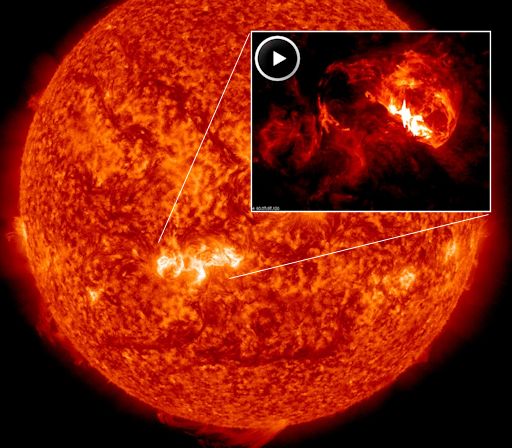
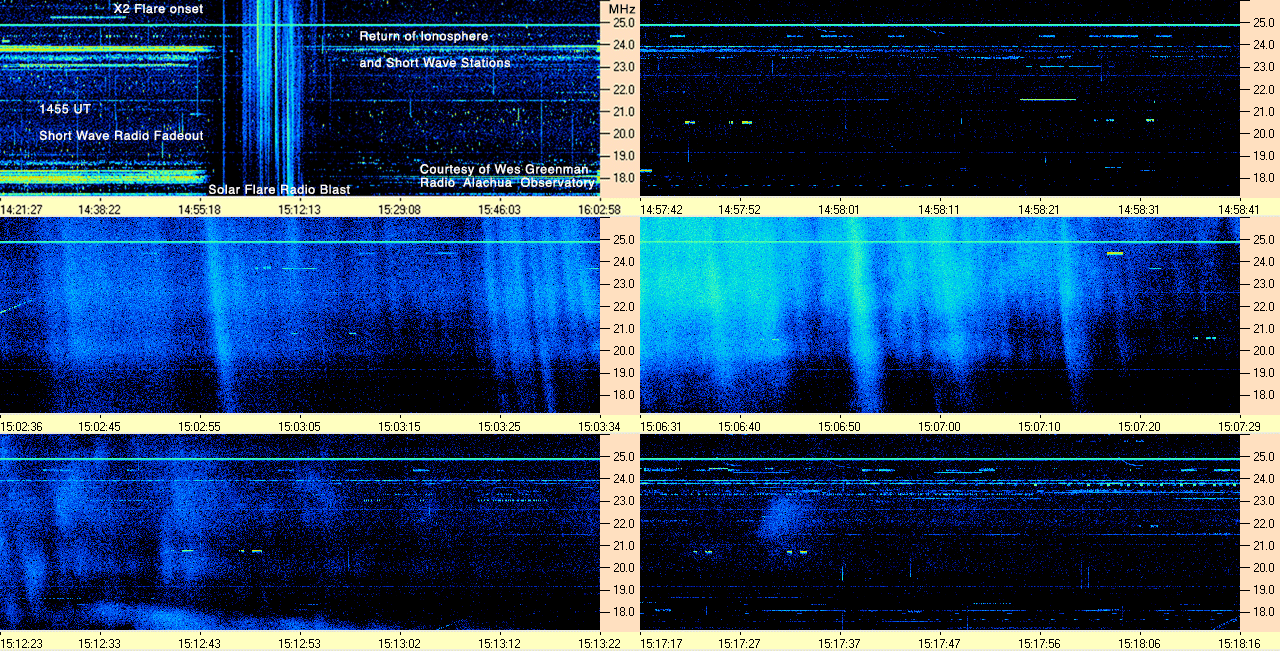
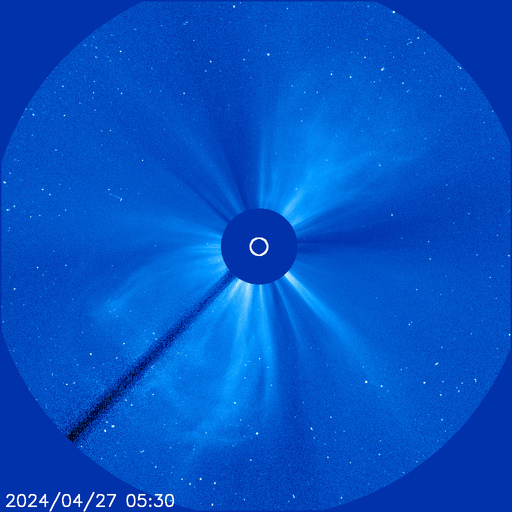
-October 13th began with an explosion on the sun. At 00:43 UT, sunspot AR1865 erupted, producing an M1-class solar flare and an Earth-directed CME.
-October 13th began with an explosion on the sun. At 00:43 UT, sunspot AR1865 erupted, producing an M1-class solar flare and an Earth-directed CME.
News Posted Today:
October 13, 2013
Warm Glow from an Orphaned Planet
Astro Picture of the Day:
October 14, 2013
A pair of sunspot groups in the sun's southern hemisphere poses a threat for Earth-directed eruptions. They're photogenic, too. Alex Dzierba took this picture of the sunspots rising over Koko crater in Honolulu, Hawaii, on Oct. 13th. He used a Coronado Personal Solar Telescope with a Ca/K filter. Ca/k or "Calcium K" filters are sensitive to light from ionized calcium in the sun's atmosphere. This kind of light reveals the bright magnetic froth around sunspots - and these sunspots are very frothy indeed. Sunrises in the week ahead could be punctuated by eruptions. NOAA forecasters estimate a 40% chance of M-class flares and a 10% chance of X-flares on Oct. 14th.







Comment