

Re: Terry's Astronomy Thread.
Daily Suspicious0bserver's Weather Post:
May 9, 2014
What's in the sky tonight?
May 9, 2014
Astro Picture of the Day:
May 9, 2014
Source:
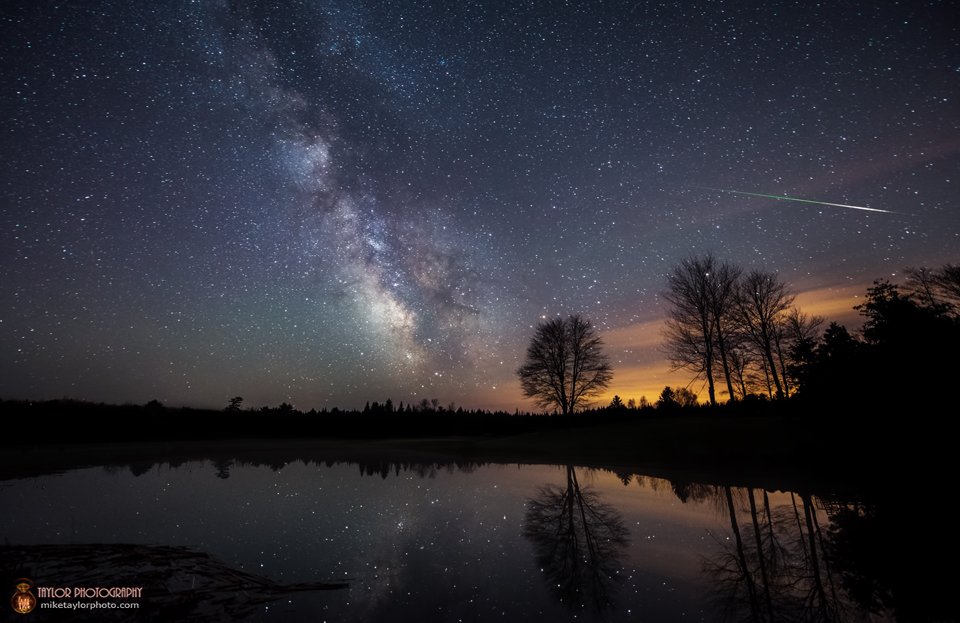
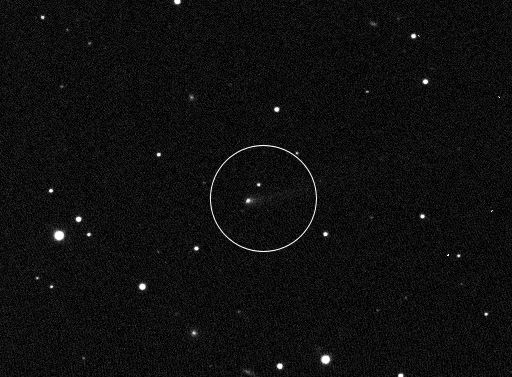
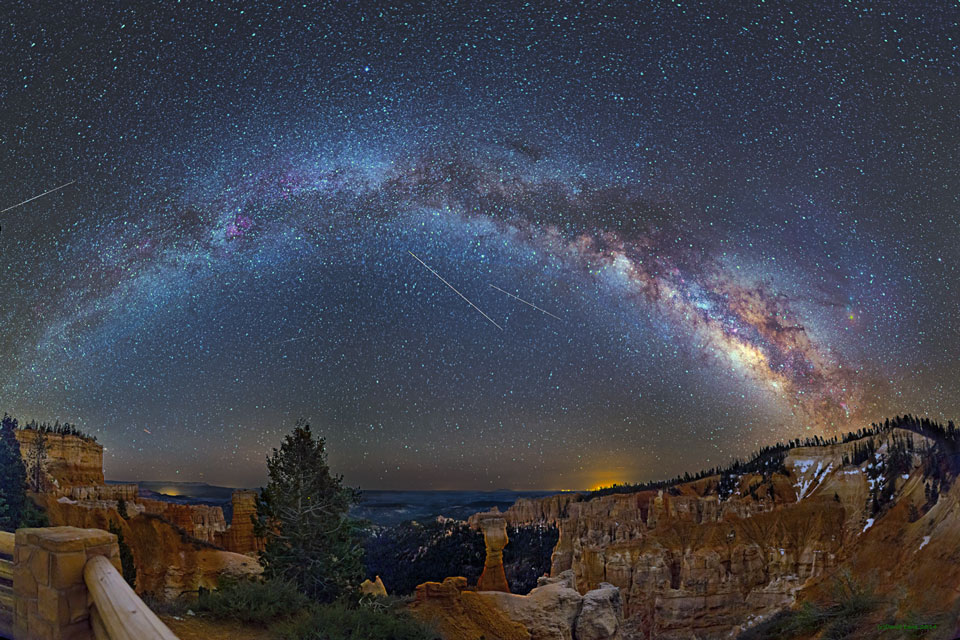
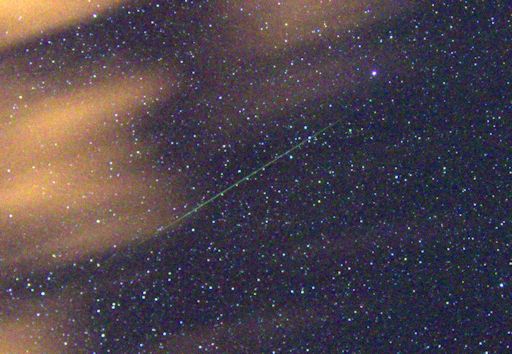
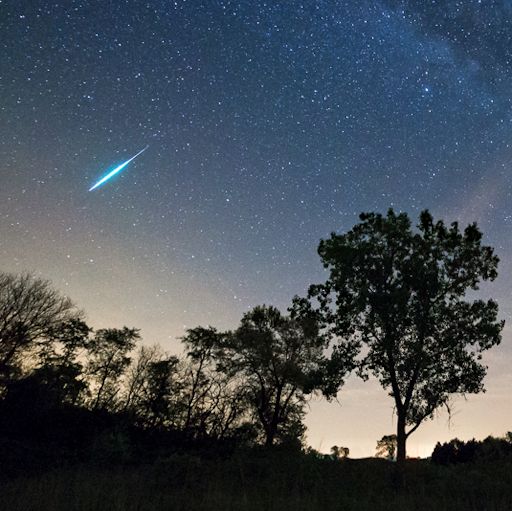
The early morning hours of May 6 were moonless when grains of cosmic dust streaked through dark skies. Swept up as planet Earth plows through dusty debris streams left behind periodic Comet Halley, the annual meteor shower is known as the Eta Aquarids. This inspired exposure captures a meteor streak moving left right through the frame. Its trail points back across the arc of the Milky Way to the shower's radiant above the local horizon in the constellation Aquarius. Known for speed Eta Aquarid meteors move fast, entering the atmosphere at about 66 kilometers per second. Still waters of the small pond near Albion, Maine, USA reflect the starry scene and the orange glow of nearby artificial lights scattered by a low cloud bank. Of course, northern hemisphere skygazers are expecting a new meteor shower on May 24, the Camelopardalids, caused by dust from periodic comet 209P/LINEAR.
Daily Suspicious0bserver's Weather Post:
May 9, 2014
What's in the sky tonight?
May 9, 2014
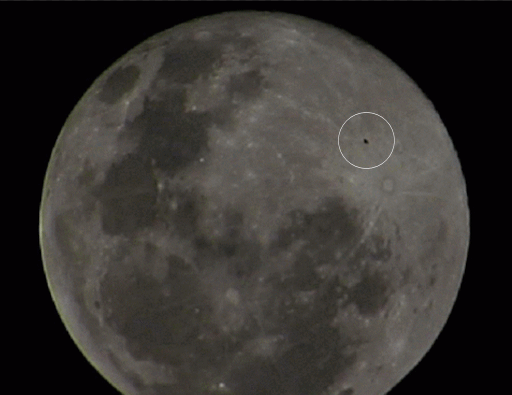
-The waxing gibbous Moon forms a curving line tonight with Mars to its left and Spica to Mars's lower left.
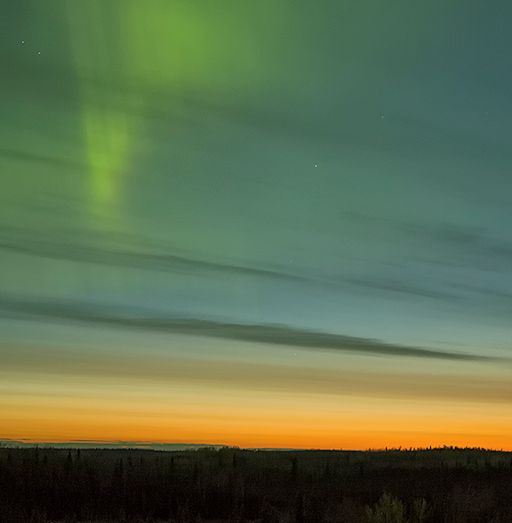
-An interplanetary shock wave, origin unknown, hit Earth's magnetic field during the late hours of May 7th. Although the weak impact did not spark a geomagnetic storm, solar wind conditions in the wake of the shock have been favorable for auroras. Nancy Dean took this picture last night on Mount Spur, Alaska. "The sunset was still showing strong on May 8th when the Northern Lights came out to dance across the Alaskan sky," says Dean.
As northern spring unfolds, persistent twilight is spreading into the night skies of Alaska. It takes a bright display of auroras to be seen against such a backdrop. Dean's photo is evidence that a weak shock does not necessarily produce weak auroras.
More lights are possible tonight. NOAA forecasters estimate a 30% chance of polar geomagnetic storms as Earth exits the wake of the shock.
-An interplanetary shock wave, origin unknown, hit Earth's magnetic field during the late hours of May 7th. Although the weak impact did not spark a geomagnetic storm, solar wind conditions in the wake of the shock have been favorable for auroras. Nancy Dean took this picture last night on Mount Spur, Alaska. "The sunset was still showing strong on May 8th when the Northern Lights came out to dance across the Alaskan sky," says Dean.
As northern spring unfolds, persistent twilight is spreading into the night skies of Alaska. It takes a bright display of auroras to be seen against such a backdrop. Dean's photo is evidence that a weak shock does not necessarily produce weak auroras.
More lights are possible tonight. NOAA forecasters estimate a 30% chance of polar geomagnetic storms as Earth exits the wake of the shock.
Astro Picture of the Day:
May 9, 2014
The early morning hours of May 6 were moonless when grains of cosmic dust streaked through dark skies. Swept up as planet Earth plows through dusty debris streams left behind periodic Comet Halley, the annual meteor shower is known as the Eta Aquarids. This inspired exposure captures a meteor streak moving left right through the frame. Its trail points back across the arc of the Milky Way to the shower's radiant above the local horizon in the constellation Aquarius. Known for speed Eta Aquarid meteors move fast, entering the atmosphere at about 66 kilometers per second. Still waters of the small pond near Albion, Maine, USA reflect the starry scene and the orange glow of nearby artificial lights scattered by a low cloud bank. Of course, northern hemisphere skygazers are expecting a new meteor shower on May 24, the Camelopardalids, caused by dust from periodic comet 209P/LINEAR.















Comment