Terry's Astronomy Thread.

Collapse
X
 
  • Time
  • Show
Clear All
new posts
  • Bluearrowll
    ⊙▃⊙
    FFR Simfile Author
    • Nov 2007
    • 7376

    #766
    Re: Terry's Astronomy Thread.

    What's in the sky tonight?
    December 8, 2013
    -This evening, look to the right of the Moon by less than a fist-width at arm's length for the dim Water Jar asterism of Aquarius. Far lower left of the Moon shines Fomalhaut.

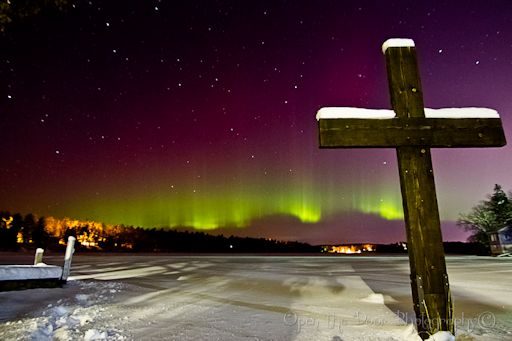
    -A high-speed solar wind stream is buffeting Earth's magnetic field, sparking G2-class geomagnetic storms around the poles. When Earth first entered the solar wind stream during the late hours of Dec. 7th, Northern Lights spilled over the Canadian border into several US states. Christopher Griffith sends this snapshot from Pillager, Minnesota. "The auroras were dancing lightly across the sky," says Griffith. "It was quite fantastic and fun to watch despite the temperature being -25 F."

    NOAA forecasters estimate a 35% chance of additional geomagnetic storms on Dec. 8th and 9th. High-latitude sky watchers should remain alert for auroras as the solar wind continues to blow.

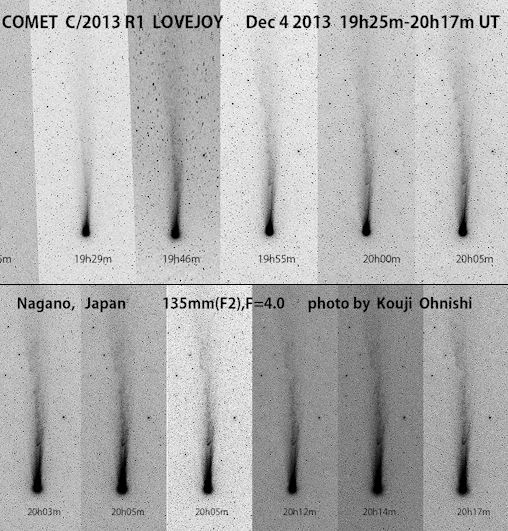
    -Amateur astronomers around the northern hemisphere are reporting activity in the tail of naked-eye Comet Lovejoy (C/2013 R1). In Nagano, Japan, astrophotographer Kouji Ohnishi could see big changes in less than an hour of monitoring. Michael Jäger saw the same "disconnection event" from his observatory in Masenberg, Austria, on Dec. 5th. The disturbance could be caused by a gust of solar wind or perhaps an episode of vigorous outgassing in the comet's core.

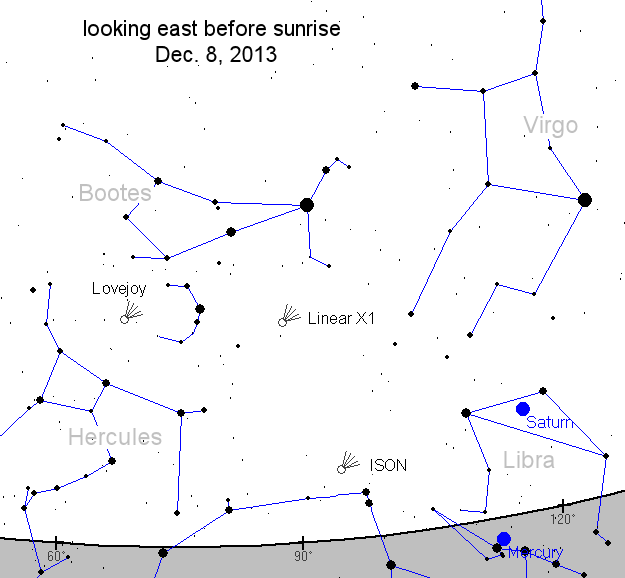
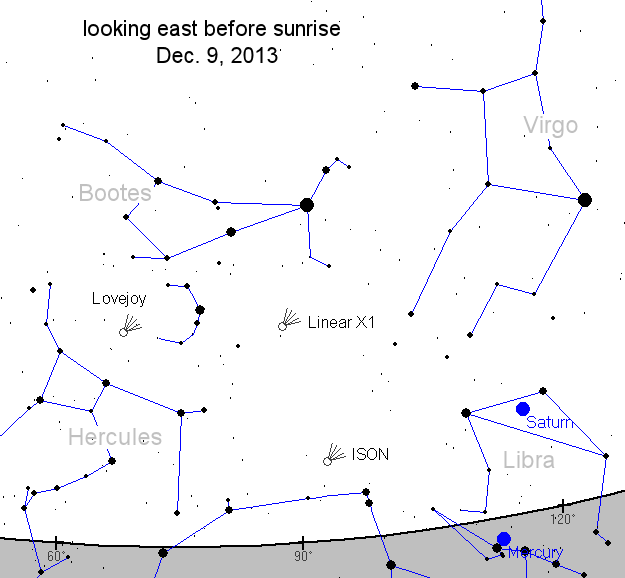
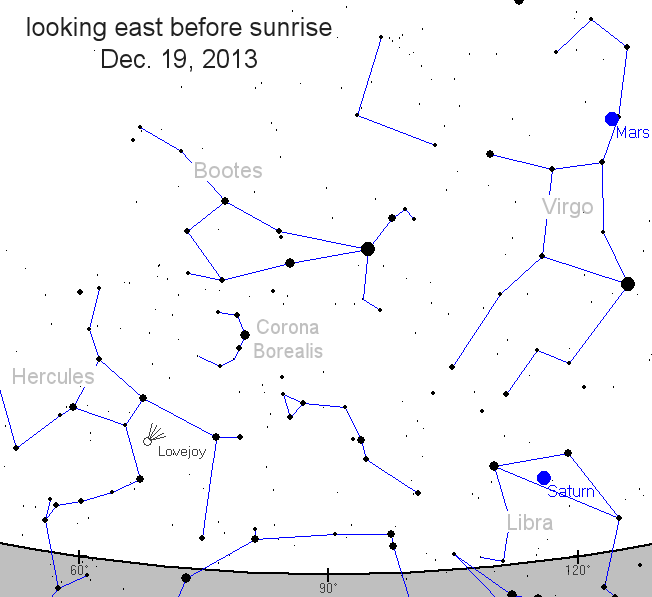
    Comet Lovejoy is now about as bright as a 4th magnitude star. It is visible to the unaided eye from the countryside and is an easy target for backyard telescopes even in urban areas. Monitoring is encouraged. Comet Lovejoy rises in the east just before the morning sun.


    Astro Picture of the Day:
    December 8, 2013

    Source:
    If you could stand on Mars - what might you see? Scroll right to find out. The robotic Spirit rover that rolled around Mars from 2004 to 2009 Mars climbed to the top of a hill in 2005 and took a series of images over three days that were then digitally combined into a 360 degree panorama. Spirit was instructed to take images having the same resolution as a human with 20-20 eyesight. The full panoramic result can be found by clicking on the above image and has a level of detail unparalleled in the history of Martian surface photography. The panorama was taken from the pinnacle of Husband Hill and has been dubbed the Everest panorama, in honor of the view from the tallest mountain on Earth. Visible in Gusev Crater are rocks, rusting sand, a Martian sundial, vast plains, nearby peaks, faraway peaks, and sand drifts. In the distance, fast moving dust devils can be seen as slight apparitions of red, green, or blue, the colors of filters used to build up this natural color vista.

    The full resolution image, if you're willing to load a 22348 pixel long image: http://apod.nasa.gov/apod/image/1312...irit_22348.jpg
    1st in Kommisar's 2009 SM Tournament
    1st in I Love You`s 2009 New Year`s Tournament
    3rd in EnR's Mashfest '08 tournament
    5th in Phynx's Unofficial FFR Tournament
    9th in D3 of the 2008-2009 4th Official FFR Tournament
    10th in D5 of the 2010 5th Official FFR Tournament
    10th in D6 of the 2011-2012 6th Official FFR Tournament

    FMO AAA Count: 71
    FGO AAA Count: 10

    Bluearrowll = The Canadian player who can not detect awkward patterns. If it's awkward for most people, it's normal for Terry. If the file is difficult but super straight forward, he has issues. If he's AAAing a FGO but then heard that his favorite Hockey team was losing by a point, Hockey > FFR
    PS: Cool AAA's Terry
    - I Love You


    An Alarm Clock's Haiku
    beep beep beep beep beep
    beep beep beep beep beep beep beep
    beep beep beep beep beep
    - ieatyourlvllol

    Comment

    • Bluearrowll
      ⊙▃⊙
      FFR Simfile Author
      • Nov 2007
      • 7376

      #767
      Re: Terry's Astronomy Thread.

      What's in the sky tonight?
      December 9, 2013
      -First-quarter Moon (exact at 10:12 a.m. EST). This evening the Moon shines just under the dim Circlet of Pisces below the Great Square of Pegasus.

      -Jupiter is passing just 15 arcminutes from Delta Geminorum, magnitude 3.5, this evening and tomorrow evening. That's about half a pencil-width at arm's length. (But it's not as close as Jupiter passed by the star on October 4th, while going the other way.)

      -Later this month, NASA plans to point the Hubble Space Telescope at Comet ISON to see if anything remains after the comet's death plunge through the sun's atmosphere on Nov. 28th. Note to Hubble: Don't expect to see much. Amateur astronomers are already searching the comet's position and setting hard limits on the brightness of any remains. Consider this image taken on Dec. 8th by Eric Allen of the Observatoire du Cégep de Trois-Rivières in Champlain, Québec. The position of the comet-had it survived-is circled. "I unfortunately have to say that there is nothing down to about magnitude +16.5, not even a small condensation," says Allen. More information about Allen's observing techniques and image processing may be found here.

      As Karl Battams of the Naval Research Lab comments in his blog on the Comet ISON Observing Campaign web site: "The evidence appears strong that at some point approaching perihelion Comet ISON likely began to completely fall apart. What remains of ISON now is going to be either just a cloud of dust, or perhaps a few very depleted chunks of nucleus. Either way, it's not going to flare up at this point and we should assume the comet's show is over."


      Astro Picture of the Day:
      December 9, 2013

      Source:
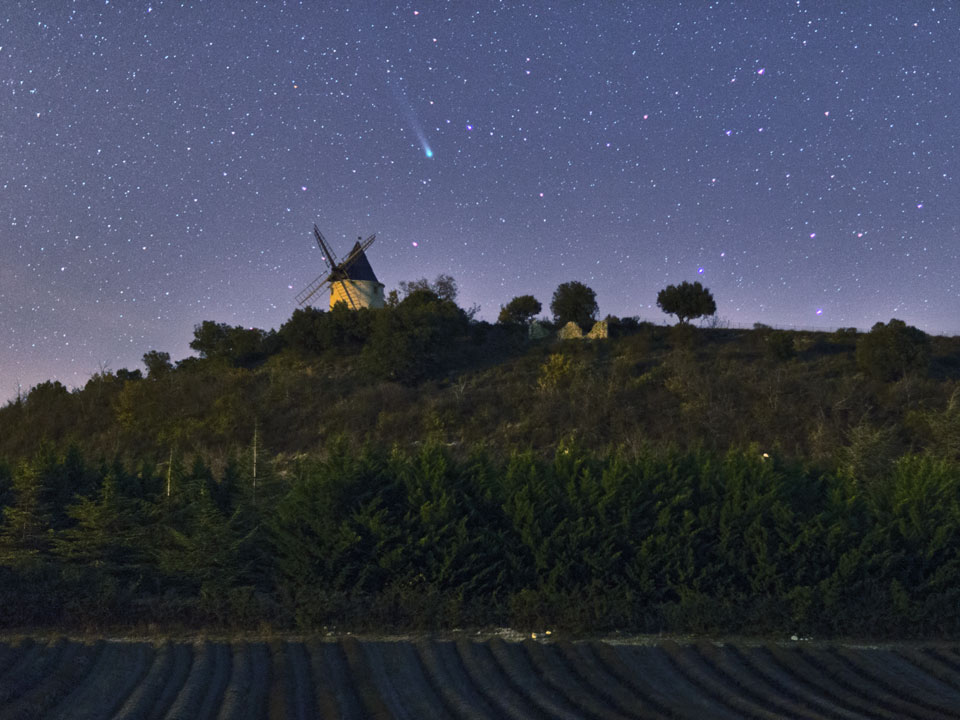
      Lovejoy continues to be an impressive camera comet. Pictured above, Comet C/2013 R1 (Lovejoy) was imaged above the windmill in Saint-Michel-l'Observatoire in southern France with a six-second exposure. In the foreground is a field of lavender. Comet Lovejoy should remain available for photo opportunities for northern observers during much of December and during much of the night, although it will be fading as the month progresses and highest in the sky before sunrise. In person, the comet will be best viewed with binoculars. A giant dirty snowball, Comet Lovejoy last visited the inner Solar System about 7,000 years ago, around the time that humans developed the wheel.
      1st in Kommisar's 2009 SM Tournament
      1st in I Love You`s 2009 New Year`s Tournament
      3rd in EnR's Mashfest '08 tournament
      5th in Phynx's Unofficial FFR Tournament
      9th in D3 of the 2008-2009 4th Official FFR Tournament
      10th in D5 of the 2010 5th Official FFR Tournament
      10th in D6 of the 2011-2012 6th Official FFR Tournament

      FMO AAA Count: 71
      FGO AAA Count: 10

      Bluearrowll = The Canadian player who can not detect awkward patterns. If it's awkward for most people, it's normal for Terry. If the file is difficult but super straight forward, he has issues. If he's AAAing a FGO but then heard that his favorite Hockey team was losing by a point, Hockey > FFR
      PS: Cool AAA's Terry
      - I Love You


      An Alarm Clock's Haiku
      beep beep beep beep beep
      beep beep beep beep beep beep beep
      beep beep beep beep beep
      - ieatyourlvllol

      Comment

      • Bluearrowll
        ⊙▃⊙
        FFR Simfile Author
        • Nov 2007
        • 7376

        #768
        Re: Terry's Astronomy Thread.

        What's in the sky tonight?
        December 10, 2013
        -The eastern (left-hand) side of the Great Square of Pegasus points down at the Moon this evening.

        -Earth is entering a stream of debris from rock comet 3200 Phaethon, source of the annual Geminid meteor shower. Forecasters expect the shower to peak on Dec. 13-14 with as many as 120 meteors per hour. Lunar interference will be a problem, as glare from the nearly-full Moon reduces the number of visible meteors 2- to 5-fold. You can listen to radar echoes from the Geminids, unaffected by moonlight, on Space Weather Radio.

        News Posted Today:
        December 9, 2013
        New View of Saturn's Hexagon


        Astro Picture of the Day:
        December 10, 2013

        Source:
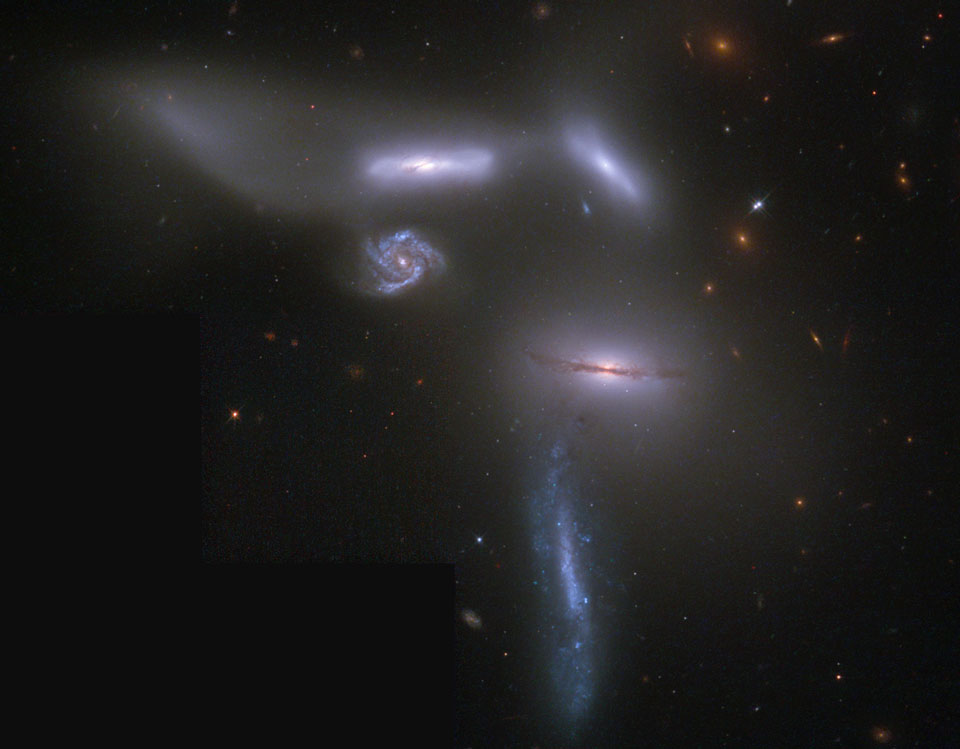
        What will survive this battle of the galaxies? Known as Seyfert's Sextet, this intriguing group of galaxies lies in the head portion of the split constellation of the Snake (Serpens). The sextet actually contains only four interacting galaxies, though. Near the center of this Hubble Space Telescope picture, the small face-on spiral galaxy lies in the distant background and appears only by chance aligned with the main group. Also, the prominent condensation on the upper left is likely not a separate galaxy at all, but a tidal tail of stars flung out by the galaxies' gravitational interactions. About 190 million light-years away, the interacting galaxies are tightly packed into a region around 100,000 light-years across, comparable to the size of our own Milky Way galaxy, making this one of the densest known galaxy groups. Bound by gravity, the close-knit group may coalesce into a single large galaxy over the next few billion years.
        Last edited by Bluearrowll; 12-10-2013, 07:51 AM.
        1st in Kommisar's 2009 SM Tournament
        1st in I Love You`s 2009 New Year`s Tournament
        3rd in EnR's Mashfest '08 tournament
        5th in Phynx's Unofficial FFR Tournament
        9th in D3 of the 2008-2009 4th Official FFR Tournament
        10th in D5 of the 2010 5th Official FFR Tournament
        10th in D6 of the 2011-2012 6th Official FFR Tournament

        FMO AAA Count: 71
        FGO AAA Count: 10

        Bluearrowll = The Canadian player who can not detect awkward patterns. If it's awkward for most people, it's normal for Terry. If the file is difficult but super straight forward, he has issues. If he's AAAing a FGO but then heard that his favorite Hockey team was losing by a point, Hockey > FFR
        PS: Cool AAA's Terry
        - I Love You


        An Alarm Clock's Haiku
        beep beep beep beep beep
        beep beep beep beep beep beep beep
        beep beep beep beep beep
        - ieatyourlvllol

        Comment

        • Bluearrowll
          ⊙▃⊙
          FFR Simfile Author
          • Nov 2007
          • 7376

          #769
          Re: Terry's Astronomy Thread.

          What's in the sky tonight?
          December 11, 2013
          -Which rises first: bright Jupiter in the east-northeast, or bright Rigel in Orion's foot in the east-southeast? Both come up soon after dark. At the latitudes of New York and Denver (about 40° N), Rigel comes first tonight. As far north as Ottawa and Seattle (about 46° N), Jupiter now leads.

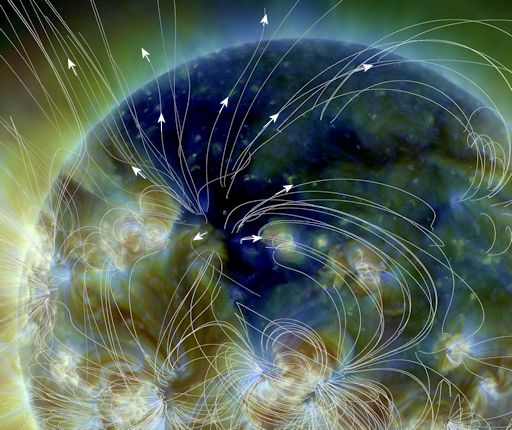
          -NASA's Solar Dynamics Observatory is monitoring a large coronal hole in the sun's northern hemisphere. Shown here in an extreme ultraviolet photo taken during the early hours of Dec. 11th, the UV-dark chasm overlies more than 500 billion square kilometers of solar terrain.

          -Coronal holes are places in the sun's atmosphere where the magnetic field opens up and allows solar wind to escape. A broad stream of solar wind flowing from this particular coronal hole should reach Earth on Dec. 15-17.

          The last time a solar wind stream blew past Earth, on Dec. 7th, the impact sparked Northern Lights in the United States as far south as Montana and Michigan. A repeat performance could be in the offing. High-latitude sky watchers should be alert for auroras early next week.

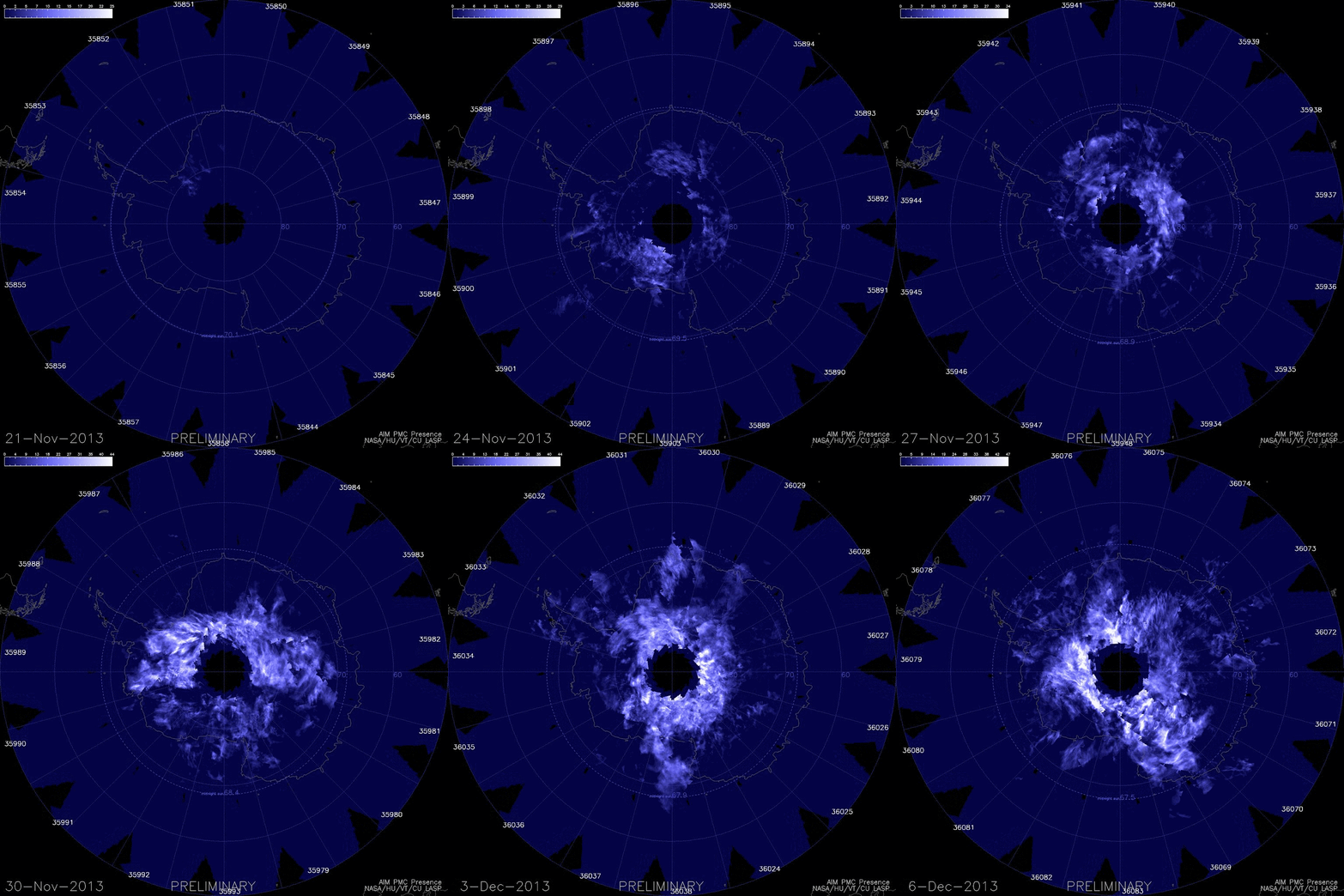
          -The season for noctilucent clouds has begun in the southern hemisphere. NASA's AIM spacecraft is monitoring a vast bank of rippling electric-blue NLCs blanketing almost all of Antarctica. This two week movie chronicles the onset of the clouds in late November and their rapid spread into December.

          NLCs are Earth's highest clouds. Seeded by "meteor smoke," they form at the edge of space 83 km above Earth's surface. When sunlight hits the tiny ice crystals that make up these clouds, they glow electric blue.

          NLCs appear during summer because that is when water molecules are wafted up from the lower atmosphere to mix with the meteor smoke. That is also, ironically, the time when the upper atmosphere is coldest, allowing the ice crystals of NLCs to form.

          In recent years NLCs have intensified. Some researchers believe this is a sign of climate change. One of the greenhouse gases that has become more abundant in Earth's atmosphere since the 19th century is methane. "When methane makes its way into the upper atmosphere, it is oxidized by a complex series of reactions to form water vapor," explains Hampton University Professor James Russell, the principal investigator of AIM."This extra water vapor is then available to grow ice crystals for NLCs."


          News Posted Today:
          December 10, 2013
          A Double Black Hole?


          Astro Picture of the Day:
          December 11, 2013

          Source:
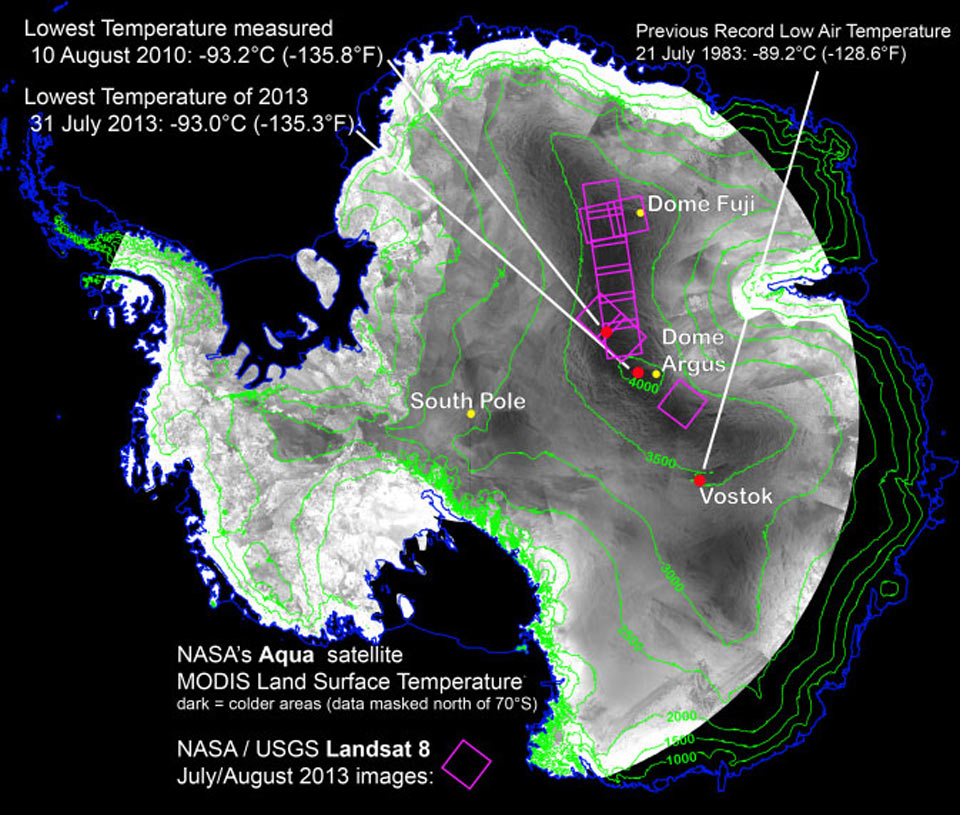
          How cold can it get on Earth? In the interior of the Antarctica, a record low temperature of -93.2 °C (-135.8 °F) has been recorded. This is about 25 °C (45 °F) colder than the coldest lows noted for any place humans live permanently. The record temperature occurred in 2010 August - winter in Antarctica - and was found by scientists sifting through decades of climate data taken by Earth-orbiting satellites. The coldest spots were found near peaks because higher air is generally colder, although specifically in depressions near these peaks because relatively dense cold air settled there and was further cooled by the frozen ground. Summer is a much better time to visit Antarctica, as some regions will warm up as high as 15 °C (59 °F).
          1st in Kommisar's 2009 SM Tournament
          1st in I Love You`s 2009 New Year`s Tournament
          3rd in EnR's Mashfest '08 tournament
          5th in Phynx's Unofficial FFR Tournament
          9th in D3 of the 2008-2009 4th Official FFR Tournament
          10th in D5 of the 2010 5th Official FFR Tournament
          10th in D6 of the 2011-2012 6th Official FFR Tournament

          FMO AAA Count: 71
          FGO AAA Count: 10

          Bluearrowll = The Canadian player who can not detect awkward patterns. If it's awkward for most people, it's normal for Terry. If the file is difficult but super straight forward, he has issues. If he's AAAing a FGO but then heard that his favorite Hockey team was losing by a point, Hockey > FFR
          PS: Cool AAA's Terry
          - I Love You


          An Alarm Clock's Haiku
          beep beep beep beep beep
          beep beep beep beep beep beep beep
          beep beep beep beep beep
          - ieatyourlvllol

          Comment

          • Bluearrowll
            ⊙▃⊙
            FFR Simfile Author
            • Nov 2007
            • 7376

            #770
            Re: Terry's Astronomy Thread.

            What's in the sky tonight?
            December 12, 2013
            -The tiny black shadow of Jupiter's fast-moving moon Io crosses Jupiter's face tonight from 10:02 p.m. EST to 12:17 a.m. EST. Following soon behind is Io itself, transiting from 10:37 p.m. to 12:52 a.m. EST. In a telescope, Io is much less visible on Jupiter's bright face than its shadow is.

            -Earth is entering a stream of debris from rock comet 3200 Phaethon, source of the annual Geminid meteor shower. Forecasters expect the shower to peak on Dec. 13-14 with as many as 120 meteors per hour. Lunar interference will be a problem, as glare from the nearly-full Moon reduces the number of visible meteors 2- to 5-fold. You can listen to radar echoes from the Geminids, unaffected by moonlight, on Space Weather Radio. Also, tune into NASA's live web chat about the Geminids on Friday the 13th beginning at 11 pm EST found here: http://www.nasa.gov/connect/chat/gem...l#.UqbCkeIlhiI

            -Every night, a network of NASA all-sky cameras scans the skies above the United States for meteoritic fireballs. Automated software maintained by NASA's Meteoroid Environment Office calculates their orbits, velocity, penetration depth in Earth's atmosphere and many other characteristics. Daily results are presented on Spaceweather.com. On Dec. 11, 2013, the network reported 32 fireballs. (15 sporadics, 4 December Monocerotids, 9 Geminids, 4 sigma Hydrids)


            Astro Picture of the Day:
            December 12, 2013

            Source:
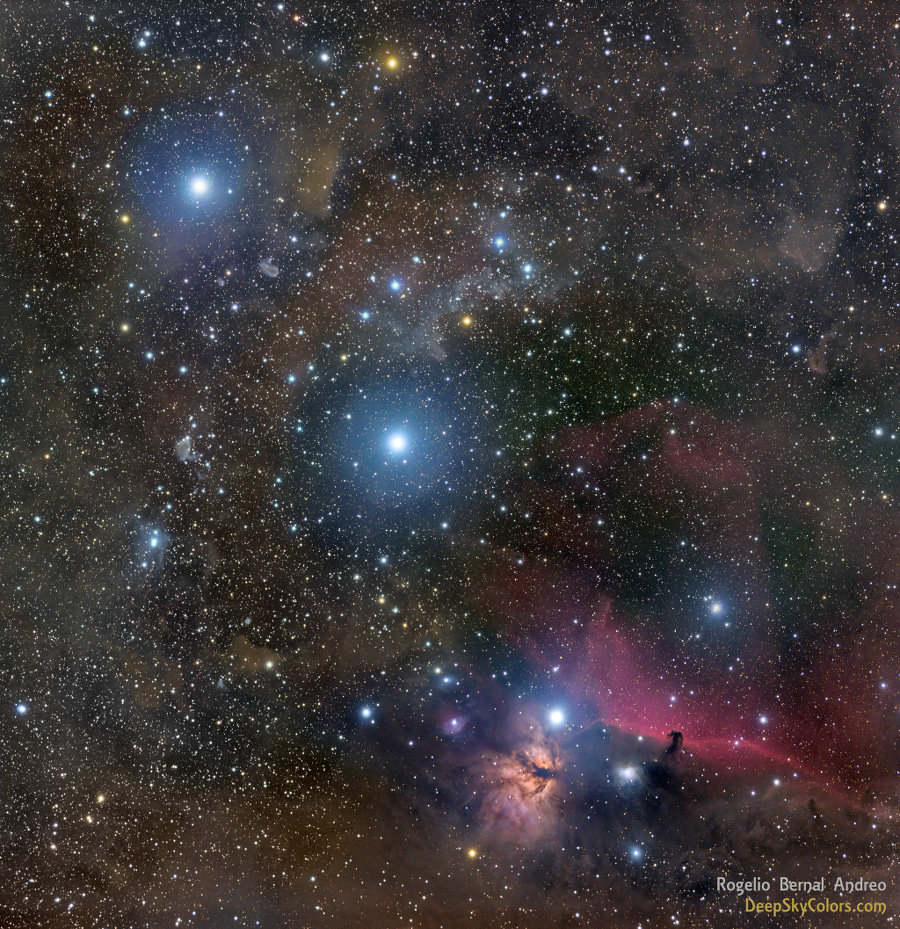
            Alnitak, Alnilam, and Mintaka, are the bright bluish stars from east to west (lower right to upper left) along the diagonal in this gorgeous cosmic vista. Otherwise known as the Belt of Orion, these three blue supergiant stars are hotter and much more massive than the Sun. They lie about 1,500 light-years away, born of Orion's well-studied interstellar clouds. In fact, clouds of gas and dust adrift in this region have intriguing and some surprisingly familiar shapes, including the dark Horsehead Nebula and Flame Nebula near Alnitak at the lower right. The famous Orion Nebula itself is off the right edge of this colorful star field. The well-framed, wide-field telescopic image spans about 4 degrees on the sky.
            1st in Kommisar's 2009 SM Tournament
            1st in I Love You`s 2009 New Year`s Tournament
            3rd in EnR's Mashfest '08 tournament
            5th in Phynx's Unofficial FFR Tournament
            9th in D3 of the 2008-2009 4th Official FFR Tournament
            10th in D5 of the 2010 5th Official FFR Tournament
            10th in D6 of the 2011-2012 6th Official FFR Tournament

            FMO AAA Count: 71
            FGO AAA Count: 10

            Bluearrowll = The Canadian player who can not detect awkward patterns. If it's awkward for most people, it's normal for Terry. If the file is difficult but super straight forward, he has issues. If he's AAAing a FGO but then heard that his favorite Hockey team was losing by a point, Hockey > FFR
            PS: Cool AAA's Terry
            - I Love You


            An Alarm Clock's Haiku
            beep beep beep beep beep
            beep beep beep beep beep beep beep
            beep beep beep beep beep
            - ieatyourlvllol

            Comment

            • Bluearrowll
              ⊙▃⊙
              FFR Simfile Author
              • Nov 2007
              • 7376

              #771
              Re: Terry's Astronomy Thread.

              What's in the sky tonight?
              December 13, 2013
              -The Geminid meteor shower should be at its peak tonight, from 9 or 10 p.m. until dawn Saturday morning. The best viewing time is after your local moonset: in the hour before the beginning of morning twilight on the 14th. But bright meteors will show even through the moonlight earlier.

              -The eclipsing binary star Algol should be at its minimum brightness, magnitude 3.4 instead of its usual 2.1, for a couple hours centered on 9:50 p.m. EST.

              -On Dec. 12th, NASA's network of all-sky meteor cameras reported 23 Geminid fireballs over the United States. This sharp uptick in activity signals the official beginning of the 2013 Geminid meteor shower. For the next 2 to 3 days, Earth will pass through a stream of debris from rock comet 3200 Phaethon, producing dozens of meteors per hour flying out of the constellation Gemini. "There is a nice show going on right now," says Bill Cooke, head of NASA's Meteoroid Environment Office.

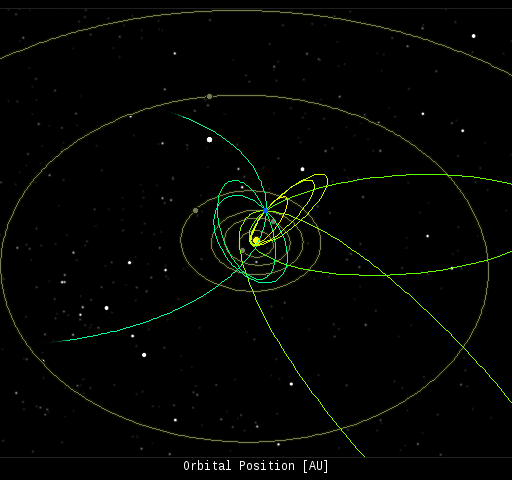
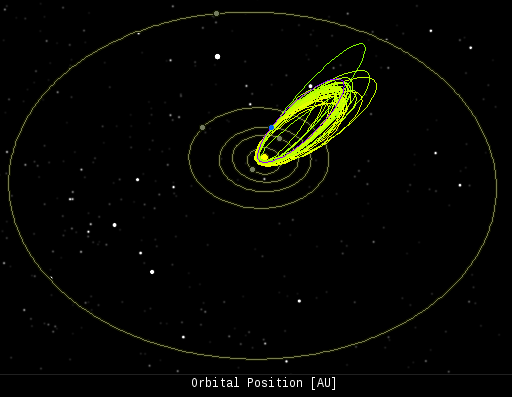
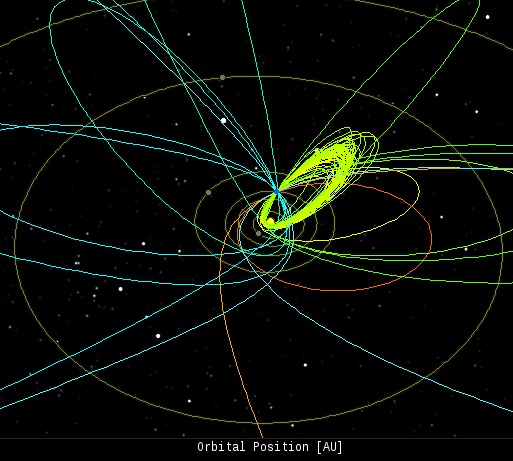
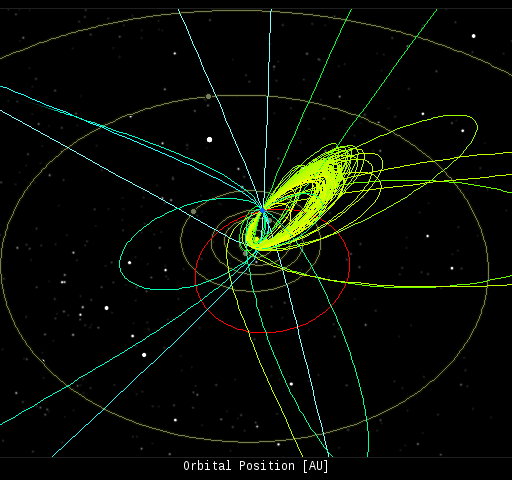
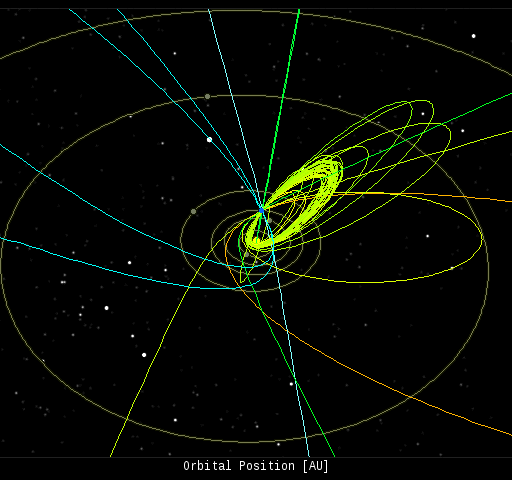
              -The multiple cameras of NASA's fireball network are able to measure the orbits of Geminid meteoroids. This plot shows the orbits of the 39 fireballs recorded so far this week.

              -Earth is the blue dot where all the orbits intersect. The purple curve shows the path of Geminid parent 3200 Phaethon.

              Forecasters expect the shower to peak on Dec. 13-14 when Earth passes through the busiest part of Phaethon's debris stream. Peak rates could reach 120 meteors per hour. However, glare from the nearly-full Moon could reduce the number of visible meteors 2- to 3-fold. Cooke advises looking during the hours just before local sunrise on Saturday, Dec. 14th. "At that time, the Moon will be below the horizon, improving your chances of seeing the show."


              Astro Picture of the Day:
              December 13, 2013

              Source:
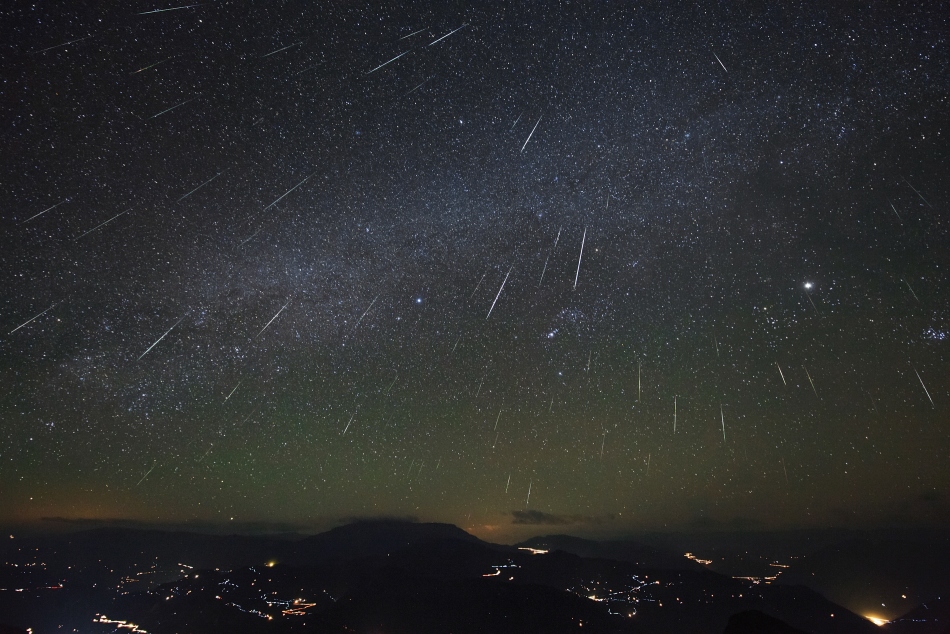
              The annual Geminid meteor shower is raining down on planet Earth this week. And despite the waxing gibbous moonlight, the reliable Geminids should be enjoyable tonight (night of December 13/14) near the shower's peak. Recorded near last year's peak in the early hours of December 14, 2012, this skyscape captures many of Gemini's lovely shooting stars. The careful composite of exposures was made during a three hour period overlooking the Dashanbao Wetlands in central China. Dark skies above are shared with bright Jupiter (right), Orion, (right of center) and the faint band of the Milky Way. The shower's radiant in the constellation Gemini, the apparent source of all the meteor streaks, lies just above the top of the frame. Dust swept up from the orbit of active asteroid 3200 Phaethon, Gemini's meteors enter the atmosphere traveling at about 22 kilometers per second.
              1st in Kommisar's 2009 SM Tournament
              1st in I Love You`s 2009 New Year`s Tournament
              3rd in EnR's Mashfest '08 tournament
              5th in Phynx's Unofficial FFR Tournament
              9th in D3 of the 2008-2009 4th Official FFR Tournament
              10th in D5 of the 2010 5th Official FFR Tournament
              10th in D6 of the 2011-2012 6th Official FFR Tournament

              FMO AAA Count: 71
              FGO AAA Count: 10

              Bluearrowll = The Canadian player who can not detect awkward patterns. If it's awkward for most people, it's normal for Terry. If the file is difficult but super straight forward, he has issues. If he's AAAing a FGO but then heard that his favorite Hockey team was losing by a point, Hockey > FFR
              PS: Cool AAA's Terry
              - I Love You


              An Alarm Clock's Haiku
              beep beep beep beep beep
              beep beep beep beep beep beep beep
              beep beep beep beep beep
              - ieatyourlvllol

              Comment

              • Bluearrowll
                ⊙▃⊙
                FFR Simfile Author
                • Nov 2007
                • 7376

                #772
                Re: Terry's Astronomy Thread.

                Late night update to provide a neat link. If you wanted to ask a question to NASA about the Geminid meteor showers, there is a live chat open between 11pm tonight and 3am this morning. Also provided is live streaming of the meteor shower courtesy of NASA's USTREAM account.


                On Dec. 13, 2013, the network reported 78 fireballs.
                (47 Geminids, 24 sporadics, 3 December Monocerotids, 1 sigma Hydrid, 3 December Leonis Minorids)

                To qualify as a fireball, it must be brighter in magnitude than the planet Venus (-4.7).


                If it is cloudy where you live or if the stream clouds over, you can listen to the meteor shower here: http://spaceweatherradio.com/
                Last edited by Bluearrowll; 12-13-2013, 09:37 PM.
                1st in Kommisar's 2009 SM Tournament
                1st in I Love You`s 2009 New Year`s Tournament
                3rd in EnR's Mashfest '08 tournament
                5th in Phynx's Unofficial FFR Tournament
                9th in D3 of the 2008-2009 4th Official FFR Tournament
                10th in D5 of the 2010 5th Official FFR Tournament
                10th in D6 of the 2011-2012 6th Official FFR Tournament

                FMO AAA Count: 71
                FGO AAA Count: 10

                Bluearrowll = The Canadian player who can not detect awkward patterns. If it's awkward for most people, it's normal for Terry. If the file is difficult but super straight forward, he has issues. If he's AAAing a FGO but then heard that his favorite Hockey team was losing by a point, Hockey > FFR
                PS: Cool AAA's Terry
                - I Love You


                An Alarm Clock's Haiku
                beep beep beep beep beep
                beep beep beep beep beep beep beep
                beep beep beep beep beep
                - ieatyourlvllol

                Comment

                • Bluearrowll
                  ⊙▃⊙
                  FFR Simfile Author
                  • Nov 2007
                  • 7376

                  #773
                  Re: Terry's Astronomy Thread.

                  What's in the sky tonight?
                  December 14, 2013
                  -The bright gibbous Moon shines in Taurus this evening. Through the glare, can you make out the Pleiades roughly a fist-width to its upper left? Easier is Aldebaran farther to the Moon's lower left. Brighter Capella shines much farther left of the Moon.

                  -The International Meteor Organization is reporting Geminid rates of more than 100 per hour (ZHR) during the early hours of Dec. 14th. This means the shower is approaching its peak. Check the realtime photo gallery for Geminid photos from around the world. And if it's dark where you are, be alert for meteors!

                  Real Time Photo Gallery of the Meteor Shower Worldwide: http://spaceweathergallery.com/index.php?title=meteor

                  Meteor Counts: http://www.imo.net/live/geminids2013/


                  Astro Picture of the Day:
                  December 14, 2013

                  Source:
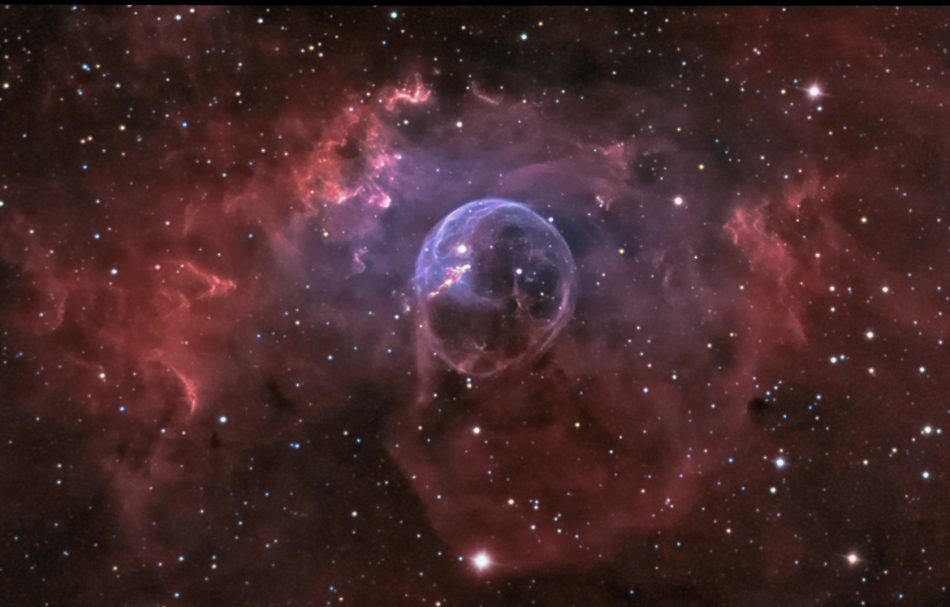
                  Blown by the wind from a massive star, this interstellar apparition has a surprisingly familiar shape. Cataloged as NGC 7635, it is also known simply as The Bubble Nebula. Although it looks delicate, the 10 light-year diameter bubble offers evidence of violent processes at work. Above and right of the Bubble's center is a hot, O star, several hundred thousand times more luminous and around 45 times more massive than the Sun. A fierce stellar wind and intense radiation from that star has blasted out the structure of glowing gas against denser material in a surrounding molecular cloud. The intriguing Bubble Nebula lies a mere 11,000 light-years away toward the boastful constellation Cassiopeia. This natural looking view of the cosmic bubble is composed from narrowband image data, also used to create a 3D model. http://astroanarchy.blogspot.fi/2013...le-nebula.html
                  1st in Kommisar's 2009 SM Tournament
                  1st in I Love You`s 2009 New Year`s Tournament
                  3rd in EnR's Mashfest '08 tournament
                  5th in Phynx's Unofficial FFR Tournament
                  9th in D3 of the 2008-2009 4th Official FFR Tournament
                  10th in D5 of the 2010 5th Official FFR Tournament
                  10th in D6 of the 2011-2012 6th Official FFR Tournament

                  FMO AAA Count: 71
                  FGO AAA Count: 10

                  Bluearrowll = The Canadian player who can not detect awkward patterns. If it's awkward for most people, it's normal for Terry. If the file is difficult but super straight forward, he has issues. If he's AAAing a FGO but then heard that his favorite Hockey team was losing by a point, Hockey > FFR
                  PS: Cool AAA's Terry
                  - I Love You


                  An Alarm Clock's Haiku
                  beep beep beep beep beep
                  beep beep beep beep beep beep beep
                  beep beep beep beep beep
                  - ieatyourlvllol

                  Comment

                  • Bluearrowll
                    ⊙▃⊙
                    FFR Simfile Author
                    • Nov 2007
                    • 7376

                    #774
                    Re: Terry's Astronomy Thread.

                    What's in the sky tonight?
                    December 15, 2013
                    -NOAA forecasters estimate a 40% chance of polar geomagnetic storms on Dec. 15th when a pair of CMEs could deliver rapid-fire glancing blows to Earth's magnetic field. High-latitude sky watchers should be alert for auroras mixed with bright moonlight.

                    -China has joined the club of nations that has landed on the Moon. On Saturday, Dec. 14th, at 9:41 p.m. Beijing local time, China's Chang’e-3 lunar lander touched down in Sinus Iridum, the Bay of Rainbows. Hours later, a lunar rover named the Jade Rabbit ("Yutu" in Mandarin Chinese) emerged for a historic mission of exploration.

                    The six-wheeled, 260-lb rover is equipped with a Chinese-made nuclear battery expected to last for more than 30 years. The rover also has expandable solar arrays to absorb the sun’s energy during the day and retract at night to cover and protect equipment from temperatures of minus 170 degrees Celsius. Onboard sensors include a ground-probing radar, cameras, and a soil sampler.

                    The United States has not performed a soft landing on the Moon since 1972 when Apollo 17 delivered astronauts Gene Cernan and Jack Schmitt to the Taurus-Littrow valley. The former USSR last did it in 1976 with the sample return mission Luna 24.

                    -The Geminid meteor shower is subsiding now as Earth exits a stream of debris from rock comet 3200 Phaethon. Preliminary counts by the International Meteor Organization suggest that the shower peaked on Dec. 14th with more than 100 meteors per hour. Bright moonlight reduced the visibility of many faint meteors. Fortunately, the shower was rich in fireballs like the one here: http://www.spaceweather.com/images20...1_Ashcraft.mp4

                    Amateur astronomer Thomas Ashcraft recorded the fireball using an all-sky camera and a 61 MHz radio receiver. Watch the movie again and turn up the volume. The soundtrack is the echo of a distant TV transmission bouncing off the ionized trail of the disintegrating meteoroid. "By listening to the radio echoes, I could tell there was a strong display of meteors all through the night," says Ashcraft. "We were lucky that some Geminid fireballs appeared through holes in our cloudy skies."

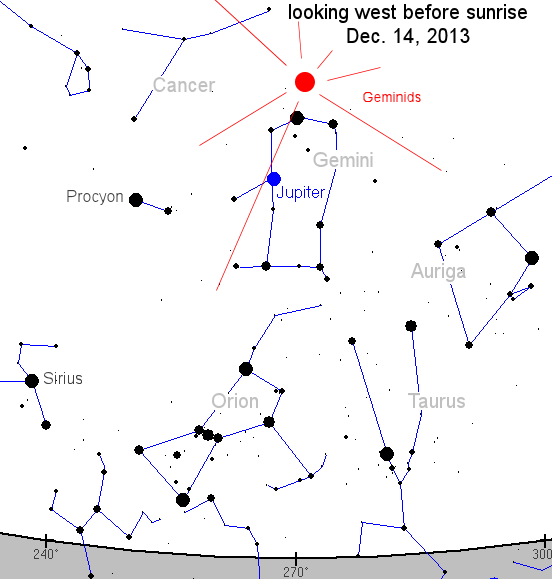
                    The shower is subsiding, but it's not over. Earth will be inside the debris stream of 3200 Phaethon for some days to come. Look west during the magic hour before sunrise, and you still could see dozens of Geminids between now and Dec. 16th.

                    -On Dec. 14, 2013, the network reported 110 fireballs. (67 Geminids, 38 sporadics, 1 December Monocerotid, 3 sigma Hydrids )


                    News Posted Today:
                    December 14, 2013
                    Chang'e 3 Delivers Rover to Lunar Surface


                    Astro Picture of the Day:
                    December 15, 2013

                    Source:
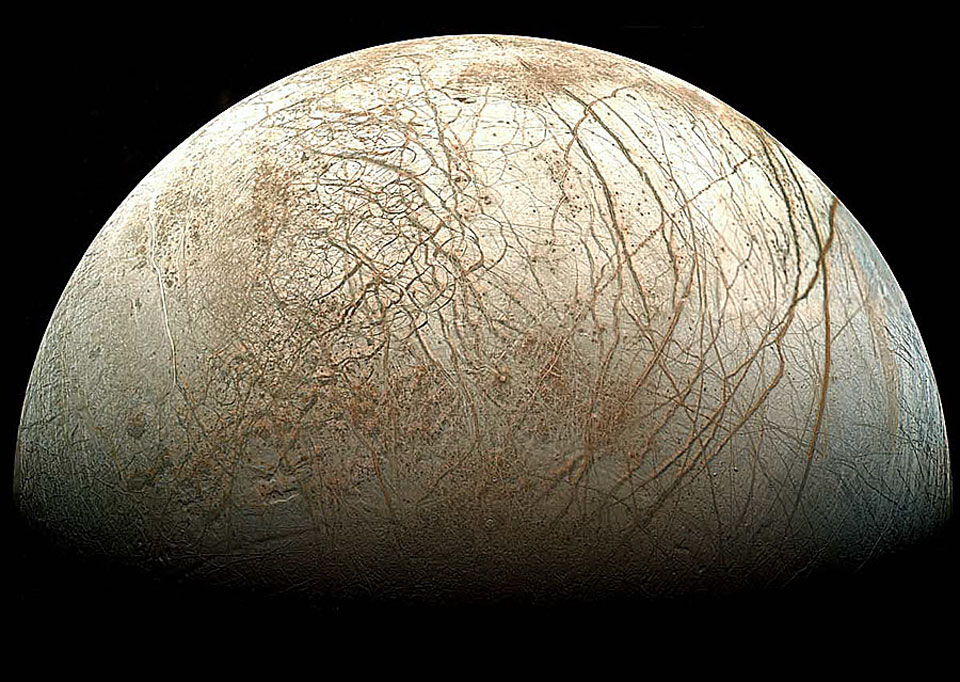
                    Although the phase of this moon might appear familiar, the moon itself might not. In fact, this gibbous phase shows part of Jupiter's moon Europa. The robot spacecraft Galileo captured this image mosaic during its mission orbiting Jupiter from 1995 - 2003. Visible are plains of bright ice, cracks that run to the horizon, and dark patches that likely contain both ice and dirt. Raised terrain is particularly apparent near the terminator, where it casts shadows. Europa is nearly the same size as Earth's Moon, but much smoother, showing few highlands or large impact craters. Evidence and images from the Galileo spacecraft, indicated that liquid oceans might exist below the icy surface. To test speculation that these seas hold life, ESA has started preliminary development of the Jupiter Icy Moons Explorer (JUICE), a spacecraft proposed for launch around 2022 that would further explore Jupiter and in particular Europa. Recent observations by the Hubble Space Telescope have uncovered new evidence that Europa, like Saturn's moon Enceladus, has ice venting from its surface.
                    1st in Kommisar's 2009 SM Tournament
                    1st in I Love You`s 2009 New Year`s Tournament
                    3rd in EnR's Mashfest '08 tournament
                    5th in Phynx's Unofficial FFR Tournament
                    9th in D3 of the 2008-2009 4th Official FFR Tournament
                    10th in D5 of the 2010 5th Official FFR Tournament
                    10th in D6 of the 2011-2012 6th Official FFR Tournament

                    FMO AAA Count: 71
                    FGO AAA Count: 10

                    Bluearrowll = The Canadian player who can not detect awkward patterns. If it's awkward for most people, it's normal for Terry. If the file is difficult but super straight forward, he has issues. If he's AAAing a FGO but then heard that his favorite Hockey team was losing by a point, Hockey > FFR
                    PS: Cool AAA's Terry
                    - I Love You


                    An Alarm Clock's Haiku
                    beep beep beep beep beep
                    beep beep beep beep beep beep beep
                    beep beep beep beep beep
                    - ieatyourlvllol

                    Comment

                    • Bluearrowll
                      ⊙▃⊙
                      FFR Simfile Author
                      • Nov 2007
                      • 7376

                      #775
                      Re: Terry's Astronomy Thread.

                      What's in the sky tonight?
                      December 16, 2013
                      -Full Moon tonight (exact at 4:28 a.m. Tuesday morning EST). As the Moon climbs the eastern sky this evening, look for Aldebaran to its upper right, Aldebaran-colored Betelgeuse to its lower right, Capella farther to its upper left, and Jupiter far to its lower left.

                      -A pair of Earth-facing sunspots, AR1917 and AR1918, have 'beta-gamma' magnetic fields that harbor energy for moderately strong solar flares. Any eruptions from the duo in the days ahead would likely be geoeffective. NOAA forecasters estimate a 25% chance of M-class flares during the next 24 hours.

                      -On Dec. 15, 2013, the network reported 52 fireballs. ( 30 Geminids, 20 sporadics, 2 December Leonis Minorids)


                      News Posted Today:
                      December 16, 2013
                      Argon Found in The Crab


                      Astro Picture of the Day:
                      December 16, 2013

                      Source:
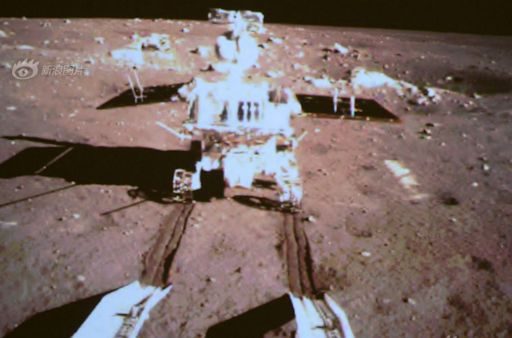
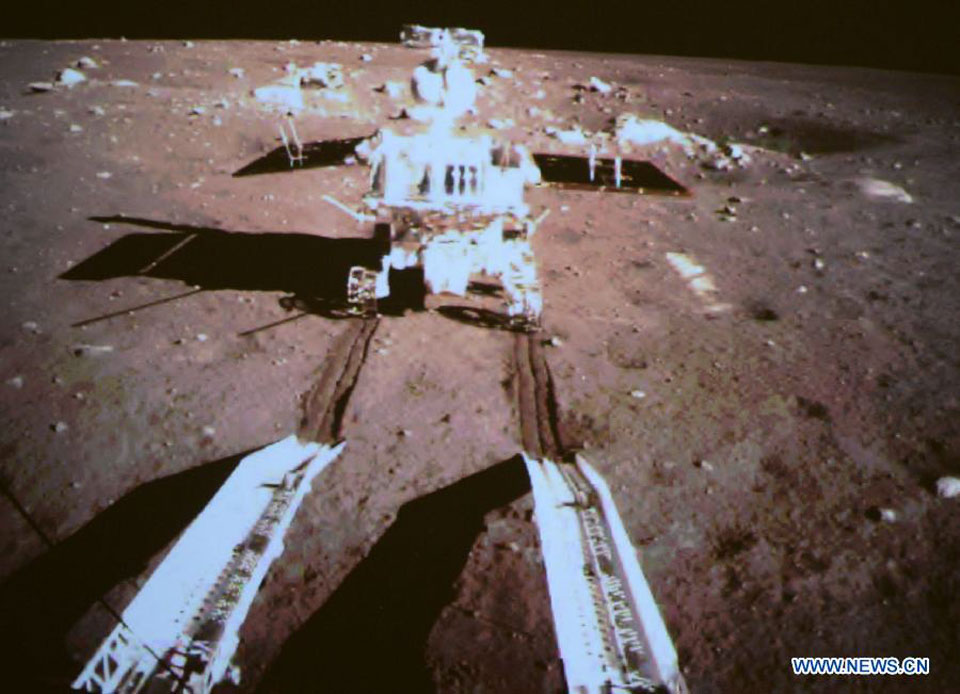
                      A new desk-sized rover has begun exploring the Moon. Launched two weeks ago by the Chinese National Space Administration, the Chang'e 3 spacecraft landed on the Moon yesterday and deployed the robotic rover. Yutu, named for a folklore lunar Jade Rabbit, has a scheduled three-month mission to explore several kilometers inside the Sinus Iridum (Latin for "Bay of Rainbows") impact crater. Yutu's cameras and spectrometers will investigate surface features and composition while ground penetrating radar will investigate deep soil structure. Chang'e 3 achieved the first soft Moon landing since the Soviet Union's Luna 24 in 1976, and Yutu is the first lunar rover deployed since the USSR's Lunokhod 2 in 1973. Pictured above, Yutu was imaged from its lander yesterday soon after rolling onto the Moon.
                      1st in Kommisar's 2009 SM Tournament
                      1st in I Love You`s 2009 New Year`s Tournament
                      3rd in EnR's Mashfest '08 tournament
                      5th in Phynx's Unofficial FFR Tournament
                      9th in D3 of the 2008-2009 4th Official FFR Tournament
                      10th in D5 of the 2010 5th Official FFR Tournament
                      10th in D6 of the 2011-2012 6th Official FFR Tournament

                      FMO AAA Count: 71
                      FGO AAA Count: 10

                      Bluearrowll = The Canadian player who can not detect awkward patterns. If it's awkward for most people, it's normal for Terry. If the file is difficult but super straight forward, he has issues. If he's AAAing a FGO but then heard that his favorite Hockey team was losing by a point, Hockey > FFR
                      PS: Cool AAA's Terry
                      - I Love You


                      An Alarm Clock's Haiku
                      beep beep beep beep beep
                      beep beep beep beep beep beep beep
                      beep beep beep beep beep
                      - ieatyourlvllol

                      Comment

                      • Bluearrowll
                        ⊙▃⊙
                        FFR Simfile Author
                        • Nov 2007
                        • 7376

                        #776
                        Re: Terry's Astronomy Thread.

                        What's in the sky tonight?
                        December 17, 2013
                        -The bright Moon shines in the dim Club of Orion this evening (for the Americas). No, the Moon doesn't always stay quite within the constellations of the zodiac. Lower left of the Moon is Jupiter, and lower right of it is Betelgeuse.

                        -The face of the sun is peppered with spots, but none of them is actively flaring. Solar activity is low on Dec. 17th.

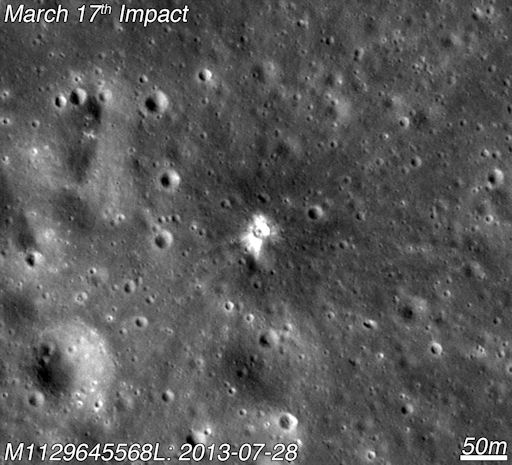
                        -Most craters on the Moon were formed millions or even billions of years ago. NASA's Lunar Reconnaisance Orbiter just found one, however, that is only 9 months old. On March 17, 2013, a bright flash of light emerged from Mare Imbrium, the Sea of Rains. Researchers concluded that a small asteroid about 0.4 meters wide hit the lunar surface and exploded like 5 tons of TNT. Here is the crater it made.

                        -Lunar Reconnaisance Orbiter's LROC camera photographed the crater in July when the spacecraft made a routine pass over the impact site. Subsequent analyses presented at last week's American Geophysical Union meeting linked the crater to the March 17th impact. According to the LROC photo, the crater is 18 meters (59 feet) wide. Together with the bright rays of fresh ejecta ringing the central gouge, the entire impact mark spans an area of lunar terrain half the size of an American football field.

                        -Unlike Earth, which has an atmosphere to protect it, the airless Moon is baldly exposed to incoming asteroids. NASA's Meteoroid Environment Office monitors the lunar surface for signs of ongoing impacts. Since 2005 they have detected flashes of light from more than 300 explosions. The March 17th event was the brightest they'd ever seen, 10 times more luminous than any other lunar meteor in the history of the program. LROC's detection of a crater in Mare Imbrium provides the kind of "ground truth" measurement they need to calibrate the entire dataset.


                        News Posted Today:
                        December 11, 2013
                        Comet ISON: What We've Learned


                        Astro Picture of the Day:
                        December 17, 2013

                        Source:
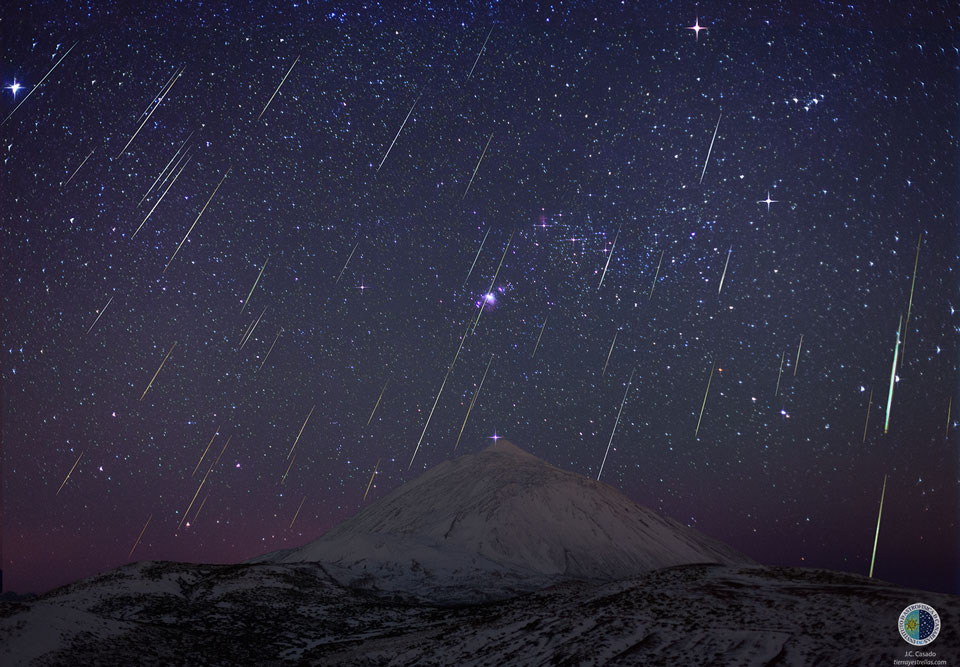
                        On some nights it rains meteors. Peaking two nights ago, asteroid dust streaked through the dark skies of Earth, showering down during the annual Geminids meteor shower. Astrophotographer Juan Carlos Casado captured the space weather event, as pictured above, in a series of exposures spanning about 2.3 hours using a wide angle lens. The snowcapped Teide volcano of the Canary Islands of Spain towers in the foreground, while the picturesque constellation of Orion highlights the background. The star appearing just near the top of the volcano is Rigel. Although the asteroid dust particles are traveling parallel to each other, the resulting meteor streaks appear to radiate from a single point on the sky, in this case in the constellation of Gemini, off the top of the image. Like train tracks appearing to converge in the distance, the meteor radiant effect is due to perspective. The astrophotographer has estimated that there are about 50 Geminids visible in the above composite image - how many do you see?
                        1st in Kommisar's 2009 SM Tournament
                        1st in I Love You`s 2009 New Year`s Tournament
                        3rd in EnR's Mashfest '08 tournament
                        5th in Phynx's Unofficial FFR Tournament
                        9th in D3 of the 2008-2009 4th Official FFR Tournament
                        10th in D5 of the 2010 5th Official FFR Tournament
                        10th in D6 of the 2011-2012 6th Official FFR Tournament

                        FMO AAA Count: 71
                        FGO AAA Count: 10

                        Bluearrowll = The Canadian player who can not detect awkward patterns. If it's awkward for most people, it's normal for Terry. If the file is difficult but super straight forward, he has issues. If he's AAAing a FGO but then heard that his favorite Hockey team was losing by a point, Hockey > FFR
                        PS: Cool AAA's Terry
                        - I Love You


                        An Alarm Clock's Haiku
                        beep beep beep beep beep
                        beep beep beep beep beep beep beep
                        beep beep beep beep beep
                        - ieatyourlvllol

                        Comment

                        • Bluearrowll
                          ⊙▃⊙
                          FFR Simfile Author
                          • Nov 2007
                          • 7376

                          #777
                          Re: Terry's Astronomy Thread.

                          What's in the sky tonight?
                          December 17, 2013
                          -The Moon and Jupiter shine together after they rise in early evening, with Pollux and Castor to their left. Although Jupiter looks close to the Moon, it's 1,600 times farther away.

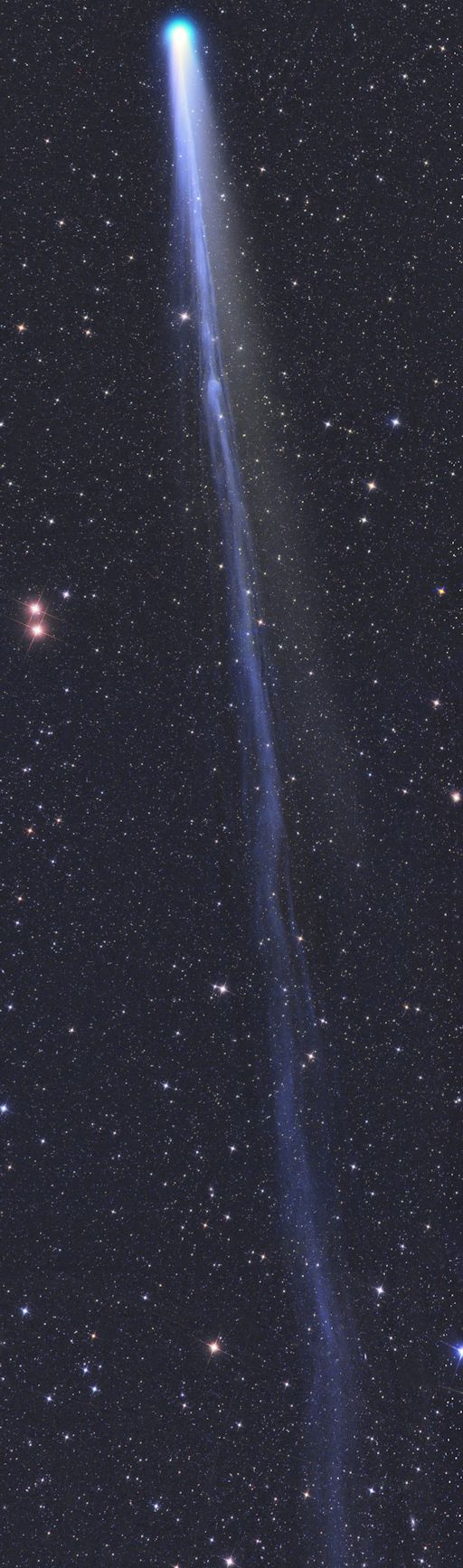
                          -Next week, Comet Lovejoy makes its closest approach to the sun. The comet's tail is already amazing. The image below taken by Gerald Rhemann of Jauerling, Austria, details its length. Filled with knots and eddies of dusty plasma, Lovejoy's tails stretches more than 20 degrees across the sky-long enough to overlap 40 full Moons or fill the Bowl of the Big Dipper twice. At closest approach to the sun or "perihelion" on Dec. 23rd, the comet will be just inside the orbit of Earth (0.82 AU). The extra heating it gets at perihelion will grow the tail even more.

                          Comet Lovejoy shines like a 4th magnitude star so it is barely visible to the unaided eye (especialy when the sky is filled with full moonlight). However, for backyard telescopes, the comet is a fairly easy target rising ahead of the sun in the eastern morning sky.


                          News Posted Today:
                          December 17, 2013
                          See Venus's Thin Crescent


                          Astro Picture of the Day:
                          December 18, 2013

                          Source:
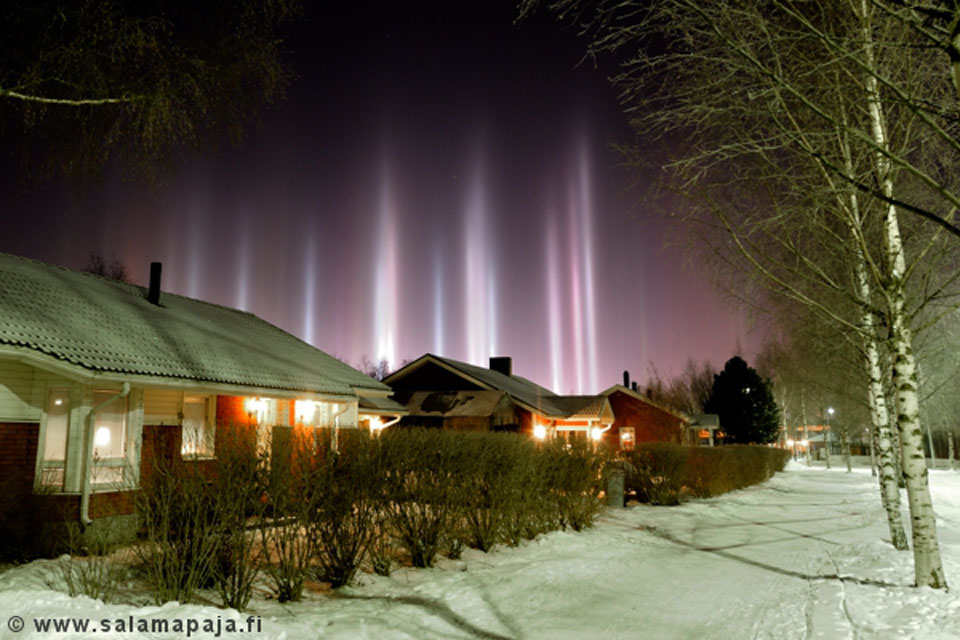
                          What's happening behind those houses? Pictured above are not aurora but nearby light pillars, a local phenomenon that can appear as a distant one. In most places on Earth, a lucky viewer can see a Sun-pillar, a column of light appearing to extend up from the Sun caused by flat fluttering ice-crystals reflecting sunlight from the upper atmosphere. Usually these ice crystals evaporate before reaching the ground. During freezing temperatures, however, flat fluttering ice crystals may form near the ground in a form of light snow, sometimes known as a crystal fog. These ice crystals may then reflect ground lights in columns not unlike a Sun-pillar. While going out to buy cat food, a quick thinking photographer, Thomas Kast, captured the above light pillars extending up from bright parking lot lights in Oulu, Finland.
                          1st in Kommisar's 2009 SM Tournament
                          1st in I Love You`s 2009 New Year`s Tournament
                          3rd in EnR's Mashfest '08 tournament
                          5th in Phynx's Unofficial FFR Tournament
                          9th in D3 of the 2008-2009 4th Official FFR Tournament
                          10th in D5 of the 2010 5th Official FFR Tournament
                          10th in D6 of the 2011-2012 6th Official FFR Tournament

                          FMO AAA Count: 71
                          FGO AAA Count: 10

                          Bluearrowll = The Canadian player who can not detect awkward patterns. If it's awkward for most people, it's normal for Terry. If the file is difficult but super straight forward, he has issues. If he's AAAing a FGO but then heard that his favorite Hockey team was losing by a point, Hockey > FFR
                          PS: Cool AAA's Terry
                          - I Love You


                          An Alarm Clock's Haiku
                          beep beep beep beep beep
                          beep beep beep beep beep beep beep
                          beep beep beep beep beep
                          - ieatyourlvllol

                          Comment

                          • gold stinger
                            Signature Extraordinare~~
                            Event Staff
                            Game Manager
                            FFR Simfile Author
                            FFR Music Producer
                            • Jan 2007
                            • 6428

                            #778
                            Re: Terry's Astronomy Thread.

                            still appreciating the dedication in this thread. Just to let you know, I've been following this thread for the past couple of months, but don't really post anything.
                            Originally posted by YoshL
                            butts.


                            - Tosh 2014


                            Comment

                            • Bluearrowll
                              ⊙▃⊙
                              FFR Simfile Author
                              • Nov 2007
                              • 7376

                              #779
                              Re: Terry's Astronomy Thread.

                              I appreciate the comments - I'm sure there's many other people in the same boat, this thread seems to be averaging 60 views a day now which is awesome. Has anyone noticed performance issues with the first page though, does it take awhile to load?

                              What's in the sky tonight?
                              December 19, 2013
                              -Once the waning gibbous Moon rises after dinnertime, you'll find Jupiter above it, Pollux and Castor left of Jupiter, and Procyon to the Moon's right or lower right. Much farther right of Procyon, watch for brilliant Sirius coming up.

                              -Jupiter (magnitude –2.7, in Gemini) rises in the east-northeast around the end of twilight, with Pollux and Castor to its left. It blazes highest around 1 or 2 a.m. In a telescope Jupiter has grown to a big 46 arcseconds wide as it nears its January 5th opposition.

                              News Posted Today:
                              December 19, 2013
                              Gaia Launches to Pinpoint a Billion Stars


                              Astro Picture of the Day:
                              December 19, 2013

                              Source:
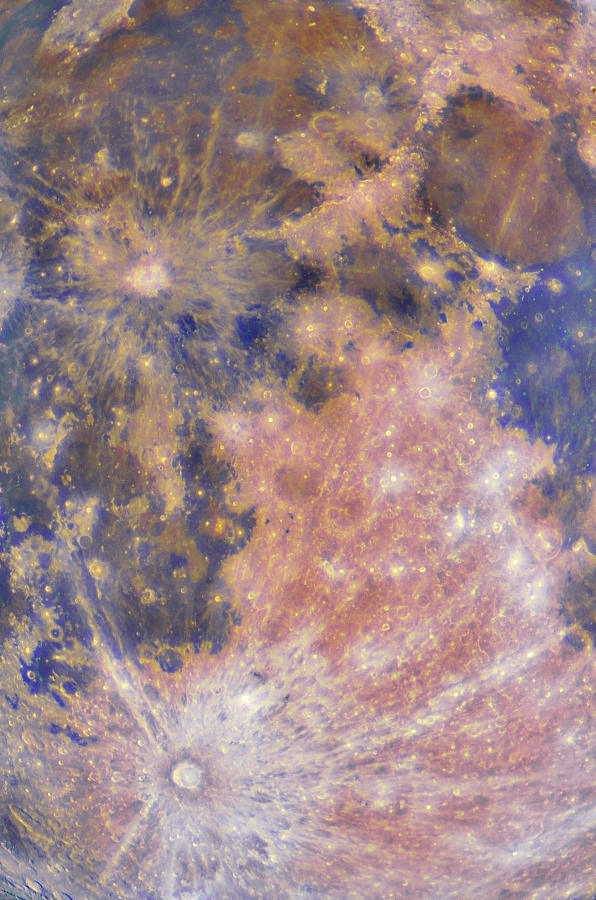
                              The Moon is normally seen in subtle shades of grey or yellow. But small, measurable color differences have been greatly exaggerated to make this telescopic, multicolored, moonscape captured during the Moon's full phase. The different colors are recognized to correspond to real differences in the chemical makeup of the lunar surface. Blue hues reveal titanium rich areas while orange and purple colors show regions relatively poor in titanium and iron. The familiar Sea of Tranquility, or Mare Tranquillitatis, is the blue area in the upper right corner of the frame. White lines radiate across the orange-hued southern lunar highlands from 85 kilometer wide ray crater Tycho at bottom left. Above it, darker rays from crater Copernicus extend into the Sea of Rains (Mare Imbrium) at the upper left. Calibrated by rock samples from the Apollo missions, similar multicolor images from spacecraft have been used to explore the Moon's global surface composition.
                              1st in Kommisar's 2009 SM Tournament
                              1st in I Love You`s 2009 New Year`s Tournament
                              3rd in EnR's Mashfest '08 tournament
                              5th in Phynx's Unofficial FFR Tournament
                              9th in D3 of the 2008-2009 4th Official FFR Tournament
                              10th in D5 of the 2010 5th Official FFR Tournament
                              10th in D6 of the 2011-2012 6th Official FFR Tournament

                              FMO AAA Count: 71
                              FGO AAA Count: 10

                              Bluearrowll = The Canadian player who can not detect awkward patterns. If it's awkward for most people, it's normal for Terry. If the file is difficult but super straight forward, he has issues. If he's AAAing a FGO but then heard that his favorite Hockey team was losing by a point, Hockey > FFR
                              PS: Cool AAA's Terry
                              - I Love You


                              An Alarm Clock's Haiku
                              beep beep beep beep beep
                              beep beep beep beep beep beep beep
                              beep beep beep beep beep
                              - ieatyourlvllol

                              Comment

                              • Bluearrowll
                                ⊙▃⊙
                                FFR Simfile Author
                                • Nov 2007
                                • 7376

                                #780
                                Re: Terry's Astronomy Thread.

                                What's in the sky tonight?
                                December 20, 2013
                                -This evening, use a telescope to watch Io disappear into eclipse by the shadow of Jupiter around 9:15 p.m. Eastern Standard Time, barely off Jupiter's western limb. Forty-five minutes later, Ganymede emerges onto dark sky in front of Jupiter's western limb. Then around 11:23 p.m. EST, the Great Red Spot (strong orange this season) transits Jupiter's central meridian.

                                -The northern winter solstice is only one day away. In the Netherlands that means it's time to open up a beer can and look inside. Every six months, Jan Koeman of Zierikzee, the Netherlands, deploys a beer-can solargraph to record the progress of seasons, solstice to solstice. On Dec. 18th he cracked his open and below is what he saw. "I made a solargraph using an empty beer tin with a pinhole and photographic paper inside," explains Koeman. "The exposure time is 6 months!"

                                The highest arcs were traced by the summer sun ofJune 2013. The lowest arc was made by the sun on Dec. 18th, just three days before the 2013 winter solstice. Occasional gaps are caused by clouds.

                                "This year I placed my solargraph high and safe on an old Dutch windmill," continues Koeman. "The miller is always busy and we have a lot of wind here, so the spinning wings of the mill are barely visible in the photo."

                                Northern winter begins on Dec. 21st at 17:11 UT. Now is the perfect time to deploy your own beer-can solargraph for the next six months.Soda cans work, too. Want to know how you can build one? Consult these walkthroughs:

                                So recently as an attempt to further branch out in my hobby that is photography, I stumbled upon an interesting kind of pinhole camera: a solargraph. A solargraph is a pinhole camera designed to cr…


                                Astro Picture of the Day:
                                December 20, 2013

                                Source:
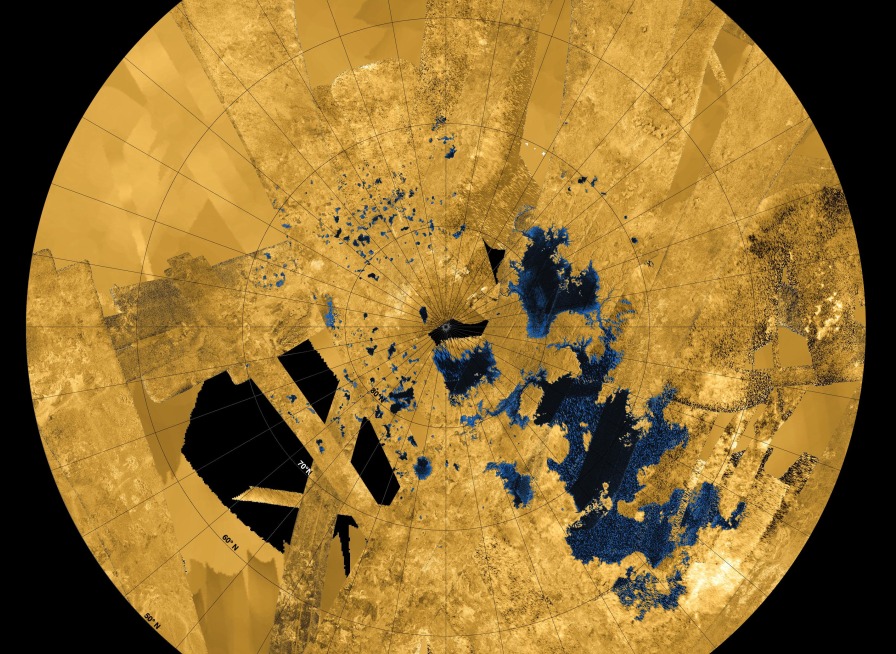
                                Saturn's large moon Titan would be unique in our solar system, the only world with stable liquid lakes and seas on its surface ... except for planet Earth of course. Centered on the north pole, this colorized map shows Titan's bodies of methane and ethane in blue and black, still liquid at frigid surface temperatures of -180 degrees C (-292 degrees F). The map is based on data from the Cassini spacecraft's radar, taken during flybys between 2004 and 2013. Roughly heart-shaped, the lake above and right of the pole is Ligeia Mare, the second largest known body of liquid on Titan and larger than Lake Superior on Earth. Just below the north pole is Punga Mare. The sprawling sea below and right of Punga is the (hopefully sleeping) Kraken Mare, Titan's largest known sea. Above and left of the pole, the moon's surface is dotted with smaller lakes that range up to 50 kilometers across.
                                1st in Kommisar's 2009 SM Tournament
                                1st in I Love You`s 2009 New Year`s Tournament
                                3rd in EnR's Mashfest '08 tournament
                                5th in Phynx's Unofficial FFR Tournament
                                9th in D3 of the 2008-2009 4th Official FFR Tournament
                                10th in D5 of the 2010 5th Official FFR Tournament
                                10th in D6 of the 2011-2012 6th Official FFR Tournament

                                FMO AAA Count: 71
                                FGO AAA Count: 10

                                Bluearrowll = The Canadian player who can not detect awkward patterns. If it's awkward for most people, it's normal for Terry. If the file is difficult but super straight forward, he has issues. If he's AAAing a FGO but then heard that his favorite Hockey team was losing by a point, Hockey > FFR
                                PS: Cool AAA's Terry
                                - I Love You


                                An Alarm Clock's Haiku
                                beep beep beep beep beep
                                beep beep beep beep beep beep beep
                                beep beep beep beep beep
                                - ieatyourlvllol

                                Comment

                                Working...