Terry's Astronomy Thread.

Collapse
X
 
  • Time
  • Show
Clear All
new posts
  • Snowcrafta
    V's beta-male entourage
    • May 2005
    • 2873

    #901
    Re: Terry's Astronomy Thread.

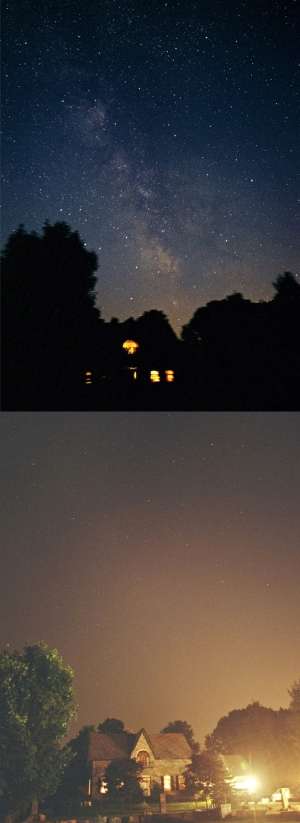
    After living in a city for 3 years and seeing that picture of the sky in Honolulu, I can understand why people are so enamored with the stars, especially in the past before light pollution.

    Those pictures are way gorgeous

    Comment

    • Bluearrowll
      ⊙▃⊙
      FFR Simfile Author
      • Nov 2007
      • 7376

      #902
      Re: Terry's Astronomy Thread.

      I think people largely underestimate the extent of how much light pollution blocks the night sky and makes things unnaturally brighter. In 2003 there was a blackout that killed power to all of Toronto plus significant parts of the north east United States. It was a clear night that night, and fortunately someone managed to take a before and after of what the sky looked like that night in the city. The results speak for themselves:


      A large portion of light pollution would be blocked if cities changed their streetlights to a design that focused light downward rather than everywhere. Consider this:


      With a design that focuses light downward, you can achieve the same level of luminosity on the ground with a smaller wattage, saving money + making the sky a little bit darker. If you'd like to read a little bit on why this makes sense, this is a great paper explaining how it works:


      Daily Suspicious0bserver's Weather Post:
      April 13, 2014


      What's in the sky tonight?
      April 13, 2014
      -Vesta, the brightest asteroid, is at opposition. Ceres, the biggest asteroid, is just 2˝° from Vesta and only 2 days from opposition. They're in Virgo, easy in binoculars at magnitudes 5.8 and 7.0, respectively.

      -On the morning of April 15th, there will be a total eclipse of the Moon visible from Australia, New Zealand, and all of the Americas. The action begins on Tuesday at 2 AM Eastern time. Information can be found here: http://science.nasa.gov/science-news.../27mar_tetrad/

      News Posted Today:
      April 10, 2014
      April’s Total Eclipse of the Moon


      Astro Picture of the Day:
      April 13, 2014

      Source:
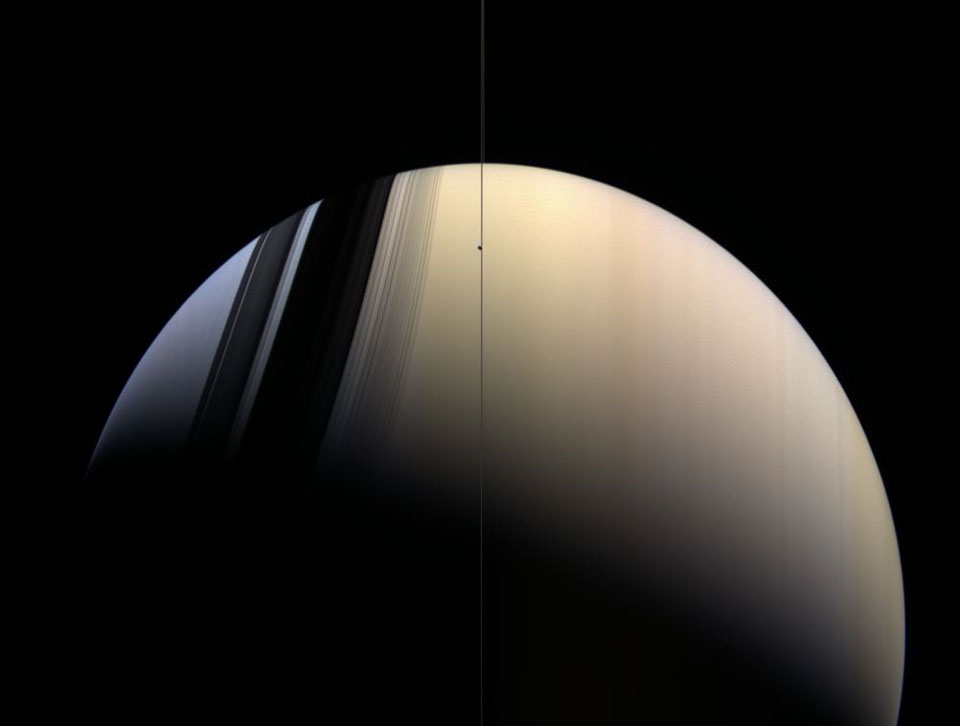
      Why is Saturn partly blue? The above picture of Saturn approximates what a human would see if hovering close to the giant ringed world. The above picture was taken in 2006 March by the robot Cassini spacecraft now orbiting Saturn. Here Saturn's majestic rings appear directly only as a thin vertical line. The rings show their complex structure in the dark shadows they create on the image left. Saturn's fountain moon Enceladus, only about 500 kilometers across, is seen as the bump in the plane of the rings. The northern hemisphere of Saturn can appear partly blue for the same reason that Earth's skies can appear blue -- molecules in the cloudless portions of both planet's atmospheres are better at scattering blue light than red. When looking deep into Saturn's clouds, however, the natural gold hue of Saturn's clouds becomes dominant. It is not known why southern Saturn does not show the same blue hue -- one hypothesis holds that clouds are higher there. It is also not known why Saturn's clouds are colored gold.
      1st in Kommisar's 2009 SM Tournament
      1st in I Love You`s 2009 New Year`s Tournament
      3rd in EnR's Mashfest '08 tournament
      5th in Phynx's Unofficial FFR Tournament
      9th in D3 of the 2008-2009 4th Official FFR Tournament
      10th in D5 of the 2010 5th Official FFR Tournament
      10th in D6 of the 2011-2012 6th Official FFR Tournament

      FMO AAA Count: 71
      FGO AAA Count: 10

      Bluearrowll = The Canadian player who can not detect awkward patterns. If it's awkward for most people, it's normal for Terry. If the file is difficult but super straight forward, he has issues. If he's AAAing a FGO but then heard that his favorite Hockey team was losing by a point, Hockey > FFR
      PS: Cool AAA's Terry
      - I Love You


      An Alarm Clock's Haiku
      beep beep beep beep beep
      beep beep beep beep beep beep beep
      beep beep beep beep beep
      - ieatyourlvllol

      Comment

      • Bluearrowll
        ⊙▃⊙
        FFR Simfile Author
        • Nov 2007
        • 7376

        #903
        Re: Terry's Astronomy Thread.

        Daily Suspicious0bserver's Weather Post:
        April 14, 2014


        What's in the sky tonight?
        April 14, 2014
        -A total lunar eclipse happens very late tonight for the Americas. The mainstream media is abuzz with reports of a "blood moon" on Tuesday morning. The scientific term is "lunar eclipse." On April 15th at 6 minutes past midnight Pacific Time (3:06 a.m Eastern Time), the Moon will enter the sunset-colored colored shadow of Earth, producing a total eclipse of the Moon. The color of Earth's shadow, and thus the color of the eclipsed Moon, depends substantially on the amount of volcanic ash and other aerosols floating in the stratosphere. According to atmospheric sciences professor Richard Keen of the University of Colorado, the stratosphere is clear. This means the eclipse will be not "blood red," but rather bright orange.

        See for yourself. The event will be visible from Australia, New Zealand, and all of the Americas. It's so bright, even observers in light-polluted cities will have no trouble enjoying the show. Got clouds? No problem. The event will be broadcast live on the web by the Coca-Cola Science Center at Columbus State University in Georgia. http://www.ccssc.org/webcast.html

        -Meanwhile Mars shines near the Moon all night, and Mars is at its closest to Earth tonight. And in addition, Spica shines much closer to the Moon than Mars does (for the Americas).


        Astro Picture of the Day:
        April 14, 2014

        Source:
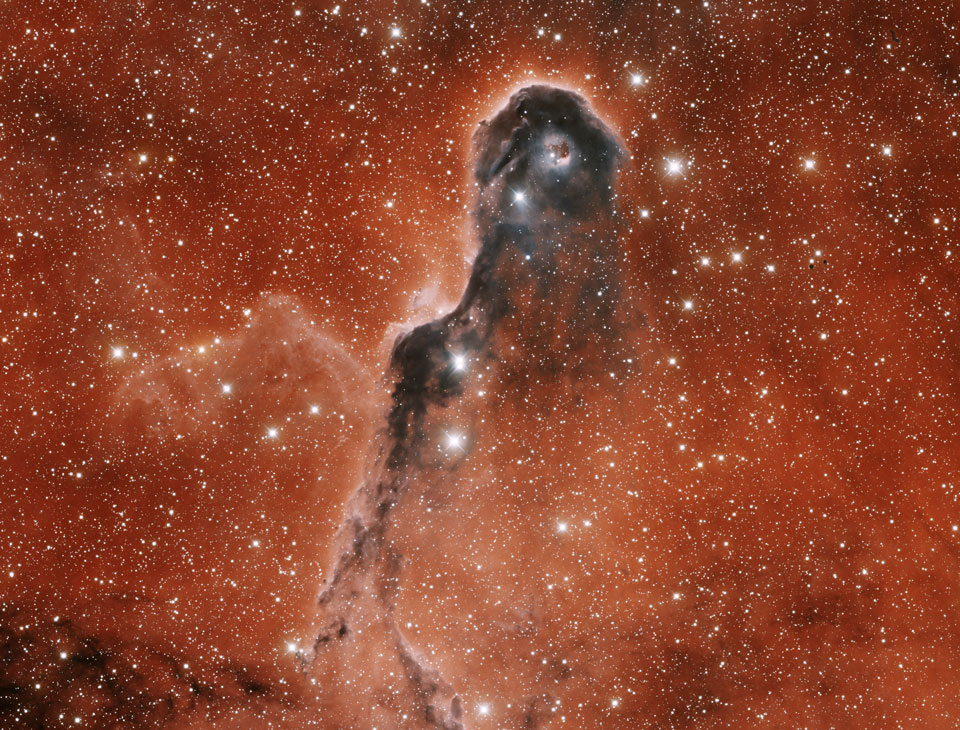
        Is there a monster in IC 1396? Known to some as the Elephant's Trunk Nebula, parts of gas and dust clouds of this star formation region may appear to take on foreboding forms, some nearly human. The only real monster here, however, is a bright young star too far from Earth to hurt us. Energetic light from this star is eating away the dust of the dark cometary globule near the top of the above image. Jets and winds of particles emitted from this star are also pushing away ambient gas and dust. Nearly 3,000 light-years distant, the relatively faint IC 1396 complex covers a much larger region on the sky than shown here, with an apparent width of more than 10 full moons.
        1st in Kommisar's 2009 SM Tournament
        1st in I Love You`s 2009 New Year`s Tournament
        3rd in EnR's Mashfest '08 tournament
        5th in Phynx's Unofficial FFR Tournament
        9th in D3 of the 2008-2009 4th Official FFR Tournament
        10th in D5 of the 2010 5th Official FFR Tournament
        10th in D6 of the 2011-2012 6th Official FFR Tournament

        FMO AAA Count: 71
        FGO AAA Count: 10

        Bluearrowll = The Canadian player who can not detect awkward patterns. If it's awkward for most people, it's normal for Terry. If the file is difficult but super straight forward, he has issues. If he's AAAing a FGO but then heard that his favorite Hockey team was losing by a point, Hockey > FFR
        PS: Cool AAA's Terry
        - I Love You


        An Alarm Clock's Haiku
        beep beep beep beep beep
        beep beep beep beep beep beep beep
        beep beep beep beep beep
        - ieatyourlvllol

        Comment

        • Bluearrowll
          ⊙▃⊙
          FFR Simfile Author
          • Nov 2007
          • 7376

          #904
          Re: Terry's Astronomy Thread.

          Daily Suspicious0bserver's Weather Post:
          April 15, 2014


          What's in the sky tonight?
          April 15, 2014
          -After dark, look east for the lineup of Mars, Spica, and the just-past-full Moon, in that order from top down.

          -NASA's Cassini spacecraft has photographed a small icy object forming at the edge of Saturn's rings. Informally named "Peggy," it may be a new moon caught in the act of genesis.

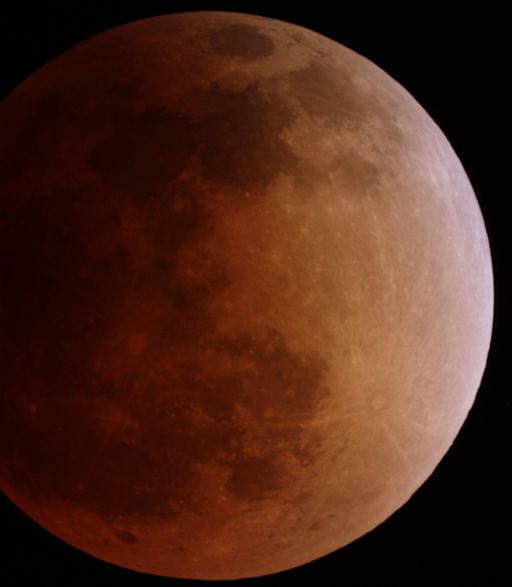
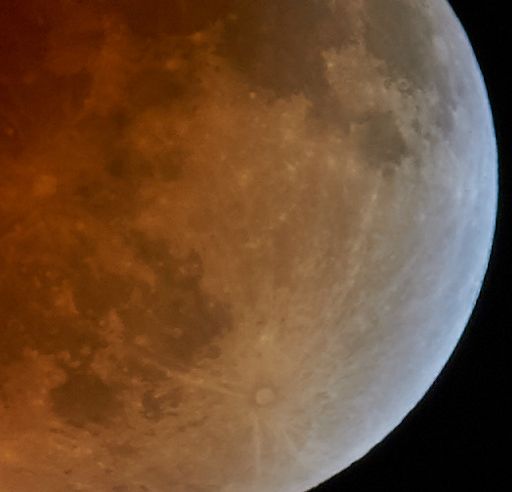
          -During the early hours of April 15th, the Moon spent more than three hours gliding through the shadow of Earth. The Moon turned red during the transit because the core of our planet's shadow is red.

          Why red? A quick trip to the Moon provides the answer: Imagine yourself standing on a dusty lunar plain looking up at the sky. Overhead hangs Earth, nightside down, completely hiding the sun behind it. The eclipse is underway.

          You might expect Earth seen in this way to be utterly dark, but it's not. The rim of the planet is on fire! As you scan your eye around Earth's circumference, you're seeing every sunrise and every sunset in the world, all of them, all at once. This incredible light beams into the heart of Earth's shadow, filling it with a coppery glow and transforming the Moon into a great red orb.


          Astro Picture of the Day:
          April 15, 2014

          Source:
          NASA's Cassini spacecraft has documented the formation of a small icy object within the rings of Saturn that may be a new moon, and may also provide clues to the formation of the planet's known moons.

          Images taken with Cassini's narrow angle camera on April 15, 2013, show disturbances at the very edge of Saturn's A ring -- the outermost of the planet's large, bright rings. One of these disturbances is an arc about 20 percent brighter than its surroundings, 750 miles (1,200 kilometers) long and 6 miles (10 kilometers) wide. Scientists also found unusual protuberances in the usually smooth profile at the ring's edge. Scientists believe the arc and protuberances are caused by the gravitational effects of a nearby object. Details of the observations were published online today (April 14, 2014) by the journal Icarus.

          The object is not expected to grow any larger, and may even be falling apart. But the process of its formation and outward movement aids in our understanding of how Saturn's icy moons, including the cloud-wrapped Titan and ocean-holding Enceladus, may have formed in more massive rings long ago. It also provides insight into how Earth and other planets in our solar system may have formed and migrated away from our star, the sun.

          "We have not seen anything like this before," said Carl Murray of Queen Mary University of London, the report's lead author. "We may be looking at the act of birth, where this object is just leaving the rings and heading off to be a moon in its own right."

          The object, informally named Peggy, is too small to be seen in images so far. Scientists estimate it is probably no more than about a half mile (about a kilometer) in diameter. Saturn's icy moons range in size depending on their proximity to the planet -- the farther from the planet, the larger. And many of Saturn's moons are composed primarily of ice, as are the particles that form Saturn's rings. Based on these facts, and other indicators, researchers recently proposed that the icy moons formed from ring particles and then moved outward, away from the planet, merging with other moons on the way.
          1st in Kommisar's 2009 SM Tournament
          1st in I Love You`s 2009 New Year`s Tournament
          3rd in EnR's Mashfest '08 tournament
          5th in Phynx's Unofficial FFR Tournament
          9th in D3 of the 2008-2009 4th Official FFR Tournament
          10th in D5 of the 2010 5th Official FFR Tournament
          10th in D6 of the 2011-2012 6th Official FFR Tournament

          FMO AAA Count: 71
          FGO AAA Count: 10

          Bluearrowll = The Canadian player who can not detect awkward patterns. If it's awkward for most people, it's normal for Terry. If the file is difficult but super straight forward, he has issues. If he's AAAing a FGO but then heard that his favorite Hockey team was losing by a point, Hockey > FFR
          PS: Cool AAA's Terry
          - I Love You


          An Alarm Clock's Haiku
          beep beep beep beep beep
          beep beep beep beep beep beep beep
          beep beep beep beep beep
          - ieatyourlvllol

          Comment

          • Bluearrowll
            ⊙▃⊙
            FFR Simfile Author
            • Nov 2007
            • 7376

            #905
            Re: Terry's Astronomy Thread.

            Daily Suspicious0bserver's Weather Post:
            April 16, 2014


            What's in the sky tonight?
            April 16, 2014
            -The waning gibbous Moon rises soon after dark with Saturn hanging right close by. Watch them cross the sky together for the rest of the night. The Moon occults (covers) Saturn for southern South America. Click the link to see if your city will be in view to watch the show.


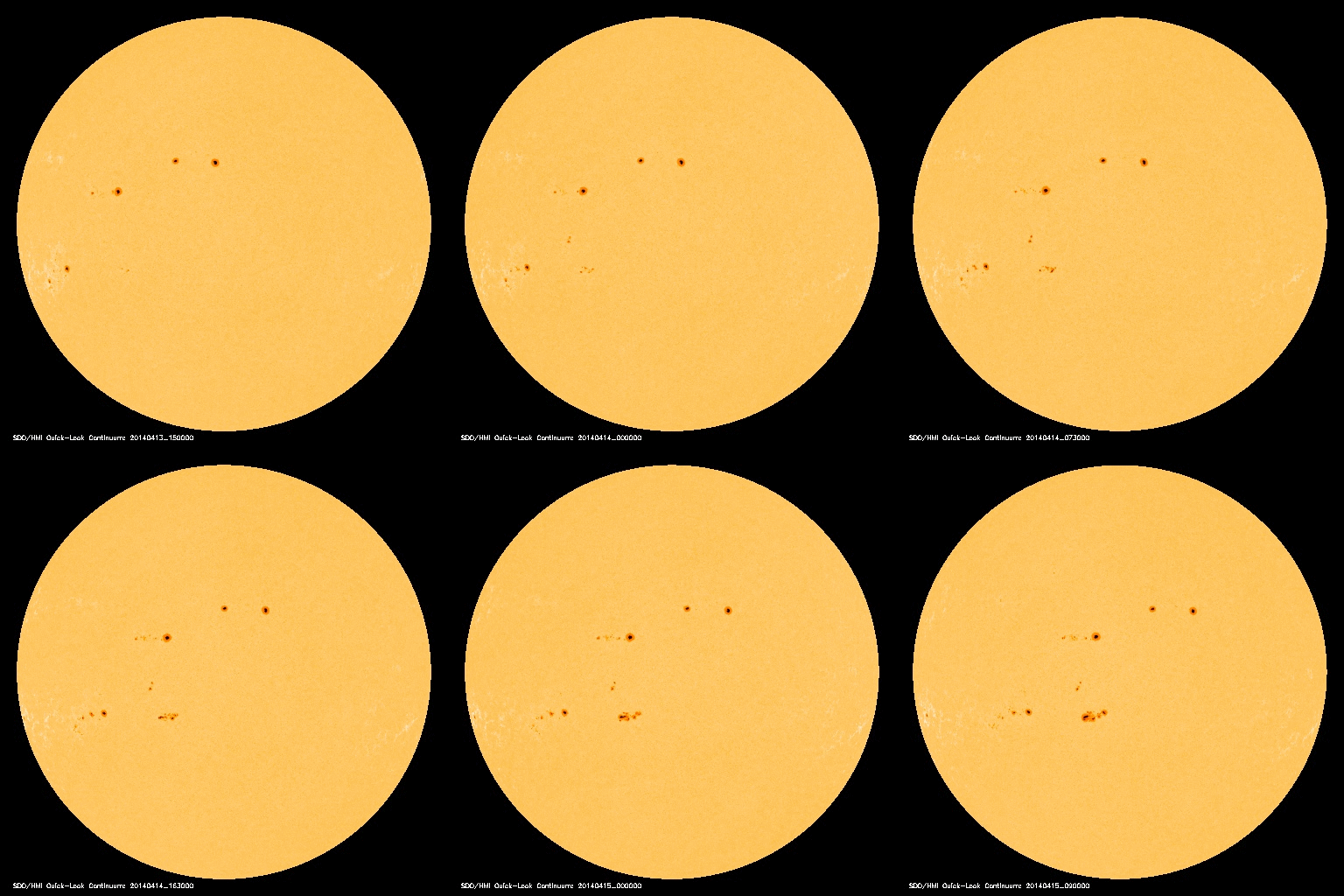
            -Scarcely 24 hours ago, sunspot AR2036 didn't exist. Now it is three times as wide as the planet Earth. Click to view a movie from the Solar Dynamics Observatory showing the sunspot's almost-explosive growth. This new sunspot has a beta-gamma magnetic field that harbors energy for M-class solar flares, Earth-directed because the sunspot is almost directly facing our planet. The region's rapid growth could destabilize the field, making an eruption even more likely. NOAA forecasters estimate a 35% chance of M-flares and a 5% chance of X-flares.


            Astro Picture of the Day:
            April 16, 2014

            Source:
            A beautiful, reddened Moon slid through dark skies on April 15, completely immersed in Earth's shadow for well over an hour. It was the year's first total lunar eclipse and was widely enjoyed over the planet's Western Hemisphere. Seen from the Caribbean island of Barbados, the dimmed lunar disk is captured during totality in this colorful skyview. The dark Moon's red color contrasts nicely with bright bluish star Spica, alpha star of the constellation Virgo, posing only about two degrees away. Brighter than Spica and about 10 degrees from the Moon on the right, Mars is near opposition and closest approach to Earth. The Red Planet's own ruddy hue seems to echo the color of the eclipsed Moon.
            1st in Kommisar's 2009 SM Tournament
            1st in I Love You`s 2009 New Year`s Tournament
            3rd in EnR's Mashfest '08 tournament
            5th in Phynx's Unofficial FFR Tournament
            9th in D3 of the 2008-2009 4th Official FFR Tournament
            10th in D5 of the 2010 5th Official FFR Tournament
            10th in D6 of the 2011-2012 6th Official FFR Tournament

            FMO AAA Count: 71
            FGO AAA Count: 10

            Bluearrowll = The Canadian player who can not detect awkward patterns. If it's awkward for most people, it's normal for Terry. If the file is difficult but super straight forward, he has issues. If he's AAAing a FGO but then heard that his favorite Hockey team was losing by a point, Hockey > FFR
            PS: Cool AAA's Terry
            - I Love You


            An Alarm Clock's Haiku
            beep beep beep beep beep
            beep beep beep beep beep beep beep
            beep beep beep beep beep
            - ieatyourlvllol

            Comment

            • Bluearrowll
              ⊙▃⊙
              FFR Simfile Author
              • Nov 2007
              • 7376

              #906
              Re: Terry's Astronomy Thread.

              Daily Suspicious0bserver's Weather Post:
              April 17, 2014


              What's in the sky tonight?
              April 17, 2014
              -Ganymede, the largest satellite of Jupiter, emerges from behind Jupiter's eastern limb around 10:18 p.m. Eastern Daylight Time. It disappears into eclipse by Jupiter's shadow around 12:06 a.m. EDT, then reappears around 3:29 a.m. EDT.

              -NASA's AIM spacecraft is discovering surprising "teleconnections" in Earth's atmosphere that link weather and climate across vast distances. Strange but true: The ground temperature in Indianapolis is correlated with the frequency of noctilucent clouds over Antarctica. NASA story: http://science.nasa.gov/science-news...leconnections/

              -Lunar eclipses are supposed to be red, yet when the Moon passed through Earth's amber shadow on April 15th, many observers witnessed a softly-glowing band of turquoise blue. Robert and Elisabeth Slobins send this picture of the phenomenon from Fort Myers, Florida. The source of the turquoise is ozone. Prof. Richard Keen, an atmospheric scientist from the University of Colorado explains: "During a lunar eclipse, most of the light illuminating the Moon passes through the stratosphere, and is reddened by scattering. However, light passing through the upper stratosphere penetrates the ozone layer, which absorbs red light and actually makes the passing light ray bluer!" This can be seen, he says, as a turquoise fringe around the red.

              For years, Keen has been using lunar eclipses to probe the transparency of the stratosphere. When the stratosphere is clogged with volcanic ash and other aerosols, lunar eclipses tend to be dark red. The bright orange color of the April 15th eclipse, along with the ready visibility of the turquoise fringe, suggests that the stratosphere is clear. This is a key finding for climate change models.


              Astro Picture of the Day:
              April 17, 2014

              Source:
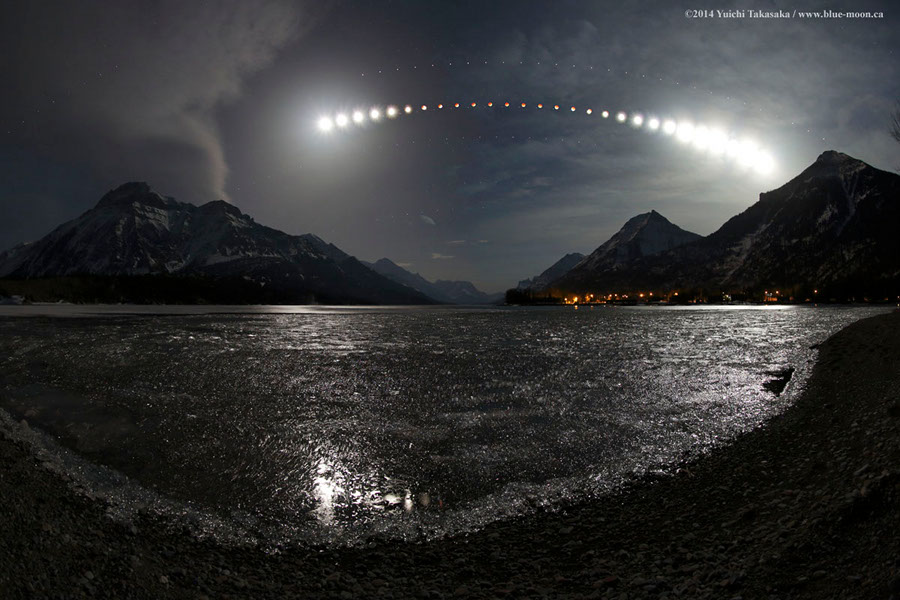
              Recorded on April 15th, this total lunar eclipse sequence looks south down icy Waterton Lake from the Waterton Lakes National Park in Alberta, Canada, planet Earth. The most distant horizon includes peaks in Glacier National Park, USA. An exposure every 10 minutes captured the Moon's position and eclipse phase, as it arced, left to right, above the rugged skyline and Waterton town lights. In fact, the sequence effectively measures the roughly 80 minute duration of the total phase of the eclipse. Around 270 BC, the Greek astronomer Aristarchus also measured the duration of lunar eclipses - though probably without the benefit of digital clocks and cameras. Still, using geometry, he devised a simple and impressively accurate way to calculate the Moon's distance, in terms of the radius of planet Earth, from the eclipse duration. This modern eclipse sequence also tracks the successive positions of Mars, above and right of the Moon, bright star Spica next to the reddened lunar disk, and Saturn to the left and below.
              1st in Kommisar's 2009 SM Tournament
              1st in I Love You`s 2009 New Year`s Tournament
              3rd in EnR's Mashfest '08 tournament
              5th in Phynx's Unofficial FFR Tournament
              9th in D3 of the 2008-2009 4th Official FFR Tournament
              10th in D5 of the 2010 5th Official FFR Tournament
              10th in D6 of the 2011-2012 6th Official FFR Tournament

              FMO AAA Count: 71
              FGO AAA Count: 10

              Bluearrowll = The Canadian player who can not detect awkward patterns. If it's awkward for most people, it's normal for Terry. If the file is difficult but super straight forward, he has issues. If he's AAAing a FGO but then heard that his favorite Hockey team was losing by a point, Hockey > FFR
              PS: Cool AAA's Terry
              - I Love You


              An Alarm Clock's Haiku
              beep beep beep beep beep
              beep beep beep beep beep beep beep
              beep beep beep beep beep
              - ieatyourlvllol

              Comment

              • Bluearrowll
                ⊙▃⊙
                FFR Simfile Author
                • Nov 2007
                • 7376

                #907
                Re: Terry's Astronomy Thread.

                Daily Suspicious0bserver's Weather Post:
                April 18, 2014


                What's in the sky tonight?
                April 18, 2014
                -Jupiter shines right under the big Arch of Spring this year. The Arch spans much of the western sky. Pollux and Castor form its top (as seen from mid-northern latitudes). To their lower left is one end of the Arch, Procyon, and farther to their lower right is the other end, Capella.

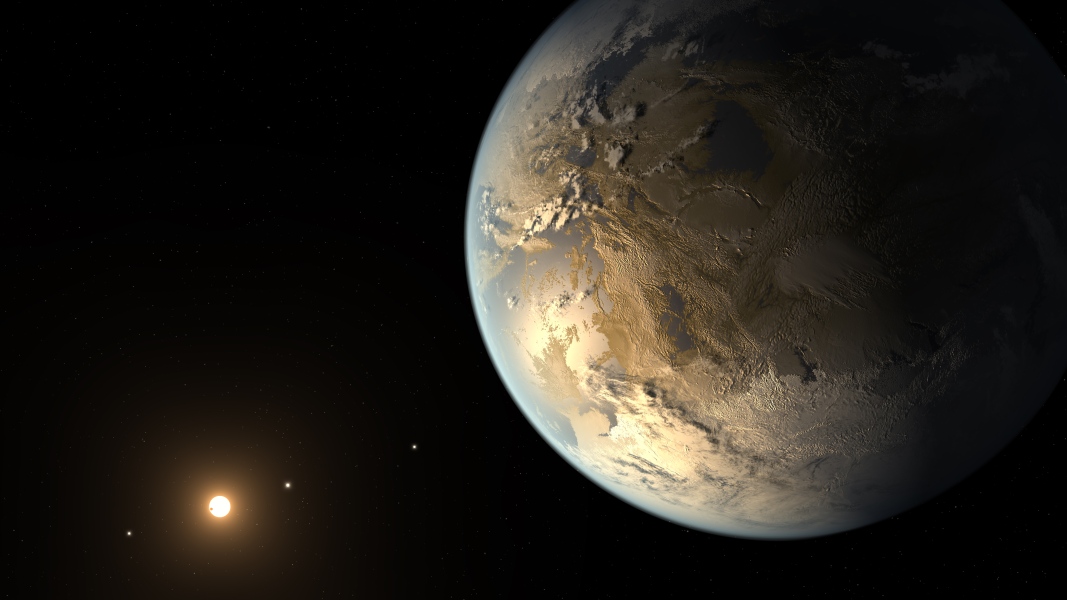
                -Using NASA's Kepler Space Telescope, astronomers have discovered the first Earth-size planet orbiting in the "habitable zone" of another star. The planet, named "Kepler-186f" orbits an M dwarf, or red dwarf, a class of stars that makes up 70 percent of the stars in the Milky Way.


                Astro Picture of the Day:
                April 18, 2014

                Source:
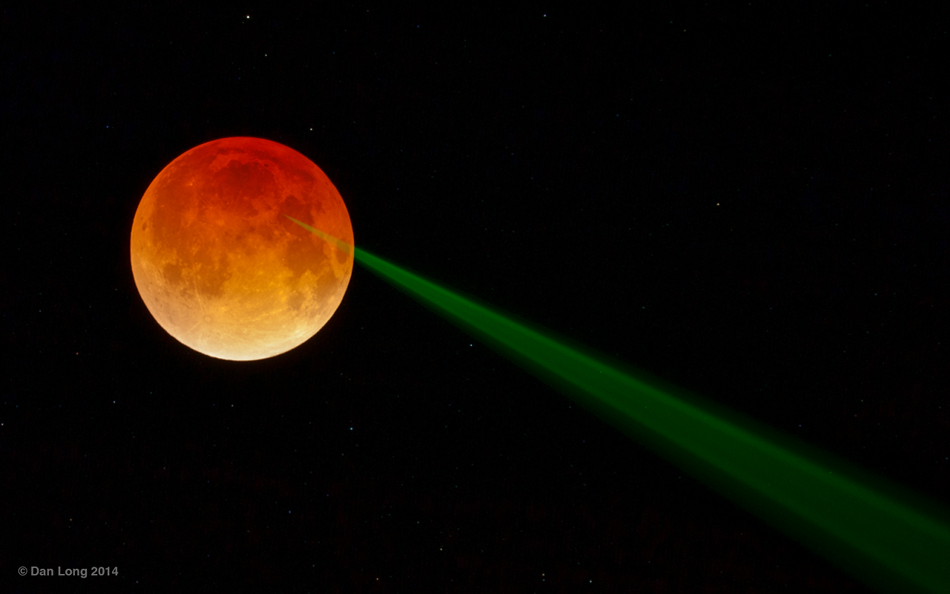
                This is not a scene from a sci-fi special effects movie. The green beam of light and red lunar disk are real enough, captured in the early morning hours of April 15. Of course, the reddened lunar disk is easy to explain as the image was taken during this week's total lunar eclipse. Immersed in shadow, the eclipsed Moon reflects the dimmed reddened light of all the sunsets and sunrises filtering around the edges of planet Earth, seen in silhouette from a lunar perspective. But the green beam of light really is a laser. Shot from the 3.5-meter telescope at Apache Point Observatory in southern New Mexico, the beam's path is revealed as Earth's atmosphere scatters some of the intense laser light. The laser's target is the Apollo 15 retroreflector, left on the Moon by the astronauts in 1971. By determining the light travel time delay of the returning laser pulse, the experimental team from UC San Diego is able to measure the Earth-Moon distance to millimeter precision and provide a test of General Relativity, Einstein's theory of gravity. Conducting the lunar laser ranging experiment during a total eclipse uses the Earth like a cosmic light switch. With direct sunlight blocked, the reflector's performance is improved over performance when illuminated by sunlight during a normal Full Moon, an effect fondly known as The Full Moon Curse.
                1st in Kommisar's 2009 SM Tournament
                1st in I Love You`s 2009 New Year`s Tournament
                3rd in EnR's Mashfest '08 tournament
                5th in Phynx's Unofficial FFR Tournament
                9th in D3 of the 2008-2009 4th Official FFR Tournament
                10th in D5 of the 2010 5th Official FFR Tournament
                10th in D6 of the 2011-2012 6th Official FFR Tournament

                FMO AAA Count: 71
                FGO AAA Count: 10

                Bluearrowll = The Canadian player who can not detect awkward patterns. If it's awkward for most people, it's normal for Terry. If the file is difficult but super straight forward, he has issues. If he's AAAing a FGO but then heard that his favorite Hockey team was losing by a point, Hockey > FFR
                PS: Cool AAA's Terry
                - I Love You


                An Alarm Clock's Haiku
                beep beep beep beep beep
                beep beep beep beep beep beep beep
                beep beep beep beep beep
                - ieatyourlvllol

                Comment

                • Bluearrowll
                  ⊙▃⊙
                  FFR Simfile Author
                  • Nov 2007
                  • 7376

                  #908
                  Re: Terry's Astronomy Thread.

                  Daily Suspicious0bserver's Weather Post:
                  April 19, 2014


                  What's in the sky tonight?
                  April 19, 2014
                  -Have you said hello to Vega yet this year? The "Summer Star" is now sparkling low in the northeast at nightfall. By dawn it's high overhead.

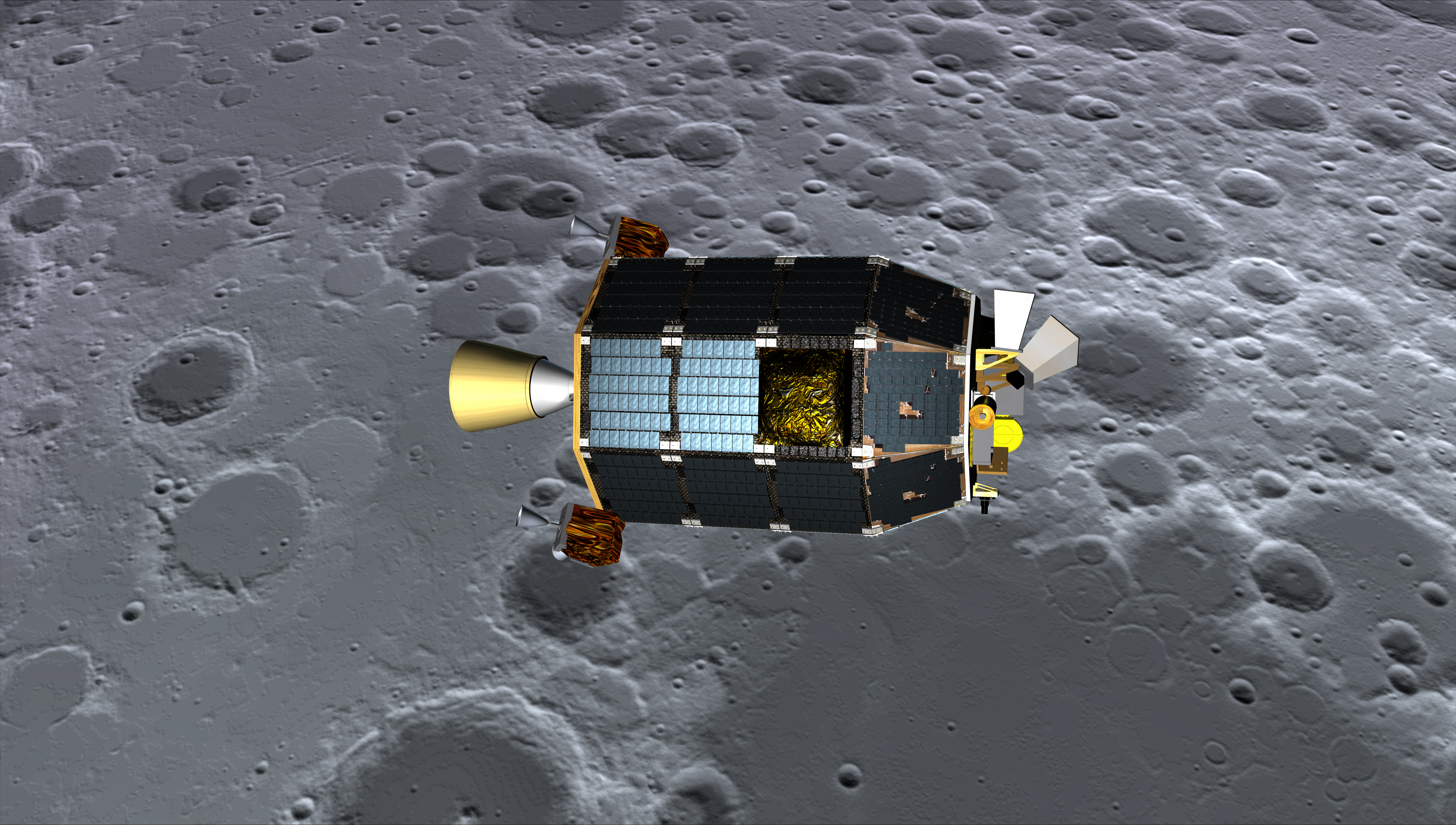
                  -There's a new crater on the Moon. NASA's LADEE spacecraft, on a mission since Sept. 2013 to study the lunar atmosphere, has crashed. The impact was deliberate. LADEE was near the end of its planned mission and the grazing impact gave researchers a chance to study "lunar air" very close to the Moon's surface. The full story can be found here:

                  Ground controllers at NASA’s Ames Research Center in Moffett Field, Calif., have confirmed that NASA’s Lunar Atmosphere and Dust Environment Explorer (LADEE)


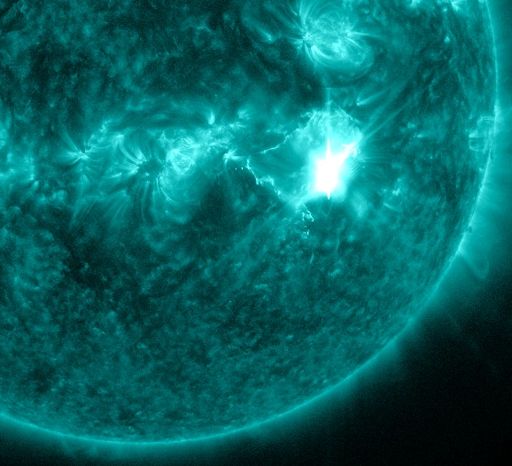
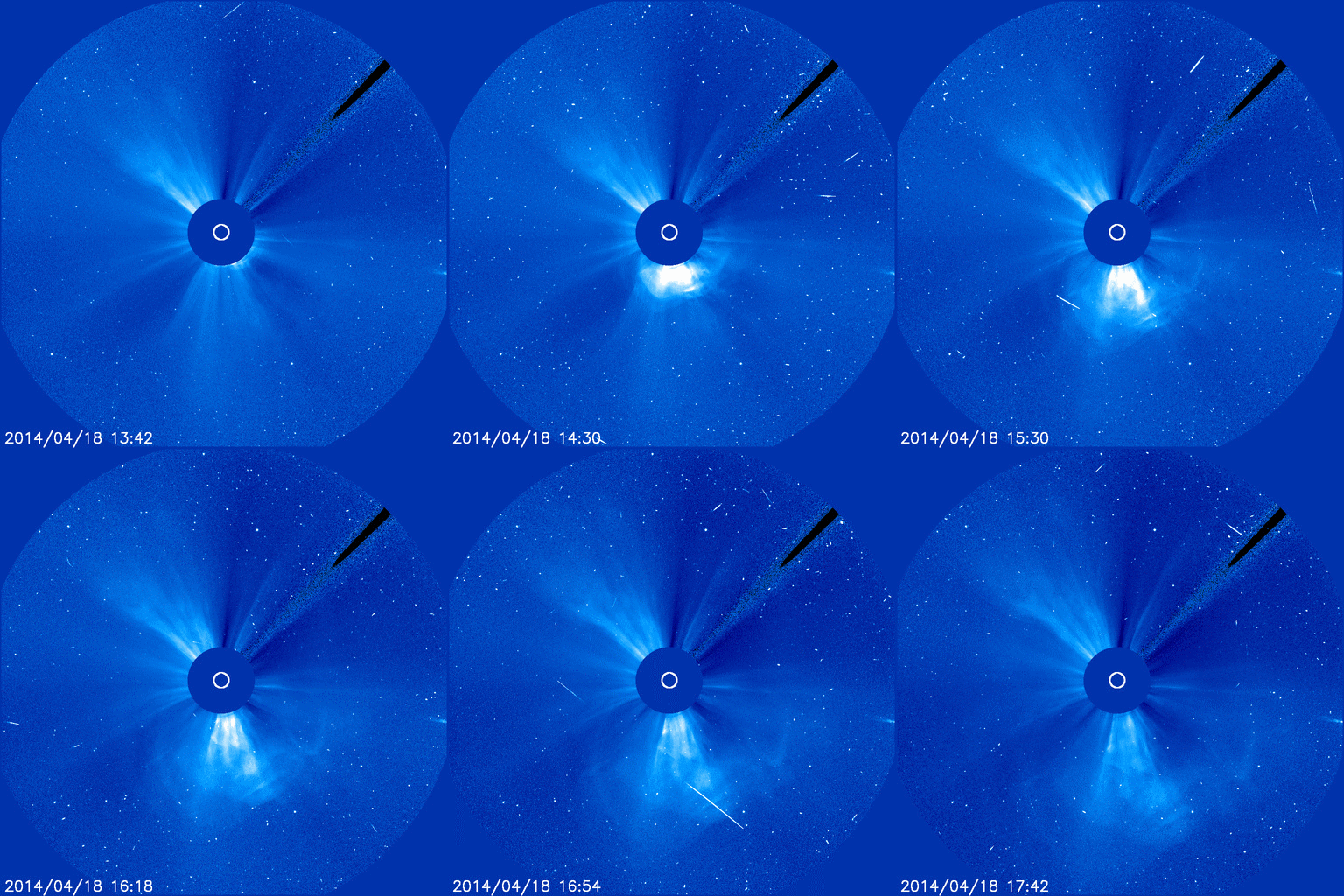
                  -Sunspot AR2036 erupted on April 18th at 1307 UT, producing a strong M7-class solar flare. NASA's Solar Dynamics Observatory recorded the extreme ultraviolet flash. A CME emerged from the blast site. The Solar and Heliospheric Observatory recorded the storm cloud racing away from the sun at aproximately 800 km/s. This CME could deliver a glancing blow to Earth's magnetic field on April 20-21. Two or three minor CMEs traveling ahead of this one are expected to arrive on April 19-20, and the combined impacts could generate geomagnetic activity throughout the weekend. NOAA forecasters put the odds of a geomagnetic storm at 55% on Saturday, increasing to 75% on Sunday. High-latitude sky watchers should be alert for auroras.

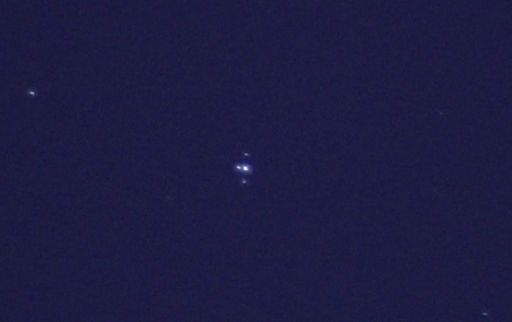
                  -Chalking up another success for commercial spaceflight, SpaceX's Dragon cargo carrier is in orbit and en route to the International Space Station. The spacecraft launched atop a Falcon 9 rocket from Cape Canaveral on Friday, April 18th, at at 3:25 p.m. EDT. Shortly after the launch, observers across Europe watched the spacecraft sail through their darkening evening sky. The brightest dot in the movie is the Dragon itself. As for the other three objects, "I don't know what they are!" says Legault. "They are probably debris such as solar panel covers or the rocket cap. I would be interested to know."

                  Dragon will reach the ISS on Sunday, April 20th, at 7:14 am EDT. Using the space station's robotic arm, ISS Commander Koichi Wakata will take hold of the spacecraft and maneuver it to its docking port, where astronauts will begin to unload 2.5 tons of supplies and science experiments.

                  On its way to the ISS, SpaceX's Falcon rocket jettisoned five CubeSats. One of the satellites, PhoneSat 2.5, is the third in a series of CubeSat missions designed to use commercially available smartphone technology as part of a low-cost development effort to provide basic spacecraft capabilities. Another of the small satellites, SporeSat, is designed to help scientists study how plant cells sense gravity -- valuable research in the larger effort to grow plants in space.

                  Dragon is scheduled to depart the space station May 18th for a splashdown in the Pacific Ocean, west of Baja California, bringing from the space station nearly 3,500 pounds of science, hardware, crew supplies and spacewalk tools. Dragon's ability to return materials from space sets it apart from other cargo carriers that burn up upon re-entry.


                  Astro Picture of the Day:
                  April 19, 2014

                  Source:
                  Planet Kepler-186f is the first known Earth-size planet to lie within the habitable zone of a star beyond the Sun. Discovered using data from the prolific planet-hunting Kepler spacecraft, the distant world orbits its parent star, a cool, dim, M dwarf star about half the size and mass of the Sun, some 500 light-years away in the constellation Cygnus. M dwarfs are common, making up about 70 percent of the stars in our Milky Way galaxy. To be within the habitable zone, where surface temperatures allowing liquid water are possible, Kepler-186f orbits close, within 53 million kilometers (about the Mercury-Sun distance) of the M dwarf star, once every 130 days. Four other planets are known in the distant system. All four are only a little larger than Earth and in much closer orbits, also illustrated in the tantalizing artist's vision. While the size and orbit of Kepler-186f are known, its mass and composition are not, and can't be determined by Kepler's transit technique. Still, models suggest that it could be rocky and have an atmosphere, making it potentially the most Earth-like exoplanet discovered so far ...
                  1st in Kommisar's 2009 SM Tournament
                  1st in I Love You`s 2009 New Year`s Tournament
                  3rd in EnR's Mashfest '08 tournament
                  5th in Phynx's Unofficial FFR Tournament
                  9th in D3 of the 2008-2009 4th Official FFR Tournament
                  10th in D5 of the 2010 5th Official FFR Tournament
                  10th in D6 of the 2011-2012 6th Official FFR Tournament

                  FMO AAA Count: 71
                  FGO AAA Count: 10

                  Bluearrowll = The Canadian player who can not detect awkward patterns. If it's awkward for most people, it's normal for Terry. If the file is difficult but super straight forward, he has issues. If he's AAAing a FGO but then heard that his favorite Hockey team was losing by a point, Hockey > FFR
                  PS: Cool AAA's Terry
                  - I Love You


                  An Alarm Clock's Haiku
                  beep beep beep beep beep
                  beep beep beep beep beep beep beep
                  beep beep beep beep beep
                  - ieatyourlvllol

                  Comment

                  • Bluearrowll
                    ⊙▃⊙
                    FFR Simfile Author
                    • Nov 2007
                    • 7376

                    #909
                    Re: Terry's Astronomy Thread.

                    Daily Suspicious0bserver's Weather Post:
                    April 20, 2014


                    What's in the sky tonight?
                    April 20, 2014
                    -The Big Dipper floats upside down near the top of the sky these evenings (for skywatchers at mid-northern latitudes), as though pouring out April showers to bring May flowers.
                    Vesta, the brightest asteroid, and Ceres, the biggest one, are both barely past opposition. They're just 2˝° apart in eastern Virgo, easy targets in binoculars at magnitudes 5.9 and 7.0.

                    -Earth is approaching a stream of debris from ancient Comet Thatcher, source of the annual Lyrid Meteor Shower. Usually the shower is mild (10-20 meteors per hour) but unmapped filaments of dust in the comet's tail sometimes trigger outbursts ten times stronger. Forecasters expect this year's peak, however strong it may be, to occur on April 22nd.

                    Astro Picture of the Day:
                    April 20, 2014

                    Source:
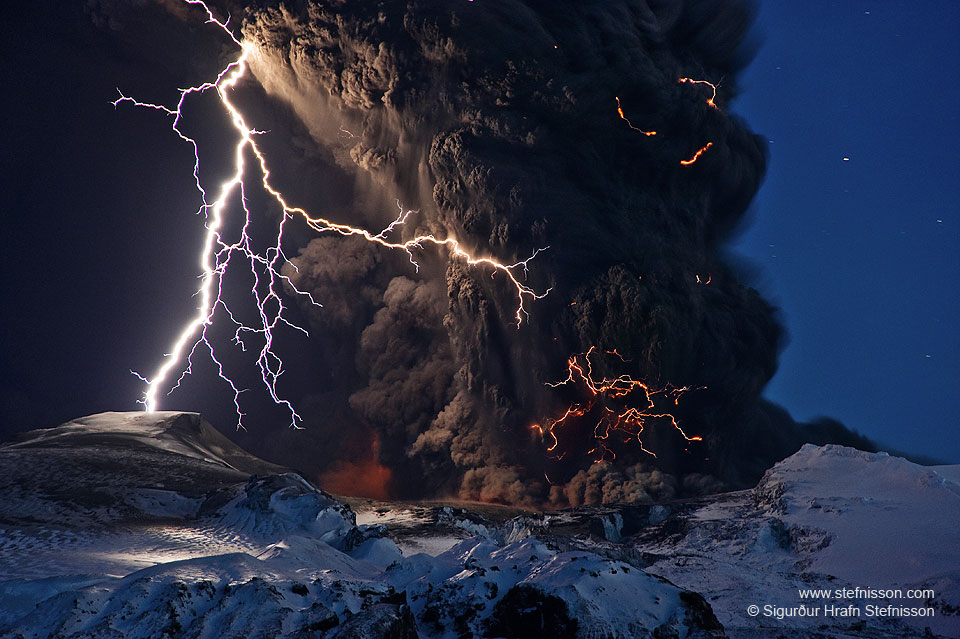
                    Why did a picturesque 2010 volcanic eruption in Iceland create so much ash? Although the large ash plume was not unparalleled in its abundance, its location was particularly noticeable because it drifted across such well-populated areas. The Eyjafjallajökull volcano in southern Iceland began erupting on 2010 March 20, with a second eruption starting under the center of a small glacier on 2010 April 14. Neither eruption was unusually powerful. The second eruption, however, melted a large amount of glacial ice which then cooled and fragmented lava into gritty glass particles that were carried up with the rising volcanic plume. Pictured above during the second eruption, lightning bolts illuminate ash pouring out of the Eyjafjallajökull volcano.
                    1st in Kommisar's 2009 SM Tournament
                    1st in I Love You`s 2009 New Year`s Tournament
                    3rd in EnR's Mashfest '08 tournament
                    5th in Phynx's Unofficial FFR Tournament
                    9th in D3 of the 2008-2009 4th Official FFR Tournament
                    10th in D5 of the 2010 5th Official FFR Tournament
                    10th in D6 of the 2011-2012 6th Official FFR Tournament

                    FMO AAA Count: 71
                    FGO AAA Count: 10

                    Bluearrowll = The Canadian player who can not detect awkward patterns. If it's awkward for most people, it's normal for Terry. If the file is difficult but super straight forward, he has issues. If he's AAAing a FGO but then heard that his favorite Hockey team was losing by a point, Hockey > FFR
                    PS: Cool AAA's Terry
                    - I Love You


                    An Alarm Clock's Haiku
                    beep beep beep beep beep
                    beep beep beep beep beep beep beep
                    beep beep beep beep beep
                    - ieatyourlvllol

                    Comment

                    • Bluearrowll
                      ⊙▃⊙
                      FFR Simfile Author
                      • Nov 2007
                      • 7376

                      #910
                      Re: Terry's Astronomy Thread.

                      Daily Suspicious0bserver's Weather Post:
                      April 21, 2014


                      What's in the sky tonight?
                      April 21, 2014
                      -Last-quarter Moon (exact at 3:52 a.m. Tuesday morning Eastern Daylight Time). The Moon rises around 2 a.m. local time Tuesday morning, far below Altair near the wide double stars Alpha and Beta Capricorni.
                      The weak Lyrid meteor shower should be active in the moonlight before dawn. Even in years with no moonlight, meteor watchers usually report fewer than 20 Lyrids visible per hour.

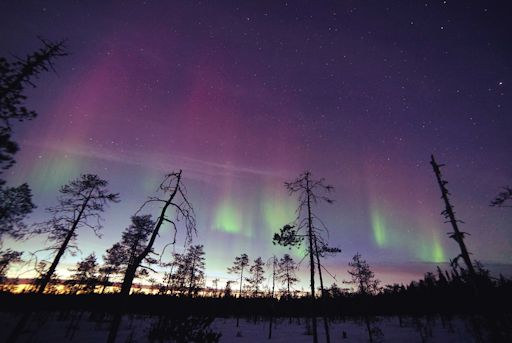
                      -A minor geomagnetic storm that lit up the Arctic Circle on Easter Sunday is subsiding. At its peak, just after an instigating CME strike around 1057 UT, the disturbance registered G1 on NOAA storm scales. Arctic auroras were briefly visible despite the brightening spring twilight:

                      "Here in Kuusamo, Finland, near the Polar circle, spring nights are becoming lighter and lighter, but still the auroras can be seen," says photographer Asko Aikkila.

                      NOAA forecasters estimate a 60% chance of renewed geomagnetic storms on April 21st as Earth passes through the windy wake of the CME. High-latitude sky watchers should remain alert for auroras.


                      Astro Picture of the Day:
                      April 21, 2014

                      Source:
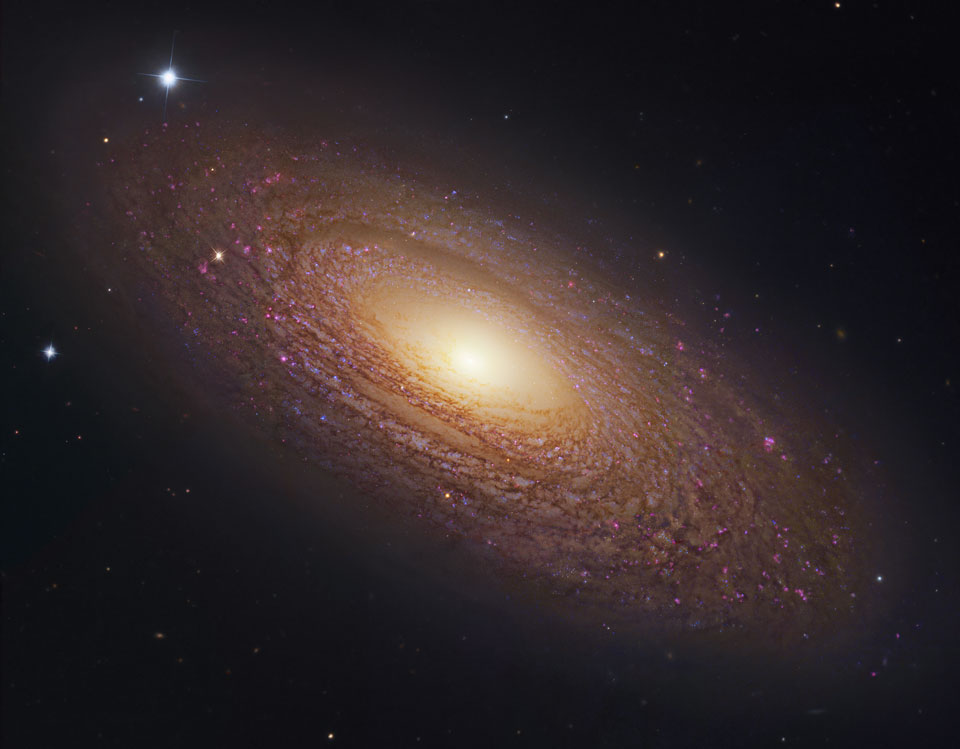
                      It is one of the more massive galaxies known. A mere 46 million light-years distant, spiral galaxy NGC 2841 can be found in the northern constellation of Ursa Major. This sharp view of the gorgeous island universe shows off a striking yellow nucleus and galactic disk. Dust lanes, small, pink star-forming regions, and young blue star clusters are embedded in the patchy, tightly wound spiral arms. In contrast, many other spirals exhibit grand, sweeping arms with large star-forming regions. NGC 2841 has a diameter of over 150,000 light-years, even larger than our own Milky Way and captured by this composite image merging exposures from the orbiting 2.4-meter Hubble Space Telescope and the ground-based 8.2-meter Subaru Telescope. X-ray images suggest that resulting winds and stellar explosions create plumes of hot gas extending into a halo around NGC 2841.
                      1st in Kommisar's 2009 SM Tournament
                      1st in I Love You`s 2009 New Year`s Tournament
                      3rd in EnR's Mashfest '08 tournament
                      5th in Phynx's Unofficial FFR Tournament
                      9th in D3 of the 2008-2009 4th Official FFR Tournament
                      10th in D5 of the 2010 5th Official FFR Tournament
                      10th in D6 of the 2011-2012 6th Official FFR Tournament

                      FMO AAA Count: 71
                      FGO AAA Count: 10

                      Bluearrowll = The Canadian player who can not detect awkward patterns. If it's awkward for most people, it's normal for Terry. If the file is difficult but super straight forward, he has issues. If he's AAAing a FGO but then heard that his favorite Hockey team was losing by a point, Hockey > FFR
                      PS: Cool AAA's Terry
                      - I Love You


                      An Alarm Clock's Haiku
                      beep beep beep beep beep
                      beep beep beep beep beep beep beep
                      beep beep beep beep beep
                      - ieatyourlvllol

                      Comment

                      • Bluearrowll
                        ⊙▃⊙
                        FFR Simfile Author
                        • Nov 2007
                        • 7376

                        #911
                        Re: Terry's Astronomy Thread.

                        Daily Suspicious0bserver's Weather Post:
                        April 22, 2014


                        What's in the sky tonight?
                        April 22, 2014
                        -Bright Jupiter, high in the west at dusk, forms the top of a huge, sideways-compressed pentagon with other bright celestial landmarks. Look left of Jupiter for Procyon, far below Procyon for bright Sirius, to the right of Sirius and somewhat lower for Rigel in Orion's foot, then above Rigel for Betelgeuse, and back to Jupiter.

                        -NOAA forecasters have downgraded the chance of geomagnetic storms today to 35% as Earth exits a stream of high-speed solar wind. High-latitude sky watchers should be alert for fading auroras.

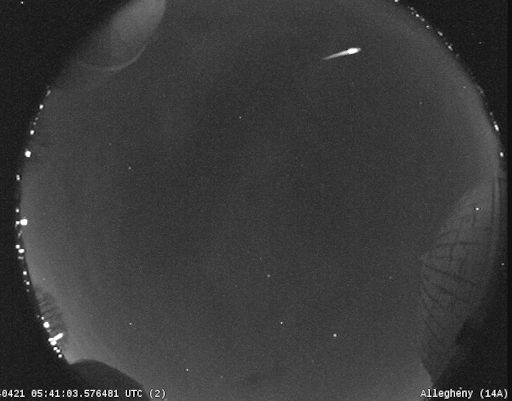
                        -Earth is passing through a stream of debris from ancient Comet Thatcher, source of the annual Lyrid meteor shower. Last night, NASA's All-Sky Fireball Network detected this bright Lyrid flying over Allegheny, Pennsylvania. Usually the Lyrid meteor shower is mild (10-20 meteors per hour), but unmapped filaments of dust in the comet's tail sometimes trigger outbursts ten times stronger. So far this year's shower is trending toward the usual--that is, mild--but surprises are possible. Forecasters espect the shower to peak on April 22nd between the hours of 10:00 UT and 21:00 UT. Got clouds? Listen for Lyrid radar echoes on Space Weather Radio. http://spaceweatherradio.com/


                        Astro Picture of the Day:
                        April 22, 2014

                        Source:
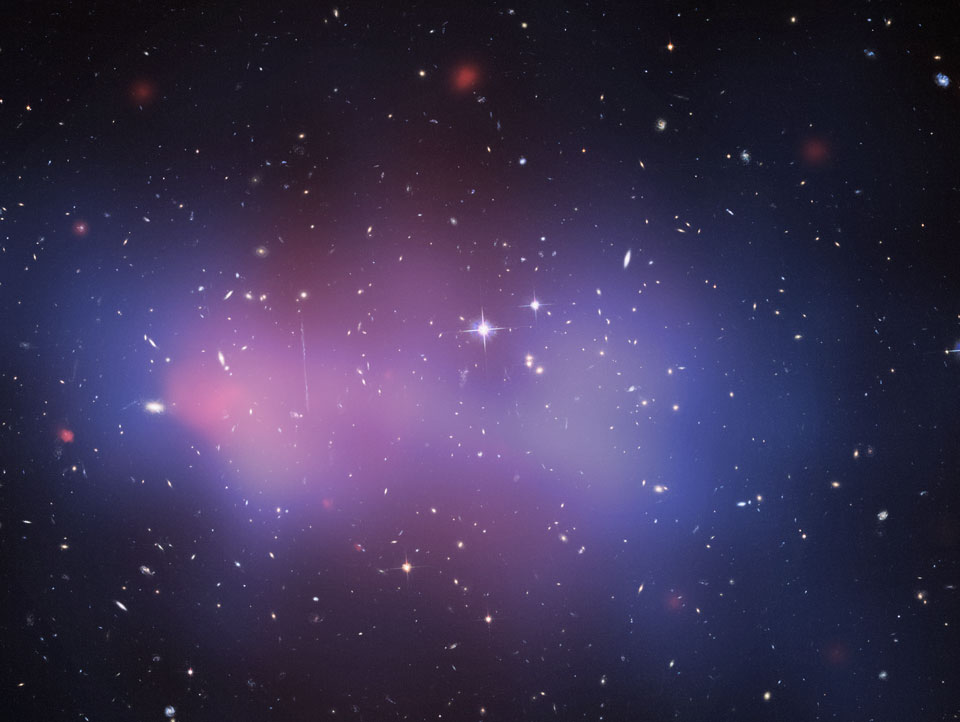
                        It is bigger than a bread box. In fact, it is much bigger than all bread boxes put together. Galaxy cluster ACT-CL J0102-4915 is one of the largest and most massive objects known. Dubbed "El Gordo", the seven billion light years (z = 0.87) distant galaxy cluster spans about seven million light years and holds the mass of a million billion Suns. The above image of El Gordo is a composite of a visible light image from the Hubble Space Telescope, an X-ray image from the Chandra Observatory showing the hot gas in pink, and a computer generated map showing the most probable distribution of dark matter in blue, computed from gravitational lens distortions of background galaxies. Almost all of the bright spots are galaxies. The blue dark matter distribution indicates that the cluster is in the middle stages of a collision between two large galaxy clusters. A careful inspection of the image will reveal a nearly vertical galaxy that appears unusually long. That galaxy is actually far in the background and has its image stretched by the gravitational lens action of the massive cluster.
                        1st in Kommisar's 2009 SM Tournament
                        1st in I Love You`s 2009 New Year`s Tournament
                        3rd in EnR's Mashfest '08 tournament
                        5th in Phynx's Unofficial FFR Tournament
                        9th in D3 of the 2008-2009 4th Official FFR Tournament
                        10th in D5 of the 2010 5th Official FFR Tournament
                        10th in D6 of the 2011-2012 6th Official FFR Tournament

                        FMO AAA Count: 71
                        FGO AAA Count: 10

                        Bluearrowll = The Canadian player who can not detect awkward patterns. If it's awkward for most people, it's normal for Terry. If the file is difficult but super straight forward, he has issues. If he's AAAing a FGO but then heard that his favorite Hockey team was losing by a point, Hockey > FFR
                        PS: Cool AAA's Terry
                        - I Love You


                        An Alarm Clock's Haiku
                        beep beep beep beep beep
                        beep beep beep beep beep beep beep
                        beep beep beep beep beep
                        - ieatyourlvllol

                        Comment

                        • Bluearrowll
                          ⊙▃⊙
                          FFR Simfile Author
                          • Nov 2007
                          • 7376

                          #912
                          Re: Terry's Astronomy Thread.

                          Daily Suspicious0bserver's Weather Post:
                          April 23, 2014


                          What's in the sky tonight?
                          April 23, 2014
                          -As soon as twilight fades out, look moderately low in the west-northwest (far below Capella) for the little Pleiades star cluster, the size of your fingertip at arm's length. How much later through the spring can you follow the Pleiades before they're lost in the sunset?

                          -The annual Lyrid meteor shower, caused by debris from ancient Comet Thatcher, is subsiding. During the shower's peak on April 22nd, dark-sky observers saw as many as 15 meteors per hour. On Apr. 22, 2014, the NASA All-sky network reported 25 fireballs.

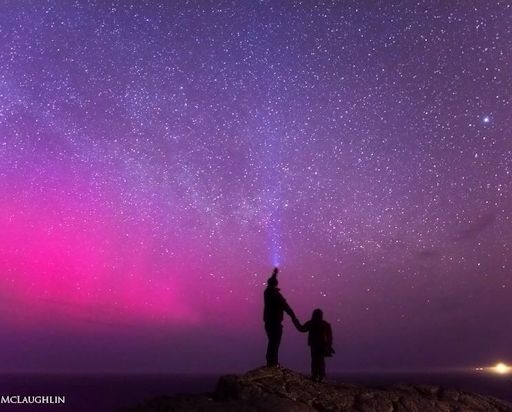
                          -NOAA forecasters estimate a 30% chance of polar geomagnetic storms on April 23-24 when the interplanetary magnetic field (IMF) is expected tip south, opening a crack in Earth's magnetosphere. Solar wind pouring in could ignite auroras. Ronan McLaughlin of Malin head, Ireland, took this picture on April 20th during the Easter Sunday geomagnetic storm. "My son Oisín and I were admiring the Milky Way when, suddenly, the auroras made an appearance." The Easter storm was sparked by a CME strike. The storms of April 23-24, if any, will be less potent because no CME is involved. The best time to look for faint auroras is during the hours around local midnight.


                          Astro Picture of the Day:
                          April 23, 2014

                          Source:
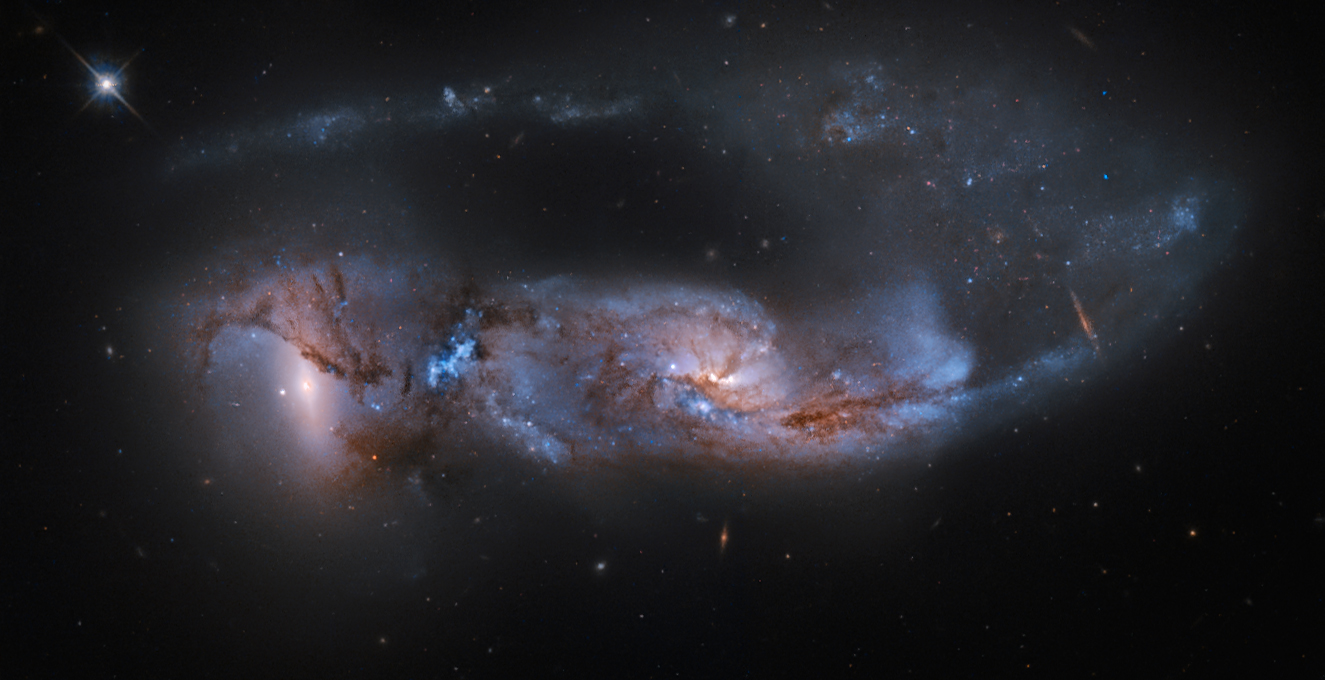
                          From planet Earth, we see this strongly distorted pair of galaxies, cataloged as Arp 81, as they were only about 100 million years after their close encounter. The havoc wreaked by their mutual gravitational interaction during the encounter is detailed in this color composite image showing twisted streams of gas and dust, a chaos of massive star formation, and a tidal tail stretching for 200 thousand light-years or so as it sweeps behind the cosmic wreckage. Also known as NGC 6622 (left) and NGC 6621, the galaxies are roughly equal in size but are destined to merge into one large galaxy in the distant future, making repeated approaches until they finally coalesce. Located in the constellation Draco, the galaxies are 280 million light-years away. Even more distant background galaxies can be spotted in this sharp, reprocessed, image from Hubble Legacy Archive data.
                          1st in Kommisar's 2009 SM Tournament
                          1st in I Love You`s 2009 New Year`s Tournament
                          3rd in EnR's Mashfest '08 tournament
                          5th in Phynx's Unofficial FFR Tournament
                          9th in D3 of the 2008-2009 4th Official FFR Tournament
                          10th in D5 of the 2010 5th Official FFR Tournament
                          10th in D6 of the 2011-2012 6th Official FFR Tournament

                          FMO AAA Count: 71
                          FGO AAA Count: 10

                          Bluearrowll = The Canadian player who can not detect awkward patterns. If it's awkward for most people, it's normal for Terry. If the file is difficult but super straight forward, he has issues. If he's AAAing a FGO but then heard that his favorite Hockey team was losing by a point, Hockey > FFR
                          PS: Cool AAA's Terry
                          - I Love You


                          An Alarm Clock's Haiku
                          beep beep beep beep beep
                          beep beep beep beep beep beep beep
                          beep beep beep beep beep
                          - ieatyourlvllol

                          Comment

                          • Bluearrowll
                            ⊙▃⊙
                            FFR Simfile Author
                            • Nov 2007
                            • 7376

                            #913
                            Re: Terry's Astronomy Thread.

                            Had no internet between last night and this morning due to ISP switch. I will either update today's post very late tonight or tomorrow morning.

                            New ISP has just finished it's transfer and so far so good:
                            1st in Kommisar's 2009 SM Tournament
                            1st in I Love You`s 2009 New Year`s Tournament
                            3rd in EnR's Mashfest '08 tournament
                            5th in Phynx's Unofficial FFR Tournament
                            9th in D3 of the 2008-2009 4th Official FFR Tournament
                            10th in D5 of the 2010 5th Official FFR Tournament
                            10th in D6 of the 2011-2012 6th Official FFR Tournament

                            FMO AAA Count: 71
                            FGO AAA Count: 10

                            Bluearrowll = The Canadian player who can not detect awkward patterns. If it's awkward for most people, it's normal for Terry. If the file is difficult but super straight forward, he has issues. If he's AAAing a FGO but then heard that his favorite Hockey team was losing by a point, Hockey > FFR
                            PS: Cool AAA's Terry
                            - I Love You


                            An Alarm Clock's Haiku
                            beep beep beep beep beep
                            beep beep beep beep beep beep beep
                            beep beep beep beep beep
                            - ieatyourlvllol

                            Comment

                            • gold stinger
                              Signature Extraordinare~~
                              Event Staff
                              Game Manager
                              FFR Simfile Author
                              FFR Music Producer
                              • Jan 2007
                              • 6428

                              #914
                              Re: Terry's Astronomy Thread.

                              excuse me where do I get that type of internet in toronto without Rogers and bell being absolute ******s?
                              Originally posted by YoshL
                              butts.


                              - Tosh 2014


                              Comment

                              • Bluearrowll
                                ⊙▃⊙
                                FFR Simfile Author
                                • Nov 2007
                                • 7376

                                #915
                                Re: Terry's Astronomy Thread.

                                Sent a pm detailing Start Communications information.


                                Daily Suspicious0bserver's Weather Post:
                                April 24, 2014


                                What's in the sky tonight?
                                April 24, 2014
                                -During dawn tomorrow morning (the 25th), look below the waning crescent Moon for Venus, as shown at right. Think photo opportunity!

                                -Solar activity is low. There are only a few sunspots facing Earth, and none of them is strongly flaring. NOAA forecasters put the odds of an X-flare today at no more than 1%.


                                Astro Picture of the Day:
                                April 24, 2014


                                Source:
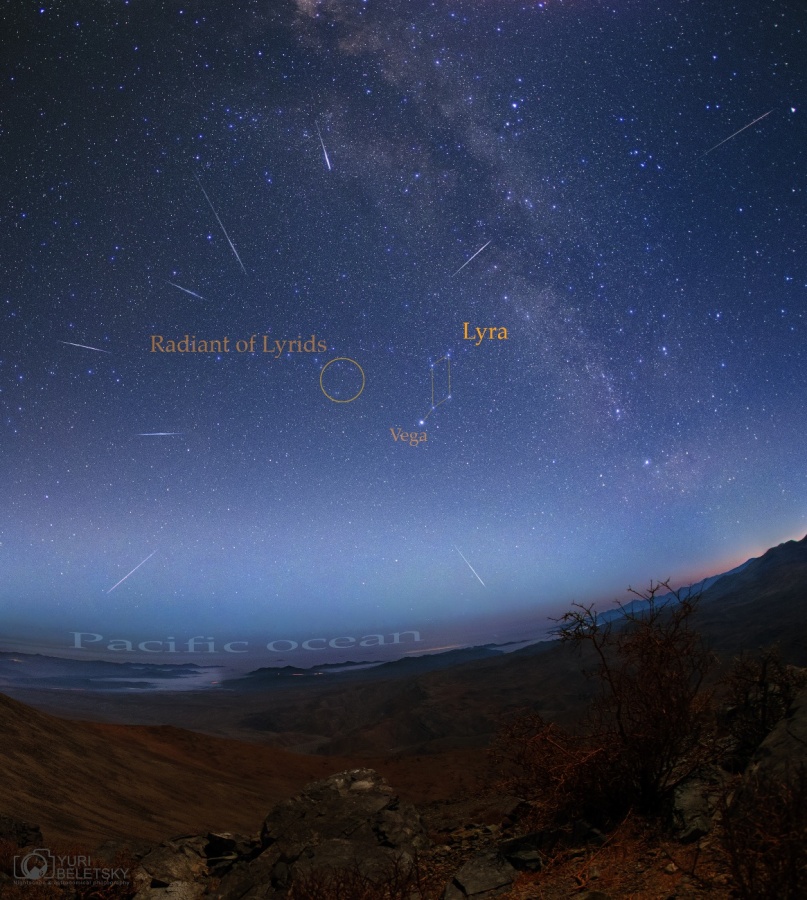
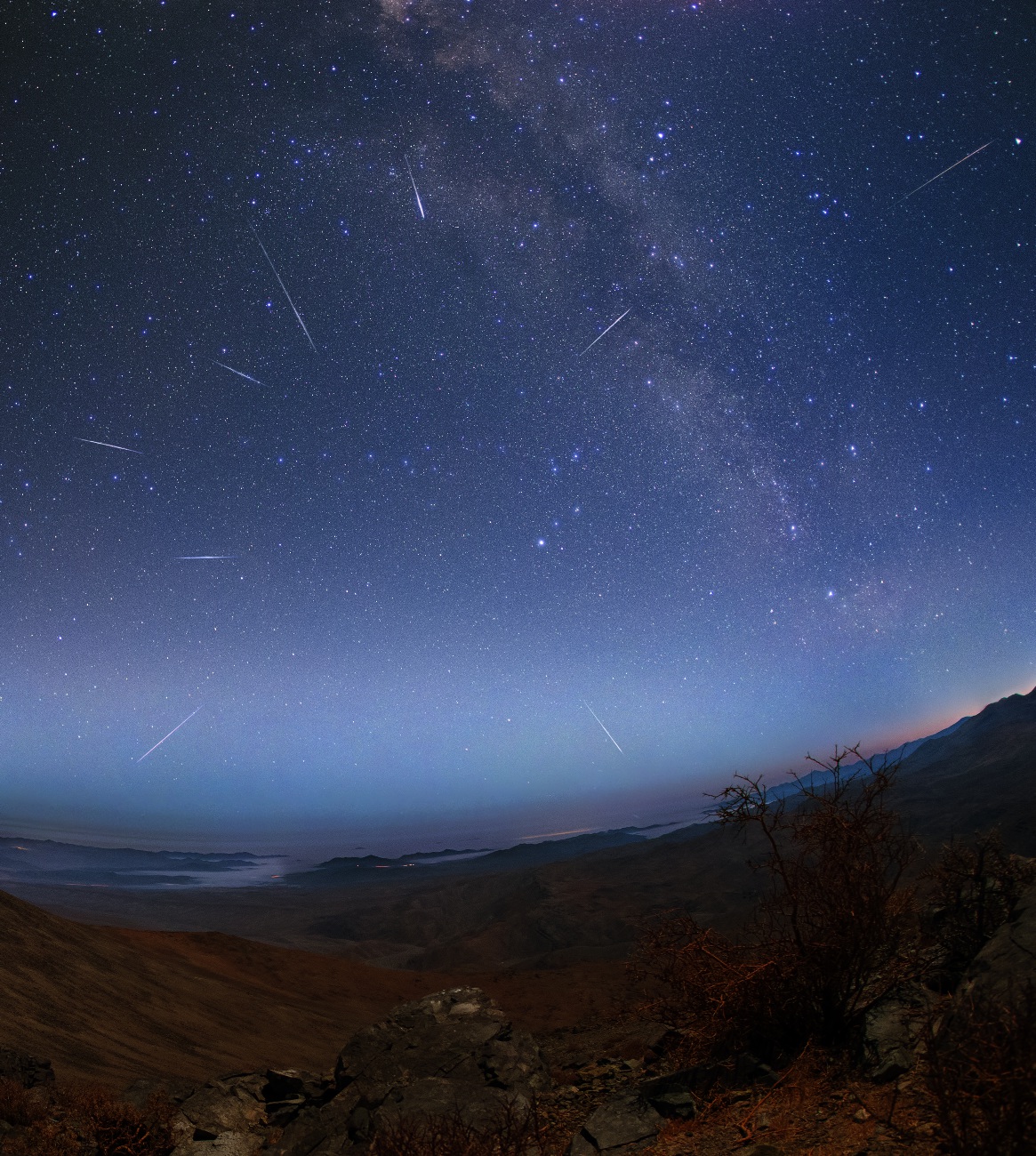
                                Earth's annual Lyrid meteor shower peaked before dawn on April 22nd, as our fair planet plowed through dust from the tail of long-period comet Thatcher. Even in the dry and dark Atacama desert along Chile's Pacific coast, light from a last quarter Moon made the night sky bright, washing out fainter meteor streaks. But brighter Lyrid meteors still put on a show. Captured in this composited earth-and-sky view recorded during early morning hours, the meteors stream away from the shower's radiant near Vega, alpha star of the constellation Lyra. The radiant effect is due to perspective as the parallel meteor tracks appear to converge in the distance. Rich starfields and dust clouds of our own Milky Way galaxy stretch across the background.


                                Daily Suspicious0bserver's Weather Post:
                                April 25, 2014


                                What's in the sky tonight?
                                April 25, 2014
                                -Up before sunrise? Step outside and look east. The crescent Moon is passing close to Venus in the pre-dawn sky on April 25th and 26th. It's a beautiful way to start the day.

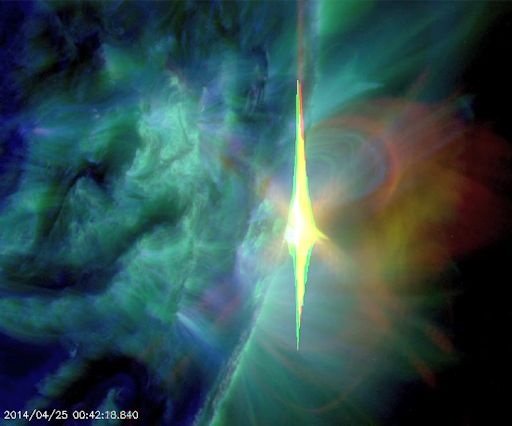
                                -Departing sunspot complex AR2035-AR2046 erupted on April 25th at 0032 UT, producing a strong X1.3-class solar flare and an HF communications blackout on the dayside of Earth. NASA's Solar Dynamics Observatory recorded a flash of extreme ultraviolet radiation from the explosion.
                                The explosion also produced a CME, but because the blast site was so close to the sun's western limb, the cloud is not heading toward our planet. The chance of a geomagnetic storm remains low.


                                Astro Picture of the Day:
                                April 25, 2014

                                Source:
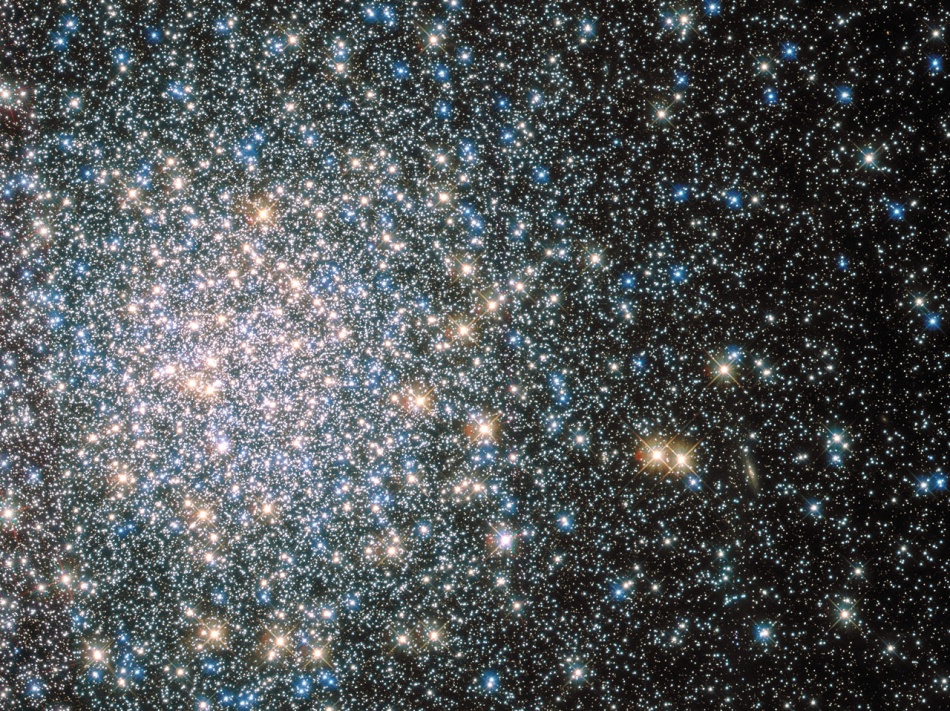
                                "Beautiful Nebula discovered between the Balance [Libra] & the Serpent [Serpens] ..." begins the description of the 5th entry in 18th century astronomer Charles Messier's famous catalog of nebulae and star clusters. Though it appeared to Messier to be fuzzy and round and without stars, Messier 5 (M5) is now known to be a globular star cluster, 100,000 stars or more, bound by gravity and packed into a region around 165 light-years in diameter. It lies some 25,000 light-years away. Roaming the halo of our galaxy, globular star clusters are ancient members of the Milky Way. M5 is one of the oldest globulars, its stars estimated to be nearly 13 billion years old. The beautiful star cluster is a popular target for Earthbound telescopes. Of course, deployed in low Earth orbit on April 25, 1990, the Hubble Space Telescope has also captured its own stunning close-up view that spans about 20 light-years near the central region of M5. Even close to its dense core at the left, the cluster's aging red and blue giant stars and rejuvenated blue stragglers stand out in yellow and blue hues in the sharp color image.
                                1st in Kommisar's 2009 SM Tournament
                                1st in I Love You`s 2009 New Year`s Tournament
                                3rd in EnR's Mashfest '08 tournament
                                5th in Phynx's Unofficial FFR Tournament
                                9th in D3 of the 2008-2009 4th Official FFR Tournament
                                10th in D5 of the 2010 5th Official FFR Tournament
                                10th in D6 of the 2011-2012 6th Official FFR Tournament

                                FMO AAA Count: 71
                                FGO AAA Count: 10

                                Bluearrowll = The Canadian player who can not detect awkward patterns. If it's awkward for most people, it's normal for Terry. If the file is difficult but super straight forward, he has issues. If he's AAAing a FGO but then heard that his favorite Hockey team was losing by a point, Hockey > FFR
                                PS: Cool AAA's Terry
                                - I Love You


                                An Alarm Clock's Haiku
                                beep beep beep beep beep
                                beep beep beep beep beep beep beep
                                beep beep beep beep beep
                                - ieatyourlvllol

                                Comment

                                Working...