

Re: Terry's Astronomy Thread.
Daily Suspicious0bserver's Weather Post:
July 1, 2014
What's in the sky tonight?
July 1, 2014
Astro Picture of the Day:
July 1, 2014
Source:
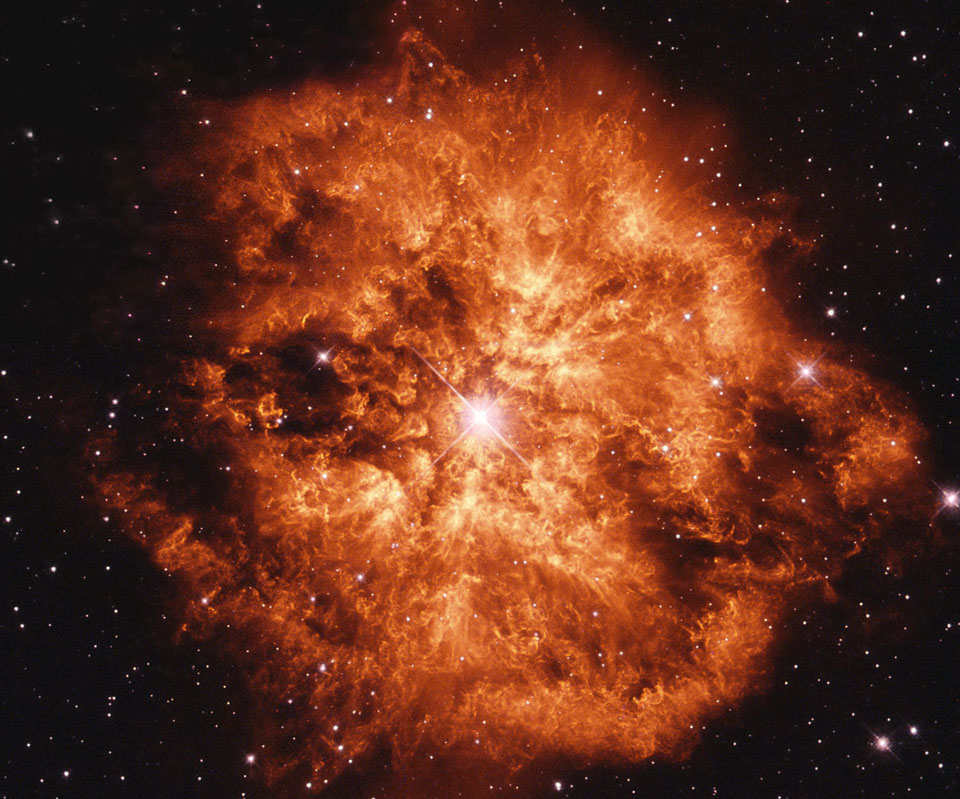
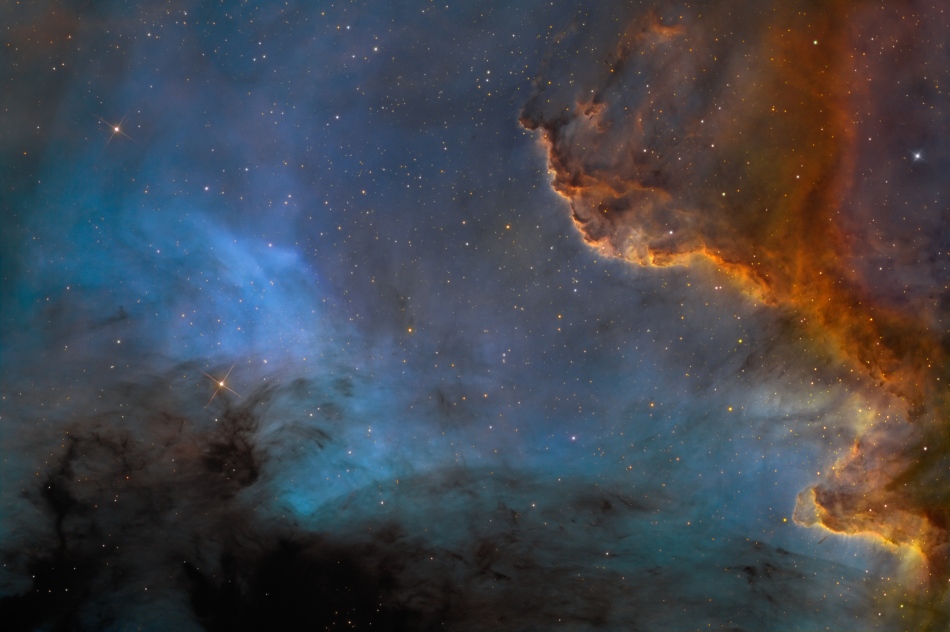
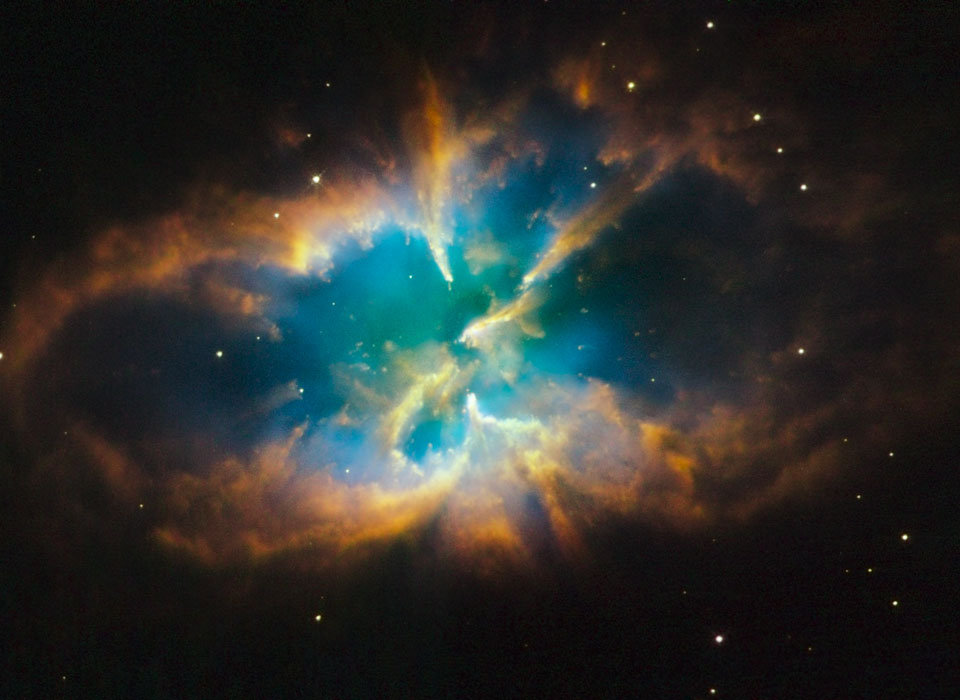
Some stars explode in slow motion. Rare, massive Wolf-Rayet stars are so tumultuous and hot that they slowly disintegrate right before our telescopes. Glowing gas globs each typically over 30 times more massive than the Earth are being expelled by violent stellar winds. Wolf-Rayet star WR 124, visible near the above image center spanning six light years across, is thus creating the surrounding nebula known as M1-67. Details of why this star has been slowly blowing itself apart over the past 20,000 years remains a topic of research. WR 124 lies 15,000 light-years away towards the constellation of Sagitta. The fate of any given Wolf-Rayet star likely depends on how massive it is, but many are thought to end their lives with spectacular explosions such as supernovas or gamma-ray bursts.
Daily Suspicious0bserver's Weather Post:
July 1, 2014
What's in the sky tonight?
July 1, 2014
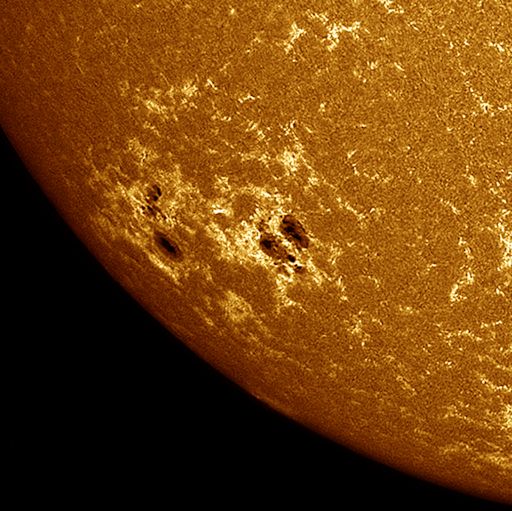
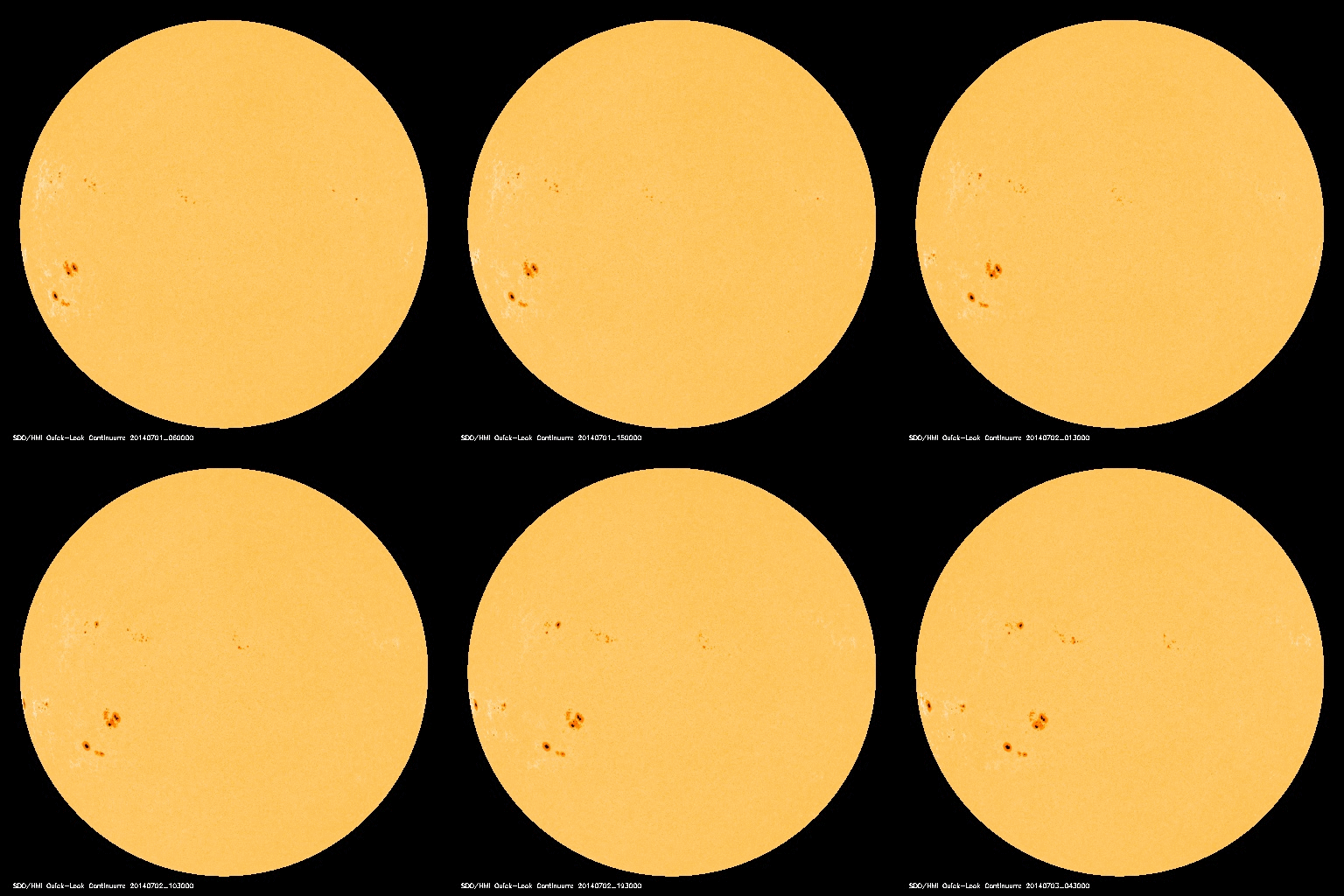
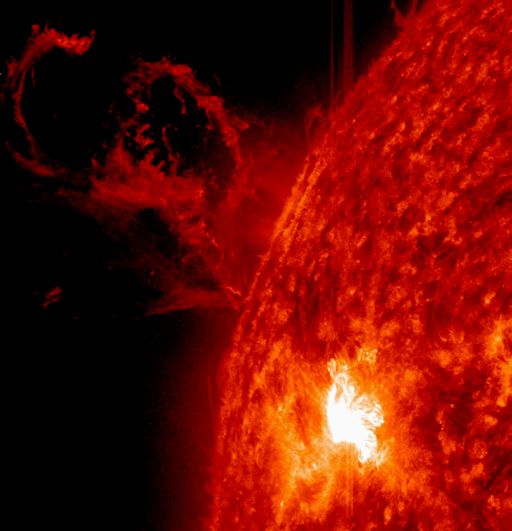
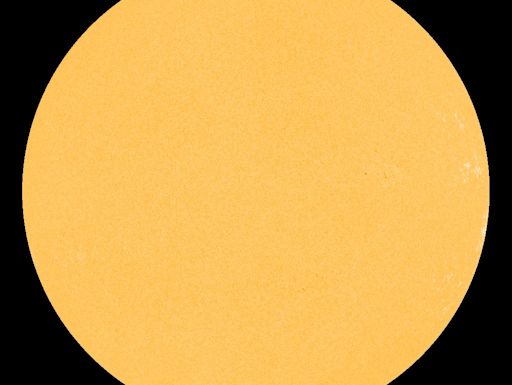
-Big sunspot AR2104, which emerged over the weekend, has developed a 'beta-gamma-delta' magnetic field that harbors energy for X-class solar flares. So far, however, the sunspot has been relatively quiet, producing no more than a few minor C-flares. Sergio Castillo photographed the brooding giant on June 30th from his backyard observatory in Inglewood, CA. Castillo used a solar telescope capped with a "Calcium-K" filter tuned to 3933 Å, a wavelength that reveals the bright magnetic froth around active sunspots. "The magnetic froth is amazingly visible around AR2104," says Castillo. "I truly hope this active region brings fireworks just in time for the 4th of July."
He might get his wish. NOAA forecasters estimate a growing 40% chance of M-class flares and a 5% chance of X-flares during the next 24 hours. The odds of geoeffective eruptions will increase even more in the days ahead as the sunspot turns toward Earth.
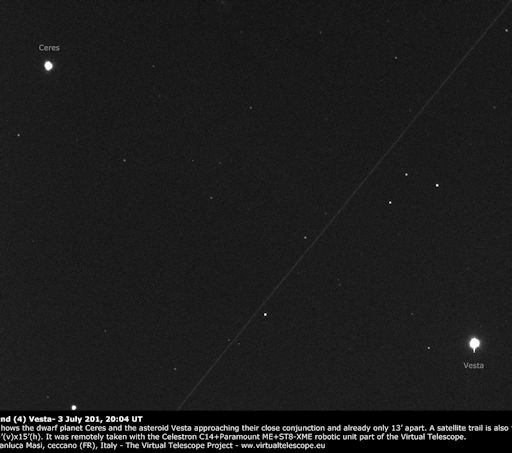
-Ceres and Vesta at their closest. The two leading asteroids, currently magnitudes 8.4 and 7.1, are closing right in on each other as seen on the sky. They're not far above Mars and Spica after dark. They are within 1/3° of each other for the next week and will appear closest together, just 1/6° apart, on the evenings of July 4th and 5th.
He might get his wish. NOAA forecasters estimate a growing 40% chance of M-class flares and a 5% chance of X-flares during the next 24 hours. The odds of geoeffective eruptions will increase even more in the days ahead as the sunspot turns toward Earth.
-Ceres and Vesta at their closest. The two leading asteroids, currently magnitudes 8.4 and 7.1, are closing right in on each other as seen on the sky. They're not far above Mars and Spica after dark. They are within 1/3° of each other for the next week and will appear closest together, just 1/6° apart, on the evenings of July 4th and 5th.
Astro Picture of the Day:
July 1, 2014
Some stars explode in slow motion. Rare, massive Wolf-Rayet stars are so tumultuous and hot that they slowly disintegrate right before our telescopes. Glowing gas globs each typically over 30 times more massive than the Earth are being expelled by violent stellar winds. Wolf-Rayet star WR 124, visible near the above image center spanning six light years across, is thus creating the surrounding nebula known as M1-67. Details of why this star has been slowly blowing itself apart over the past 20,000 years remains a topic of research. WR 124 lies 15,000 light-years away towards the constellation of Sagitta. The fate of any given Wolf-Rayet star likely depends on how massive it is, but many are thought to end their lives with spectacular explosions such as supernovas or gamma-ray bursts.








Comment