Terry's Astronomy Thread.

Collapse
X
 
  • Time
  • Show
Clear All
new posts
  • Bluearrowll
    ⊙▃⊙
    FFR Simfile Author
    • Nov 2007
    • 7376

    #721
    Re: Terry's Astronomy Thread.

    What's in the sky tonight?
    October 29, 2013
    -Look high in the northeast after dark for Cassiopeia standing on end. With the Moon out of the evening sky, now's a fine time to hunt some of Cassiopeia's star clusters and nebulae.

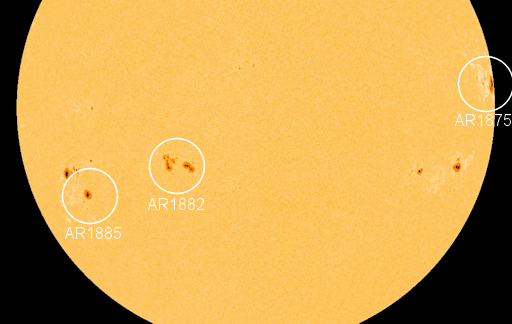
    -As October comes to an end, a series of CMEs will sweep past Earth. The first three are expected to deliver glancing blows on Oct. 28th through Oct. 30th, possibly having little effect. A more direct hit is likely on Oct. 31st when a CME from Earth-facing sunspot AR1882 arrives. It was propelled in our direction by an M4-class flare on Oct. 28th. High-latitude sky watchers should be alert for auroras on Halloween.

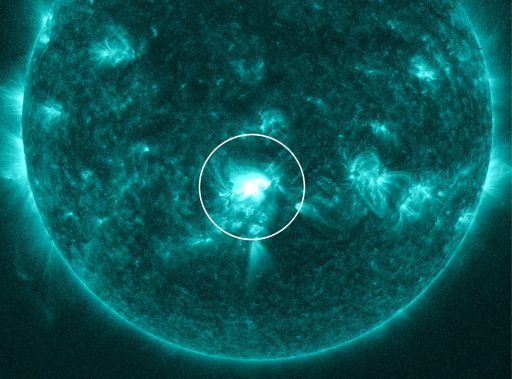
    -he sun is dotted with spots, and three of them pose a threat for strong eruptions. Today's sunspots most-likely-to-flare are circled in this Oct. 29th image of the sun from NASA's Solar Dynamics Observatory. AR1875, AR1882 and AR1875 have 'beta-gamma-delta' magnetic fields that harbor energy for X-class solar flares. One of these spots in particular, AR1882, is almost directly facing Earth, so any eruptions it unleashes would almost surely be geoeffective. NOAA forecasters estimate a 70% chance of M-class flares and a 35% chance of X-flares on Oct. 29th.


    News Posted Today:
    October 29, 2013
    November 3rd's Rare Solar Eclipse


    Astro Picture of the Day:
    October 29, 2013
    Source:
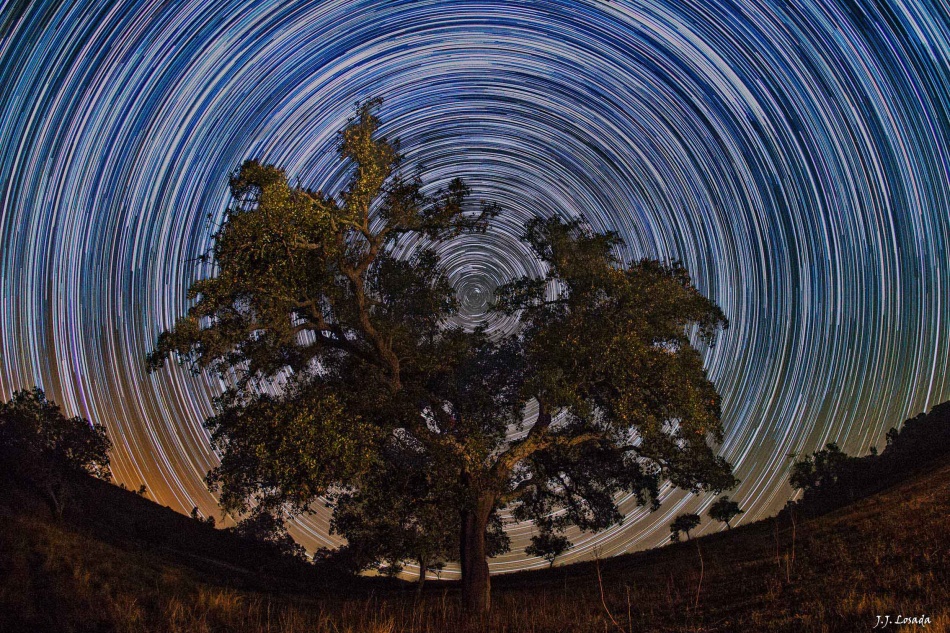
    If you climbed this magnificent tree, it looks like you could reach out and touch the North Celestial Pole at the center of all the star trail arcs. The well-composed image was recorded over a period of nearly 2 hours as a series of 30 second long, consecutive exposures on the night of October 5. The exposures were made with a digital camera fixed to a tripod near Almaden de la Plata, province of Seville, in southern Spain, planet Earth. Of course, the graceful star trails reflect the Earth's daily rotation around its axis. By extension, the axis of rotation leads to the center of the concentric arcs in the night sky. Convenient for northern hemisphere night sky photographers and celestial navigators alike, the bright star Polaris is very close to the North Celestial Pole and so makes the short bright trail in the central gap between the leafy branches.
    1st in Kommisar's 2009 SM Tournament
    1st in I Love You`s 2009 New Year`s Tournament
    3rd in EnR's Mashfest '08 tournament
    5th in Phynx's Unofficial FFR Tournament
    9th in D3 of the 2008-2009 4th Official FFR Tournament
    10th in D5 of the 2010 5th Official FFR Tournament
    10th in D6 of the 2011-2012 6th Official FFR Tournament

    FMO AAA Count: 71
    FGO AAA Count: 10

    Bluearrowll = The Canadian player who can not detect awkward patterns. If it's awkward for most people, it's normal for Terry. If the file is difficult but super straight forward, he has issues. If he's AAAing a FGO but then heard that his favorite Hockey team was losing by a point, Hockey > FFR
    PS: Cool AAA's Terry
    - I Love You


    An Alarm Clock's Haiku
    beep beep beep beep beep
    beep beep beep beep beep beep beep
    beep beep beep beep beep
    - ieatyourlvllol

    Comment

    • Bluearrowll
      ⊙▃⊙
      FFR Simfile Author
      • Nov 2007
      • 7376

      #722
      Re: Terry's Astronomy Thread.

      What's in the sky tonight?
      October 29, 2013
      -NOAA forcasters estimate a 25% chance of polar geomagnetic storms on Oct. 31st when a CME is expected to hit Earth's magnetic field. It was propelled in our direction by an M4-class flare from sunspot AR1882 on Oct. 28th. High-latitude sky watchers should be alert for auroras on Halloween.

      -Consider it a parting shot. Just before sunspot AR1875 rotated over the sun's western limb on Oct. 29th, it unleashed a powerful X2-class solar flare. NASA Solar Dynamics Observatory recorded the explosion's extreme ultraviolet flash.

      -X-rays and UV radiation from the flare ionized the top of our planet's atmosphere. Waves of ionization disturbed the normal propagation of radio waves over the Americas and the Pacific, and may have caused an HF communications blackout over the poles.

      -The Solar and Heliospheric Observatory (SOHO) recorded a bright CME emerging from the blast site. Given the sunspot's location on sun's western limb, however, it is unlikely the CME will reach our planet. Analysts at NOAA are busy evaluating the possibility of a glancing blow in the days ahead.


      News Posted Today:
      October 29, 2013
      November 3rd's Rare Solar Eclipse


      Astro Picture of the Day:
      October 30, 2013
      Source:
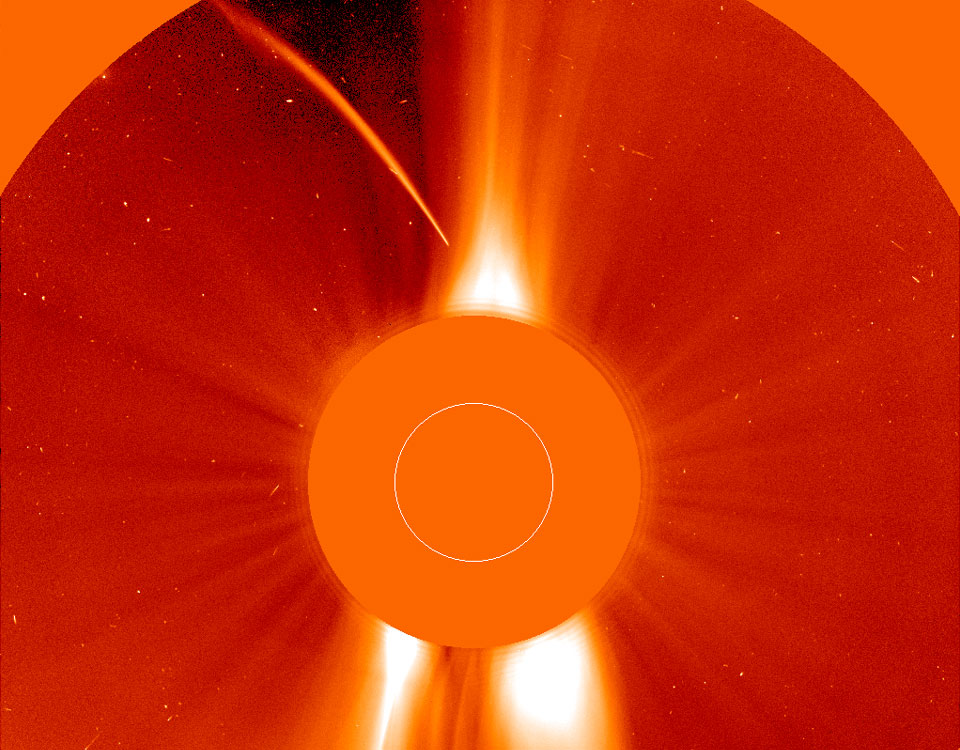
      Arcing toward a fiery fate, this Sungrazer comet was recorded by the SOHO spacecraft's Large Angle Spectrometric COronagraph(LASCO) on December 23, 1996. LASCO uses an occulting disk, partially visible at the lower right, to block out the otherwise overwhelming solar disk allowing it to image the inner 8 million kilometers of the relatively faint corona. The comet is seen as its coma enters the bright equatorial solar wind region (oriented vertically). Positioned in space to continuously observe the Sun, SOHO has now been used to discover over 1,500 comets, including numerous sungrazers. Based on their orbits, the vast majority of sungrazers are believed to belong to the Kreutz family of sungrazing comets created by successive break ups from a single large parent comet that passed very near the Sun in the twelfth century. The Great Comet of 1965, Ikeya-Seki, was also a member of the Kreutz family, coming within about 650,000 kilometers of the Sun's surface. Passing so close to the Sun, Sungrazers are subjected to destructive tidal forces along with intense solar heat. This small comet, known as the Christmas Comet SOHO 6, did not survive. Later this year, Comet ISON, potentially the brightest sungrazer in recorded history but not a Kreutz sungrazer, is expected to survive.


      --------------------------

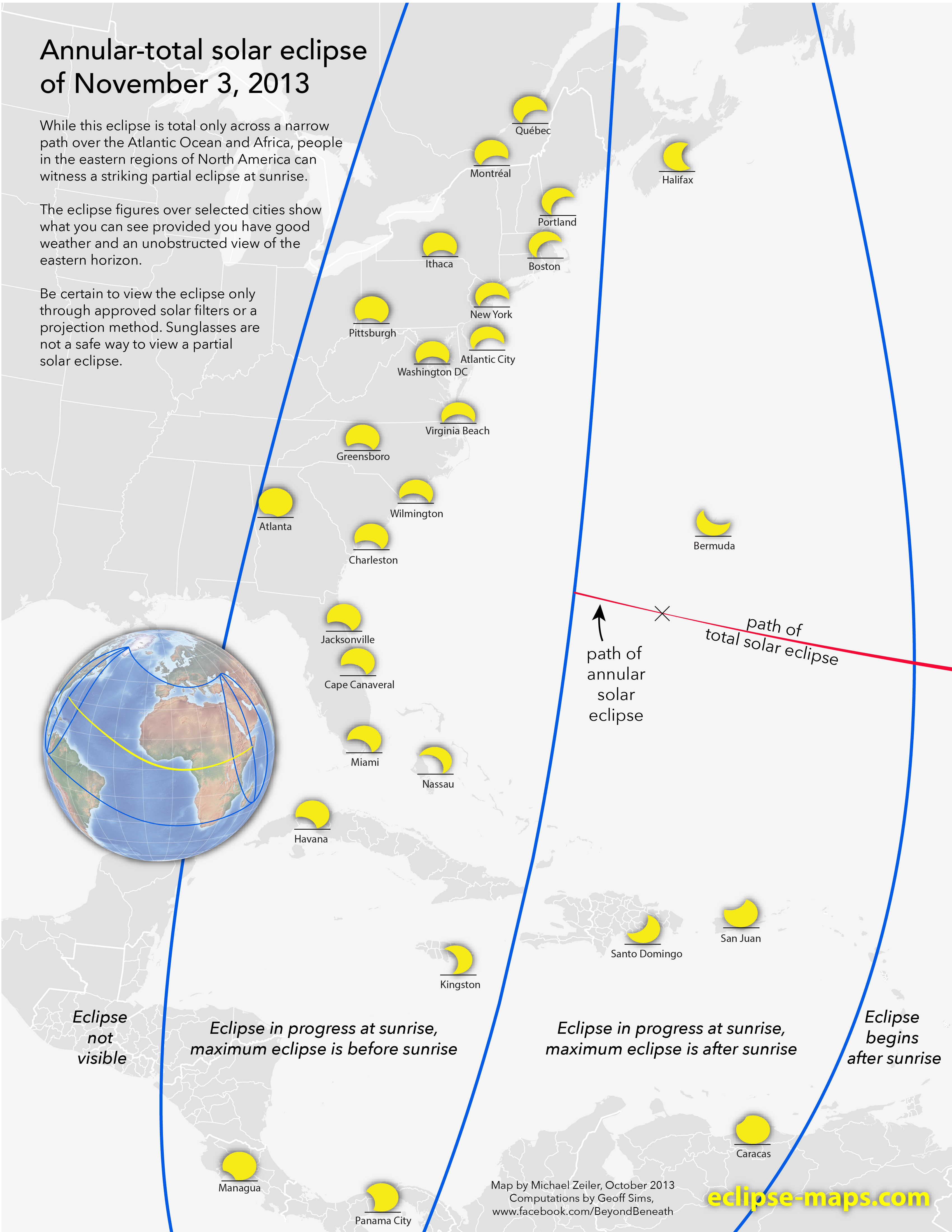
      If you live on the east coast of the United States / Canada, be prepared for a partial solar eclipse at sunrise sunday morning. Use the below map to find out what the sun will look like in your sunrise, weather permitting.

      1st in Kommisar's 2009 SM Tournament
      1st in I Love You`s 2009 New Year`s Tournament
      3rd in EnR's Mashfest '08 tournament
      5th in Phynx's Unofficial FFR Tournament
      9th in D3 of the 2008-2009 4th Official FFR Tournament
      10th in D5 of the 2010 5th Official FFR Tournament
      10th in D6 of the 2011-2012 6th Official FFR Tournament

      FMO AAA Count: 71
      FGO AAA Count: 10

      Bluearrowll = The Canadian player who can not detect awkward patterns. If it's awkward for most people, it's normal for Terry. If the file is difficult but super straight forward, he has issues. If he's AAAing a FGO but then heard that his favorite Hockey team was losing by a point, Hockey > FFR
      PS: Cool AAA's Terry
      - I Love You


      An Alarm Clock's Haiku
      beep beep beep beep beep
      beep beep beep beep beep beep beep
      beep beep beep beep beep
      - ieatyourlvllol

      Comment

      • Bluearrowll
        ⊙▃⊙
        FFR Simfile Author
        • Nov 2007
        • 7376

        #723
        Re: Terry's Astronomy Thread.

        What's in the sky tonight?
        October 31, 2013
        -Halloween is moonless this year. Spot Venus in the southwest as twilight fades, and Vega very high in the west after dark. Higher above Vega is Deneb. A greater distance to Vega's left, look for Altair.

        -Algol, the Demon Star, is at minimum light in eclipse for a couple hours centered on 10:35 p.m. EDT.

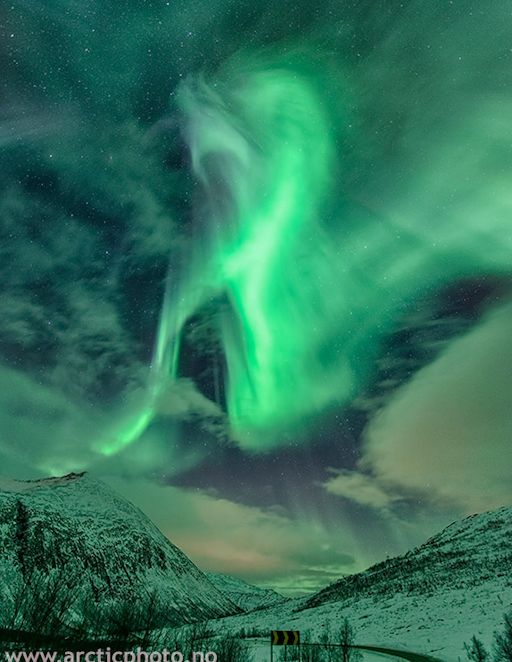
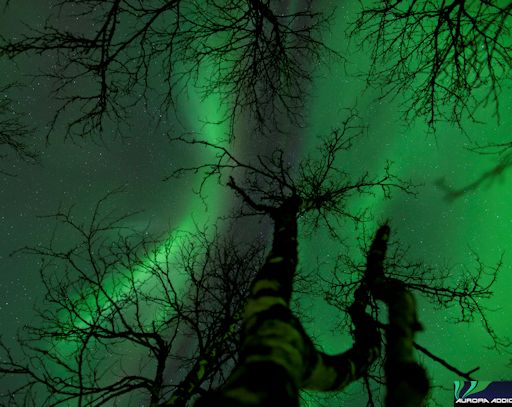
        -High-latitude sky watchers should be alert for auroras on Halloween. A CME is expected to hit Earth's magnetic field on Oct. 31st, possibly sparking polar geomagnetic storms. In northern Norway, the show got started early with this display on Oct. 30th. "We witnessed a very powerful outburst of auroras with bright colours," says photographer Bjørn Jørgensen of Tromsø. And that was before the CME arrived...

        -As Oct. 31st begins, indicators still suggest a CME is approaching Earth. NOAA forecasters expect a G1-class geomagnetic storm when it arrives. Watch for the shock here.


        Astro Picture of the Day:
        October 31, 2013
        Source:
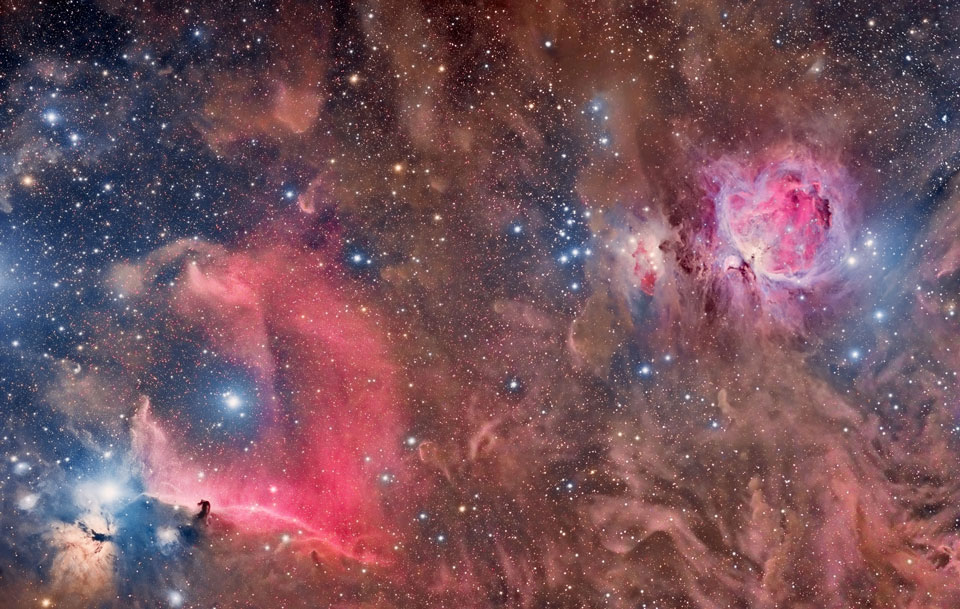
        The dark Horsehead Nebula and the glowing Orion Nebula are contrasting cosmic vistas. Adrift 1,500 light-years away in one of the night sky's most recognizable constellations, they appear in opposite corners of the above stunning mosaic. The familiar Horsehead nebula appears as a dark cloud, a small silhouette notched against the long red glow at the lower left. Alnitak is the easternmost star in Orion's belt and is seen as the brightest star to the left of the Horsehead. Below Alnitak is the Flame Nebula, with clouds of bright emission and dramatic dark dust lanes. The magnificent emission region, the Orion Nebula (aka M42), lies at the upper right. Immediately to its left is a prominent reflection nebula sometimes called the Running Man. Pervasive tendrils of glowing hydrogen gas are easily traced throughout the region.
        1st in Kommisar's 2009 SM Tournament
        1st in I Love You`s 2009 New Year`s Tournament
        3rd in EnR's Mashfest '08 tournament
        5th in Phynx's Unofficial FFR Tournament
        9th in D3 of the 2008-2009 4th Official FFR Tournament
        10th in D5 of the 2010 5th Official FFR Tournament
        10th in D6 of the 2011-2012 6th Official FFR Tournament

        FMO AAA Count: 71
        FGO AAA Count: 10

        Bluearrowll = The Canadian player who can not detect awkward patterns. If it's awkward for most people, it's normal for Terry. If the file is difficult but super straight forward, he has issues. If he's AAAing a FGO but then heard that his favorite Hockey team was losing by a point, Hockey > FFR
        PS: Cool AAA's Terry
        - I Love You


        An Alarm Clock's Haiku
        beep beep beep beep beep
        beep beep beep beep beep beep beep
        beep beep beep beep beep
        - ieatyourlvllol

        Comment

        • Bluearrowll
          ⊙▃⊙
          FFR Simfile Author
          • Nov 2007
          • 7376

          #724
          Re: Terry's Astronomy Thread.

          What's in the sky tonight?
          November 1, 2013
          -Fomalhaut, the Autumn Star, shines at its highest in the south after dinnertime at this time of year. Fomalhaut is often called "lonely" because it's so far from any other 1st-magnitude star. It's in the bottom right of the Great Water: the enormous expanse of autumn sky filled with dim water-themed constellations.

          -As expected, a coronal mass ejection (CME) hit Earth's magnetic field during the early hours of Oct. 31st, Halloween. The impact, however, was not strong enough to spark a geomagnetic storm or widespread auroras. Instead, unexpectedly, auroras appeared before the impact. Observing from Troms, Norway, Chris and Becki Nation photographed this spooky scene on Oct. 30th. "AMAZING display last night!" says Chris. "We had a 360 degree light show. It was absolutely breathtaking and we didn't know which way to point the camera."

          Becki adds, "we are a family of 6 utter Aurora Addicts: Chris, Becki, Aurora 10, Oceanna 8, Lyrica 3 and Caspian 1. We are currently planning a 4 month road trip in our camper van to Lapland this season from our home in the south of the UK. Things are about to get very green."

          But not right away. The geomagnetic field is expected to be mostly quiet for the next 3 days (Nov. 1 - 3).


          Astro Picture of the Day:
          November 1, 2013
          Source:
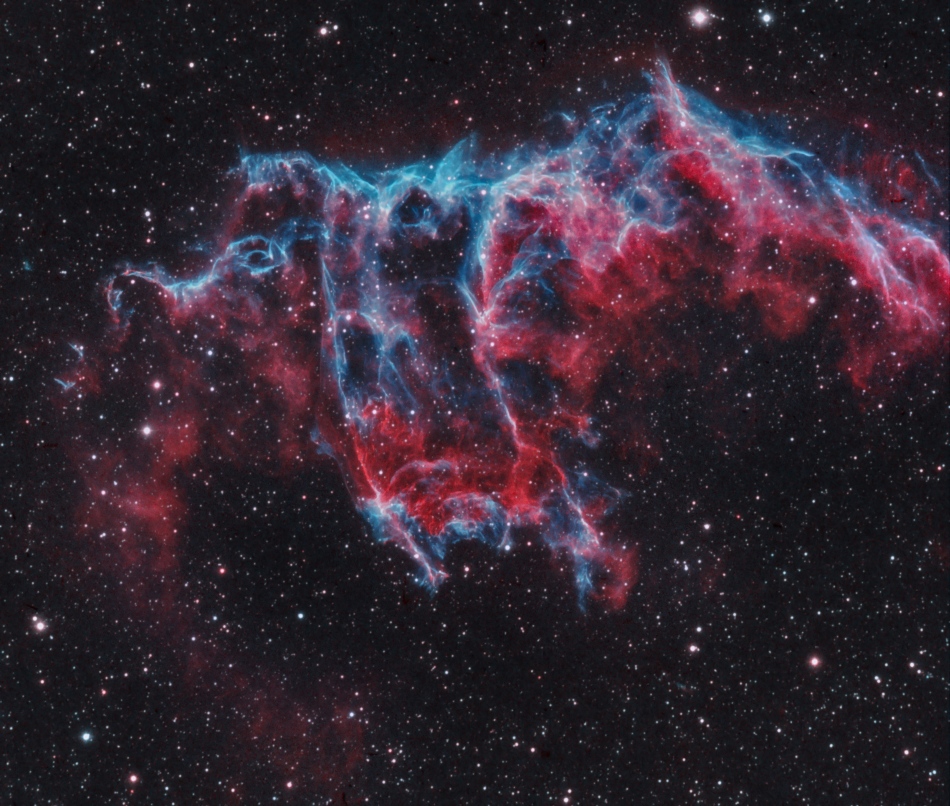
          Frightening forms and scary faces are a mark of the Halloween season. They also haunt this cosmic close-up of the eastern Veil Nebula. The Veil Nebula itself is a large supernova remnant, the expanding debris cloud from the death explosion of a massive star. While the Veil is roughly circular in shape covering nearly 3 degrees on the sky in the constellation Cygnus, this portion of the eastern Veil spans only 1/2 degree, about the apparent size of the Moon. That translates to 12 light-years at the Veil's reassuring estimated distance of 1,400 light-years from planet Earth. In the composite of image data recorded through narrow band filters, emission from hydrogen atoms in the remnant is shown in red with strong emission from oxygen atoms in blue-green hues. In the western part of the Veil lies another seasonal apparition, the Witch's Broom.
          1st in Kommisar's 2009 SM Tournament
          1st in I Love You`s 2009 New Year`s Tournament
          3rd in EnR's Mashfest '08 tournament
          5th in Phynx's Unofficial FFR Tournament
          9th in D3 of the 2008-2009 4th Official FFR Tournament
          10th in D5 of the 2010 5th Official FFR Tournament
          10th in D6 of the 2011-2012 6th Official FFR Tournament

          FMO AAA Count: 71
          FGO AAA Count: 10

          Bluearrowll = The Canadian player who can not detect awkward patterns. If it's awkward for most people, it's normal for Terry. If the file is difficult but super straight forward, he has issues. If he's AAAing a FGO but then heard that his favorite Hockey team was losing by a point, Hockey > FFR
          PS: Cool AAA's Terry
          - I Love You


          An Alarm Clock's Haiku
          beep beep beep beep beep
          beep beep beep beep beep beep beep
          beep beep beep beep beep
          - ieatyourlvllol

          Comment

          • Bluearrowll
            ⊙▃⊙
            FFR Simfile Author
            • Nov 2007
            • 7376

            #725
            Re: Terry's Astronomy Thread.

            What's in the sky tonight?
            November 2, 2013
            -A partial eclipse of the Sun will be in progress as the Sun rises on Sunday morning for the Eastern Seaboard of North America and points inland. The partial eclipse happens in the daytime on Sunday for Africa, the Middle East, southernmost Europe, and elsewhere. The eclipse is total for a narrow track crossing the Atlantic and Equatorial Africa. You can find some good information here: http://www.skyandtelescope.com/obser...229133421.html

            -Daylight-saving time ends at 2 a.m. Sunday morning for most of North America. Clocks fall back an hour. When planning for the sunrise eclipse, be sure that your expected sunrise time and your clocks are both in standard time!

            -Sunspot AR1884 is directly facing Earth, and it has a mixed-polarity magnetic field that harbors energy for strong eruptions. On Nov. 1st at 1953 UT the active region unleashed a brief but intense M6-class solar flare. NASA's Solar Dynamics Observatory recorded the extreme ultraviolet flash. Although the flare was aimed directly at Earth, its effect on our planet was minimal--mainly because the duration was so short (less than 1 minute). A brief blackout of HF radio signals might have occured on the daylit side of Earth, while low-frequency navigation signals could have been disrupted for ~tens of minutes. Any such disruptions have since subsided.

            -Sunspot AR1884 poses a threat for longer and stronger flares this weekend. NOAA forecasters estimate a 40% chance of M-class flares and a 5% chance of X-class flares on Nov. 2nd and 3rd.


            Astro Picture of the Day:
            November 2, 2013
            Source:
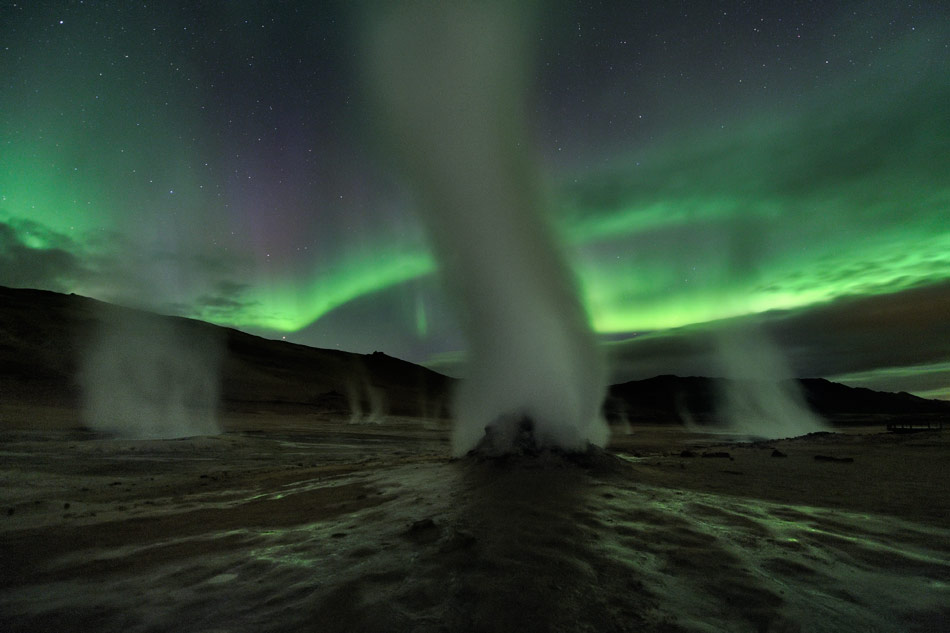
            What spooky planet is this? Planet Earth of course, on the dark and stormy night of September 12 at Hverir, a geothermally active area along the volcanic landscape in northeastern Iceland. Geomagnetic storms produced the auroral display in the starry night sky while ghostly towers of steam and gas venting from fumaroles danced against the eerie greenish light. Tonight, there is still a chance for geomagnetic storms triggered by recent solar activity, so high-latitude skygazers should beware.
            1st in Kommisar's 2009 SM Tournament
            1st in I Love You`s 2009 New Year`s Tournament
            3rd in EnR's Mashfest '08 tournament
            5th in Phynx's Unofficial FFR Tournament
            9th in D3 of the 2008-2009 4th Official FFR Tournament
            10th in D5 of the 2010 5th Official FFR Tournament
            10th in D6 of the 2011-2012 6th Official FFR Tournament

            FMO AAA Count: 71
            FGO AAA Count: 10

            Bluearrowll = The Canadian player who can not detect awkward patterns. If it's awkward for most people, it's normal for Terry. If the file is difficult but super straight forward, he has issues. If he's AAAing a FGO but then heard that his favorite Hockey team was losing by a point, Hockey > FFR
            PS: Cool AAA's Terry
            - I Love You


            An Alarm Clock's Haiku
            beep beep beep beep beep
            beep beep beep beep beep beep beep
            beep beep beep beep beep
            - ieatyourlvllol

            Comment

            • Bluearrowll
              ⊙▃⊙
              FFR Simfile Author
              • Nov 2007
              • 7376

              #726
              Re: Terry's Astronomy Thread.

              What's in the sky tonight?
              November 3, 2013
              -Jupiter's moon Io casts its tiny shadow onto Jupiter tonight from 12:39 p.m. Eastern Daylight Time to 1:53 a.m. Eastern Standard Time. (A self-adjusting clock will make the switch at 2:00 a.m. your local daylight time.) Europa disappears into eclipse by Jupiter's shadow just west of the planet around 1:45 a.m. Eastern Daylight Time.

              -New Moon (exact at 6:50 a.m. Eastern Standard Time).

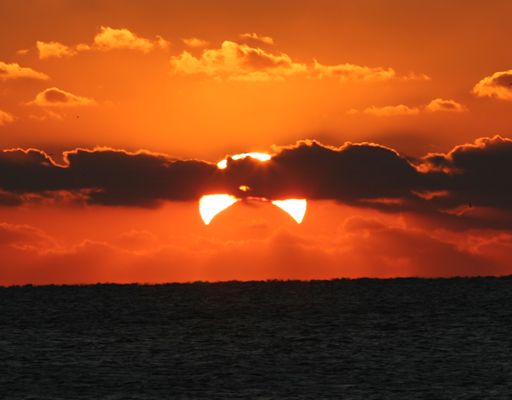
              -This morning, the New Moon passed in front of the sun, producing a solar eclipse visible from the east Coast of North America to the western side of Africa. In Hampton, Virginia, the eclipse was underway when the morning sun rose over the Atlantic Ocean. "We had a beautiful view of the partially eclipsed sun peeking between the clouds," says photographer Stephen Gagnon who stationed his camera on Buckroe Beach.

              -Later, the New Moon covered the entire sun, producing an annular eclipse and then a total solar eclipse visible across the Atlantic and Africa. The narrow path of totality touched several African nations including Gabon, the Congo, Uganda, Kenya, Ethiopia and Somalia.


              Astro Picture of the Day:
              November 3, 2013
              Source:
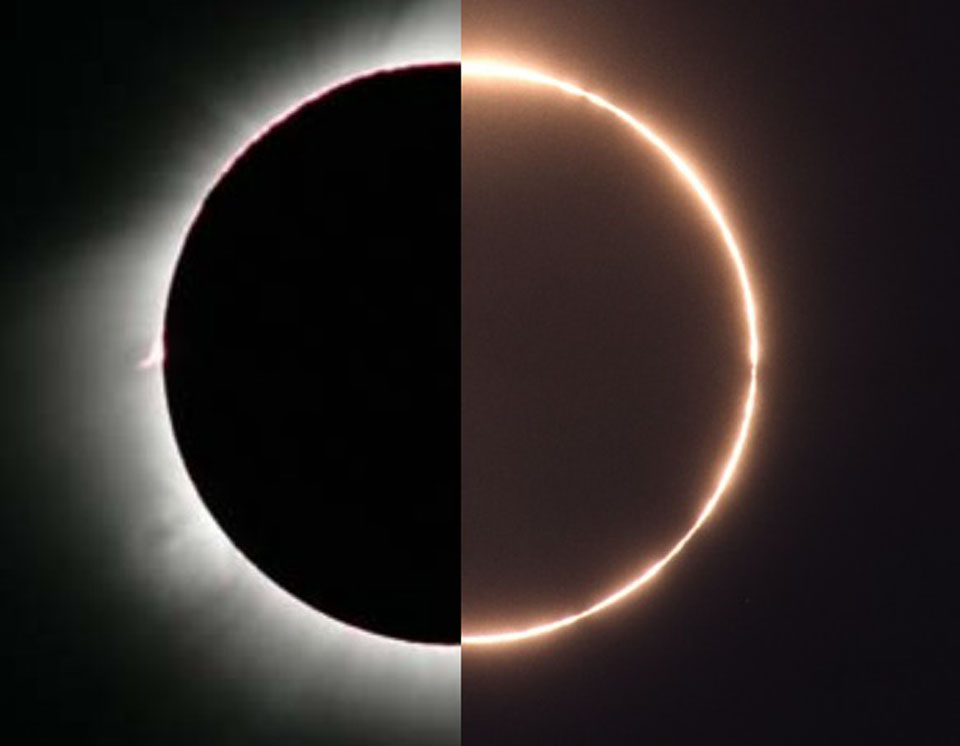
              A spectacular geocentric celestial event of 2005 was a rare hybrid eclipse of the Sun - a total or an annular eclipse could be seen depending on the observer's location. For Fred Espenak, aboard a gently swaying ship within the middle of the Moon's shadow track about 2,200 kilometers west of the Galapagos, the eclipse was total, the lunar silhouette exactly covering the bright solar disk for a few brief moments. His camera captured a picture of totality revealing the extensive solar corona and prominences rising above the Sun's edge. But for Stephan Heinsius, near the end of the shadow track at Penonome Airfield, Panama, the Moon's apparent size had shrunk enough to create an annular eclipse, showing a complete annulus of the Sun's bright disk as a dramatic ring of fire. Pictures from the two locations are compared above. How rare is such a hybrid eclipse? Calculations show that during the 21st century just 3.1% (7 out of 224) of solar eclipses are hybrid while hybrids comprise about 5% of all solar eclipses over the period 2000 BC to AD 3000. Today's hybrid solar eclipse is most widely visible beyond the central shadow track as a brief partial eclipse from northeastern Americas through Africa, and along the track in an annular phase for only the first 15 seconds.

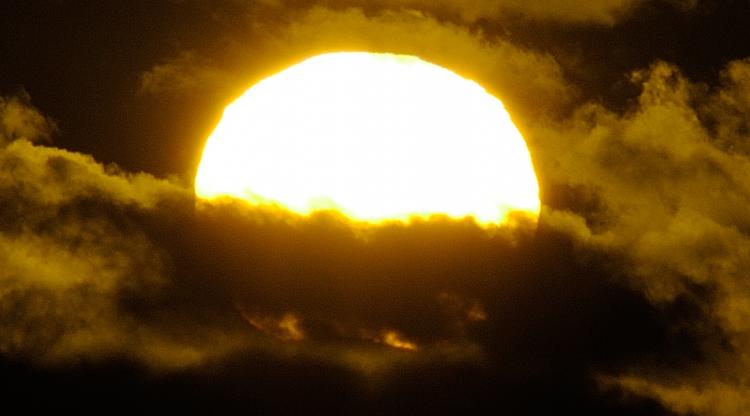
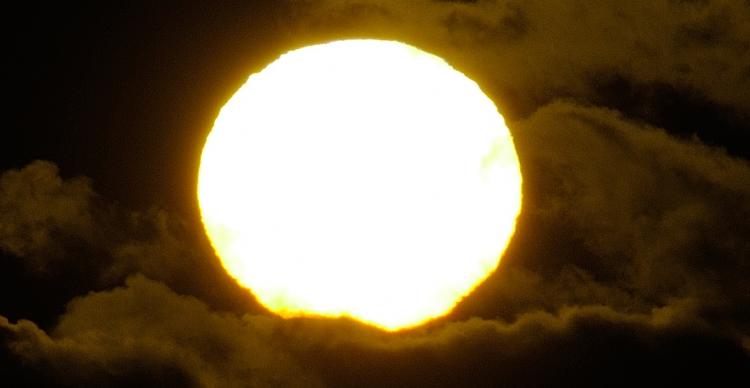
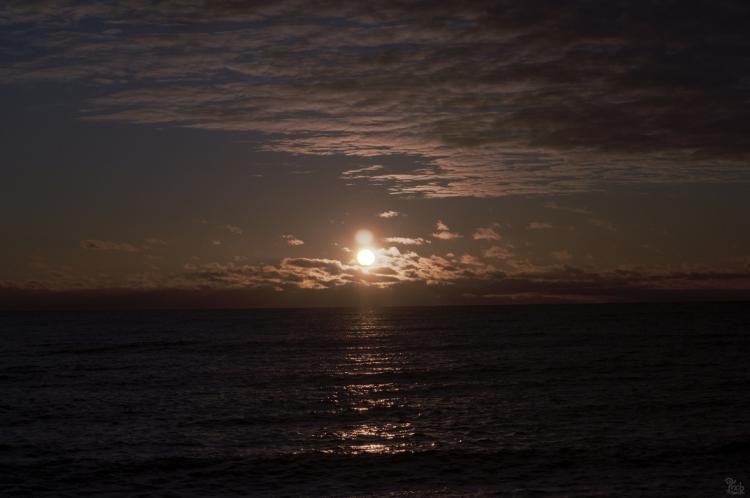
              My own photos of the eclipse as seen from the shores of Toronto are below. Departing at 5am, passing through over half the city, and battling wind chills of -9 for a couple hours to find the best position resulted in the following photographs.


              1st in Kommisar's 2009 SM Tournament
              1st in I Love You`s 2009 New Year`s Tournament
              3rd in EnR's Mashfest '08 tournament
              5th in Phynx's Unofficial FFR Tournament
              9th in D3 of the 2008-2009 4th Official FFR Tournament
              10th in D5 of the 2010 5th Official FFR Tournament
              10th in D6 of the 2011-2012 6th Official FFR Tournament

              FMO AAA Count: 71
              FGO AAA Count: 10

              Bluearrowll = The Canadian player who can not detect awkward patterns. If it's awkward for most people, it's normal for Terry. If the file is difficult but super straight forward, he has issues. If he's AAAing a FGO but then heard that his favorite Hockey team was losing by a point, Hockey > FFR
              PS: Cool AAA's Terry
              - I Love You


              An Alarm Clock's Haiku
              beep beep beep beep beep
              beep beep beep beep beep beep beep
              beep beep beep beep beep
              - ieatyourlvllol

              Comment

              • Riotpolice
                "Reach For The Stars"
                • Nov 2010
                • 1921

                #727
                Re: Terry's Astronomy Thread.

                Very awesome post, I didn't wake up early enough + it was cloudy so I couldn't see any of it but still very cool to see an eclipse every once in a while!
                Originally posted by hi19hi19
                Also why is "summon" in quotation marks as usually that signifies an alternate meaning like for example last night I "visited" your mother but it really means last night I "fucked her in the ass" so exactly what is the subtext of "summon" because I am not sure I am comfortable with the implications

                Originally posted by m0de
                im usually the "nice guy" around these parts.. but this is bad, and you should feel bad. i would rather dip my balls in honey and hover them over a red ant hill than to ever hear such butchered crap.

                Comment

                • Bluearrowll
                  ⊙▃⊙
                  FFR Simfile Author
                  • Nov 2007
                  • 7376

                  #728
                  Re: Terry's Astronomy Thread.

                  What's in the sky tonight?
                  November 4, 2013
                  -Look high in the northeast after dark for Cassiopeia standing on end. Before the Moon starts to brighten the evening sky in a few days, tour some of Cassiopeia's star clusters and nebulae.

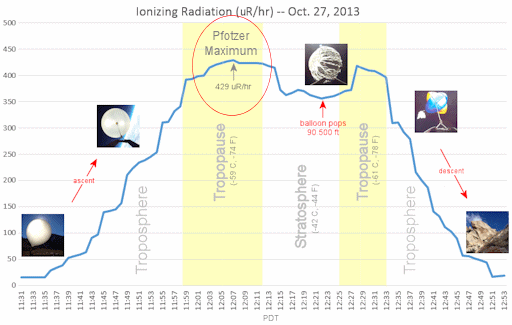
                  -On Oct. 27th, when the students of Earth to Sky Calculus launched a pair of radiation sensors to the stratosphere onboard a helium balloon, they didn't know what to expect. They re-discovered the Pfotzer Maximum, which is a layer of peak radiation about 20 km above Earth's surface. Take a look at this data plot from the team's space weather balloon and keep reading below for more information. The plot shows a complete profile of ionizing radiation between 2.7 km and 27 km above Earth's surface. Data from their sensor counted X-rays and gamma-rays in the energy range 10.0 KeV to 20.0 MeV. A peak in radiation levels occured in the tropopause-that's the Pfotzer Maximum.

                  -When cosmic rays crash into Earth's atmosphere, they produce a spray of secondary particles. With increasing depth in the atmosphere, the primary cosmic radiation component decreases, whereas the secondary radiation component increases. This complex situation results in a maximum of the dose rate at an altitude of ~20 km, the so-called "Pfotzer maximum," named after physicist George Pfotzer who discovered the peak using balloons and Geiger tubes in the 1930s.


                  Astro Picture of the Day:
                  November 4, 2013
                  Source:
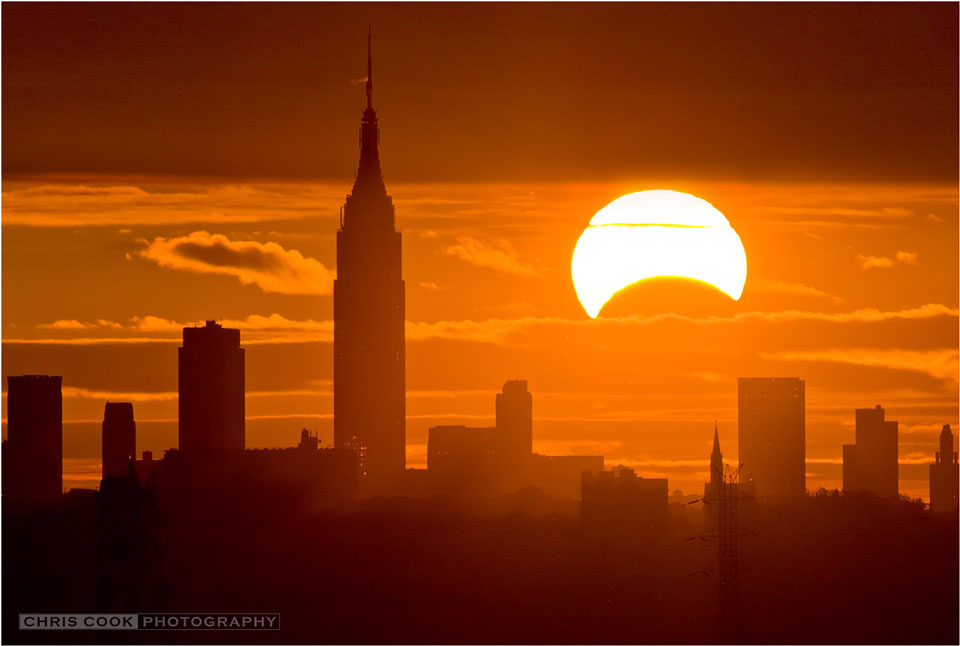
                  A sunrise over New York City rarely looks like this. Yesterday, however, the Sun rose partly eclipsed by the Moon as seen from much of the eastern North American and northern South America. Simultaneously, much of Africa, already well into daytime, saw the eclipse from beginning to end. The eclipse was unusual in that it was a hybrid - parts of the Earth saw the Moon as too angularly small to cover the whole Sun, and so at maximum coverage left the Sun surrounded by a ring a fire, while other parts of the Earth saw the Moon as large enough to cover the entire Sun, and so at maximum coverage witnessed a total solar eclipse. Slight changes in the angular size of the Moon as seen from the Earth's surface are caused by the non-flatness of the Earth and the ellipticity of the Moon's orbit. Pictured above, the famous Empire State Building in New York City is seen to the left of the partially eclipsed Sun, adorned with scenic clouds. The next solar eclipse visible from New York City - a very slight eclipse - will occur during the sunset of 2014 October 23.
                  1st in Kommisar's 2009 SM Tournament
                  1st in I Love You`s 2009 New Year`s Tournament
                  3rd in EnR's Mashfest '08 tournament
                  5th in Phynx's Unofficial FFR Tournament
                  9th in D3 of the 2008-2009 4th Official FFR Tournament
                  10th in D5 of the 2010 5th Official FFR Tournament
                  10th in D6 of the 2011-2012 6th Official FFR Tournament

                  FMO AAA Count: 71
                  FGO AAA Count: 10

                  Bluearrowll = The Canadian player who can not detect awkward patterns. If it's awkward for most people, it's normal for Terry. If the file is difficult but super straight forward, he has issues. If he's AAAing a FGO but then heard that his favorite Hockey team was losing by a point, Hockey > FFR
                  PS: Cool AAA's Terry
                  - I Love You


                  An Alarm Clock's Haiku
                  beep beep beep beep beep
                  beep beep beep beep beep beep beep
                  beep beep beep beep beep
                  - ieatyourlvllol

                  Comment

                  • Bluearrowll
                    ⊙▃⊙
                    FFR Simfile Author
                    • Nov 2007
                    • 7376

                    #729
                    Re: Terry's Astronomy Thread.

                    What's in the sky tonight?
                    November 5, 2013
                    -In twilight, look southwest for the waxing crescent Moon with Venus more than a fist-width at arm's length to its left, as shown here.

                    -Big sunspot AR1890 has an increasingly unstable 'beta-gamma-delta' magnetic field that harbors energy for strong explosions. So far the sunspot is quiet, but this could be the calm before the storm. NOAA forecasters estimate a 45% chance of M-class solar flares and a 10% chance of X-flares on Nov. 5th.

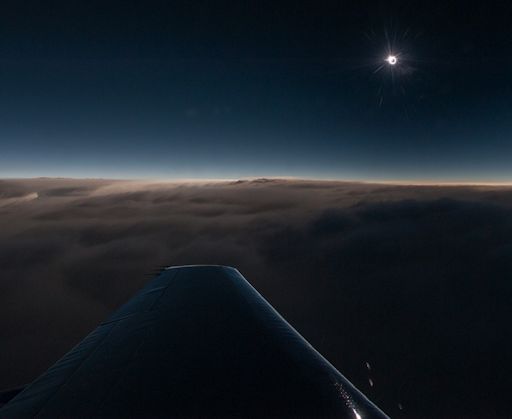
                    -On Sunday morning, Nov. 3rd, the New Moon passed in front of the sun, producing a solar eclipse visible from the east Coast of North America to the western side of Africa. Photographer Ben Cooper experienced the event in a way few people ever have--by racing across the path of totality in a jet airplane. "We used a Falcon 900B jet to intercept this extremely short eclipse with a perpendicular crossing of the eclipse path," Cooper says. He took this picture flying 43,000 feet over the Atlantic Ocean.

                    -Many eclipse chasers didn't bother chasing this particular eclipse because it was so short--in some places lasting only a matter of seconds. Cooper was among a dozen on board the jet who were determined to experience totality. "There was zero margin for error, with the plane, traveling near 600mph and hitting the eclipse shadow where it touched down on Earth at some 8,000 mph, required to hit a geographic point over the ocean at a precise instant," he says. "We arrived at our destination about 1 second late, so we observed even less of the eclipse than we expected. In total, we got an instantaneous totality of nearly zero seconds!" More about the experience can be read here: http://www.launchphotography.com/Tot...ipse_2013.html


                    Astro Picture of the Day:
                    November 5, 2013
                    Source:
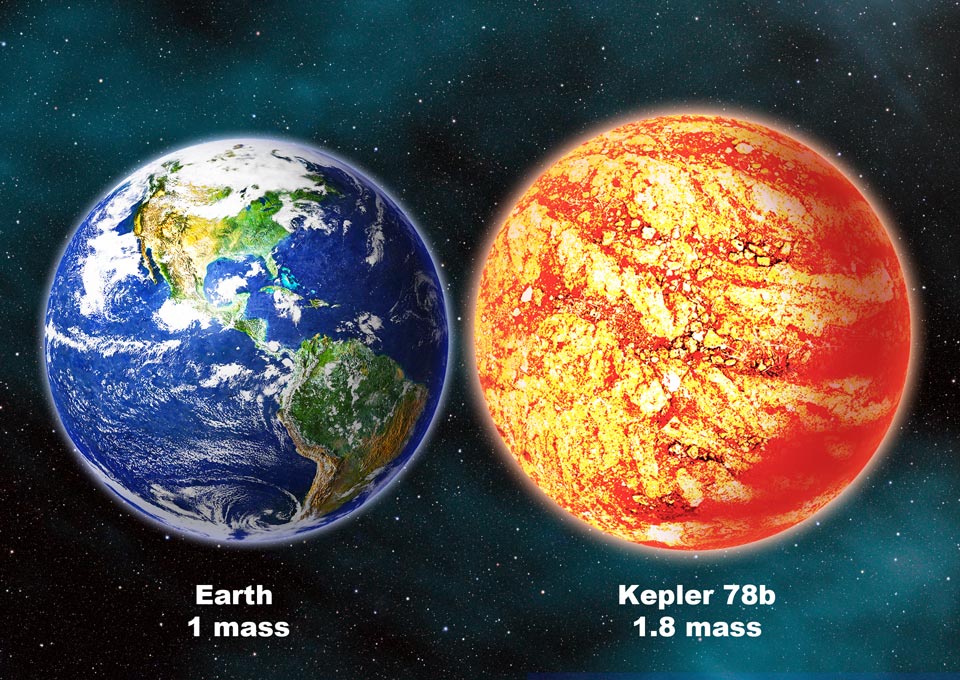
                    Even though Kepler-78b is only slightly larger than the Earth, it should not exist. Its size is extraordinary only in the sense that it is the most similar in size to the Earth of any exoplanet yet directly discovered. Its orbit, however, is extraordinary in the sense that it circles a Sun-like star 40 times closer than planet Mercury. At such a scathing distance, even rock is liquid. Models of planet formation predict that no planet can form in such a close orbit, and models of planet evolution predict that Kepler-78b's orbit should decay -- dooming the planet to eventually merge with its parent star. Illustrated above in comparison with the Earth, Kepler-78b was discovered by eclipse with the Earth-orbiting Kepler spacecraft and further monitored for subtle wobbles by the HARPS- North, a spectrograph attached to the 3.6-meter Telescopio Nazionale Galileo in the Canary Islands.
                    1st in Kommisar's 2009 SM Tournament
                    1st in I Love You`s 2009 New Year`s Tournament
                    3rd in EnR's Mashfest '08 tournament
                    5th in Phynx's Unofficial FFR Tournament
                    9th in D3 of the 2008-2009 4th Official FFR Tournament
                    10th in D5 of the 2010 5th Official FFR Tournament
                    10th in D6 of the 2011-2012 6th Official FFR Tournament

                    FMO AAA Count: 71
                    FGO AAA Count: 10

                    Bluearrowll = The Canadian player who can not detect awkward patterns. If it's awkward for most people, it's normal for Terry. If the file is difficult but super straight forward, he has issues. If he's AAAing a FGO but then heard that his favorite Hockey team was losing by a point, Hockey > FFR
                    PS: Cool AAA's Terry
                    - I Love You


                    An Alarm Clock's Haiku
                    beep beep beep beep beep
                    beep beep beep beep beep beep beep
                    beep beep beep beep beep
                    - ieatyourlvllol

                    Comment

                    • Bluearrowll
                      ⊙▃⊙
                      FFR Simfile Author
                      • Nov 2007
                      • 7376

                      #730
                      Re: Terry's Astronomy Thread.

                      What's in the sky tonight?
                      November 6, 2013
                      -Venus and the crescent Moon are closest this evening. Look for them in the southwest as twilight fades.

                      -On Nov. 5th at 22:12 UT, the magnetic canopy of sunspot AR1890 erupted, producing a brief but intense X3-class solar flare. NASA's Solar Dynamics Observatory recorded the extreme ultraviolet flash.

                      -Radiation from the flare caused a surge in the ionization of Earth's upper atmosphere--and this led to a rare magnetic crochet. Alexander Avtanski observed the effect using a homemade magnetometer in San Jose, California. A magnetic crochet is a disturbance in Earth's magnetic field caused by electrical currents flowing in air 60 km to 100 km above our heads. Unlike geomagnetic disturbances that arrive with CMEs days after a flare, a magnetic crochet occurs while the flare is in progress. They tend to occur during fast impulsive flares like this one.

                      -More eruptions are in the offing. NOAA forecasters estimate a 45% chance of M-class solar flares and a 10% chance of X-flares on Nov. 6th.


                      Astro Picture of the Day:
                      November 6, 2013
                      Source:
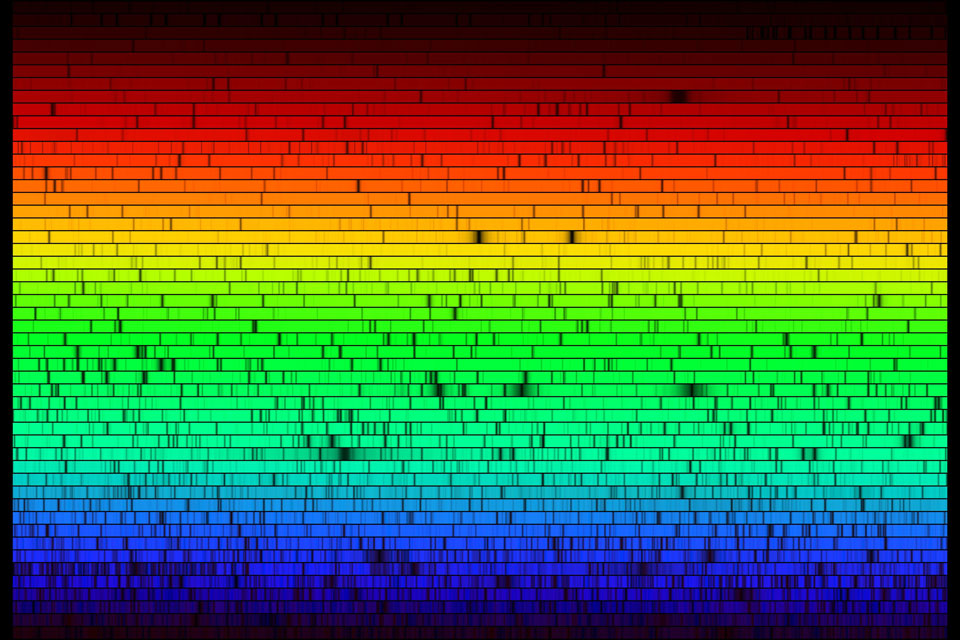
                      It is still not known why the Sun's light is missing some colors. Here are all the visible colors of the Sun, produced by passing the Sun's light through a prism-like device. The spectrum was created at the McMath-Pierce Solar Observatory and shows, first off, that although our white-appearing Sun emits light of nearly every color, it does indeed appear brightest in yellow-green light. The dark patches in the above spectrum arise from gas at or above the Sun's surface absorbing sunlight emitted below. Since different types of gas absorb different colors of light, it is possible to determine what gasses compose the Sun. Helium, for example, was first discovered in 1870 on a solar spectrum and only later found here on Earth. Today, the majority of spectral absorption lines have been identified - but not all.
                      1st in Kommisar's 2009 SM Tournament
                      1st in I Love You`s 2009 New Year`s Tournament
                      3rd in EnR's Mashfest '08 tournament
                      5th in Phynx's Unofficial FFR Tournament
                      9th in D3 of the 2008-2009 4th Official FFR Tournament
                      10th in D5 of the 2010 5th Official FFR Tournament
                      10th in D6 of the 2011-2012 6th Official FFR Tournament

                      FMO AAA Count: 71
                      FGO AAA Count: 10

                      Bluearrowll = The Canadian player who can not detect awkward patterns. If it's awkward for most people, it's normal for Terry. If the file is difficult but super straight forward, he has issues. If he's AAAing a FGO but then heard that his favorite Hockey team was losing by a point, Hockey > FFR
                      PS: Cool AAA's Terry
                      - I Love You


                      An Alarm Clock's Haiku
                      beep beep beep beep beep
                      beep beep beep beep beep beep beep
                      beep beep beep beep beep
                      - ieatyourlvllol

                      Comment

                      • Bluearrowll
                        ⊙▃⊙
                        FFR Simfile Author
                        • Nov 2007
                        • 7376

                        #731
                        Re: Terry's Astronomy Thread.

                        What's in the sky tonight?
                        November 7, 2013
                        -The bulge of the crescent Moon points sunward — but not quite down to Venus in evening twilight. The Moon is currently 5° north of the ecliptic, while Venus is 4° south of it. (In fact, Venus is at its farthest-south declination, –27° 10′, since 1930!)

                        -AR1890, one of the biggest sunspots of the current solar cycle, has turned almost directly toward Earth. This raises the possibility of geoeffective eruptions in the days ahead. NOAA forecasters estimate a 45% chance of M-class flares and a 10% chance of X-flares on Nov. 7th.

                        -Comet ISON is now inside the orbit of Earth and racing toward the sun. Last night, astronomer Alberto Quijano Vodniza of Pasto, Colombia, recorded the comet moving through space at 103,000 mph (46 km/s). "The movie shows the comet's motion over 27 minutes," says Vodniza. Watch it again. "We also caught a satellite."

                        On Nov. 28th, Comet ISON will fly through the sun's atmosphere little more than a million kilometers above the sun's fiery surface. This raises a question: Is Comet ISON racing toward its doom? Astronomer Matthew Knight of the Lowell Observatory thinks the comet might withstand the heat:

                        "At its closest point to the Sun, the equilibrium temperature approaches 5000 degrees Fahrenheit, hot enough to cause much of the dust and rock on ISON’s surface to vaporize," says Knight. "While it may seem incredible that anything can survive this inferno, the rate at which ISON will likely lose mass is relatively small compared to how big it likely is. Assuming that the comet's nucleus is bigger than about 200 meters in radius (current estimates suggest it is 500-2000 m in radius), it will likely survive. It helps that the comet is moving very fast, about 400 km/s at perihelion, so it will not remain long at such extreme temperatures."

                        If Comet ISON does survive its encounter with the sun, it could put on a good show for backyard astronomers in the northern hemisphere in December. The next few weeks will tell the tale.


                        Astro Picture of the Day:
                        November 7, 2013
                        Source:
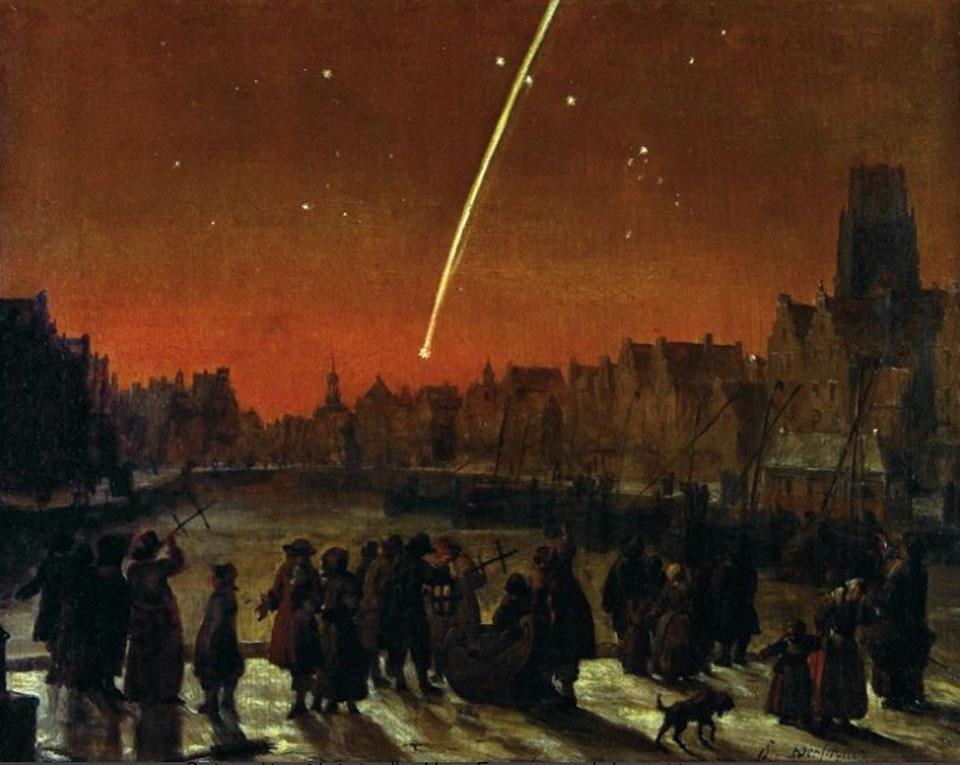
                        Was there ever another comet like ISON? Although no two comets are exactly alike, one that appears to have had notable similarities was Comet Kirch, the Great Comet of 1680. Like approaching Comet ISON, Comet Kirch was a bright sungrazer, making a very close approach to the surface of the Sun. Neither comet, coincidently, is a member of the most common group of sungrazers - the Kreutz group - populated by remnants of a comet that disintegrated near the Sun hundreds of years ago. The long tail of Comet Kirch is depicted in the above painting by Lieve Versheier. As pictured, some members of the foreground crowd of Rotterdam in the Netherlands are holding cross-staffs, an angle measuring device that predated the sextant. No one knows how Comet ISON will develop, but like Comet Kirch, it is expected to be brightest when very near the Sun, in ISON's case during last few days of November.
                        1st in Kommisar's 2009 SM Tournament
                        1st in I Love You`s 2009 New Year`s Tournament
                        3rd in EnR's Mashfest '08 tournament
                        5th in Phynx's Unofficial FFR Tournament
                        9th in D3 of the 2008-2009 4th Official FFR Tournament
                        10th in D5 of the 2010 5th Official FFR Tournament
                        10th in D6 of the 2011-2012 6th Official FFR Tournament

                        FMO AAA Count: 71
                        FGO AAA Count: 10

                        Bluearrowll = The Canadian player who can not detect awkward patterns. If it's awkward for most people, it's normal for Terry. If the file is difficult but super straight forward, he has issues. If he's AAAing a FGO but then heard that his favorite Hockey team was losing by a point, Hockey > FFR
                        PS: Cool AAA's Terry
                        - I Love You


                        An Alarm Clock's Haiku
                        beep beep beep beep beep
                        beep beep beep beep beep beep beep
                        beep beep beep beep beep
                        - ieatyourlvllol

                        Comment

                        • Bluearrowll
                          ⊙▃⊙
                          FFR Simfile Author
                          • Nov 2007
                          • 7376

                          #732
                          Re: Terry's Astronomy Thread.

                          What's in the sky tonight?
                          November 8, 2013
                          -The Hubble Space Telescope has spotted a strange asteroid with six comet-like tails. Researchers think the asteroid, named P/2013 P5, is spewing jets of dust as it rapidly rotates to the breaking point. The full story from Science@NASA is found here: http://science.nasa.gov/science-news.../07nov_6tails/

                          -Big sunspot AR1890 is crackling with strong flares. The latest, which peaked on Nov. 8th at 04:32 UT, registered X1 on the Richter Scale of Flares. (Note: Earlier, we underestimated the intensity of this flare as M8.) NASA's Solar Dynamics Observatory recorded a flash of extreme UV radiation from the blast site. This sunspot has a signature: It tends to produce very brief flares. The X1-flare was no exception as it lasted barely a minute. Brevity mitigates Earth-effects, so this intense flare was not strongly geoeffective--at least, not at first. The explosion also hurled a CME into space. The cloud could deliver a glancing blow to Earth's magnetic field on Nov. 10-11, possibly sparking polar geomagnetic storms.


                          News Posted Today:
                          November 7, 2013
                          New Chelyabinsk Results Yield Surprises


                          Astro Picture of the Day:
                          November 8, 2013
                          Source:
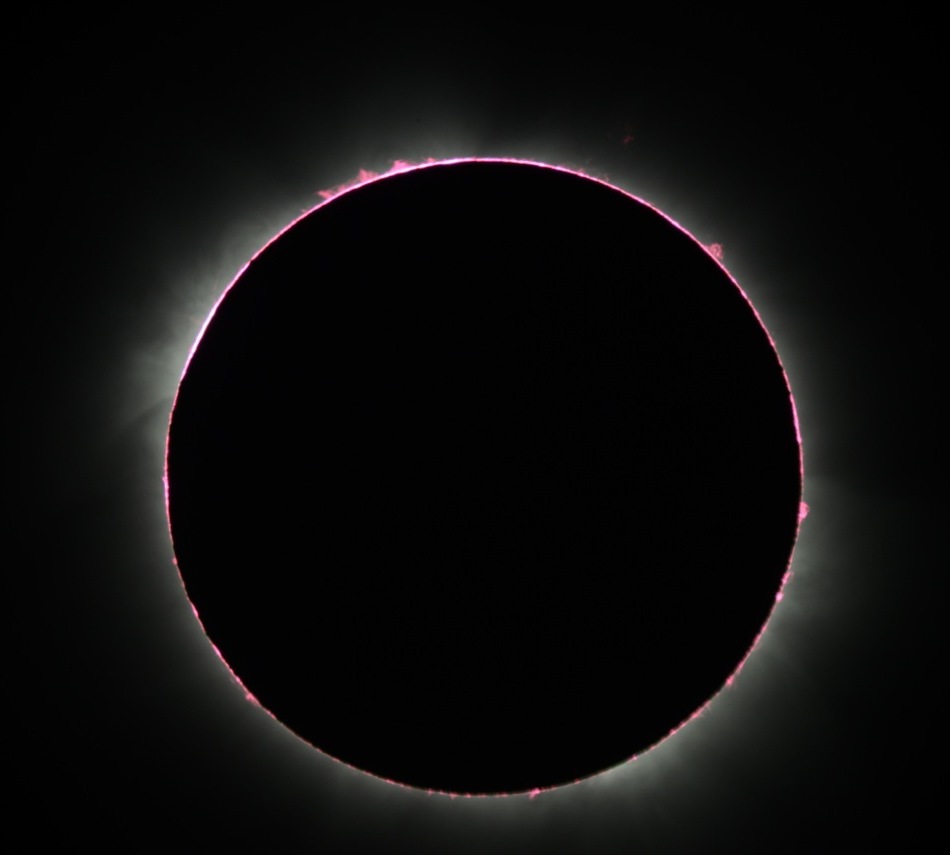
                          The Sun's disk was totally eclipsed for a brief 20 seconds as the Moon's dark umbral shadow raced across Pokwero in northwestern Uganda on November 3rd. So this sharp telescopic view of totality in clear skies from the central African locale was much sought after by eclipse watchers. In the inspiring celestial scene the Moon just covers the overwhelmingly bright photosphere, the lower, normally visible layer of the Sun's atmosphere. Extending beyond the photosphere, the reddish hydrogen alpha glow of the solar chromosphere outlines the lunar silhouette, fading into the Sun's tenuous, hot, outer atmosphere or corona. Planet-sized prominences reaching beyond the limb of the active Sun adorn the edges of the silhouette, including a cloud of glowing plasma separated from the chromosphere near the 1 o'clock position.
                          1st in Kommisar's 2009 SM Tournament
                          1st in I Love You`s 2009 New Year`s Tournament
                          3rd in EnR's Mashfest '08 tournament
                          5th in Phynx's Unofficial FFR Tournament
                          9th in D3 of the 2008-2009 4th Official FFR Tournament
                          10th in D5 of the 2010 5th Official FFR Tournament
                          10th in D6 of the 2011-2012 6th Official FFR Tournament

                          FMO AAA Count: 71
                          FGO AAA Count: 10

                          Bluearrowll = The Canadian player who can not detect awkward patterns. If it's awkward for most people, it's normal for Terry. If the file is difficult but super straight forward, he has issues. If he's AAAing a FGO but then heard that his favorite Hockey team was losing by a point, Hockey > FFR
                          PS: Cool AAA's Terry
                          - I Love You


                          An Alarm Clock's Haiku
                          beep beep beep beep beep
                          beep beep beep beep beep beep beep
                          beep beep beep beep beep
                          - ieatyourlvllol

                          Comment

                          • Bluearrowll
                            ⊙▃⊙
                            FFR Simfile Author
                            • Nov 2007
                            • 7376

                            #733
                            Re: Terry's Astronomy Thread.

                            What's in the sky tonight?
                            November 9, 2013
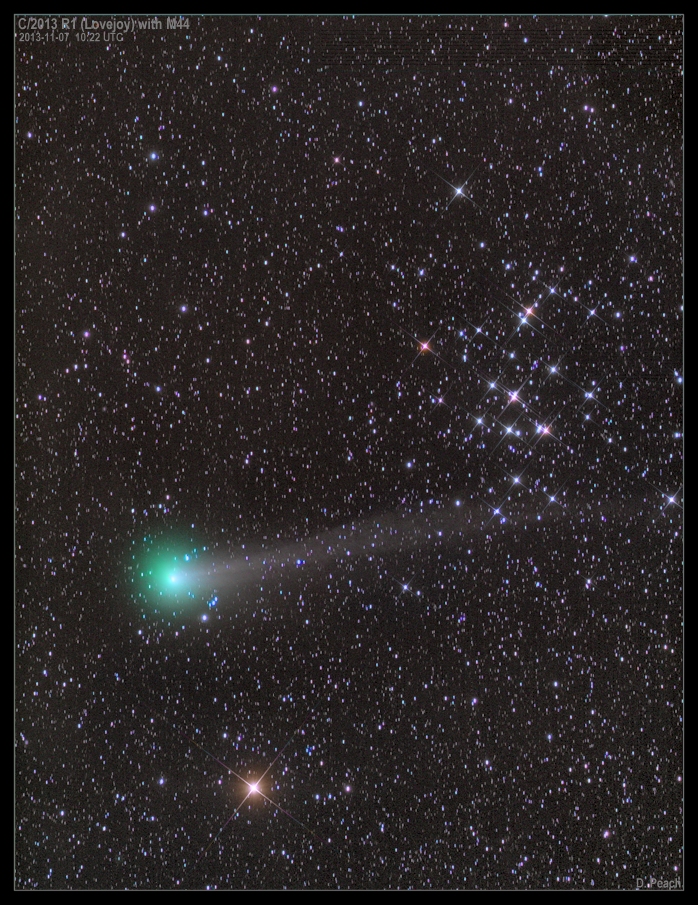
                            -Comet ISON is upstaged! Four comets are currently on display for binoculars or small telescopes in the east before the beginning of dawn (for Northern Hemisphere observers). One is Comet ISON, still underperforming at only about 8th magnitude. It starts this week about midway between Mars and Spica and speeds toward Spica daily, to pass it on November 17th and 18th. But ISON is being outdone! Comet 2013 R1 (Lovejoy) "is a humdinger — almost as bright now as Comet ISON was forecast to be," writes S&T's Tony Flanders. "And it's very high in the sky... big, bright, and beautiful in 10×30 binoculars."

                            -The other two comets, Encke and C/2012 X1 (LINEAR), are fainter. See Tony's article The Other Great Morning Comet, with finder charts for Lovejoy and ISON http://www.skyandtelescope.com/obser...231157211.html. Further details and charts for all four are at http://comets.skyhound.com/.

                            -And don't delay. Encke is getting very low, and moonlight returns to the just-before-dawn sky after about November 15th.

                            -First-quarter Moon (exact at 12:57 a.m. EST Sunday morning). The Moon shines at nightfall about midway between Altair far to its upper right and Fomalhaut far to its lower left. It hangs just above the dim pattern of Capricornus.

                            Astro Picture of the Day:
                            November 9, 2013
                            Source:
                            While anxiously waiting for Comet ISON to brighten further as it falls toward the Sun, northern skygazers can also find three other bright comets in the east before dawn. In fact, Comet Lovejoy C/2013 R1 is currently the morning sky's brightest. Only discovered in September and not a sungrazing comet, this Comet Lovejoy is nearing the edge of naked-eye visibility and might be spotted from very dark sky sites. Sporting a greenish coma and tail in this telescopic view taken on November 7, Comet Lovejoy is about 0.5 AU from our fair planet and 1.2 AU from the Sun. The comet is having a photogenic Messier moment, sweeping past well known star cluster M44, the Beehive in Cancer. Yellowish bright star Delta Cancri is near the bottom of the frame.
                            1st in Kommisar's 2009 SM Tournament
                            1st in I Love You`s 2009 New Year`s Tournament
                            3rd in EnR's Mashfest '08 tournament
                            5th in Phynx's Unofficial FFR Tournament
                            9th in D3 of the 2008-2009 4th Official FFR Tournament
                            10th in D5 of the 2010 5th Official FFR Tournament
                            10th in D6 of the 2011-2012 6th Official FFR Tournament

                            FMO AAA Count: 71
                            FGO AAA Count: 10

                            Bluearrowll = The Canadian player who can not detect awkward patterns. If it's awkward for most people, it's normal for Terry. If the file is difficult but super straight forward, he has issues. If he's AAAing a FGO but then heard that his favorite Hockey team was losing by a point, Hockey > FFR
                            PS: Cool AAA's Terry
                            - I Love You


                            An Alarm Clock's Haiku
                            beep beep beep beep beep
                            beep beep beep beep beep beep beep
                            beep beep beep beep beep
                            - ieatyourlvllol

                            Comment

                            • Bluearrowll
                              ⊙▃⊙
                              FFR Simfile Author
                              • Nov 2007
                              • 7376

                              #734
                              Re: Terry's Astronomy Thread.

                              What's in the sky tonight?
                              November 10, 2013
                              -Cassiopeia shines high in the northeast in early evening, with its five-star W pattern standing on end. Look far below it for Capella rising. Far right of Capella is the little Pleiades cluster, with Aldebaran down below it.

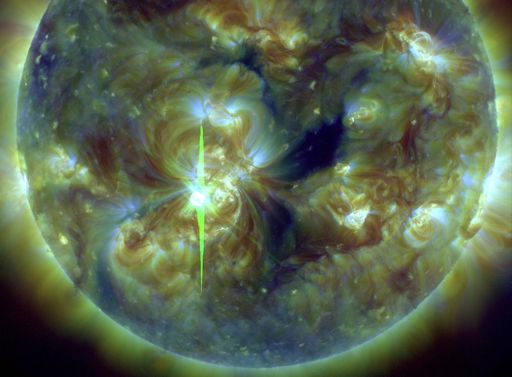
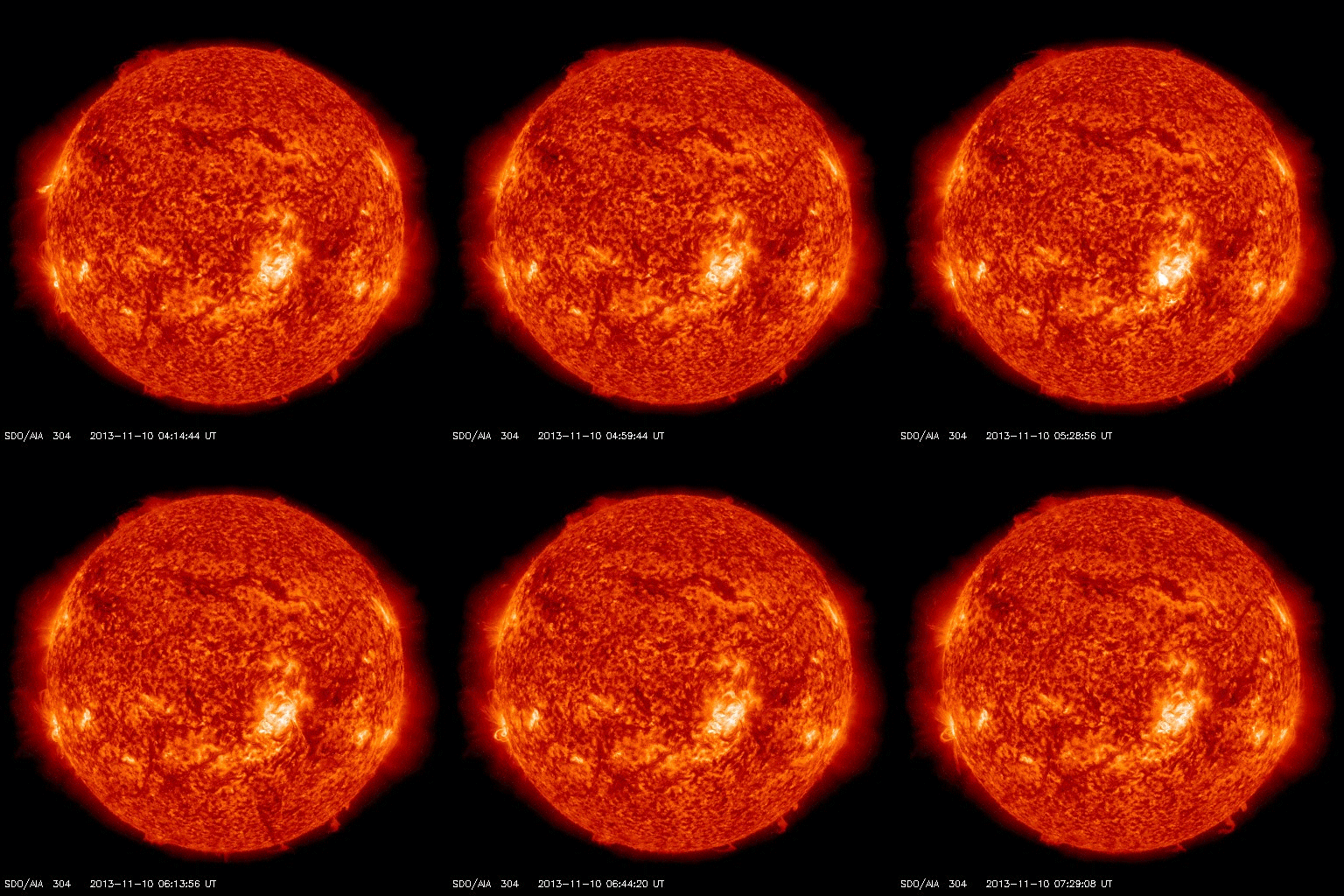
                              -sunspot AR1890 has unleashed another strong flare, an X1-class explosion on Nov. 10th at 05:14 UT. NASA's Solar Dynamics Observatory recorded a bright flash of extreme ultraviolet radiation from the blast site. This is the third X-flare from AR1890 since Nov. 5th, and all three have something in common: brevity. AR1890 tends to produce impulsive flares, peaking sharply in a matter of minutes or less. Often, brief flares do not produce coronal mass ejections (CMEs), but this one could be an exception. A movie of the flare shows a plume of material lifting off the sun shortly after the UV flash. That could be the beginnings of an Earth-directed CME.


                              Astro Picture of the Day:
                              November 10, 2013
                              Source:
                              Sometimes the sky itself is the best show in town. In January 2007, people from Perth, Australia gathered on a local beach to watch a sky light up with delights near and far. Nearby, fireworks exploded as part of Australia Day celebrations. On the far right, lightning from a thunderstorm flashed in the distance. Near the image center, though, seen through clouds, was the most unusual sight of all: Comet McNaught. The photogenic comet was so bright that it even remained visible though the din of Earthly flashes. Comet McNaught has now returned to the outer Solar System and is now only visible with a large telescope. The above image is actually a three photograph panorama digitally processed to reduce red reflections from the exploding firework.
                              1st in Kommisar's 2009 SM Tournament
                              1st in I Love You`s 2009 New Year`s Tournament
                              3rd in EnR's Mashfest '08 tournament
                              5th in Phynx's Unofficial FFR Tournament
                              9th in D3 of the 2008-2009 4th Official FFR Tournament
                              10th in D5 of the 2010 5th Official FFR Tournament
                              10th in D6 of the 2011-2012 6th Official FFR Tournament

                              FMO AAA Count: 71
                              FGO AAA Count: 10

                              Bluearrowll = The Canadian player who can not detect awkward patterns. If it's awkward for most people, it's normal for Terry. If the file is difficult but super straight forward, he has issues. If he's AAAing a FGO but then heard that his favorite Hockey team was losing by a point, Hockey > FFR
                              PS: Cool AAA's Terry
                              - I Love You


                              An Alarm Clock's Haiku
                              beep beep beep beep beep
                              beep beep beep beep beep beep beep
                              beep beep beep beep beep
                              - ieatyourlvllol

                              Comment

                              • Riotpolice
                                "Reach For The Stars"
                                • Nov 2010
                                • 1921

                                #735
                                Re: Terry's Astronomy Thread.

                                Beautiful picture of the sun, looks really sweet with those filters.
                                Originally posted by hi19hi19
                                Also why is "summon" in quotation marks as usually that signifies an alternate meaning like for example last night I "visited" your mother but it really means last night I "fucked her in the ass" so exactly what is the subtext of "summon" because I am not sure I am comfortable with the implications

                                Originally posted by m0de
                                im usually the "nice guy" around these parts.. but this is bad, and you should feel bad. i would rather dip my balls in honey and hover them over a red ant hill than to ever hear such butchered crap.

                                Comment

                                Working...