Terry's Astronomy Thread.

Collapse
X
 
  • Time
  • Show
Clear All
new posts
  • Bluearrowll
    ⊙▃⊙
    FFR Simfile Author
    • Nov 2007
    • 7376

    #796
    Re: Terry's Astronomy Thread.

    Daily Suspicious0bserver's Weather Post:
    January 4, 2014


    What's in the sky tonight?
    January 4, 2014
    -Soon after dark, Sirius, the Dog Star, rises below Orion. And Procyon, the Little Dog Star, rises to the lower right of bright Jupiter. Which of them comes up first? It's Procyon if you're north of latitude 30° (Tijuana, New Orleans, Jacksonville), and Sirius if you're south of there.
    Hint: "Procyon" means "Before the Dog." That tells you something about where its namers lived.

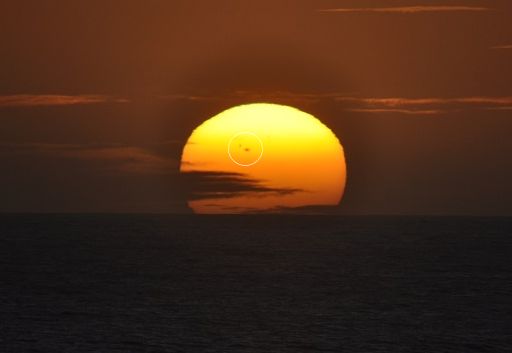
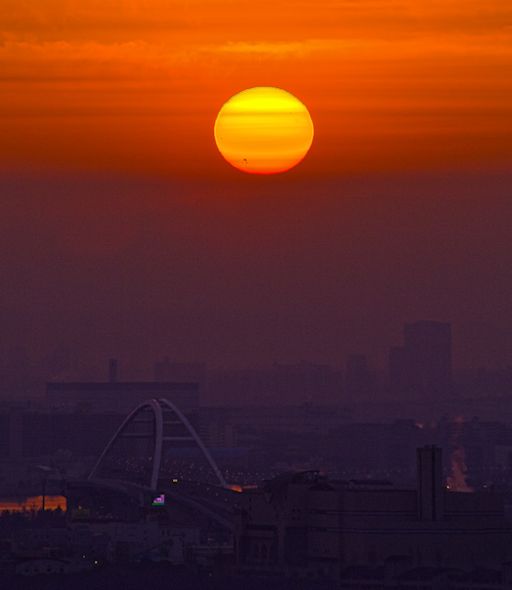
    -Sunspot AR1944, which appeared on January 1st, is one of the largest sunspots of the current solar cycle. It's so big, people are noticing it as a naked-eye blemish on the solar disk. Daisuke Tomiyasu sends this picture from Higashinada-ku, Kobe, Hyogo, Japan.

    "Sunspot 1944 was visible at sunrise on January 4th," says Tomiyasu. "I combined three exposures of 1/15sec, 1/100sec, and 1/640sec to create this HDR (high dynamic range) image."

    Although the sunspot has been relatively quiet and stable since it first appeared on New Year's Day, a region of this size has the potential to produce significant activity. Indeed, NOAA forecasters, who say they are keeping a close eye on this behemoth, estimate a 75% chance of M-flares and a 30% chance of X-flares on Jan. 4th.


    Astro Picture of the Day:
    January 4, 2014
    Source:
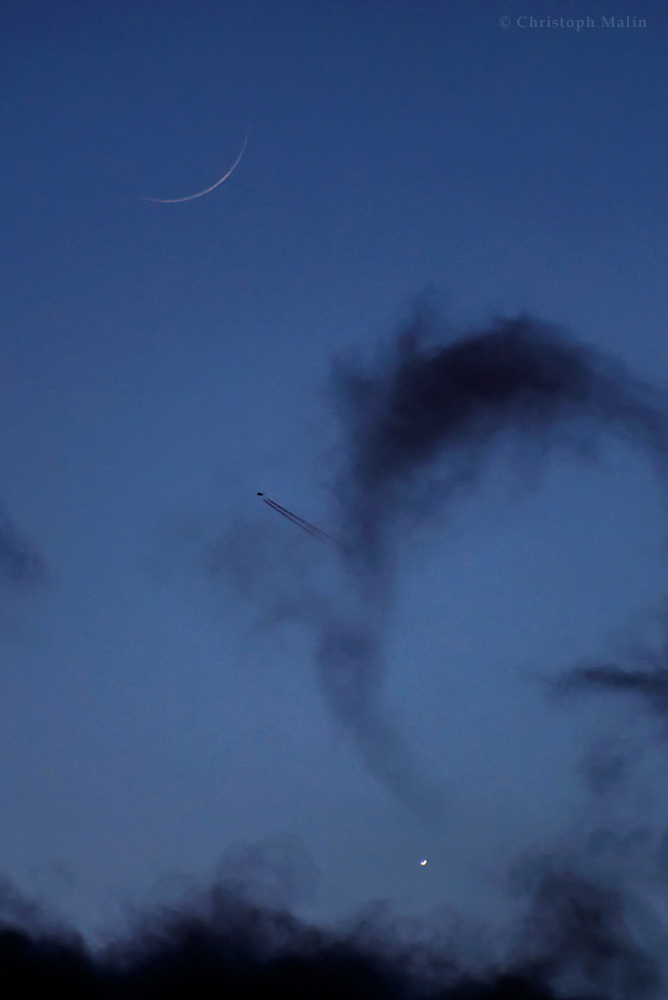
    A crescent Venus shines along the western horizon at dusk in this clearing sky. The Earth's sister planet is smiling between the low clouds near the bottom of the frame during its January 2nd conjunction with the slender, young crescent Moon above. Of course the lovely pairing of Moon and Venus crescents could be enjoyed in the new year's skies around the the world. But the twin contrails in this scene belong to an aircraft above Appenzell, Switzerland. Soon to disappear from evening skies, Venus is heading toward its January 11th inferior conjunction and an appearance in predawn skies as planet Earth's morning star by late January. And the Moon will be young again, too.
    1st in Kommisar's 2009 SM Tournament
    1st in I Love You`s 2009 New Year`s Tournament
    3rd in EnR's Mashfest '08 tournament
    5th in Phynx's Unofficial FFR Tournament
    9th in D3 of the 2008-2009 4th Official FFR Tournament
    10th in D5 of the 2010 5th Official FFR Tournament
    10th in D6 of the 2011-2012 6th Official FFR Tournament

    FMO AAA Count: 71
    FGO AAA Count: 10

    Bluearrowll = The Canadian player who can not detect awkward patterns. If it's awkward for most people, it's normal for Terry. If the file is difficult but super straight forward, he has issues. If he's AAAing a FGO but then heard that his favorite Hockey team was losing by a point, Hockey > FFR
    PS: Cool AAA's Terry
    - I Love You


    An Alarm Clock's Haiku
    beep beep beep beep beep
    beep beep beep beep beep beep beep
    beep beep beep beep beep
    - ieatyourlvllol

    Comment

    • Bluearrowll
      ⊙▃⊙
      FFR Simfile Author
      • Nov 2007
      • 7376

      #797
      Re: Terry's Astronomy Thread.

      Daily Suspicious0bserver's Weather Post:
      January 5, 2014


      What's in the sky tonight?
      January 5, 2014
      -Jupiter is at opposition. All week it’s at its biggest and brightest for 2014.

      -Algol in Perseus, the prototype eclipsing binary star, should be in one of its periodic dimmings, magnitude 3.4 instead of its usual 2.1, for a couple hours centered on 8:24 p.m. EST. Algol takes several additional hours to fade and to rebrighten.

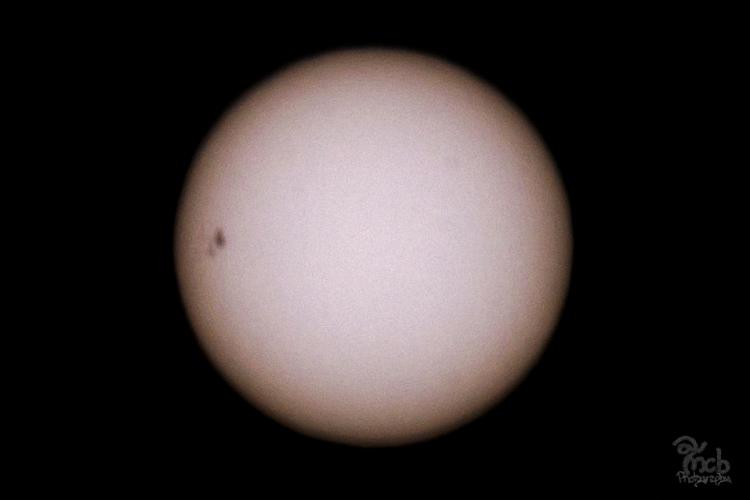
      -Giant sunspot AR1944 has developed a 'beta-gamma-delta' magnetic field that harbors energy for potent Earth-directed eruptions. NOAA forecasters estimate a 75% chance of M-class flares and a 30% chance of X-flares on Jan. 5th.

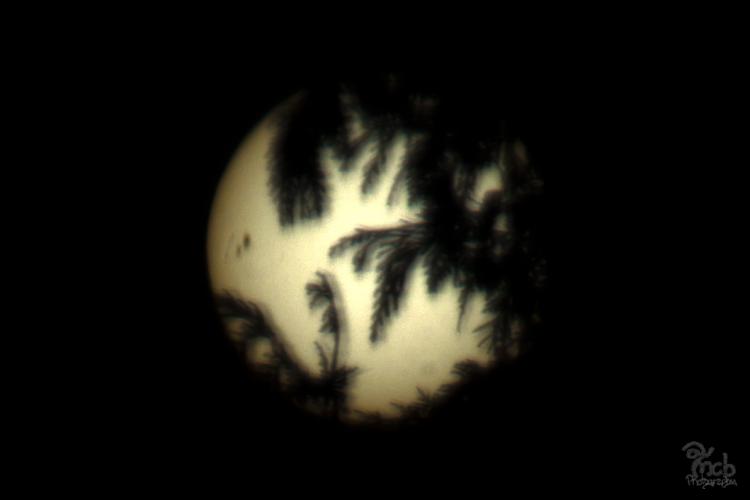
      -I have also included my own photos of the sunspot simply by pointing a DSLR at the sun with a 300mm lens and a neutral density filter.

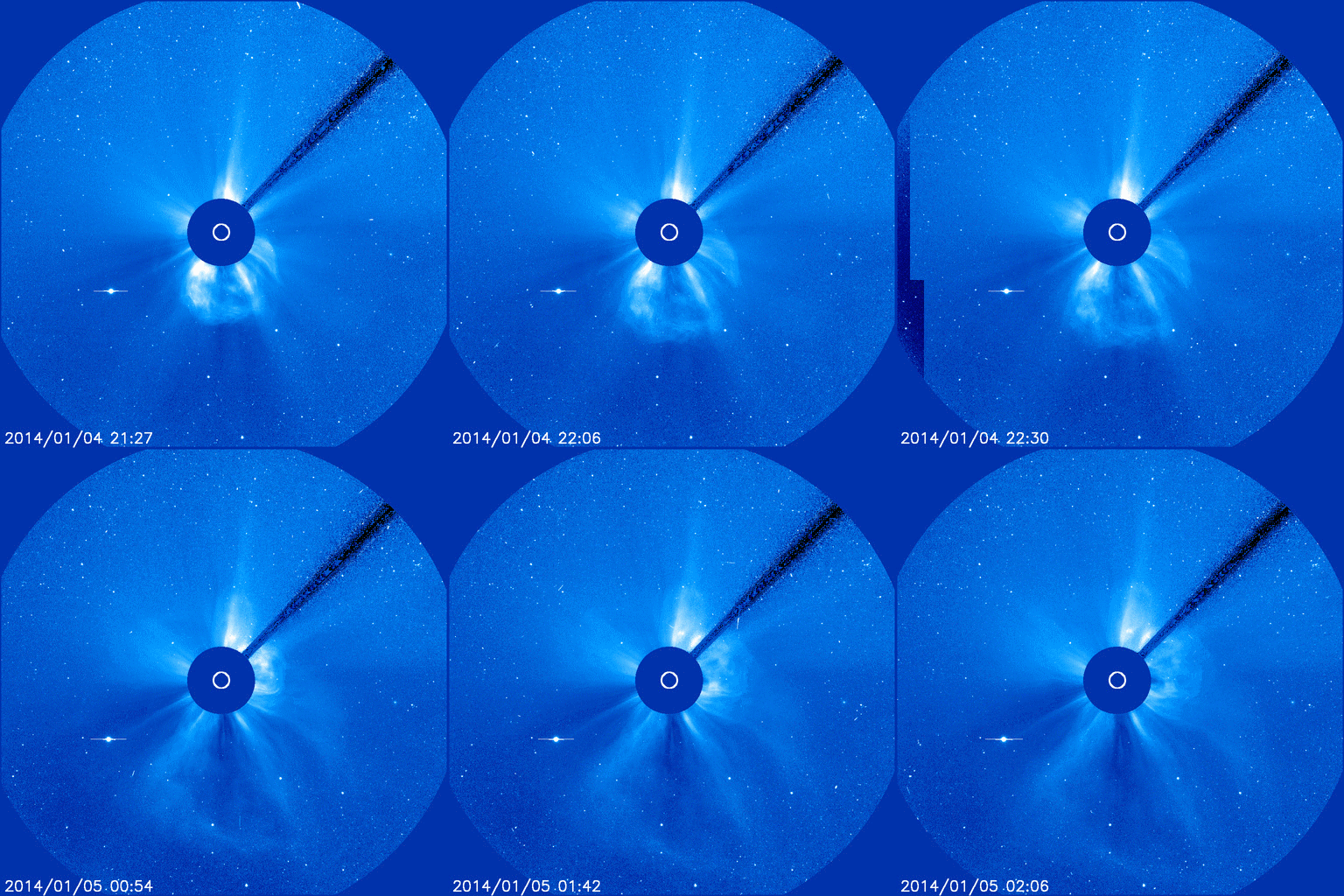
      -A coronal mass ejection (CME) might be heading for Earth. The cloud blasted away from the sun during the late hours of Jan 4th following a long-duration M4-class solar flare from big sunspot AR1944. SOHO (the Solar and Heliospheric Observatory) recorded the explosion.

      -The assymetric CME could deliver a glancing blow to Earth's magnetic field in two or three days, possibly sparking polar geomagnetic storms. NOAA analysts are still processing the CME imagery for a more precise forecast.

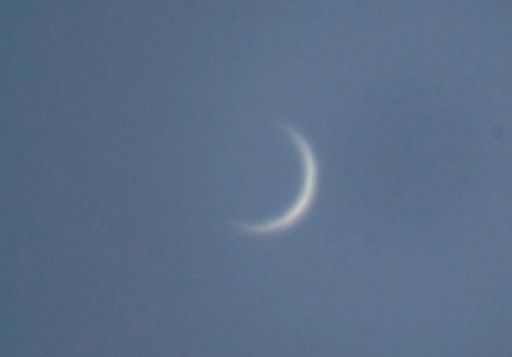
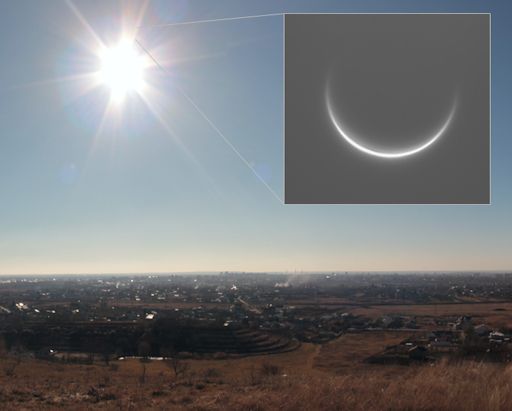
      -Venus is turning its night side toward Earth as it approaches inferior solar conjunction on Jan. 11th. Less than 2% of Venus's sunlit hemisphere is now facing us, which means the planet looks like a razor-thin crescent. If you have a GOTO telescope, command it to slew to Venus. It's visible even in broad daylight.

      -Amateur astronomer Steven Bellavia of New York took the picture at noon on Jan. 4th using a Celestron C5 telescope. "This is the finest crescent Venus I have ever been able to photograph," he says.

      Observers who wish to try this for themselves can find Bellavia's photo details here. Be careful, though, because Venus is only 11o from the blinding sun.


      News Posted Today:
      January 4, 2014
      Huge Sunspot Group Now Observable


      Astro Picture of the Day:
      January 5, 2014

      Source:
      A crescent Venus shines along the western horizon at dusk in this clearing sky. The Earth's sister planet is smiling between the low clouds near the bottom of the frame during its January 2nd conjunction with the slender, young crescent Moon above. Of course the lovely pairing of Moon and Venus crescents could be enjoyed in the new year's skies around the the world. But the twin contrails in this scene belong to an aircraft above Appenzell, Switzerland. Soon to disappear from evening skies, Venus is heading toward its January 11th inferior conjunction and an appearance in predawn skies as planet Earth's morning star by late January. And the Moon will be young again, too.
      1st in Kommisar's 2009 SM Tournament
      1st in I Love You`s 2009 New Year`s Tournament
      3rd in EnR's Mashfest '08 tournament
      5th in Phynx's Unofficial FFR Tournament
      9th in D3 of the 2008-2009 4th Official FFR Tournament
      10th in D5 of the 2010 5th Official FFR Tournament
      10th in D6 of the 2011-2012 6th Official FFR Tournament

      FMO AAA Count: 71
      FGO AAA Count: 10

      Bluearrowll = The Canadian player who can not detect awkward patterns. If it's awkward for most people, it's normal for Terry. If the file is difficult but super straight forward, he has issues. If he's AAAing a FGO but then heard that his favorite Hockey team was losing by a point, Hockey > FFR
      PS: Cool AAA's Terry
      - I Love You


      An Alarm Clock's Haiku
      beep beep beep beep beep
      beep beep beep beep beep beep beep
      beep beep beep beep beep
      - ieatyourlvllol

      Comment

      • Bluearrowll
        ⊙▃⊙
        FFR Simfile Author
        • Nov 2007
        • 7376

        #798
        Re: Terry's Astronomy Thread.

        Daily Suspicious0bserver's Weather Post:
        January 6, 2014


        What's in the sky tonight?
        January 6, 2014
        -Jupiter’s Great Red Spot crosses the planet’s central meridian around 9:53 p.m. EST.

        One of the largest sunspots in years, AR1944, is turning toward Earth. The active region contains dozens of dark cores, the largest of which is big enough to swallow three planet Earths. It's so big, sky watchers are noticing it as a blemish on the solar disk at sunset.

        "Sunspot AR1944 was visible without using a solar telescope," reports Eddie Irizarry of Rincon, Puerto Rico, who took this picture at the end of the day on Jan. 5th. "Proper filters and extreme care should be taken when photographing the sun," he adds. "Unfiltered sunlight magnified by optics can cause serious eye damage."

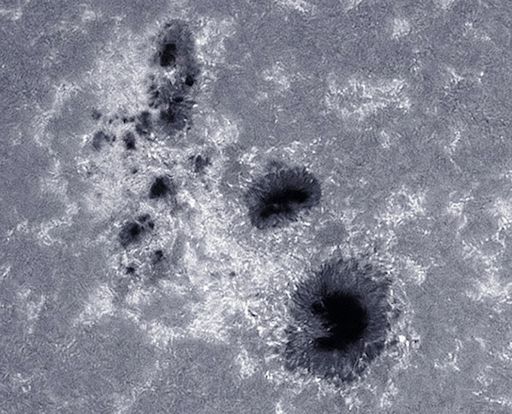
        Astronomers who have a safe solar telescope are encouraged to take a closer look. "AR1944 has to be the most awesome sunspot ever," says Sergio Castillo of Inglewood, CA. "I cannot stop photographing it." His latest image from Jan. 5th is shown below.

        Castillo used a telescope capped with a "Calcium K" filter. Calcium K filters, which are sensitive to the blue glow of calcium ions in the sun's lower atmosphere, highlight the bright magnetic froth that often forms around a sunspot's dark cores. AR1944 is very frothy indeed.

        Magnetic froth does not necessarily herald an explosion, but it does guarantee a photogenic sunspot. Scan the gallery for more images:


        Astro Picture of the Day:
        January 6, 2014

        Source:
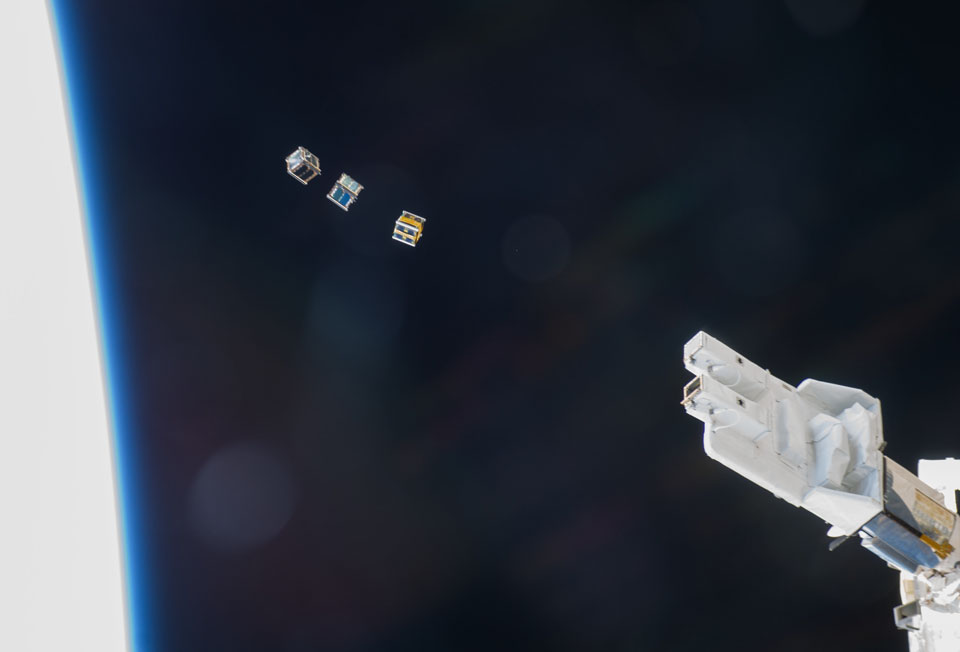
        Cubes are orbiting the Earth. Measuring ten-centimeters on a side, CubeSats - each roughly the size of a large coffee mug -- are designed to be inexpensive both to build and to launch. Pictured above, three CubeSats were released from the International Space Station (ISS) last November by the arm of the Japanese Kibo Laboratory module. CubeSats are frequently created by students as part of university science or engineering projects and include missions such as collecting wide angle imagery of the Earth, testing orbital radio communications, monitoring the Earth's magnetic field, and exploring the Earth's surrounding radiations. Depending on the exact height of their release, CubeSats will re-enter the Earth's atmosphere on the time scale of months to years.
        Last edited by Bluearrowll; 01-6-2014, 03:56 PM.
        1st in Kommisar's 2009 SM Tournament
        1st in I Love You`s 2009 New Year`s Tournament
        3rd in EnR's Mashfest '08 tournament
        5th in Phynx's Unofficial FFR Tournament
        9th in D3 of the 2008-2009 4th Official FFR Tournament
        10th in D5 of the 2010 5th Official FFR Tournament
        10th in D6 of the 2011-2012 6th Official FFR Tournament

        FMO AAA Count: 71
        FGO AAA Count: 10

        Bluearrowll = The Canadian player who can not detect awkward patterns. If it's awkward for most people, it's normal for Terry. If the file is difficult but super straight forward, he has issues. If he's AAAing a FGO but then heard that his favorite Hockey team was losing by a point, Hockey > FFR
        PS: Cool AAA's Terry
        - I Love You


        An Alarm Clock's Haiku
        beep beep beep beep beep
        beep beep beep beep beep beep beep
        beep beep beep beep beep
        - ieatyourlvllol

        Comment

        • Riotpolice
          "Reach For The Stars"
          • Nov 2010
          • 1921

          #799
          Re: Terry's Astronomy Thread.

          Oh wow, I saw an article about those CubeSats. Very cool information, I hope that the satellites will become less and less expensive to build as time goes on. Unfortunately, that also means traffic in space orbiting earth will become much more clustered together. Hopefully we can provide alternatives that bring them down once their use is finished like ie. After a 4 year period, your CubeSat must be taken out of space and brought back to earth.
          Originally posted by hi19hi19
          Also why is "summon" in quotation marks as usually that signifies an alternate meaning like for example last night I "visited" your mother but it really means last night I "fucked her in the ass" so exactly what is the subtext of "summon" because I am not sure I am comfortable with the implications

          Originally posted by m0de
          im usually the "nice guy" around these parts.. but this is bad, and you should feel bad. i would rather dip my balls in honey and hover them over a red ant hill than to ever hear such butchered crap.

          Comment

          • Bluearrowll
            ⊙▃⊙
            FFR Simfile Author
            • Nov 2007
            • 7376

            #800
            Re: Terry's Astronomy Thread.

            Daily Suspicious0bserver's Weather Post:
            January 7, 2014


            What's in the sky tonight?
            January 7, 2014
            -First-quarter Moon (exact at 10:39 p.m. EST). Look to the right of the Moon this evening for the Great Square of Pegasus, tipped up onto one corner. The main line of Andromeda’s stars extends up from its top.

            -NOAA forecasters estimate a 70% chance of polar geomagnetic storms on Jan. 7th when a CME is expected to deliver a glancing blow to Earth's magnetic field. The CME was hurled in our direction by an M4-class explosion from giant sunspot AR1944 on Jan. 4th. High latitude sky watchers should be alert for auroras.

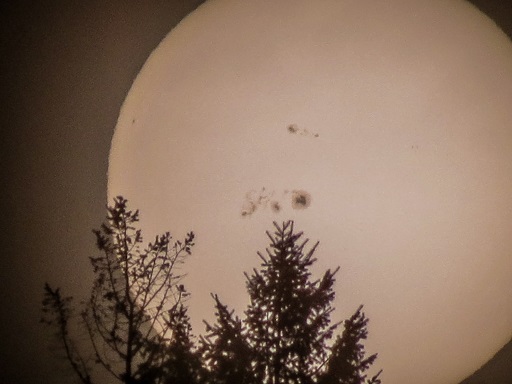
            -One of the biggest sunspots in years is crossing the center of the solar disk, putting Earth in the way of potential eruptions. Rocky Raybell photographed the active region named "AR1944" yesterday from his backyard in Keller, Washington.

            -The sprawling sunspot contains dozens of dark cores, the largest big enough to swallow Earth three times over. This makes it an easy target for amateur solar telescopes. Raybell used a backyard 'scope capped with a Baader solar filer to capture both the sunspot and trees in the foreground.


            Astro Picture of the Day:
            January 7, 2014

            Source:
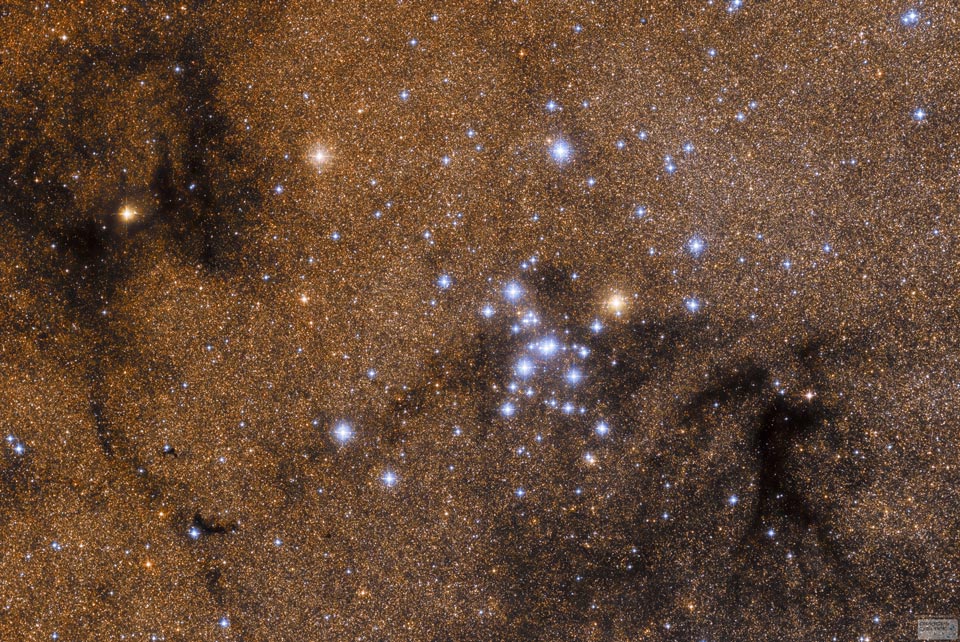
            M7 is one of the most prominent open clusters of stars on the sky. The cluster, dominated by bright blue stars, can be seen with the naked eye in a dark sky in the tail of the constellation of the Scorpion (Scorpius). M7 contains about 100 stars in total, is about 200 million years old, spans 25 light-years across, and lies about 1000 light-years away. The above deep image, taken last June from Hungary through a small telescope, combines over 60 two-minute exposures. The M7 star cluster has been known since ancient times, being noted by Ptolemy in the year 130 AD. Also visible are a dark dust cloud and literally millions of unrelated stars towards the Galactic center.
            1st in Kommisar's 2009 SM Tournament
            1st in I Love You`s 2009 New Year`s Tournament
            3rd in EnR's Mashfest '08 tournament
            5th in Phynx's Unofficial FFR Tournament
            9th in D3 of the 2008-2009 4th Official FFR Tournament
            10th in D5 of the 2010 5th Official FFR Tournament
            10th in D6 of the 2011-2012 6th Official FFR Tournament

            FMO AAA Count: 71
            FGO AAA Count: 10

            Bluearrowll = The Canadian player who can not detect awkward patterns. If it's awkward for most people, it's normal for Terry. If the file is difficult but super straight forward, he has issues. If he's AAAing a FGO but then heard that his favorite Hockey team was losing by a point, Hockey > FFR
            PS: Cool AAA's Terry
            - I Love You


            An Alarm Clock's Haiku
            beep beep beep beep beep
            beep beep beep beep beep beep beep
            beep beep beep beep beep
            - ieatyourlvllol

            Comment

            • Bluearrowll
              ⊙▃⊙
              FFR Simfile Author
              • Nov 2007
              • 7376

              #801
              Re: Terry's Astronomy Thread.

              Daily Suspicious0bserver's Weather Post:
              January 8, 2014


              What's in the sky tonight?
              January 8, 2014
              -Jupiter’s moon Europa crosses Jupiter’s face from 6:47 to 9:29 p.m. EST, with its shadow following just 10 minutes behind.

              -Giant sunspot AR1944 is directly facing Earth and crackling with solar flares. Yesterday, Jan. 7th, an X1-class explosion in the sunspot's magnetic canopy hurled a CME in our direction. High-latitude sky watchers shoud be alert for auroras on Jan. 9th when the cloud is expected to arrive. NOAA forecasters estimate a 60% chance of polar geomagnetic storms.

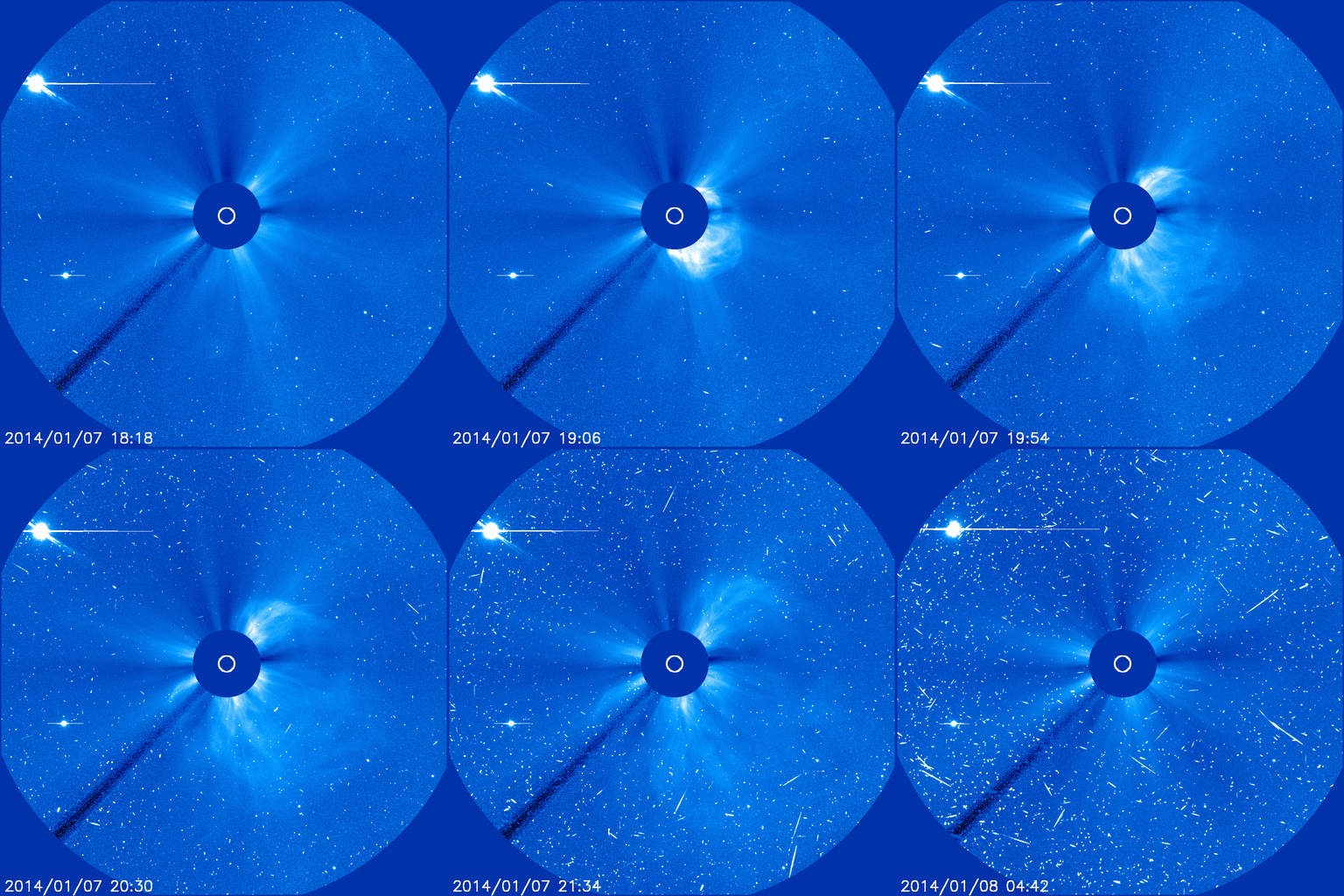
              -The X1-flare that hurled the CME toward Earth also accelerated a swarm of high-energy protons in our direction. Effects of the proton fusillade are visible in this Jan. 7th coronagraph movie from the Solar and Heliospheric Observatory (SOHO).

              -The "snow" in this movie is caused by solar protons striking the spacecraft's CCD camera. A veritable blizzard of speckles develops as the CME emerges into full view. Indeed, many of the protons are accelerated by shock waves at the forefront of the expanding cloud.

              This ongoing radiation storm ranks S2 on NOAA storm scales. It is rich in "hard" protons with more than 100 MeV of energy, which accounts for the snowiness of the SOHO coronagraph images. According to NOAA, "passengers and crew in high-flying aircraft at high latitudes may be exposed to elevated radiation risk" during such a storm.

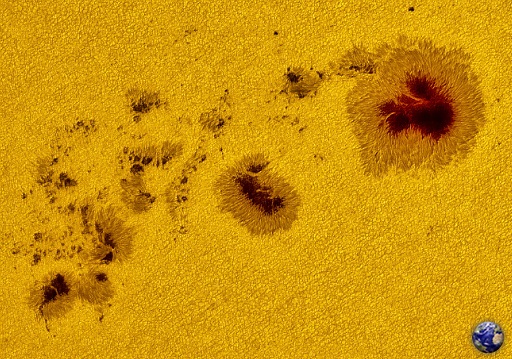
              The source of all this activity is AR1944, one of the biggest sunspots of the past decade. The sprawling active region is more than 200,000 km wide and contains dozens of dark cores. Its primary core, all by itself, is large enough to swallow Earth three times over. To set the scale of the behemoth, Karzaman Ahmad inserted a picture of Earth in the corner of this picture he took on Jan. 7th from the Langkawi National Observatory in Malaysia.

              -More flares are in the offing. The sunspot has an unstable 'beta-gamma-delta' magnetic field that is likely to erupt again today. NOAA forecasters estimate an 80% chance of M-class flares and a 50% chance of X-flares on Jan. 8th.


              Astro Picture of the Day:
              January 8, 2014

              Source:
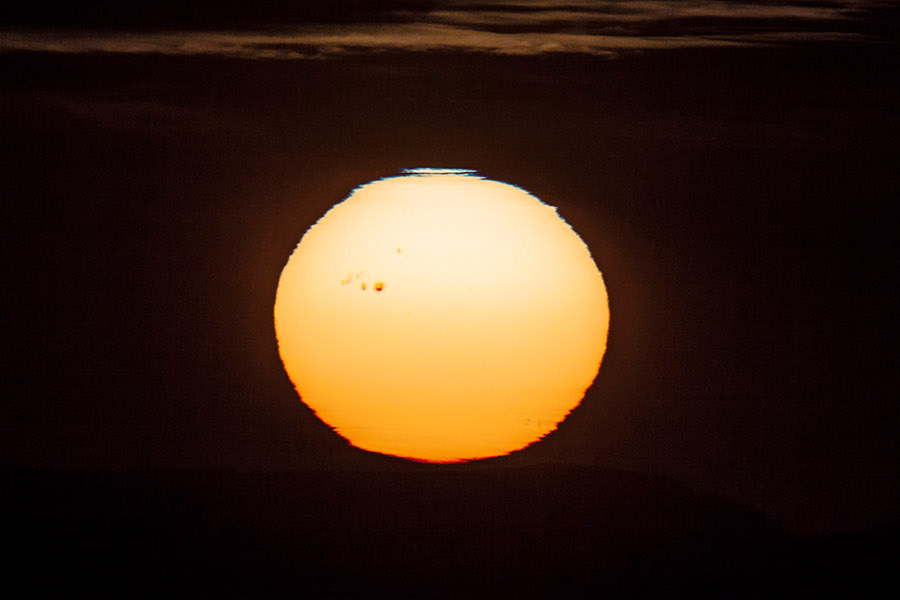
              Sunsets may be the most watched celestial event, but lately sunsets have even offered something extra. A sunspot so large it was visible to the naked eye is captured in Swiss skies in this sunset scene from January 5, crossing left to right near the center of a solar disk dimmed and distorted by Earth's dense atmosphere. Detailed views reveal a large solar active region composed of sunspots, some larger than planet Earth itself. Cataloged as active region AR 1944, on January 7 it produced a substantial solar flare and a coronal mass ejection (CME) forecast to reach Earth. The CME could trigger geomagnetic storms and aurora on January 9.
              1st in Kommisar's 2009 SM Tournament
              1st in I Love You`s 2009 New Year`s Tournament
              3rd in EnR's Mashfest '08 tournament
              5th in Phynx's Unofficial FFR Tournament
              9th in D3 of the 2008-2009 4th Official FFR Tournament
              10th in D5 of the 2010 5th Official FFR Tournament
              10th in D6 of the 2011-2012 6th Official FFR Tournament

              FMO AAA Count: 71
              FGO AAA Count: 10

              Bluearrowll = The Canadian player who can not detect awkward patterns. If it's awkward for most people, it's normal for Terry. If the file is difficult but super straight forward, he has issues. If he's AAAing a FGO but then heard that his favorite Hockey team was losing by a point, Hockey > FFR
              PS: Cool AAA's Terry
              - I Love You


              An Alarm Clock's Haiku
              beep beep beep beep beep
              beep beep beep beep beep beep beep
              beep beep beep beep beep
              - ieatyourlvllol

              Comment

              • Bluearrowll
                ⊙▃⊙
                FFR Simfile Author
                • Nov 2007
                • 7376

                #802
                Re: Terry's Astronomy Thread.

                Daily Suspicious0bserver's Weather Post:
                January 9, 2014


                What's in the sky tonight?
                January 9, 2014
                -A large coronal mass ejection (CME) from the Sun should start hitting Earth's magnetosphere around 8:00 UT January 9th (3 a.m. EST, midnight PST).

                -The CME comes from a big sunspot region that's currently visible to the unaided eye through a safe solar filter or a #14 rectangular arc-welder's filter.

                -NOAA forecasters estimate a 90% chance of geomagnetic storms on Jan. 9th when a CME is expected to hit Earth's magnetic field. The speed of the solar wind around Earth could spike to 700 km/s (1.6 million mph) shortly after the impact, sharply compressing Earth's magnetosphere. High-latitude sky watchers should be alert for auroras.

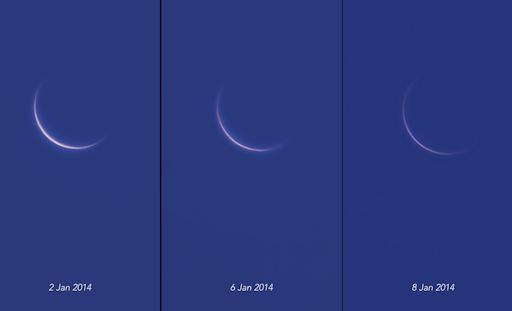
                -Venus is turning its night side toward Earth as it approaches inferior solar conjunction on Jan. 11th. Less than 1% of Venus's sunlit hemisphere is now facing us, which means the planet looks like a razor-thin crescent. If you have a GOTO telescope, command it to slew to Venus. It's visible even in broad daylight.

                -Shahrin Ahmad of Sri Damansara, Malaysia, took these pictures on Jan. 2nd, 6th and 8th using a 4.5 inch telescope. "It us very interesting to see how fast Venus changes in only 6 days! Today the thinning crescent is only 0.7% illuminated at a distance of 7o from the sun."


                Astro Picture of the Day:
                January 9, 2014

                Source:
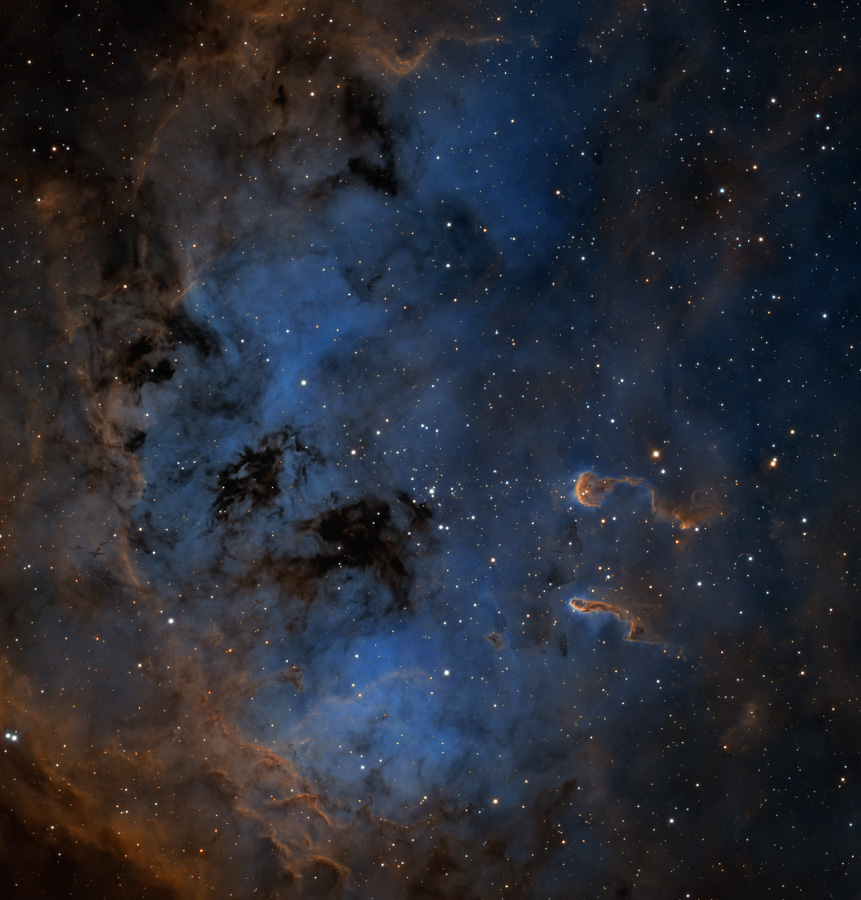
                This telescopic close-up shows off the otherwise faint emission nebula IC 410 in striking false-colors. It also features two remarkable inhabitants of the cosmic pond of gas and dust below and right of center, the tadpoles of IC 410. The picture is a composite of images taken through narrow band filters. The narrow band image data traces atoms in the nebula, with emission from sulfur atoms in red, hydrogen atoms in green, and oxygen in blue. Partly obscured by foreground dust, the nebula itself surrounds NGC 1893, a young galactic cluster of stars that energizes the glowing gas. Composed of denser cooler gas and dust the tadpoles are around 10 light-years long, potentially sites of ongoing star formation. Sculpted by wind and radiation from the cluster stars, their tails trail away from the cluster's central region. IC 410 lies some 12,000 light-years away, toward the constellation Auriga.
                1st in Kommisar's 2009 SM Tournament
                1st in I Love You`s 2009 New Year`s Tournament
                3rd in EnR's Mashfest '08 tournament
                5th in Phynx's Unofficial FFR Tournament
                9th in D3 of the 2008-2009 4th Official FFR Tournament
                10th in D5 of the 2010 5th Official FFR Tournament
                10th in D6 of the 2011-2012 6th Official FFR Tournament

                FMO AAA Count: 71
                FGO AAA Count: 10

                Bluearrowll = The Canadian player who can not detect awkward patterns. If it's awkward for most people, it's normal for Terry. If the file is difficult but super straight forward, he has issues. If he's AAAing a FGO but then heard that his favorite Hockey team was losing by a point, Hockey > FFR
                PS: Cool AAA's Terry
                - I Love You


                An Alarm Clock's Haiku
                beep beep beep beep beep
                beep beep beep beep beep beep beep
                beep beep beep beep beep
                - ieatyourlvllol

                Comment

                • Bluearrowll
                  ⊙▃⊙
                  FFR Simfile Author
                  • Nov 2007
                  • 7376

                  #803
                  Re: Terry's Astronomy Thread.

                  Daily Suspicious0bserver's Weather Post:
                  January 10, 2014


                  What's in the sky tonight?
                  January 10, 2014
                  -Look left of the Moon at nightfall for the Pleiades, as shown here. The Pleiades are straight above the Moon by about 8 or 9.

                  -Bright Capella high overhead and bright Rigel in Orion's foot, both magnitude 0, have almost the same right ascension — so they cross your sky’s north-south meridian at almost the same time. Capella passes closest to straight overhead around 10 p.m., depending on how far east or west you live in your time zone. (It goes exactly through the zenith if you're at latitude 46° north: Portland, Oregon; Montreal; central France.) So, when Capella is passing closest to the zenith, Rigel always marks true south over your landscape.

                  -Giant sunspot AR1944 has not unleashed a significant flare in more than 48 hours. The growing quiet could be the calm between storms. AR1944 has an unstable 'beta-gamma-delta' magnetic field that harbors energy for X-class flares.

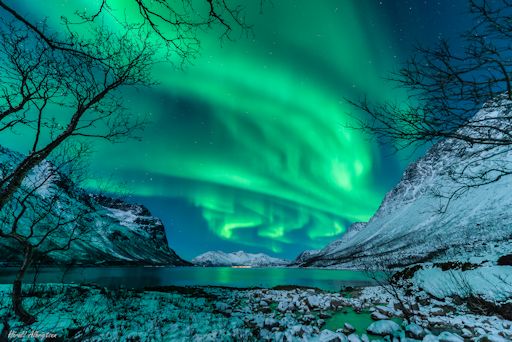
                  -As predicted, a CME hit Earth's magnetic field on Jan. 9th (20:00 UT). The impact was weaker than expected, however, and it failed to produce widespread geomagnetic storms. Nevertheless, some beautiful auroras appeared around the Arctic Circle. Harald Albrigtsen sends this picture from Tromsø, Norway.

                  It was dark in Norway when the CME arrived, so observers there witnessed a nice display. By the time night fell over North America, however, the lights had faded. US observers saw nothing remarkable.

                  More auroras are possible on Jan. 10th as Earth passes through the magnetic wake of the CME. NOAA forecasters estimate a 85% chance of polar geomagnetic storms before the day is over.


                  Astro Picture of the Day:
                  January 10, 2014

                  Source:
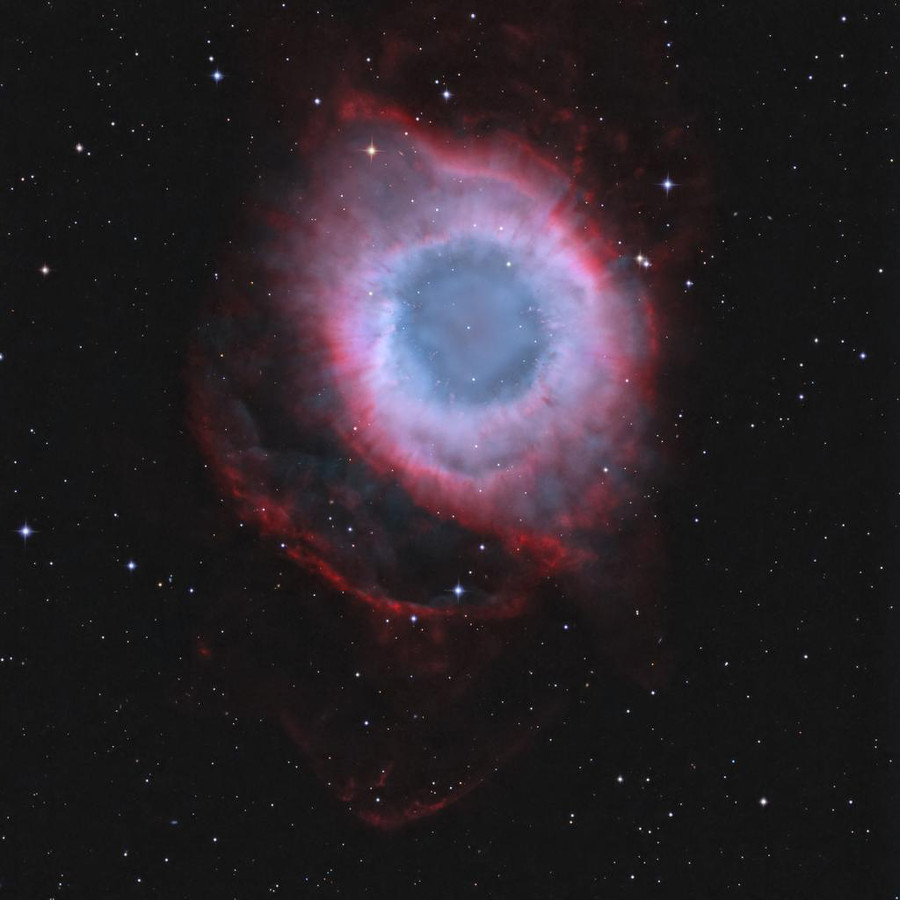
                  A mere seven hundred light years from Earth, in the constellation Aquarius, a sun-like star is dying. Its last few thousand years have produced the Helix Nebula (NGC 7293), a well studied and nearby example of a Planetary Nebula, typical of this final phase of stellar evolution. A total of 28.5 hours of exposure time have gone in to creating this deep view of the nebula. Combining narrow band image data from emission lines of hydrogen atoms in red and oxygen atoms in blue-green hues, it shows remarkable details of the Helix's brighter inner region, about 3 light-years across, but also follows fainter outer halo features that give the nebula a span of well over six light-years. The white dot at the Helix's center is this Planetary Nebula's hot, central star. A simple looking nebula at first glance, the Helix is now understood to have a surprisingly complex geometry.
                  1st in Kommisar's 2009 SM Tournament
                  1st in I Love You`s 2009 New Year`s Tournament
                  3rd in EnR's Mashfest '08 tournament
                  5th in Phynx's Unofficial FFR Tournament
                  9th in D3 of the 2008-2009 4th Official FFR Tournament
                  10th in D5 of the 2010 5th Official FFR Tournament
                  10th in D6 of the 2011-2012 6th Official FFR Tournament

                  FMO AAA Count: 71
                  FGO AAA Count: 10

                  Bluearrowll = The Canadian player who can not detect awkward patterns. If it's awkward for most people, it's normal for Terry. If the file is difficult but super straight forward, he has issues. If he's AAAing a FGO but then heard that his favorite Hockey team was losing by a point, Hockey > FFR
                  PS: Cool AAA's Terry
                  - I Love You


                  An Alarm Clock's Haiku
                  beep beep beep beep beep
                  beep beep beep beep beep beep beep
                  beep beep beep beep beep
                  - ieatyourlvllol

                  Comment

                  • s1rnight
                    ( ¯u¯)-b
                    FFR Music Producer
                    • Aug 2011
                    • 392

                    #804
                    Re: Terry's Astronomy Thread.

                    !! this is really cool. i might start coming here regularly just to read these haha

                    Comment

                    • Bluearrowll
                      ⊙▃⊙
                      FFR Simfile Author
                      • Nov 2007
                      • 7376

                      #805
                      Re: Terry's Astronomy Thread.

                      Daily Suspicious0bserver's Weather Post:
                      January 11, 2014


                      What's in the sky tonight?
                      January 11, 2014
                      -Aldebaran shines below the Moon at dusk, as shown here. It swings around to the left of the Moon by about 11 p.m.

                      -Jupiter’s Great Red Spot transits Jupiter’s central meridian around 9:30 p.m. EST.

                      -Venus is at inferior conjunction, passing 5° north of the Sun today.

                      -NOAA forecasters estimate a 35% chance of X-class solar flares on Jan. 11th. The likely source would be AR1944. The brooding sunspot has been quiet for days, but still poses a threat for strong eruptions.

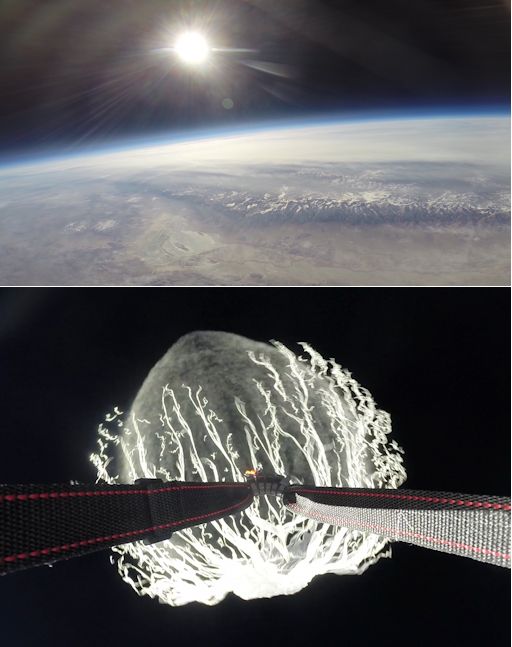
                      -The payload of a space weather balloon launched Jan. 8th by the students of Earth to Sky Calculus has been recovered from its landing site in Death Valley National Park. The purpose of the flight was to study a solar radiation storm in progress at the time of the launch. Analyzing the data may take a few days.

                      These pictures were taken by a pair of Hero3+ cameras looking out of the payload capsule. The upper frame shows the Sierra Nevada mountain range, unusually brown for this time of year as California endures a historic drought. The lower frame captures the balloon popping at an altitude of approximately 100,000 feet. Click on each frame for a closer look. The landscape shot was made using the Hero3+'s new "superview mode"--a favorite of snowboarders and now, for the first time, balloonists!

                      In addition to cameras, the payload contained an x-ray/gamma-ray dosimeter, a GPS altimeter, and a cryogenic thermometer. Together these instruments can form a complete thermal and radiation profile of the atmosphere throughout the flight. The students plan to pay special attention to data collected at aviation altitudes to learn how much radiation air travelers absorb during periods of high solar activity.


                      News Posted Today:
                      January 10, 2014
                      Galaxies Trace Early Cosmic History


                      Astro Picture of the Day:
                      January 11, 2014

                      Source:
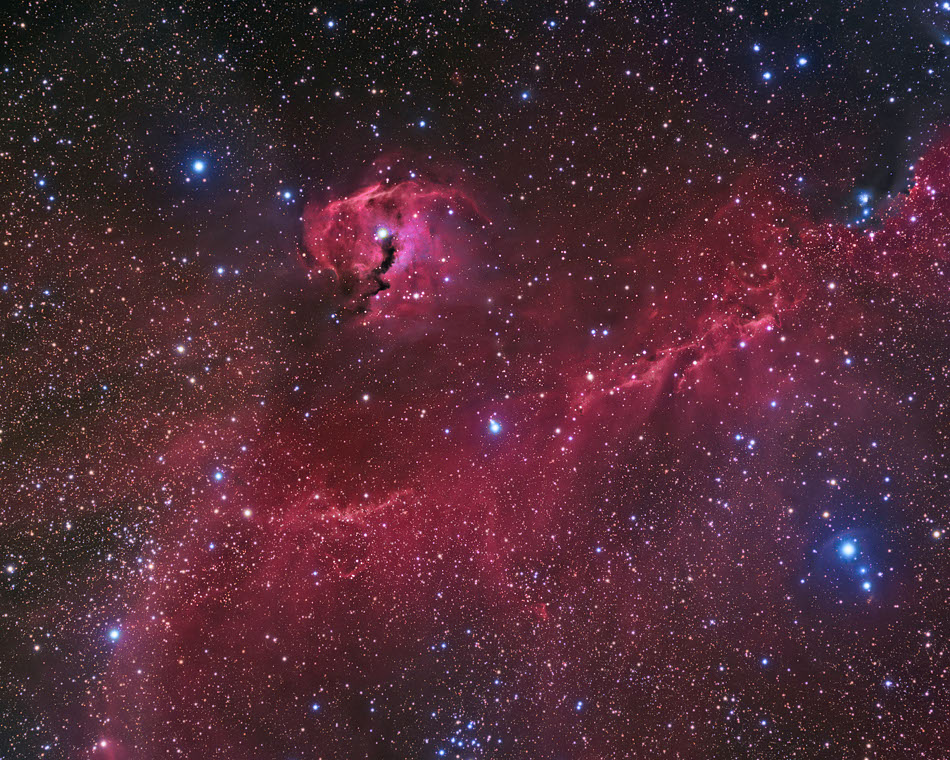
                      A broad expanse of glowing gas and dust presents a bird-like visage to astronomers from planet Earth, suggesting its popular moniker - The Seagull Nebula. This portrait of the cosmic bird covers a 1.6 degree wide swath across the plane of the Milky Way, near the direction of Sirius, alpha star of the constellation Canis Major. Of course, the region includes objects with other catalog designations: notably NGC 2327, a compact, dusty emission region with an embedded massive star that forms the bird's head (aka the Parrot Nebula, above center). Dominated by the reddish glow of atomic hydrogen, the complex of gas and dust clouds with bright young stars spans over 100 light-years at an estimated 3,800 light-year distance.
                      1st in Kommisar's 2009 SM Tournament
                      1st in I Love You`s 2009 New Year`s Tournament
                      3rd in EnR's Mashfest '08 tournament
                      5th in Phynx's Unofficial FFR Tournament
                      9th in D3 of the 2008-2009 4th Official FFR Tournament
                      10th in D5 of the 2010 5th Official FFR Tournament
                      10th in D6 of the 2011-2012 6th Official FFR Tournament

                      FMO AAA Count: 71
                      FGO AAA Count: 10

                      Bluearrowll = The Canadian player who can not detect awkward patterns. If it's awkward for most people, it's normal for Terry. If the file is difficult but super straight forward, he has issues. If he's AAAing a FGO but then heard that his favorite Hockey team was losing by a point, Hockey > FFR
                      PS: Cool AAA's Terry
                      - I Love You


                      An Alarm Clock's Haiku
                      beep beep beep beep beep
                      beep beep beep beep beep beep beep
                      beep beep beep beep beep
                      - ieatyourlvllol

                      Comment

                      • Bluearrowll
                        ⊙▃⊙
                        FFR Simfile Author
                        • Nov 2007
                        • 7376

                        #806
                        Re: Terry's Astronomy Thread.

                        Daily Suspicious0bserver's Weather Post:
                        January 12, 2014


                        What's in the sky tonight?
                        January 12, 2014
                        -Jupiter shines left of the nearly full Moon early this evening. Ganymede, the largest and brightest moon of Jupiter itself, slowly emerges out of eclipse from Jupiter's shadow around 10:21 p.m. EST. With a telescope, watch for this happening just off Jupiter's eastern limb.

                        -NOAA forecasters estimate a 35% chance of X-class solar flares on Jan. 12th, most likely from AR1944. The brooding sunspot has been quiet for days, but still poses a threat for strong eruptions.

                        -This weekend Venus is at inferior conjunction. That means it is passing almost directly between Earth and the sun. With its nightside facing Earth (almost perfectly), Venus looks like an incredibly slender crescent. On Jan. 11th in Targoviste, Romania, amateur astronomer Maximilian Teodorescu photographed Venus only 5 degrees from the sun.

                        -"Taking extreme care not to point any unfiltered optics at the sun, I started to look for Venus through my 11-inch Celestron telescope," says Teodorescu. "The thin but very large crescent suddenly appeared into the field of view. It was surreal to watch the boiling atmospheric arc of the planet just above the sun in plain day. My wife immortalized the moment by taking a panoramic view from our clear-sky location."

                        Observing Venus through a telescope can be dangerous. Even a quick inadvertent glimpse of magnified light from the nearby sun can cause serious eye damage. Anthony J. Cook of the Griffith Observatory has some advice for observers: "I have observed Venus at conjunction, but only from within the shadow of a building, or by adding a mask to the front end of the telescope to fully shadow the optics from direct sunlight. This is tricky with a refractor or a catadioptric, because the optics start at the front end of the tube. Here at Griffith Observatory, I rotate the telescope dome to make sure the lens of the telescope is shaded from direct sunlight, even through it means that the lens will be partially blocked when aimed at Venus. With our Newtonian telescope, I add a curved cardboard mask at the front end of the tube to shadow the primary mirror."

                        Around the world, many people are applying these techniques to photograph Venus as it passes by the sun.


                        Astro Picture of the Day:
                        January 12, 2014
                        Source:
                        What does the universe look like on small scales? On large scales? Humanity is discovering that the universe is a very different place on every proportion that has been explored. For example, so far as we know, every tiny proton is exactly the same, but every huge galaxy is different. On more familiar scales, a small glass table top to a human is a vast plane of strange smoothness to a dust mite -- possibly speckled with cell boulders. Not all scale lengths are well explored -- what happens to the smallest mist droplets you sneeze, for example, is a topic of active research -- and possibly useful to know to help stop the spread of disease. The above interactive flash animation, a modern version of the classic video Powers of Ten, is a new window to many of the known scales of our universe. By moving the scroll bar across the bottom, you can explore a diversity of sizes, while clicking on different items will bring up descriptive information.
                        1st in Kommisar's 2009 SM Tournament
                        1st in I Love You`s 2009 New Year`s Tournament
                        3rd in EnR's Mashfest '08 tournament
                        5th in Phynx's Unofficial FFR Tournament
                        9th in D3 of the 2008-2009 4th Official FFR Tournament
                        10th in D5 of the 2010 5th Official FFR Tournament
                        10th in D6 of the 2011-2012 6th Official FFR Tournament

                        FMO AAA Count: 71
                        FGO AAA Count: 10

                        Bluearrowll = The Canadian player who can not detect awkward patterns. If it's awkward for most people, it's normal for Terry. If the file is difficult but super straight forward, he has issues. If he's AAAing a FGO but then heard that his favorite Hockey team was losing by a point, Hockey > FFR
                        PS: Cool AAA's Terry
                        - I Love You


                        An Alarm Clock's Haiku
                        beep beep beep beep beep
                        beep beep beep beep beep beep beep
                        beep beep beep beep beep
                        - ieatyourlvllol

                        Comment

                        • Bluearrowll
                          ⊙▃⊙
                          FFR Simfile Author
                          • Nov 2007
                          • 7376

                          #807
                          Re: Terry's Astronomy Thread.

                          Daily Suspicious0bserver's Weather Post:
                          January 13, 2014


                          What's in the sky tonight?
                          January 13, 2014
                          -Betelgeuse is lower right of the Moon this evening. Jupiter is to the Moon's lower left, with Pollux on beyond. Look far under the Moon for Procyon.

                          -Blowing with gusts as fast as 800 km/s (1.8 million mph), a stream of solar wind is buffeting Earth's magnetic field. High-latitude sky watchers should be alert for auroras on Jan. 13th.

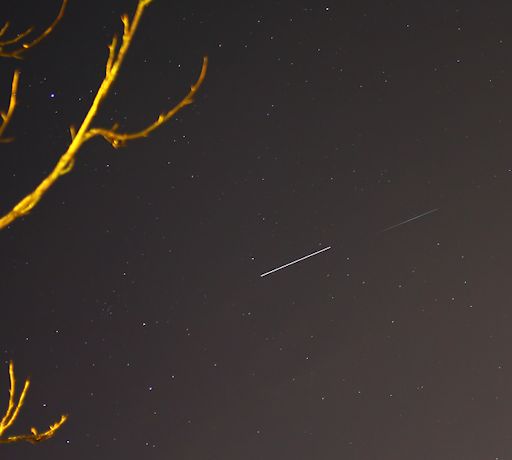
                          -On Jan. 12th, a robotic arm on the ISS reached out and snagged another spaceship--Orbital Sciences Corporation's Cygnus cargo carrier. Cygnus reached the ISS on time despite a launch delay last Wednesday caused by stormy space weather. The docking on Sunday morning at 8:05 am EST marked the first successful contracted cargo delivery by Orbital Sciences.

                          Only five hours before docking, the two spacecraft flew over the Netherlands where veteran satellite observer Marco Langbroek was waiting with his camera to take this picture.

                          "The Cygnus cargoship was too faint to be seen by the naked eye for most of the pass, but around 5:57:05 UTC it briefly flared to mag +2 and the close duo ISS-Cygnus was suddenly and briefly well visible as a result," says Langbroek. "This picture shows the moment when the Cygnus flared."

                          Cygnus delivered almost 2800 lbs of equipment and crew supplies to the space station. This includes dozens of new science experiments including 23 designed by students. One newly arrived investigation will study the behavior of ants in microgravity. Another will probe the decreased effectiveness of antibiotics during spaceflight--a possible problem for astronauts on long space journeys. Yet another will explore how different materials burn in microgravity to improve fire safety in future spacecraft.

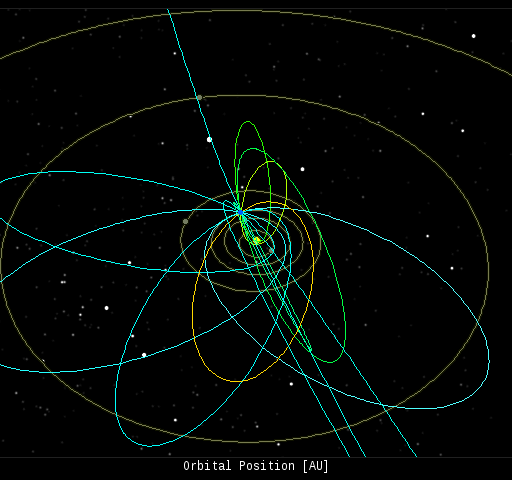
                          -Compare what Suspicious0bserver's mentioned about the fireball in his video today with the January 12 fireball orbital network, and see if there is any consistencies. On Jan. 12, 2014, the network reported 11 fireballs. (10 sporadics, 1 Canum Venaticid)


                          Astro Picture of the Day:
                          January 13, 2014

                          Source:
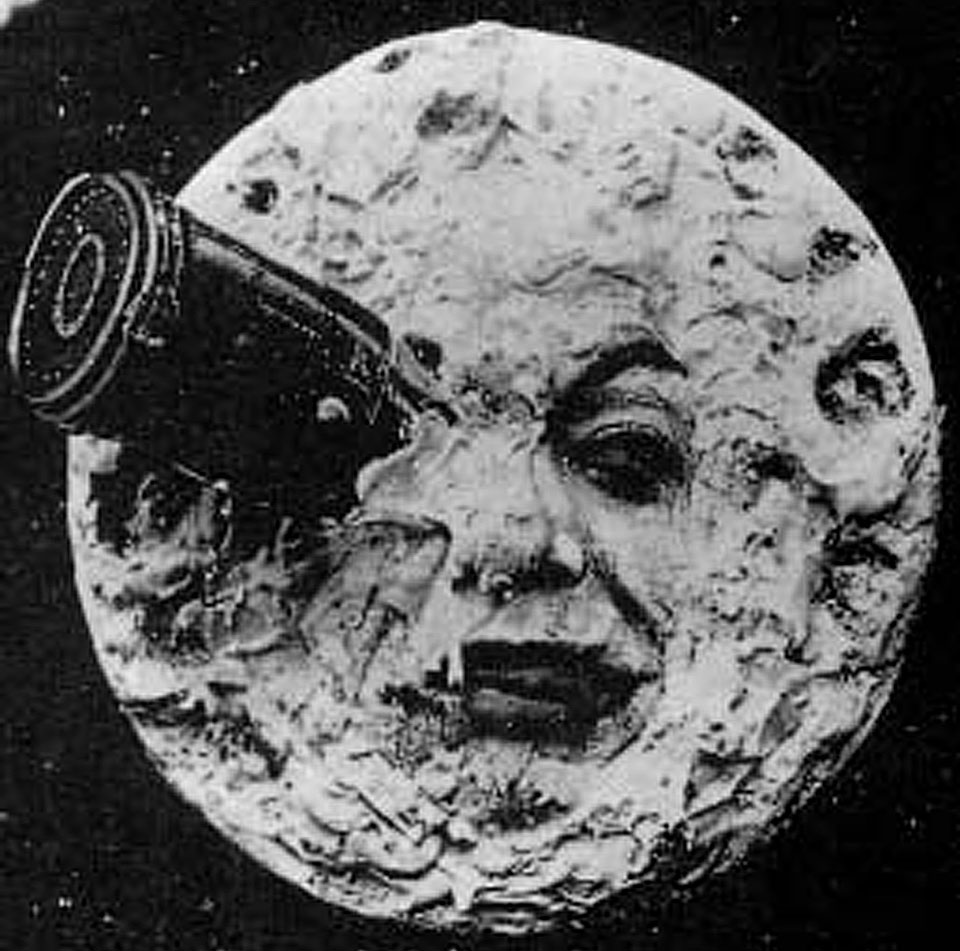
                          What would it be like to visit the Moon? The first major fictional cinematic film exploring this enduring transcultural fantasy was titled Le voyage dans la lune (A Trip to the Moon) and made in 1902, becoming one of the most popular movies of the early years of the twentieth century. The silent film starred the filmmaker Georges Melies himself and portrayed a club of astronomers voyaging to the Moon and back. Pictured above is a frame from the movie that has become an enduring icon for both film and space. Alluding to a bullseye trajectory, the Man in the Moon is caricatured as being struck by the human-built spaceship. The entire 14-minute film is now freely available. Visiting the Moon remained a very popular topic even 67 years later in 1969 when humans first made an actual voyage.
                          The movie: http://www.youtube.com/watch?v=_FrdVdKlxUk
                          The movie rescored: http://www.youtube.com/watch?v=vNVmYxc6iZ4
                          1st in Kommisar's 2009 SM Tournament
                          1st in I Love You`s 2009 New Year`s Tournament
                          3rd in EnR's Mashfest '08 tournament
                          5th in Phynx's Unofficial FFR Tournament
                          9th in D3 of the 2008-2009 4th Official FFR Tournament
                          10th in D5 of the 2010 5th Official FFR Tournament
                          10th in D6 of the 2011-2012 6th Official FFR Tournament

                          FMO AAA Count: 71
                          FGO AAA Count: 10

                          Bluearrowll = The Canadian player who can not detect awkward patterns. If it's awkward for most people, it's normal for Terry. If the file is difficult but super straight forward, he has issues. If he's AAAing a FGO but then heard that his favorite Hockey team was losing by a point, Hockey > FFR
                          PS: Cool AAA's Terry
                          - I Love You


                          An Alarm Clock's Haiku
                          beep beep beep beep beep
                          beep beep beep beep beep beep beep
                          beep beep beep beep beep
                          - ieatyourlvllol

                          Comment

                          • Bluearrowll
                            ⊙▃⊙
                            FFR Simfile Author
                            • Nov 2007
                            • 7376

                            #808
                            Re: Terry's Astronomy Thread.

                            Daily Suspicious0bserver's Weather Post:
                            January 14, 2014


                            What's in the sky tonight?
                            January 14, 2014
                            -Jupiter shines left of the nearly full Moon early this evening. Ganymede, the largest and brightest moon of Jupiter itself, slowly emerges out of eclipse from Jupiter's shadow around 10:21 p.m. EST. With a telescope, watch for this happening just off Jupiter's eastern limb.

                            -NOAA forecasters have downgraded the chance of X-flares on Jan. 14th to 15% as giant sunspot AR1944 rotates off the solar disk. The odds on Jan. 15th are even lower: 1%. A spell of quiet appears to be in the offing.

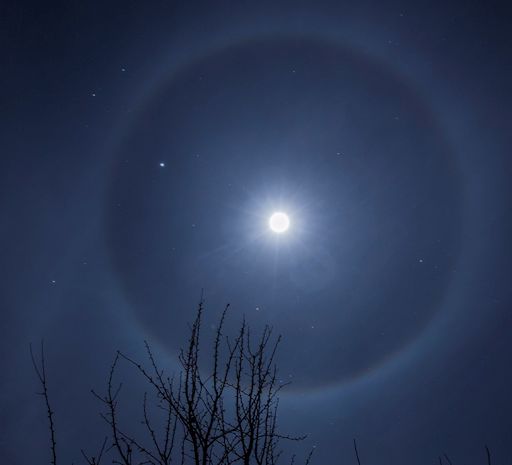
                            -When the sun goes down tonight, step outside and look east. The waxing full Moon is having a close encounter with Jupiter. Stojan Stojanovski sends this picture of the meeting from Velmej-Ohrid, Macedonia.

                            -In Stojanovski's photo, the Moon has circumscribed Jupiter inside a luminous ring. It's a 22o halo, caused by ice crystals in high cirrus clouds. Lunar ice halos are most often seen when the Moon is high and bright. With Jupiter so close to the bulls-eye, tonight is a great time to look!


                            Astro Picture of the Day:
                            January 14, 2014

                            Source:
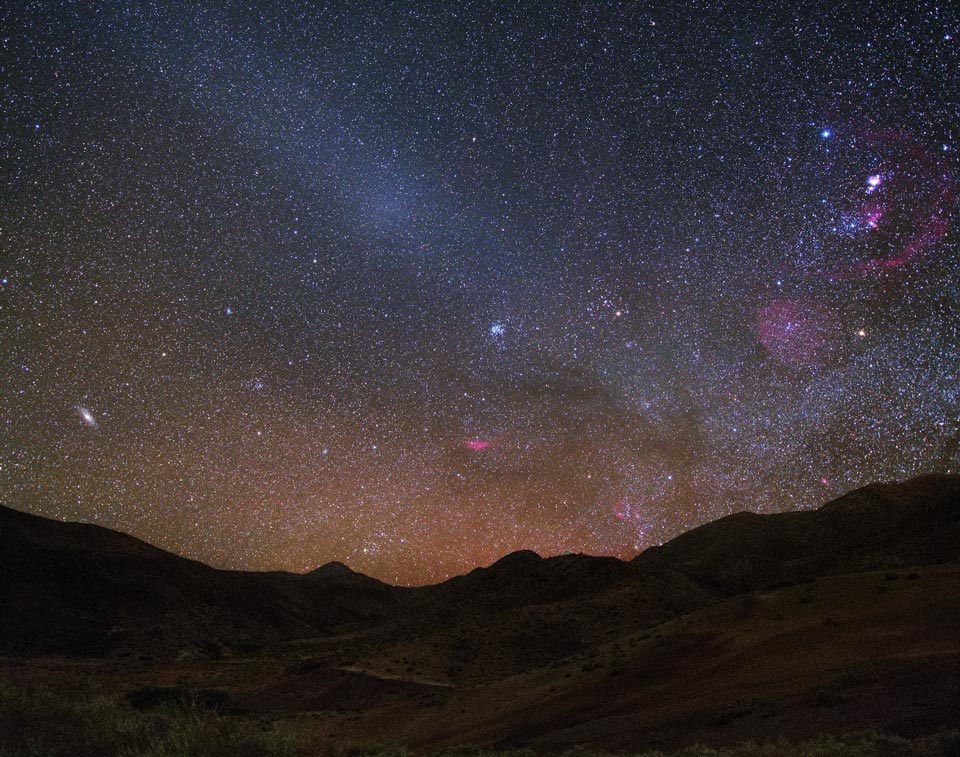
                            Is the night sky darkest in the direction opposite the Sun? No. In fact, a rarely discernable faint glow known as the gegenschein (German for "counter glow") can be seen 180 degrees around from the Sun in an extremely dark sky. The gegenschein is sunlight back-scattered off small interplanetary dust particles. These dust particles are millimeter sized splinters from asteroids and orbit in the ecliptic plane of the planets. Pictured above from last year is one of the more spectacular pictures of the gegenschein yet taken. Here a deep exposure of an extremely dark sky over Las Campanas Observatory in Chile shows the gegenschein so clearly that even a surrounding glow is visible. Notable background objects include the Andromeda galaxy, the Pleiades star cluster, the California Nebula, the belt of Orion just below the Orion Nebula and inside Barnard's Loop, and bright stars Sirius and Betelgeuse. The gegenschein is distinguished from zodiacal light near the Sun by the high angle of reflection. During the day, a phenomenon similar to the gegenschein called the glory can be seen in reflecting air or clouds opposite the Sun from an airplane.
                            1st in Kommisar's 2009 SM Tournament
                            1st in I Love You`s 2009 New Year`s Tournament
                            3rd in EnR's Mashfest '08 tournament
                            5th in Phynx's Unofficial FFR Tournament
                            9th in D3 of the 2008-2009 4th Official FFR Tournament
                            10th in D5 of the 2010 5th Official FFR Tournament
                            10th in D6 of the 2011-2012 6th Official FFR Tournament

                            FMO AAA Count: 71
                            FGO AAA Count: 10

                            Bluearrowll = The Canadian player who can not detect awkward patterns. If it's awkward for most people, it's normal for Terry. If the file is difficult but super straight forward, he has issues. If he's AAAing a FGO but then heard that his favorite Hockey team was losing by a point, Hockey > FFR
                            PS: Cool AAA's Terry
                            - I Love You


                            An Alarm Clock's Haiku
                            beep beep beep beep beep
                            beep beep beep beep beep beep beep
                            beep beep beep beep beep
                            - ieatyourlvllol

                            Comment

                            • Bluearrowll
                              ⊙▃⊙
                              FFR Simfile Author
                              • Nov 2007
                              • 7376

                              #809
                              Re: Terry's Astronomy Thread.

                              Daily Suspicious0bserver's Weather Post:
                              January 15, 2014


                              What's in the sky tonight?
                              January 15, 2014
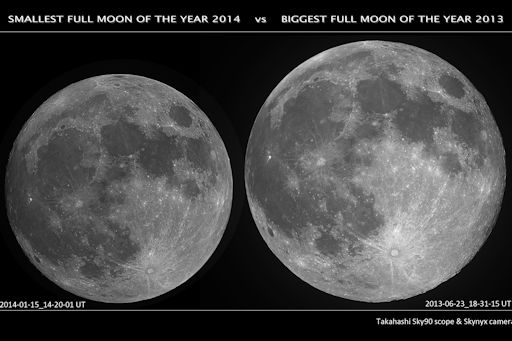
                              -Full Moon (exact at 11:52 p.m. EST). This is the smallest full Moon of 2014. Jupiter shines above it in early evening. As the evening grows late, Jupiter swings to the Moon's upper right.

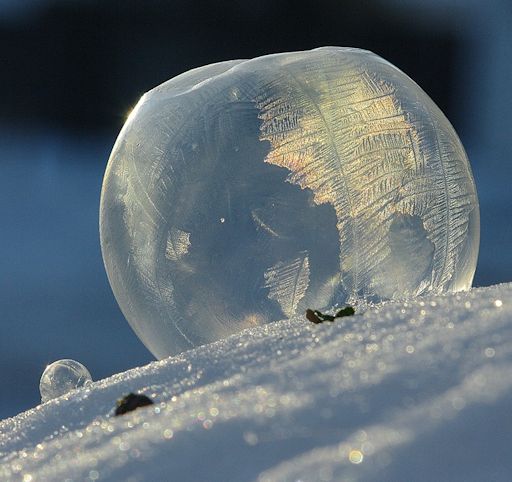
                              -Science teacher Tom Wagner of Waterloo, Iowa, is an avid photographer of snowflakes. Over the years he has discovered a great way to catch large flakes in mid-air: "I blow a soap bubble and allow the snowflake to land on it," he explains. Once the snowflake is properly corralled, the photography is relatively easy.

                              Last week when the Polar Vortex descended over Iowa, Wagner went outdoors to capture some more snowflakes. Just one problem: It was so cold outside, the soap bubbles themselves froze.

                              "I made a decision to photograph these frozen bubbles on the snow," says Wagner. "The sun was 20 minutes from setting so I had to act fast. Most of the bubbles popped when they landed but with some practice I discovered a technique that resulted in quite a few remaining intact."

                              "After a few pictures at home I hurried over to a nearby cemetery where there was still several more minutes of direct sunlight. The men digging nearby must have wondered what I was doing blowing little bubbles onto the snow then lying next to them with my camera in hand. Having the sun in the immediate background illuminated the fern-like crystals growing within the curved bubble skin."


                              Astro Picture of the Day:
                              January 15, 2014

                              Source:
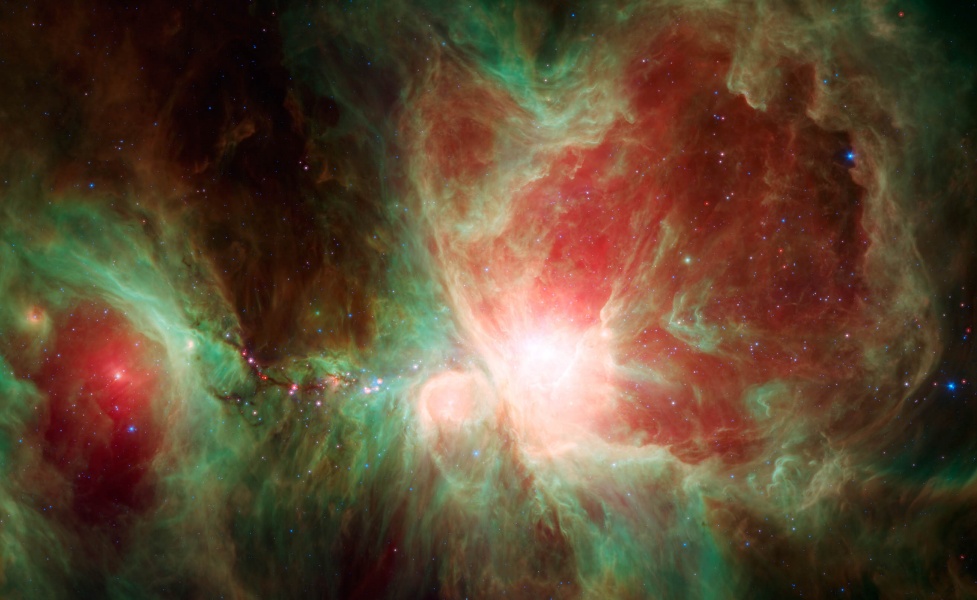
                              Few cosmic vistas excite the imagination like the Orion Nebula, an immense stellar nursery some 1,500 light-years away. This stunning false-color view spans about 40 light-years across the region, constructed using infrared data from the Spitzer Space Telescope. Compared to its visual wavelength appearance, the brightest portion of the nebula is likewise centered on Orion's young, massive, hot stars, known as the Trapezium Cluster. But the infrared image also detects the nebula's many protostars, still in the process of formation, seen here in red hues. In fact, red spots along the dark dusty filament to the left of the bright cluster include the protostar cataloged as HOPS 68, recently found to have crystals of the silicate mineral olivine within its protostellar envelope.
                              Crystal pictures: http://www.spitzer.caltech.edu/image...f-Crystal-Rain
                              Crystal supporting papers: http://arxiv.org/pdf/1104.4498v1.pdf
                              1st in Kommisar's 2009 SM Tournament
                              1st in I Love You`s 2009 New Year`s Tournament
                              3rd in EnR's Mashfest '08 tournament
                              5th in Phynx's Unofficial FFR Tournament
                              9th in D3 of the 2008-2009 4th Official FFR Tournament
                              10th in D5 of the 2010 5th Official FFR Tournament
                              10th in D6 of the 2011-2012 6th Official FFR Tournament

                              FMO AAA Count: 71
                              FGO AAA Count: 10

                              Bluearrowll = The Canadian player who can not detect awkward patterns. If it's awkward for most people, it's normal for Terry. If the file is difficult but super straight forward, he has issues. If he's AAAing a FGO but then heard that his favorite Hockey team was losing by a point, Hockey > FFR
                              PS: Cool AAA's Terry
                              - I Love You


                              An Alarm Clock's Haiku
                              beep beep beep beep beep
                              beep beep beep beep beep beep beep
                              beep beep beep beep beep
                              - ieatyourlvllol

                              Comment

                              • Bluearrowll
                                ⊙▃⊙
                                FFR Simfile Author
                                • Nov 2007
                                • 7376

                                #810
                                Re: Terry's Astronomy Thread.

                                Daily Suspicious0bserver's Weather Post:
                                January 16, 2014


                                What's in the sky tonight?
                                January 16, 2014
                                -As the Moon climbs up in the east, spot Procyon to its upper right, bright Jupiter higher above them, and Sirius far right of the Moon in the southeast, under Orion.

                                -NOAA forecasters estimate a 35% chance of polar geomagnetic storms on Jan. 17th when a minor CME is expected to hit Earth. High-latitude sky watchers should be alert for auroras competing with bright moonlight.

                                -Last night's full Moon was the smallest of the year, as much as 14% smaller and 30% dimmer than other full Moons of 2014. But could you tell the difference? When the Moon is high in the sky with no reference points nearby, a big Moon and a small Moon look much the same. To set the scale of the phenomenon, Karzaman Ahmad of the Langkawi National Observatory in Maylasia photographed last night's Moon and placed it alongside a photo of the largest Moon from 2013. "It really was smaller!" he says.

                                -Full Moons vary in size and brightness because of the oval shape of the Moon's orbit. The Moon follows an elliptical path around Earth with one side ("perigee") about 50,000 km closer than the other ("apogee"). Last night's full Moon was a distant apogee Moon--less big and bright, but no less beautiful.


                                Astro Picture of the Day:
                                January 16, 2014

                                Source:
                                Despina is a tiny moon of Neptune. A mere 148 kilometers across, diminutive Despina was discovered in 1989, in images from the Voyager 2 spacecraft taken during its encounter with the solar system's most distant gas giant planet. But looking through the Voyager 2 data 20 years later, amateur image processor and philosophy professor Ted Stryk discovered something no one had recognized before -- images that show the shadow of Despina in transit across Neptune's blue cloud tops. His composite view of Despina and its shadow is composed of four archival frames taken on August 24, 1989, separated by nine minutes. Despina itself has been artificially brightened to make it easier to see. In ancient Greek mythology, Despina is a daughter of Poseidon, the Roman god Neptune.
                                Last edited by Bluearrowll; 01-16-2014, 07:32 PM.
                                1st in Kommisar's 2009 SM Tournament
                                1st in I Love You`s 2009 New Year`s Tournament
                                3rd in EnR's Mashfest '08 tournament
                                5th in Phynx's Unofficial FFR Tournament
                                9th in D3 of the 2008-2009 4th Official FFR Tournament
                                10th in D5 of the 2010 5th Official FFR Tournament
                                10th in D6 of the 2011-2012 6th Official FFR Tournament

                                FMO AAA Count: 71
                                FGO AAA Count: 10

                                Bluearrowll = The Canadian player who can not detect awkward patterns. If it's awkward for most people, it's normal for Terry. If the file is difficult but super straight forward, he has issues. If he's AAAing a FGO but then heard that his favorite Hockey team was losing by a point, Hockey > FFR
                                PS: Cool AAA's Terry
                                - I Love You


                                An Alarm Clock's Haiku
                                beep beep beep beep beep
                                beep beep beep beep beep beep beep
                                beep beep beep beep beep
                                - ieatyourlvllol

                                Comment

                                Working...