

Re: Terry's Astronomy Thread.
What's in the sky tonight?
August 7, 2013
News Posted Today:
August 6, 2013
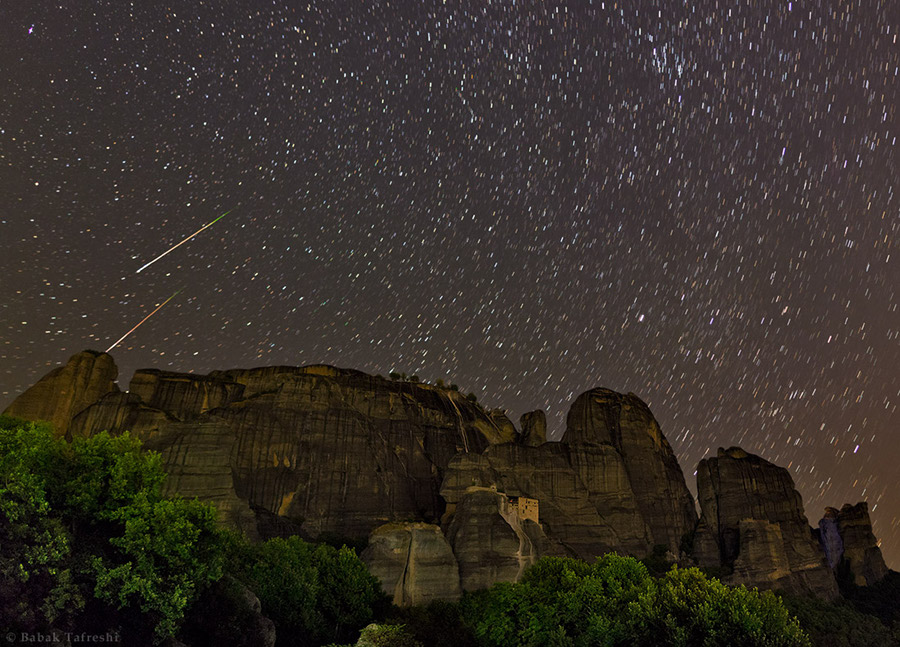
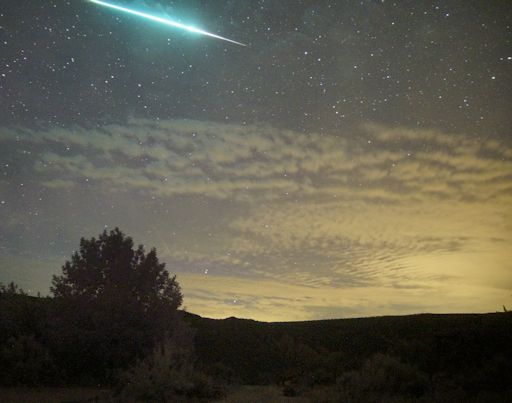
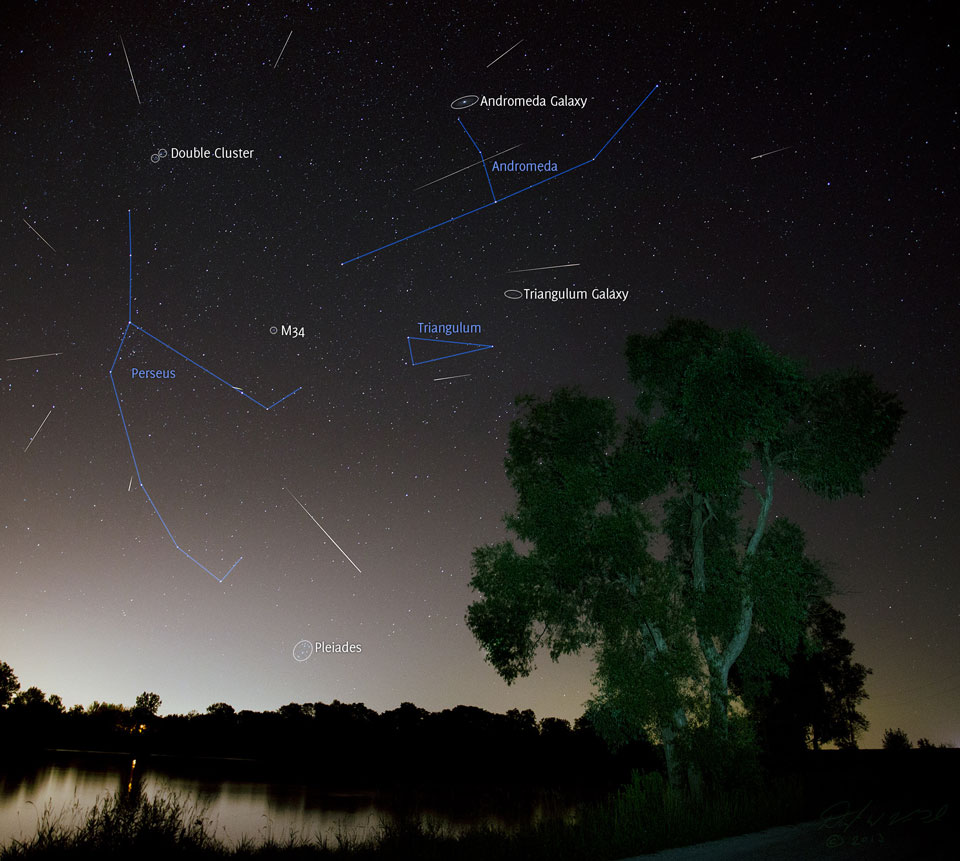
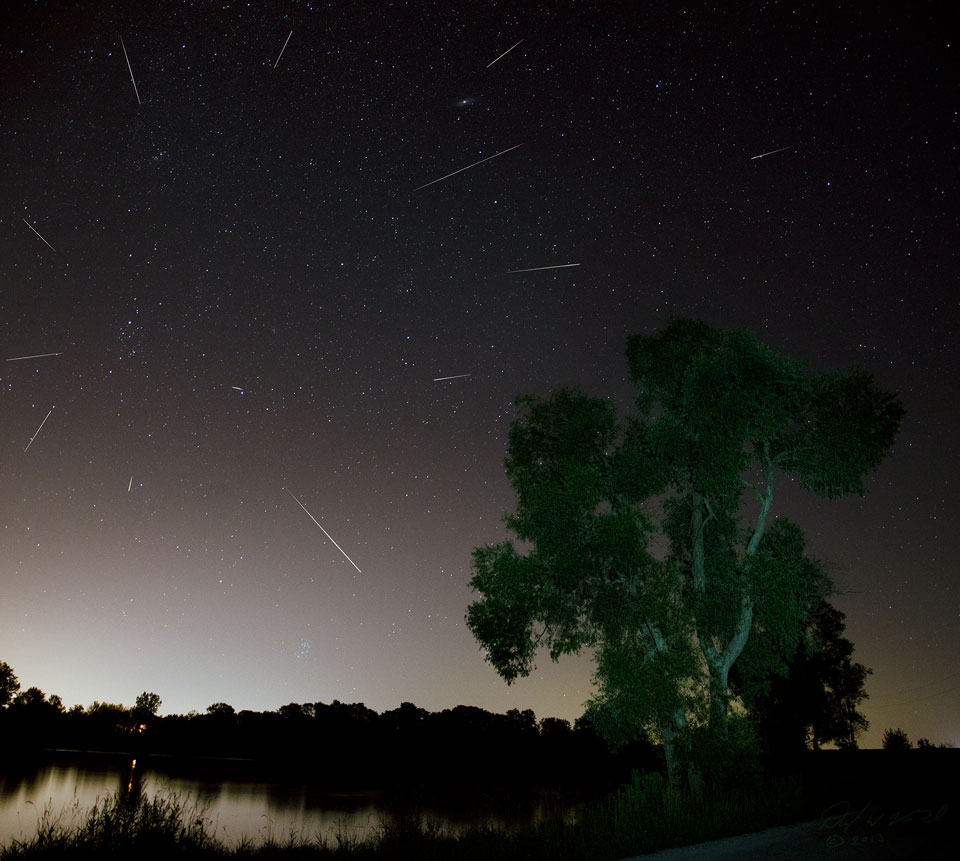
Get Ready for the 2013 Perseids

Astro Picture of the Day:
August 7, 2013
 Source:
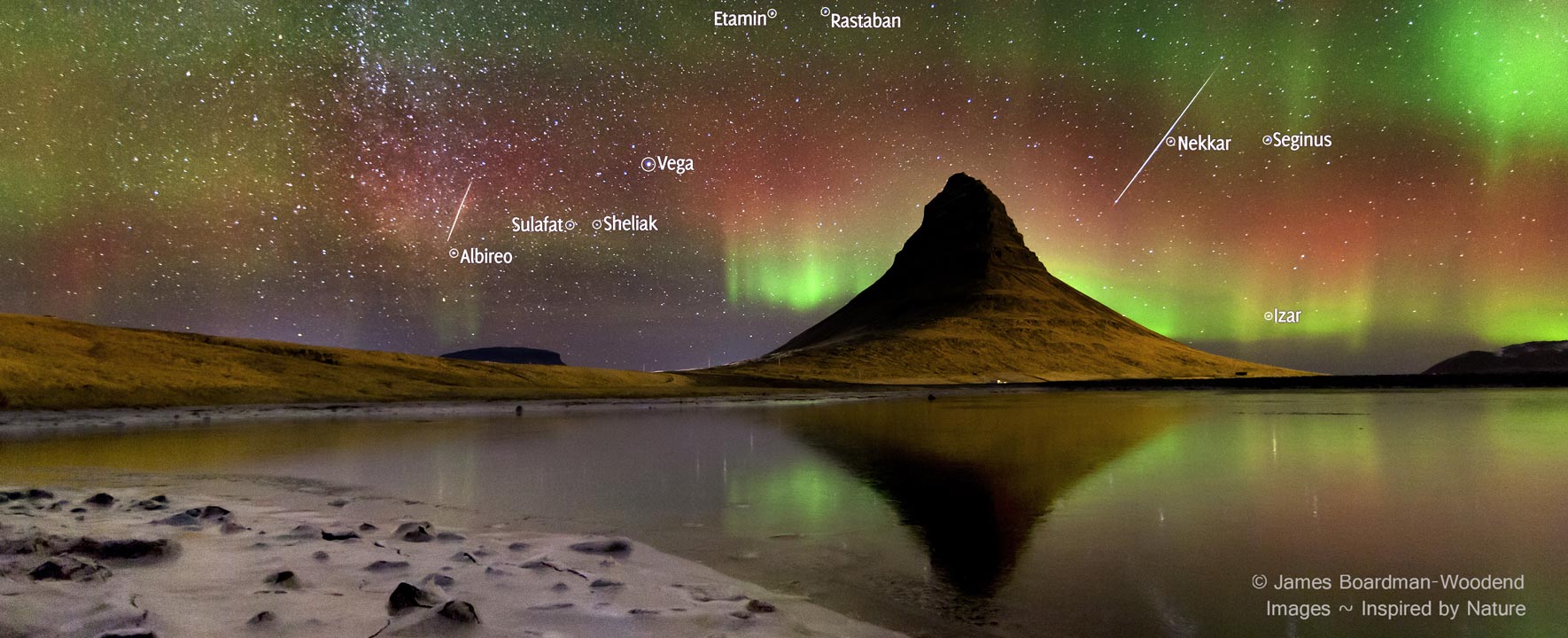
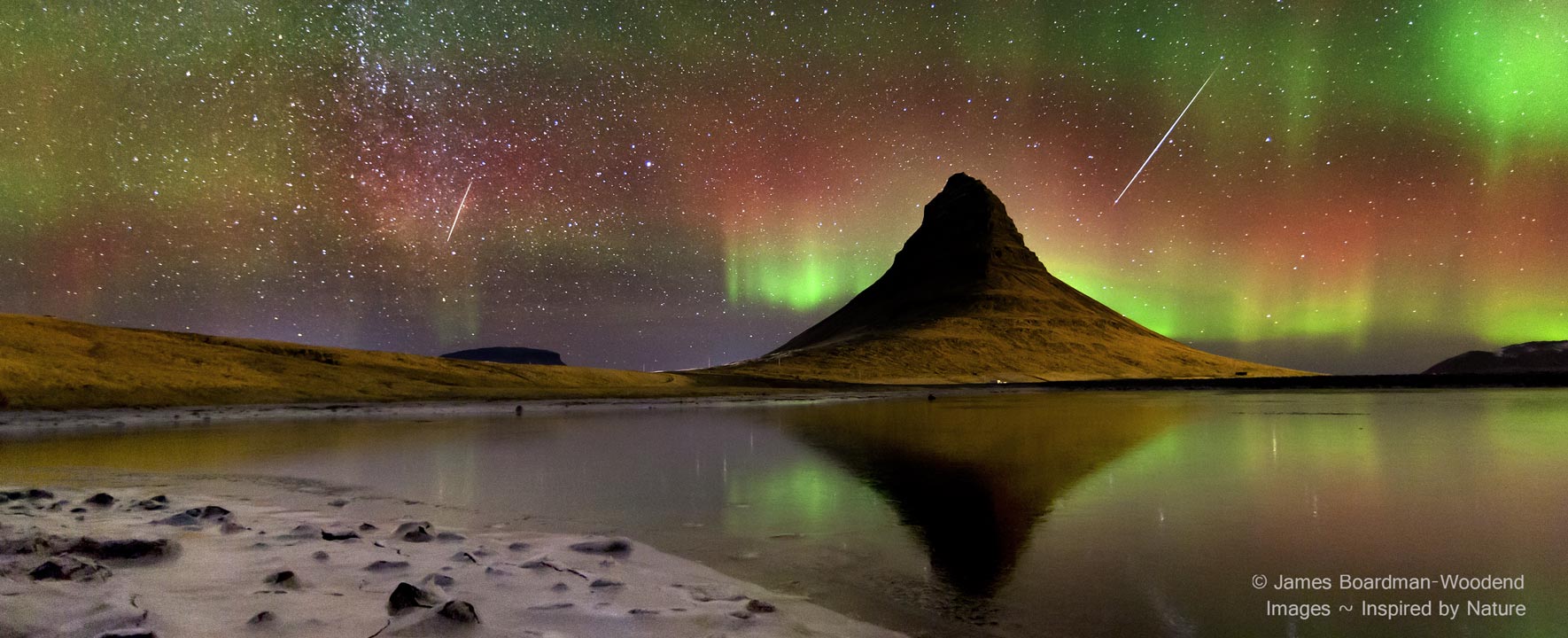
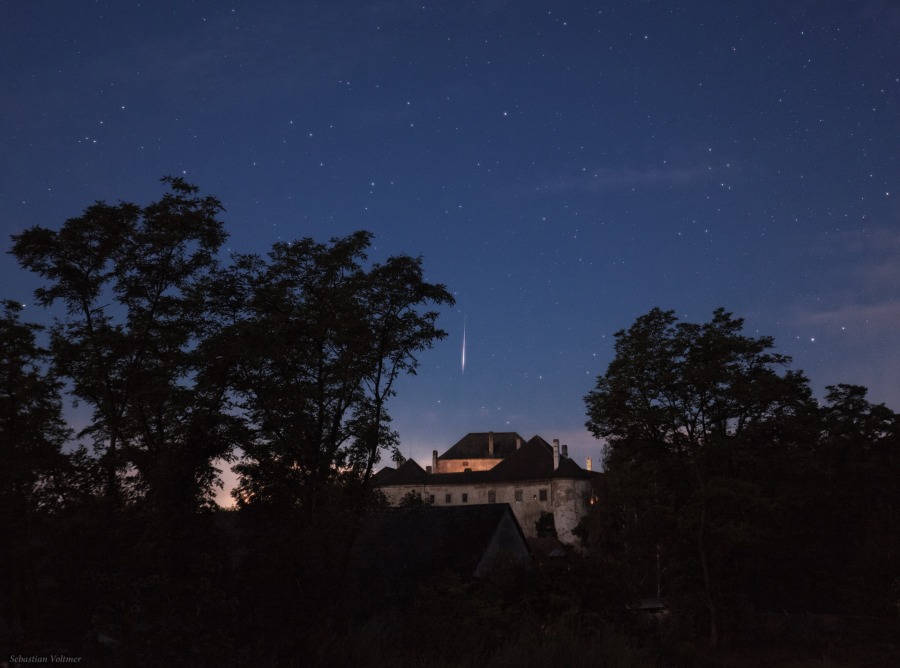
What's going on behind that volcano? Quite a bit. First of all, the volcano itself, named Kirkjufell, is quite old and located in western Iceland near the town of Grundarfjörður. In front of the steeply-sloped structure lies a fjord that had just begun to freeze when the above image was taken - in mid-December of 2012. Although quite faint to the unaided eye, the beautiful colors of background aurorae became quite apparent on the 25-second exposure. What makes this image is of particular note, though, is that it also captures streaks from the Geminids meteor shower - meteors that might not have been evident were the aurora much brighter. Far in the distance, on the left, is the band of our Milky Way Galaxy, while stars from our local part of the Milky Way appear spread across the background. This weekend the Perseids meteor shower will peak and may well provide sky enthusiasts with their own memorable visual experiences.
What's in the sky tonight?
August 7, 2013
-Bright Vega passes closest to overhead around 10 or 11 p.m., depending on how far east or west you are in your time zone. How closely it misses your zenith depends on how far north or south you live. It passes right through the zenith if you're at latitude 39° north (Washington DC, Cincinnati, Kansas City, Lake Tahoe). How closely can you judge this by looking?
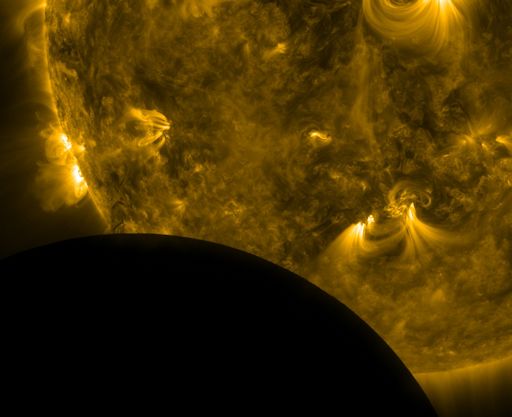
-Yesterday, August 6th, the new Moon passed in front of the sun, producing a partial solar eclipse. The only place to see it was from space. NASA's Solar Dynamics Observatory (SDO) photographed the eclipse from geosynchronous orbit approximately 36,000 km above Earth's surface. Beyond the novelty of observing an eclipse from space, these images have practical value to the SDO science team. The sharp edge of the lunar limb helps researchers measure the in-orbit characteristics of the telescope - e.g., how light diffracts around the telescope's optics and filter support grids. Once these are calibrated, it is possible to correct SDO data for instrumental effects and sharpen the images even more than before.
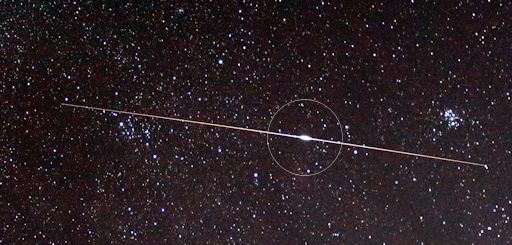
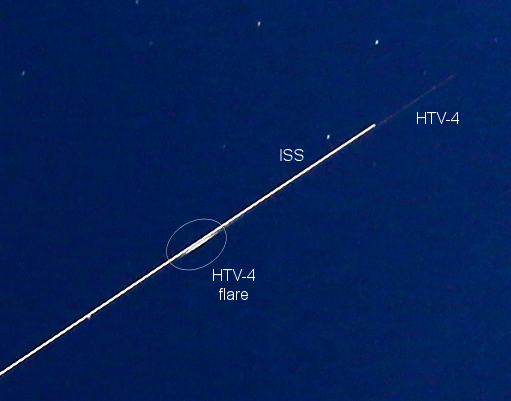
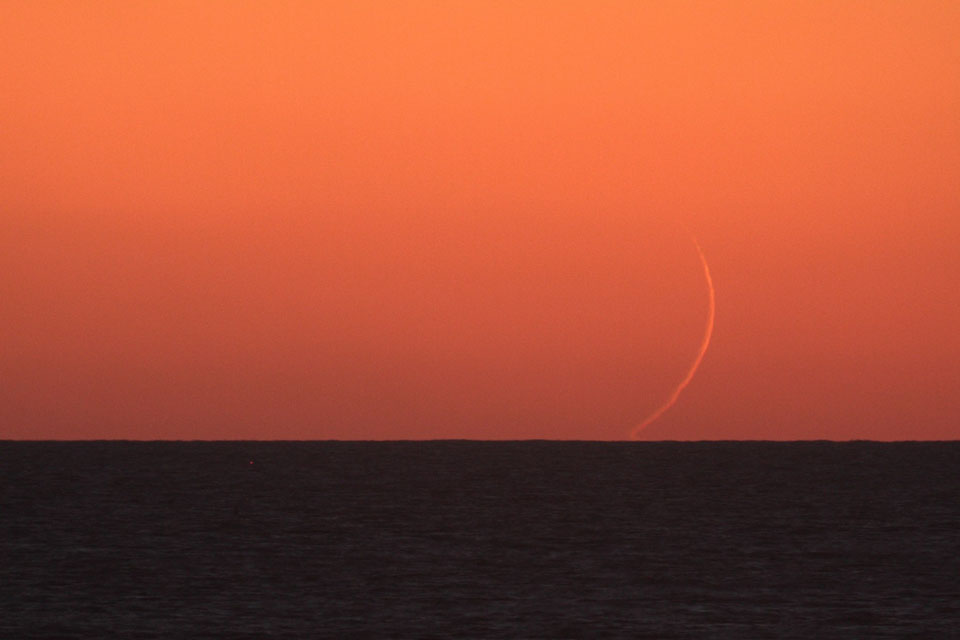
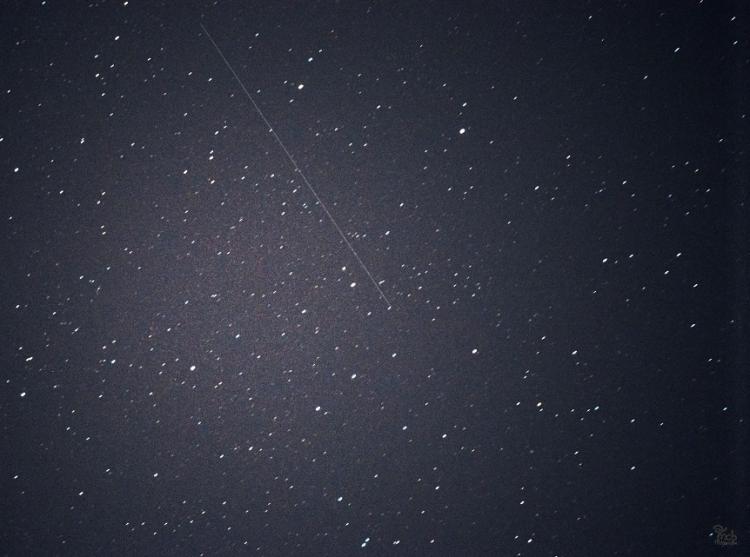
-Launched on August 3rd, Japan's unmanned HTV-4 cargo carrier is now chasing the International Space Station around Earth. The two spaceships will rendevous on Friday, August 9th. Meanwhile, skywatchers are enjoying the chase. The below picture is from Gary of Fort Davis, Texas when he witnessed a bright flare from the HTV-4 reflecting sunlight.
-Yesterday, August 6th, the new Moon passed in front of the sun, producing a partial solar eclipse. The only place to see it was from space. NASA's Solar Dynamics Observatory (SDO) photographed the eclipse from geosynchronous orbit approximately 36,000 km above Earth's surface. Beyond the novelty of observing an eclipse from space, these images have practical value to the SDO science team. The sharp edge of the lunar limb helps researchers measure the in-orbit characteristics of the telescope - e.g., how light diffracts around the telescope's optics and filter support grids. Once these are calibrated, it is possible to correct SDO data for instrumental effects and sharpen the images even more than before.
-Launched on August 3rd, Japan's unmanned HTV-4 cargo carrier is now chasing the International Space Station around Earth. The two spaceships will rendevous on Friday, August 9th. Meanwhile, skywatchers are enjoying the chase. The below picture is from Gary of Fort Davis, Texas when he witnessed a bright flare from the HTV-4 reflecting sunlight.
News Posted Today:
August 6, 2013
Get Ready for the 2013 Perseids
Astro Picture of the Day:
August 7, 2013
What's going on behind that volcano? Quite a bit. First of all, the volcano itself, named Kirkjufell, is quite old and located in western Iceland near the town of Grundarfjörður. In front of the steeply-sloped structure lies a fjord that had just begun to freeze when the above image was taken - in mid-December of 2012. Although quite faint to the unaided eye, the beautiful colors of background aurorae became quite apparent on the 25-second exposure. What makes this image is of particular note, though, is that it also captures streaks from the Geminids meteor shower - meteors that might not have been evident were the aurora much brighter. Far in the distance, on the left, is the band of our Milky Way Galaxy, while stars from our local part of the Milky Way appear spread across the background. This weekend the Perseids meteor shower will peak and may well provide sky enthusiasts with their own memorable visual experiences.









Comment