

Re: Terry's Astronomy Thread.
What's in the sky tonight?
October 1, 2013

Astro Picture of the Day:
October 1, 2013
 Source:
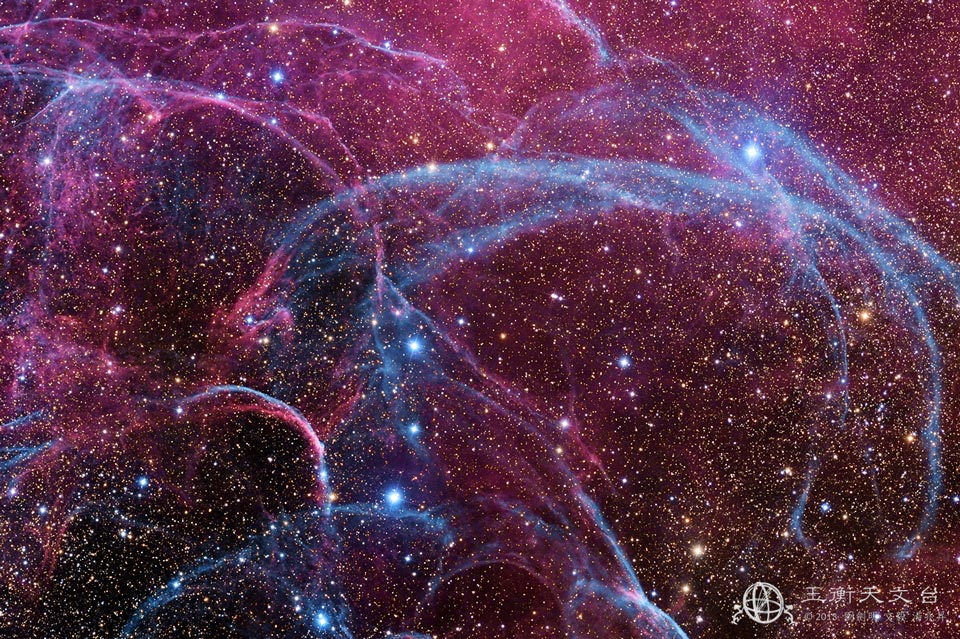
The explosion is over but the consequences continue. About eleven thousand years ago a star in the constellation of Vela could be seen to explode, creating a strange point of light briefly visible to humans living near the beginning of recorded history. The outer layers of the star crashed into the interstellar medium, driving a shock wave that is still visible today. A roughly spherical, expanding shock wave is visible in X-rays. The above image captures some of that filamentary and gigantic shock in visible light. As gas flies away from the detonated star, it decays and reacts with the interstellar medium, producing light in many different colors and energy bands. Remaining at the center of the Vela Supernova Remnant is a pulsar, a star as dense as nuclear matter that rotates completely around more than ten times in a single second.
What's in the sky tonight?
October 1, 2013
-Now that October is here, the little fall constellation Aries is visible in the east-northeast after dark and all through the evening. Its two or three brightest stars are lined up roughly horizontally, well below the stars of Andromeda.
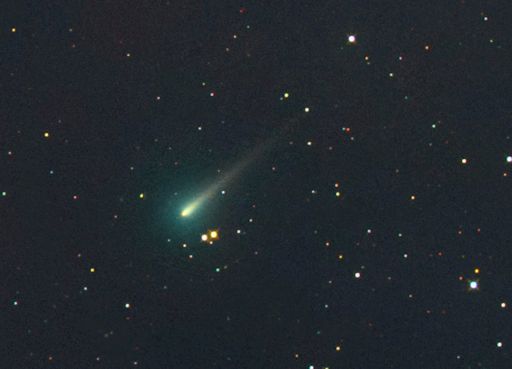
-Today, October 1st, Comet ISON will fly by Mars at a distance of only 0.07 AU. Red Planet satellites and rovers have a ringside seat for the flyby, and they will be snapping pictures despite a shutdown of the US government. (Apparently, Curiosity has been designated "essential personnel.")
-Today, October 1st, Comet ISON will fly by Mars at a distance of only 0.07 AU. Red Planet satellites and rovers have a ringside seat for the flyby, and they will be snapping pictures despite a shutdown of the US government. (Apparently, Curiosity has been designated "essential personnel.")
Astro Picture of the Day:
October 1, 2013
The explosion is over but the consequences continue. About eleven thousand years ago a star in the constellation of Vela could be seen to explode, creating a strange point of light briefly visible to humans living near the beginning of recorded history. The outer layers of the star crashed into the interstellar medium, driving a shock wave that is still visible today. A roughly spherical, expanding shock wave is visible in X-rays. The above image captures some of that filamentary and gigantic shock in visible light. As gas flies away from the detonated star, it decays and reacts with the interstellar medium, producing light in many different colors and energy bands. Remaining at the center of the Vela Supernova Remnant is a pulsar, a star as dense as nuclear matter that rotates completely around more than ten times in a single second.






.jpg)




Comment