Terry's Astronomy Thread.

Collapse
X
 
  • Time
  • Show
Clear All
new posts
  • Bluearrowll
    ⊙▃⊙
    FFR Simfile Author
    • Nov 2007
    • 7376

    #601
    Re: Terry's Astronomy Thread.

    What's in the sky tonight?
    July 10, 2013
    -Soon after sunset while the sky is still bright, watch for the thin crescent Moon coming into view just above the west horizon, to the lower left of Venus. Binoculars help.

    -A minor CME hit Earth's magnetic field on July 9th at approximately 20:30 UT. The impact was weak, and at first had little effect, but now a geomagnetic storm is in progress as Earth passes through the wake of the CME

    Astro Picture of the Day:
    July 10, 2013

    Source:
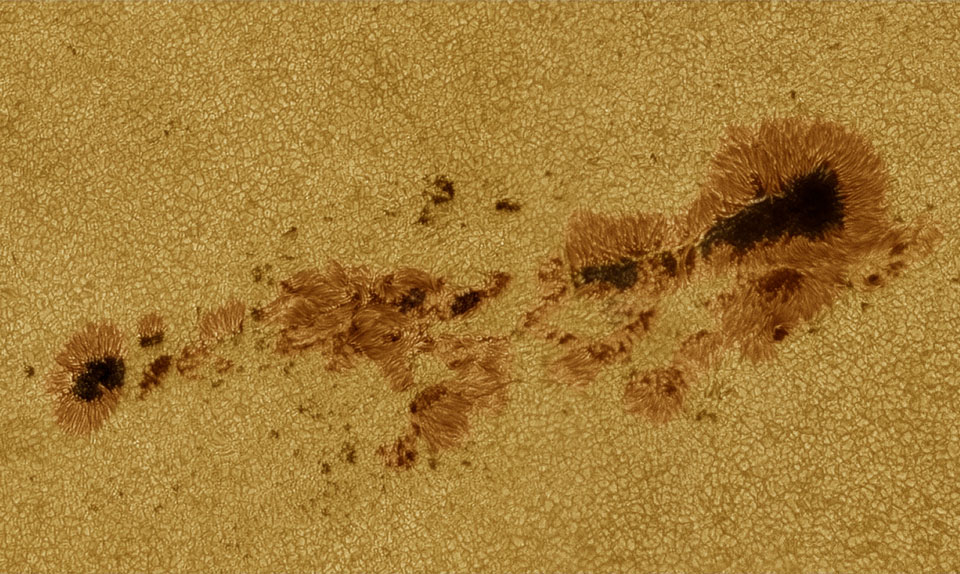
    One of the largest sunspot regions in recent years is now crossing the Sun. This region of convoluted magnetic fields may well produce a solar flare that releases a cloud of energetic particles into the Solar System. Were a very powerful cloud to impact the Earth's magnetosphere, it could be dangerous to Earth-orbiting astronauts and satellites. Conversely, the impact of even a less energetic cloud might create picturesque aurora. Pictured above is the sunspot region as it appeared two days ago. The rightmost part of this region has been cataloged as AR 11785, while the left part as AR 11787. The darkest sunspot regions contain nearly vertical magnetic fields and are called umbras, while the surrounding bronze regions - more clearly showing stringy magnetic flux tubes - are called penumbras. Churning solar granules, many about 1000 km across, compose the yellow background region. No one knows what this sunspot region will do, but space weather researchers are monitoring it closely.
    Last edited by Bluearrowll; 07-10-2013, 04:26 AM.
    1st in Kommisar's 2009 SM Tournament
    1st in I Love You`s 2009 New Year`s Tournament
    3rd in EnR's Mashfest '08 tournament
    5th in Phynx's Unofficial FFR Tournament
    9th in D3 of the 2008-2009 4th Official FFR Tournament
    10th in D5 of the 2010 5th Official FFR Tournament
    10th in D6 of the 2011-2012 6th Official FFR Tournament

    FMO AAA Count: 71
    FGO AAA Count: 10

    Bluearrowll = The Canadian player who can not detect awkward patterns. If it's awkward for most people, it's normal for Terry. If the file is difficult but super straight forward, he has issues. If he's AAAing a FGO but then heard that his favorite Hockey team was losing by a point, Hockey > FFR
    PS: Cool AAA's Terry
    - I Love You


    An Alarm Clock's Haiku
    beep beep beep beep beep
    beep beep beep beep beep beep beep
    beep beep beep beep beep
    - ieatyourlvllol

    Comment

    • Bluearrowll
      ⊙▃⊙
      FFR Simfile Author
      • Nov 2007
      • 7376

      #602
      Re: Terry's Astronomy Thread.

      What's in the sky tonight?
      July 11, 2013
      -As twilight fades, spot the crescent Moon low in the west. Venus is roughly 1½ fist-widths at arm's length to its right (for North America). As dusk deepens, watch for Regulus and Gamma (γ) Leonis coming into view above them, as shown below.

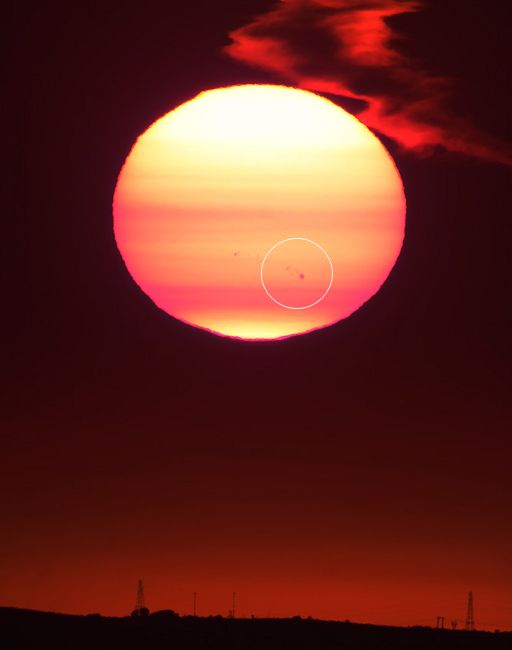
      -Despite its unstable magnetic field, big sunspot AR1785 has resisted exploding. Even so, it's putting on a good show. Pretty sunsets could give way to actual solar flares if the magnetic field of AR1785 finally erupts. For the 5th day in a row, flare probabilities remain high: NOAA forecasters estimate a 55% chance of M-flares and a 10% chance of X-flares. Pete Lawrence of Selsey UK photographed the active region as a dark-mark in the sunset on July 9th:


      Astro Picture of the Day:
      July 11, 2013


      Source:
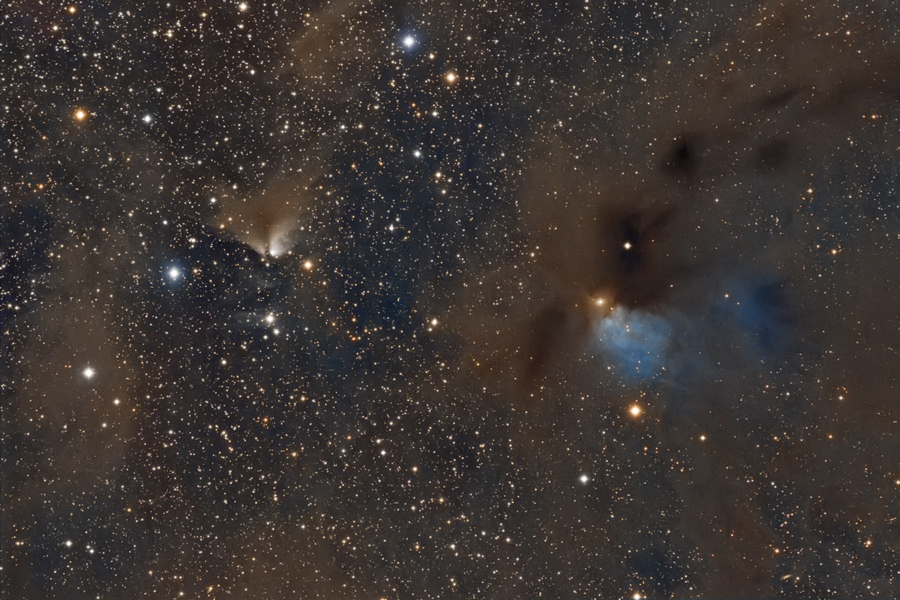
      This complex of dusty nebulae linger along the edge of the Taurus molecular cloud, a mere 450 light-years distant. Stars are forming on the cosmic scene, including extremely youthful star RY Tauri prominent toward the upper left of the 1.5 degree wide telescopic field. In fact RY Tauri is a pre-main sequence star, embedded in its natal cloud of gas and dust, also cataloged as reflection nebula vdB 27. Highly variable, the star is still relatively cool and in the late phases of gravitational collapse. It will soon become a stable, low mass, main sequence star, a stage of stellar evolution achieved by our Sun some 4.5 billion years ago. Another pre-main sequence star, V1023 Tauri, can be spotted below and right, embedded in its yellowish dust cloud adjacent to the striking blue reflection nebula Ced 30.
      1st in Kommisar's 2009 SM Tournament
      1st in I Love You`s 2009 New Year`s Tournament
      3rd in EnR's Mashfest '08 tournament
      5th in Phynx's Unofficial FFR Tournament
      9th in D3 of the 2008-2009 4th Official FFR Tournament
      10th in D5 of the 2010 5th Official FFR Tournament
      10th in D6 of the 2011-2012 6th Official FFR Tournament

      FMO AAA Count: 71
      FGO AAA Count: 10

      Bluearrowll = The Canadian player who can not detect awkward patterns. If it's awkward for most people, it's normal for Terry. If the file is difficult but super straight forward, he has issues. If he's AAAing a FGO but then heard that his favorite Hockey team was losing by a point, Hockey > FFR
      PS: Cool AAA's Terry
      - I Love You


      An Alarm Clock's Haiku
      beep beep beep beep beep
      beep beep beep beep beep beep beep
      beep beep beep beep beep
      - ieatyourlvllol

      Comment

      • Bluearrowll
        ⊙▃⊙
        FFR Simfile Author
        • Nov 2007
        • 7376

        #603
        Re: Terry's Astronomy Thread.

        What's in the sky tonight?
        July 12, 2013
        -The crescent Moon, faint Regulus, and bright Venus form a curving line low in the western twilight, as shown below.

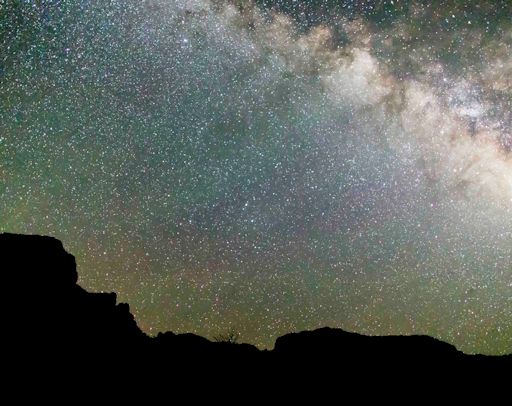
        -Not all colorful lights in the sky are the aurora borealis. The green light in the picture below is called "airglow." Airglow is a luminous bubble that surounds our entire planet, fringing the top of the atmosphere with aurora-like color. Although airglow resembles the aurora borealis, its underlying physics is different. Airglow is caused by an assortment of chemical reactions in the upper atmosphere driven mainly by solar ultraviolet radiation; auroras, on the other hand, are ignited by gusts of solar wind. Green airglow is best photographed from extremely dark sites on nights when the Moon is new or below the horizon. It often shows up in long exposures of the Milky Way: more airglow.Astrophotographer Kenneth Edwards discovered this for himself on July 4th when he was taking a long exposure of the Milky Way over Big Bend National Park, Texas:


        Astro Picture of the Day:
        July 12, 2013


        Source:
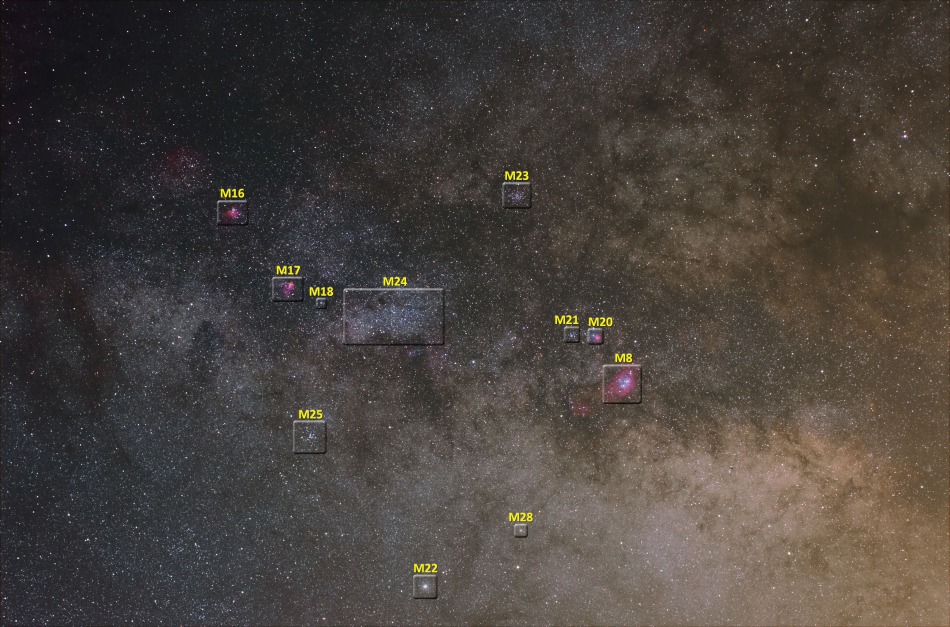
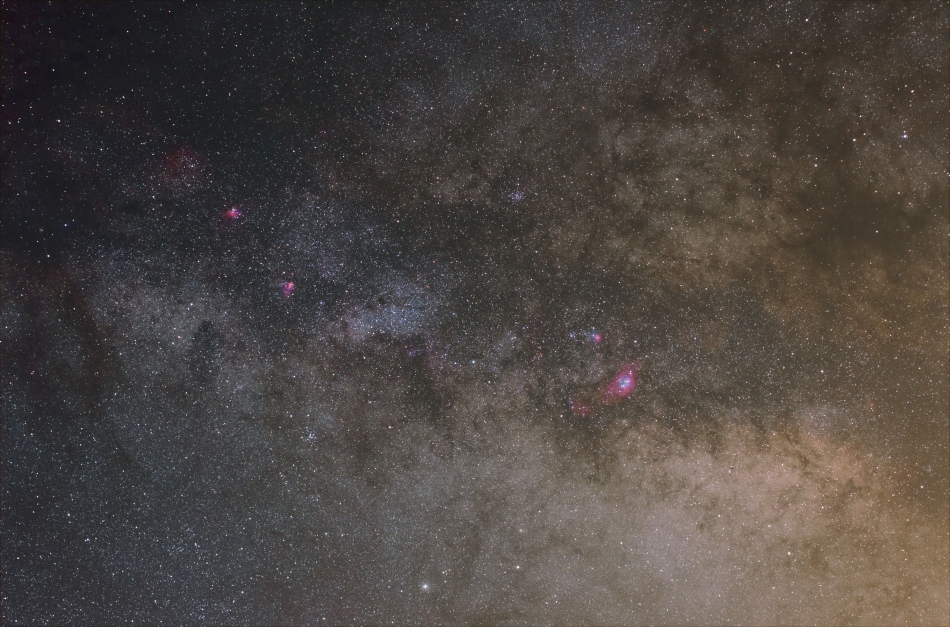
        This fifteen degree wide field of view stretches across the crowded starfields of Sagittarius toward the center of our Milky Way galaxy. In fact, the center of the galaxy lies near the right edge of the rich starscape and eleven bright star clusters and nebulae fall near the center of the frame. All eleven are numbered entries in the catalog compiled by 18th century cosmic tourist Charles Messier. Achieving celebrity status for skygazers, M8 (Lagoon), M16 (Eagle), M17 (Omega), and M20 (Trifid) show off the telltale reddish hues of emission nebulae associated with star forming regions. But also eye-catching in small telescopes are star clusters in the crowded region; M18, M21, M22, M23, M25, and M28. Broader in extent than the star clusters themselves, M24 is actually a cloud of the Milky Way's stars thousands of light-years long, seen through a break in the galaxy's veil of obscuring dust. You can put your cursor over the image (or click here) for help identifying Messier's eleven.
        1st in Kommisar's 2009 SM Tournament
        1st in I Love You`s 2009 New Year`s Tournament
        3rd in EnR's Mashfest '08 tournament
        5th in Phynx's Unofficial FFR Tournament
        9th in D3 of the 2008-2009 4th Official FFR Tournament
        10th in D5 of the 2010 5th Official FFR Tournament
        10th in D6 of the 2011-2012 6th Official FFR Tournament

        FMO AAA Count: 71
        FGO AAA Count: 10

        Bluearrowll = The Canadian player who can not detect awkward patterns. If it's awkward for most people, it's normal for Terry. If the file is difficult but super straight forward, he has issues. If he's AAAing a FGO but then heard that his favorite Hockey team was losing by a point, Hockey > FFR
        PS: Cool AAA's Terry
        - I Love You


        An Alarm Clock's Haiku
        beep beep beep beep beep
        beep beep beep beep beep beep beep
        beep beep beep beep beep
        - ieatyourlvllol

        Comment

        • Bluearrowll
          ⊙▃⊙
          FFR Simfile Author
          • Nov 2007
          • 7376

          #604
          Re: Terry's Astronomy Thread.

          What's in the sky tonight?
          July 13, 2013
          -Summery Scorpius struts in the south right after dark. Now is the time (before the Moon grows bright) to explore its Milky-Way-rich southern part, full of bright deep-sky objects. The northern part of Scorpius includes orange Antares and, to Antares's right, Delta Scorpii, a star that 13 years ago doubled in brightness and still rivals Antares for attention.

          -Saturn is near eastern quadrature during July and August (90° east of the Sun), so this is when its globe casts the widest shadow onto the rings behind, as seen from Earth's viewpoint. That's the black band on the rings just off the globe at lower right of center (celestial northeast).
          Meanwhile, the rings are now casting an almost equally prominent shadow onto the globe. That's the black rim above the rings (south here is up). Both add to Saturn's 3-D appearance in a telescope.

          The gray band on the globe just inside the rings is the semitransparent C Ring, the sparse "Crepe Ring," with no shadow currently behind it to confuse its appearance.

          Damian Peach shot this extraordinarily fine image through excellent seeing conditions on July 8th.


          Astro Picture of the Day:
          July 13, 2013


          Source:
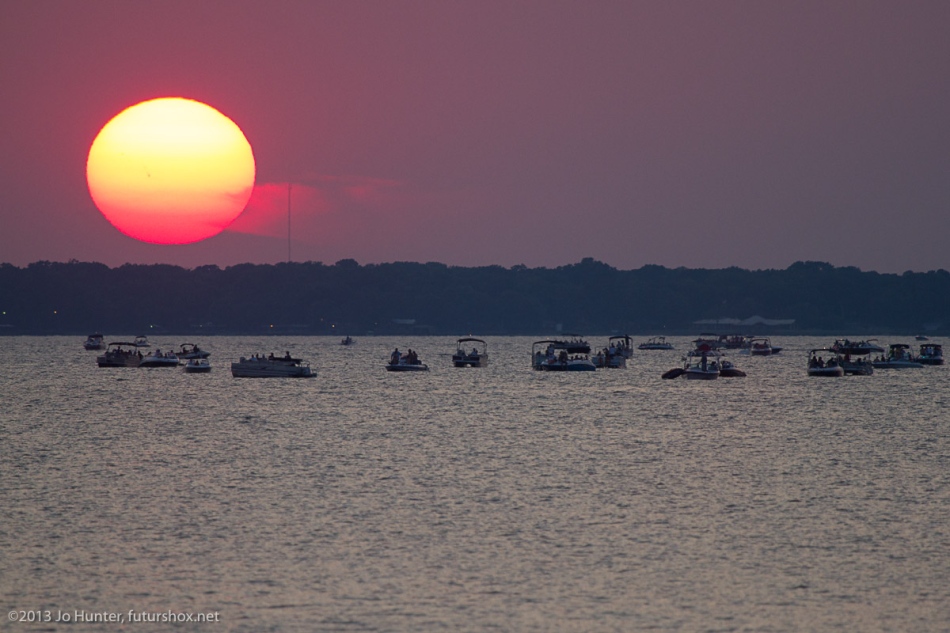
          Reddened rays of the setting Sun flooded the skies over Cedar Creek Lake, southeast of Dallas, Texas, planet Earth on July 6th. And while sunsets may be the most watched celestial event, this one even offered something extra. A sunspot so large it was visible to the naked eye is captured in the serene sunset view, near the center of a solar disk dimmed and distorted by Earth's dense atomosphere. Telescopic views revealed the spot to be a complex of large solar active regions composed of sunspots, some larger than planet Earth itself.
          1st in Kommisar's 2009 SM Tournament
          1st in I Love You`s 2009 New Year`s Tournament
          3rd in EnR's Mashfest '08 tournament
          5th in Phynx's Unofficial FFR Tournament
          9th in D3 of the 2008-2009 4th Official FFR Tournament
          10th in D5 of the 2010 5th Official FFR Tournament
          10th in D6 of the 2011-2012 6th Official FFR Tournament

          FMO AAA Count: 71
          FGO AAA Count: 10

          Bluearrowll = The Canadian player who can not detect awkward patterns. If it's awkward for most people, it's normal for Terry. If the file is difficult but super straight forward, he has issues. If he's AAAing a FGO but then heard that his favorite Hockey team was losing by a point, Hockey > FFR
          PS: Cool AAA's Terry
          - I Love You


          An Alarm Clock's Haiku
          beep beep beep beep beep
          beep beep beep beep beep beep beep
          beep beep beep beep beep
          - ieatyourlvllol

          Comment

          • top
            Banned
            • Apr 2012
            • 1907

            #605
            Re: Terry's Astronomy Thread.

            damn that sunset is beautiful

            Comment

            • Bluearrowll
              ⊙▃⊙
              FFR Simfile Author
              • Nov 2007
              • 7376

              #606
              Re: Terry's Astronomy Thread.

              What's in the sky tonight?
              July 14, 2013
              -Do you live too far north to see Alpha Centauri? The nearest star for northerners is Barnard's Star, a red dwarf 6.0 light-years away in northern Ophiuchus. At magnitude 9.6 it's fairly easy in most telescopes.

              -Mars and Jupiter are low in the east-northeast during early dawn. Jupiter is far and away the brightest at magnitude –1.9. Look just upper right of it for Mars, magnitude +1.6. Binoculars help. Jupiter is drawing closer to Mars daily. They'll pass just 3/4° apart on the morning of July 22nd.

              News Posted Today:
              July 14, 2013
              A Tale of the Sun's Tail


              Astro Picture of the Day:
              July 14, 2013


              Source:
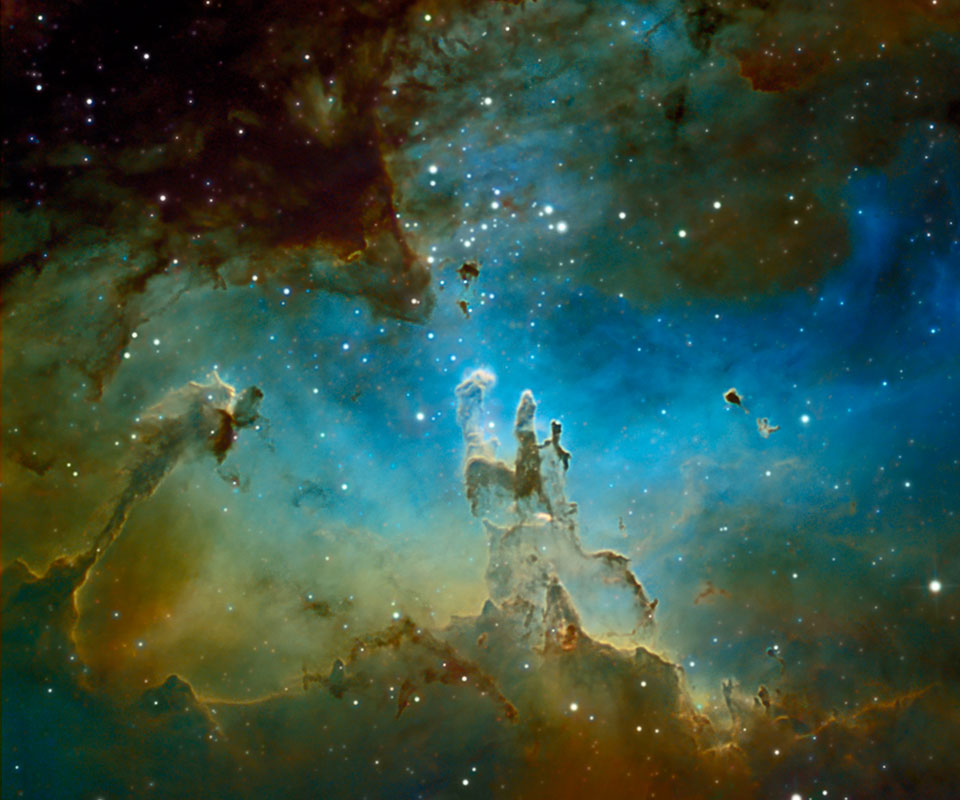
              What lights up this castle of star formation? The familiar Eagle Nebula glows bright in many colors at once. The above image is a composite of three of these glowing gas colors. Pillars of dark dust nicely outline some of the denser towers of star formation. Energetic light from young massive stars causes the gas to glow and effectively boils away part of the dust and gas from its birth pillar. Many of these stars will explode after several million years, returning most of their elements back to the nebula which formed them. This process is forming an open cluster of stars known as M16.
              1st in Kommisar's 2009 SM Tournament
              1st in I Love You`s 2009 New Year`s Tournament
              3rd in EnR's Mashfest '08 tournament
              5th in Phynx's Unofficial FFR Tournament
              9th in D3 of the 2008-2009 4th Official FFR Tournament
              10th in D5 of the 2010 5th Official FFR Tournament
              10th in D6 of the 2011-2012 6th Official FFR Tournament

              FMO AAA Count: 71
              FGO AAA Count: 10

              Bluearrowll = The Canadian player who can not detect awkward patterns. If it's awkward for most people, it's normal for Terry. If the file is difficult but super straight forward, he has issues. If he's AAAing a FGO but then heard that his favorite Hockey team was losing by a point, Hockey > FFR
              PS: Cool AAA's Terry
              - I Love You


              An Alarm Clock's Haiku
              beep beep beep beep beep
              beep beep beep beep beep beep beep
              beep beep beep beep beep
              - ieatyourlvllol

              Comment

              • Bluearrowll
                ⊙▃⊙
                FFR Simfile Author
                • Nov 2007
                • 7376

                #607
                Re: Terry's Astronomy Thread.

                What's in the sky tonight?
                July 15, 2013
                -First-quarter Moon (exact at 11:18 p.m. EDT). Look quite close to the Moon for Spica. Saturn glows off to their upper left. Think photo opportunity.

                -The Moon occults (hides) Spica for skywatchers in Hawaii and parts of Central and South America. For Timetables: http://www.lunar-occultations.com/io...0716zc1925.htm


                Astro Picture of the Day:
                July 15, 2013

                Source:
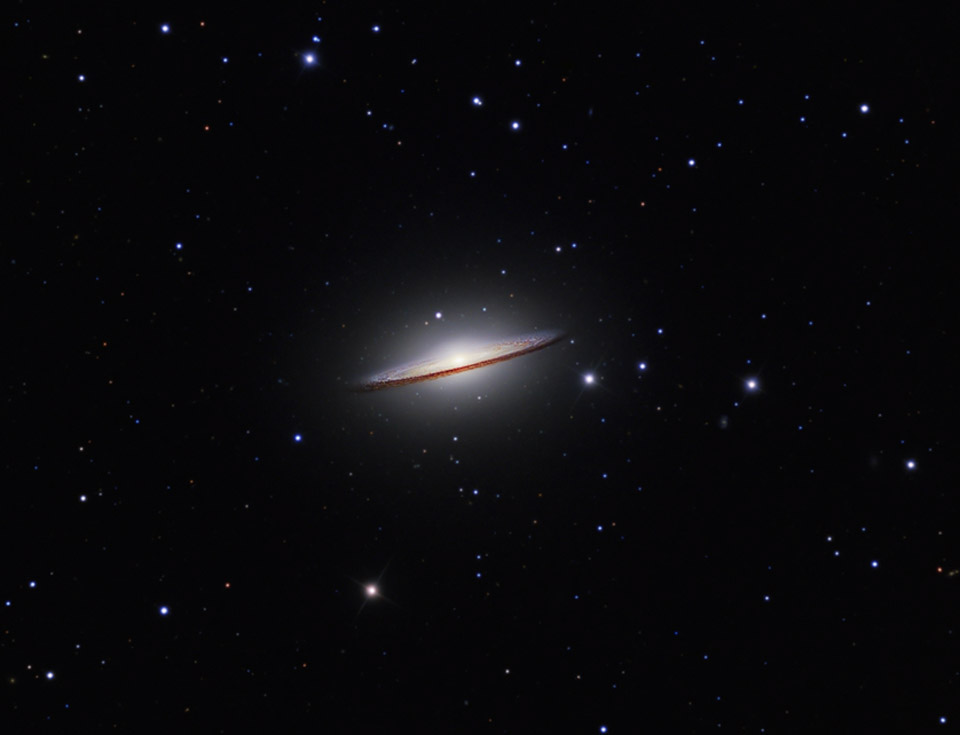
                What's going on in the center of this spiral galaxy? Named the Sombrero Galaxy for its hat-like resemblance, M104 features a prominent dust lane and a bright halo of stars and globular clusters. Reasons for the Sombrero's hat-like appearance include an unusually large and extended central bulge of stars, and dark prominent dust lanes that appear in a disk that we see nearly edge-on. Billions of old stars cause the diffuse glow of the extended central bulge visible in the above image from the 200-inch Hale Telescope. Close inspection of the central bulge shows many points of light that are actually globular clusters. M104's spectacular dust rings harbor many younger and brighter stars, and show intricate details astronomers don't yet fully understand. The very center of the Sombrero glows across the electromagnetic spectrum, and is thought to house a large black hole. Fifty million-year-old light from the Sombrero Galaxy can be seen with a small telescope towards the constellation of Virgo.
                1st in Kommisar's 2009 SM Tournament
                1st in I Love You`s 2009 New Year`s Tournament
                3rd in EnR's Mashfest '08 tournament
                5th in Phynx's Unofficial FFR Tournament
                9th in D3 of the 2008-2009 4th Official FFR Tournament
                10th in D5 of the 2010 5th Official FFR Tournament
                10th in D6 of the 2011-2012 6th Official FFR Tournament

                FMO AAA Count: 71
                FGO AAA Count: 10

                Bluearrowll = The Canadian player who can not detect awkward patterns. If it's awkward for most people, it's normal for Terry. If the file is difficult but super straight forward, he has issues. If he's AAAing a FGO but then heard that his favorite Hockey team was losing by a point, Hockey > FFR
                PS: Cool AAA's Terry
                - I Love You


                An Alarm Clock's Haiku
                beep beep beep beep beep
                beep beep beep beep beep beep beep
                beep beep beep beep beep
                - ieatyourlvllol

                Comment

                • Bluearrowll
                  ⊙▃⊙
                  FFR Simfile Author
                  • Nov 2007
                  • 7376

                  #608
                  Re: Terry's Astronomy Thread.

                  What's in the sky tonight?
                  July 16, 2013
                  -This evening the Moon shines below Saturn, with Spica now off to their lower right.

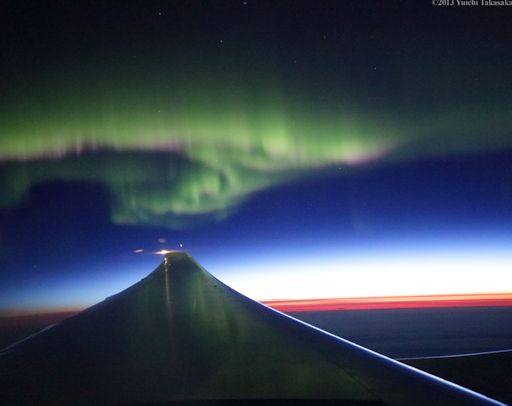
                  -Aisle or window? The next time you're making that decision at the airport, consider the following snapshot. "I was expecting auroras when I boarded Air Canada flight 854 from Vancouver to Heathrow on the evening of July 14th - and I was not disappointed," reports photographer Yuichi Takasaka. "Above the James Bay in the northern Manitoba, the lights grew so bright that I could see them through the twilight. Note the colors reflected from the wing of the plane, these were the strongest auroras I've seen from an airliner ever!" A 0.25 second exposure yielded this image:

                  -According to NOAA forecasters the odds of a polar geomagnetic storm on July 16th are 20%, increasing to 50% on July 18th when a solar wind stream is expected to hit Earth's magnetic field. Add to that the near-certainty of high-latitude noctilucent clouds and ... pick the window seat.


                  Astro Picture of the Day:
                  July 16, 2013
                  Source:
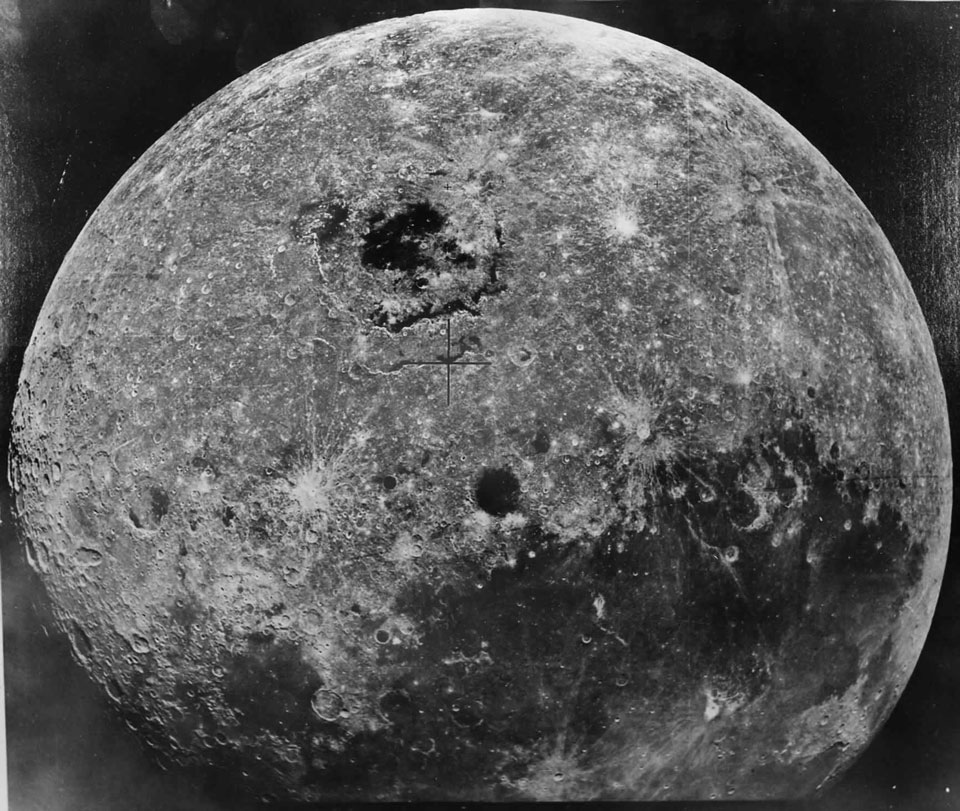
                  Which moon is this? Earth's. Our Moon's unfamiliar appearance is due partly to an unfamiliar viewing angle as captured by a little-known spacecraft - the Soviet Union's Zond 8 that circled the Moon in October of 1970. Pictured above, the dark-centered circular feature that stands out near the top of the image is Mare Orientale, a massive impact basin formed by an ancient collision with an asteroid. Mare Orientale is surrounded by light colored and highly textured highlands. Across the image bottom lies the dark and expansive Oceanus Procellarum, the largest of the dark (but dry) maria that dominate the side of the Moon that always faces toward the Earth. Originally designed to carry humans, robotic Zond 8 came within 1000 km of the lunar surface, took about 100 detailed photographs on film, and returned them safely to Earth within a week.
                  1st in Kommisar's 2009 SM Tournament
                  1st in I Love You`s 2009 New Year`s Tournament
                  3rd in EnR's Mashfest '08 tournament
                  5th in Phynx's Unofficial FFR Tournament
                  9th in D3 of the 2008-2009 4th Official FFR Tournament
                  10th in D5 of the 2010 5th Official FFR Tournament
                  10th in D6 of the 2011-2012 6th Official FFR Tournament

                  FMO AAA Count: 71
                  FGO AAA Count: 10

                  Bluearrowll = The Canadian player who can not detect awkward patterns. If it's awkward for most people, it's normal for Terry. If the file is difficult but super straight forward, he has issues. If he's AAAing a FGO but then heard that his favorite Hockey team was losing by a point, Hockey > FFR
                  PS: Cool AAA's Terry
                  - I Love You


                  An Alarm Clock's Haiku
                  beep beep beep beep beep
                  beep beep beep beep beep beep beep
                  beep beep beep beep beep
                  - ieatyourlvllol

                  Comment

                  • Bluearrowll
                    ⊙▃⊙
                    FFR Simfile Author
                    • Nov 2007
                    • 7376

                    #609
                    Re: Terry's Astronomy Thread.

                    What's in the sky tonight?
                    July 17, 2013
                    -The Moon stands in central Libra this evening, about midway (for the longitudes of the Americas) between Saturn to its right and the stars of upper Scorpius to its left.

                    -Venus (magnitude –3.9) shines brightly low in the west-northwest in evening twilight. In a telescope it's still small (12 arcseconds) and gibbous (87% sunlit). But for the rest of the year, watch it grow in size and wane in phase until becoming a long, ultra-thin crescent.

                    News Posted Today:
                    July 15, 2013
                    The Sun's Heat Wave


                    Astro Picture of the Day:
                    July 17, 2013
                    Source:
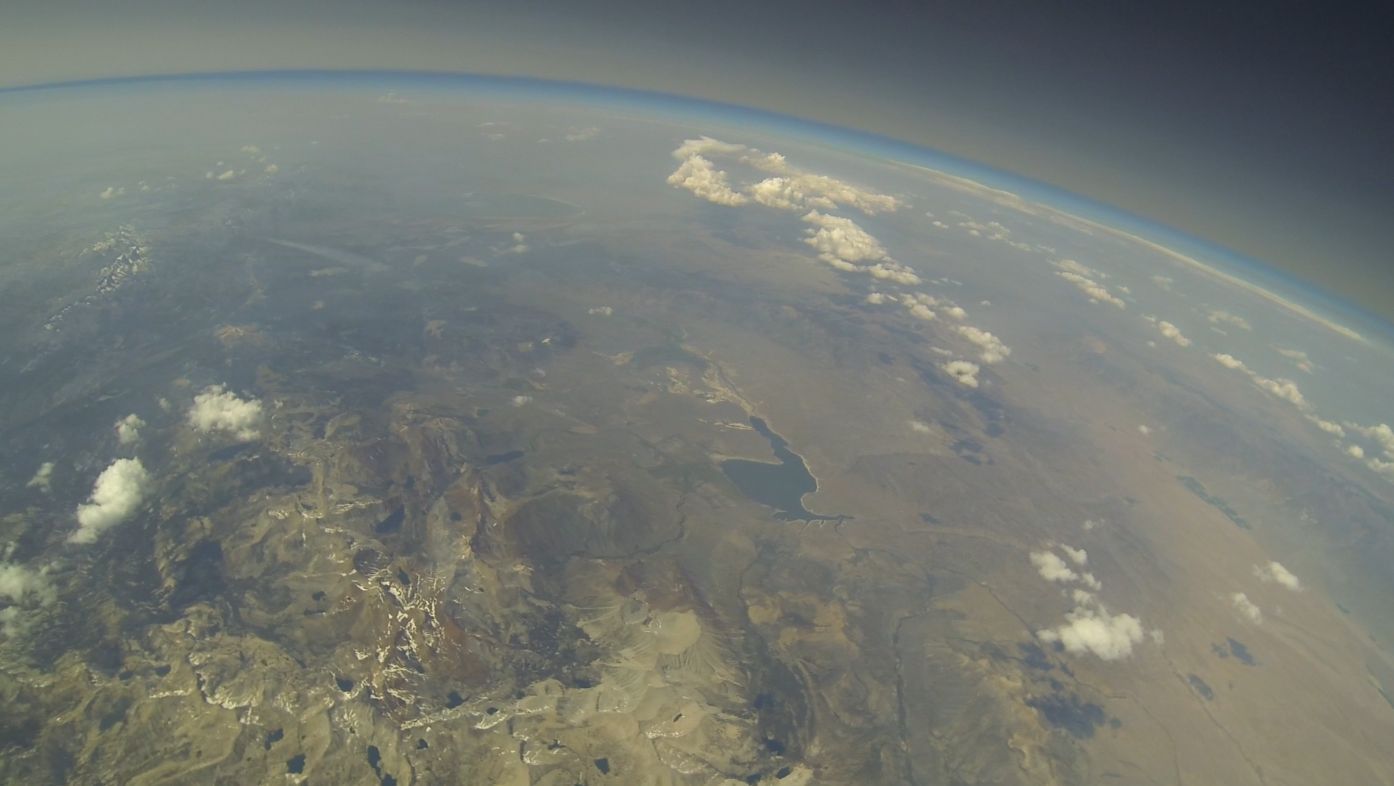
                    Since 2011, the Earth to Sky students have flown 30 balloons and measured the temperature of the tropopause 19 times.The temperature of the tropopause on June 30, 2013 during a huge heat wave, fell right in the middle of their overall distribution - nothing unusual. These results show that hot air on the ground does not necessarily translate into a hot upper atmosphere. There was, however, something unusual about the flight. Normally, air above the Sierra launch site is crystal clear, but not this time. En route to the stratosphere, the balloon encountered many thin layers of smoke and ash blown into the area from distant wildfires. Each fire, apparently, lofted its aerosols to a different altitude where winds stretched the smoky debris into a thin layer. This picture was captured while the balloon was in transit between two layers. Note the curved blue line. That's the narrow gap between the two aerosol layers, allowing a glimpse of blue sky in the distance. (To residents of the eastern Sierra: That's Crowley Lake in the foreground.)
                    1st in Kommisar's 2009 SM Tournament
                    1st in I Love You`s 2009 New Year`s Tournament
                    3rd in EnR's Mashfest '08 tournament
                    5th in Phynx's Unofficial FFR Tournament
                    9th in D3 of the 2008-2009 4th Official FFR Tournament
                    10th in D5 of the 2010 5th Official FFR Tournament
                    10th in D6 of the 2011-2012 6th Official FFR Tournament

                    FMO AAA Count: 71
                    FGO AAA Count: 10

                    Bluearrowll = The Canadian player who can not detect awkward patterns. If it's awkward for most people, it's normal for Terry. If the file is difficult but super straight forward, he has issues. If he's AAAing a FGO but then heard that his favorite Hockey team was losing by a point, Hockey > FFR
                    PS: Cool AAA's Terry
                    - I Love You


                    An Alarm Clock's Haiku
                    beep beep beep beep beep
                    beep beep beep beep beep beep beep
                    beep beep beep beep beep
                    - ieatyourlvllol

                    Comment

                    • Bluearrowll
                      ⊙▃⊙
                      FFR Simfile Author
                      • Nov 2007
                      • 7376

                      #610
                      Re: Terry's Astronomy Thread.

                      What's in the sky tonight?
                      July 18, 2013
                      -Look lower left of the gibbous Moon this evening for the red supergiant Antares. Also nearby are other stars of upper Scorpius.

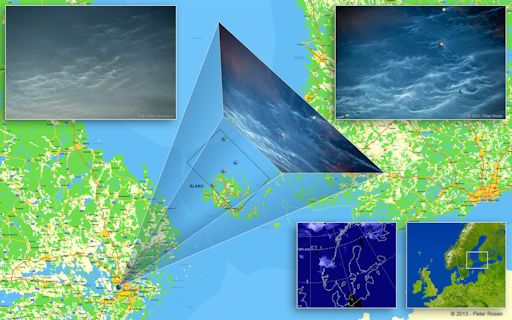
                      -Noctilucent clouds are our planet's highest clouds - but exactly how high are they? The textbook answer is 82-82 km, but textbooks can be wrong. Peter Rosén of Stockholm, Sweden, decided to find out for himself. "On July 4th I photographed some interesting NLCs," he explains. "After uploading them on Spaceweather, I noticed that P-M Hedén had photographed the same formations and at the same time from a location 26 km (16 miles) north of mine. I decided to make precise measurements of the same features in both pictures with respect to the stars and try to determine the exact geographical position and height of these NLCs.Some years ago I found a very useful calculator put online by Paul Schlyter to measure the position and altitude of Perseid meteors. By entering the geographical position of both observers and the respective coordinates of an object in the sky, it will compute the position and altitude of the object. In this case, I used it for NLCs." He picked four features color-coded in the figure below and measured their positions. "The height of these NLCs ranged from 75.1 km (blue dot) to 78.6 km (red dot)," he says. "These results seem to be a little bit lower than the value of 83 km that is often referenced."

                      The calculator is found here: http://stjarnhimlen.se/calc/metnlcalt_en.html


                      News Posted Today:
                      July 17, 2013
                      Magnifying Quasars


                      Astro Picture of the Day:
                      July 18, 2013
                      Source:
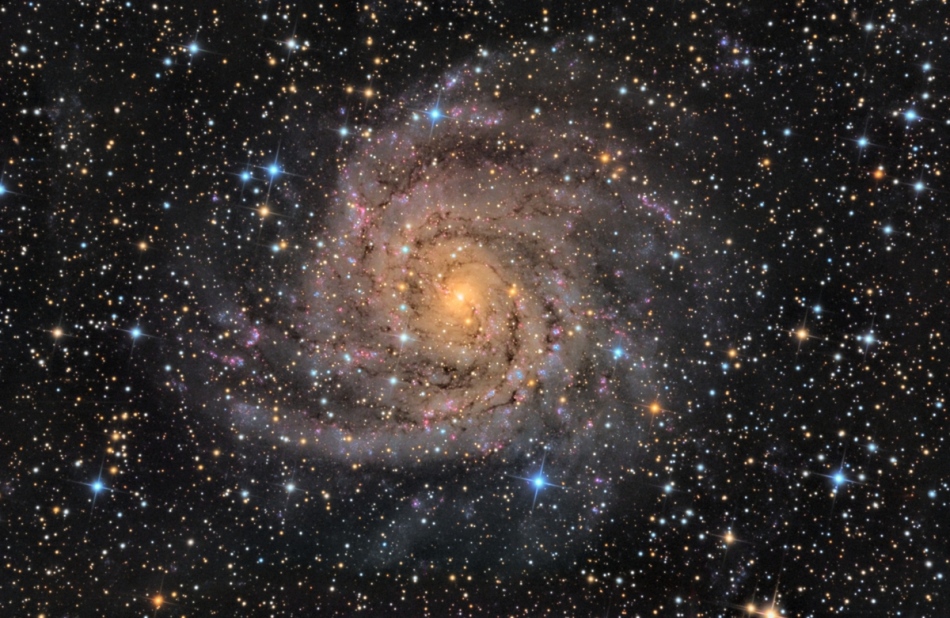
                      Similar in size to large, bright spiral galaxies in our neighborhood, IC 342 is a mere 10 million light-years distant in the long-necked, northern constellation Camelopardalis. A sprawling island universe, IC 342 would otherwise be a prominent galaxy in our night sky, but it is hidden from clear view and only glimpsed through the veil of stars, gas and dust clouds along the plane of our own Milky Way galaxy. Even though IC 342's light is dimmed by intervening cosmic clouds, this deep telescopic image traces the galaxy's obscuring dust, blue star clusters, and glowing pink star forming regions along spiral arms that wind far from the galaxy's core. IC 342 may have undergone a recent burst of star formation activity and is close enough to have gravitationally influenced the evolution of the local group of galaxies and the Milky Way.
                      1st in Kommisar's 2009 SM Tournament
                      1st in I Love You`s 2009 New Year`s Tournament
                      3rd in EnR's Mashfest '08 tournament
                      5th in Phynx's Unofficial FFR Tournament
                      9th in D3 of the 2008-2009 4th Official FFR Tournament
                      10th in D5 of the 2010 5th Official FFR Tournament
                      10th in D6 of the 2011-2012 6th Official FFR Tournament

                      FMO AAA Count: 71
                      FGO AAA Count: 10

                      Bluearrowll = The Canadian player who can not detect awkward patterns. If it's awkward for most people, it's normal for Terry. If the file is difficult but super straight forward, he has issues. If he's AAAing a FGO but then heard that his favorite Hockey team was losing by a point, Hockey > FFR
                      PS: Cool AAA's Terry
                      - I Love You


                      An Alarm Clock's Haiku
                      beep beep beep beep beep
                      beep beep beep beep beep beep beep
                      beep beep beep beep beep
                      - ieatyourlvllol

                      Comment

                      • Bluearrowll
                        ⊙▃⊙
                        FFR Simfile Author
                        • Nov 2007
                        • 7376

                        #611
                        Re: Terry's Astronomy Thread.

                        What's in the sky tonight?
                        July 19, 2013
                        -Telescope users looking at the gibbous Moon from most of North America tonight can watch the Moon's invisible dark limb creep up to and occult the 4.4-magnitude star Xi Ophiuchi. Only Florida and the West miss out.

                        -Some times of the star's disappearance: in western Massachusetts, 12:38 a.m. EDT; Atlanta, 12:32 a.m. EDT; Chicago, 11:10 p.m. CDT; Winnipeg, 10:50 p.m. CDT; Kansas City, 11:00 p.m. CDT; Austin, 11:07 p.m. CDT; Denver, 9:39 p.m. MDT. Start watching early.

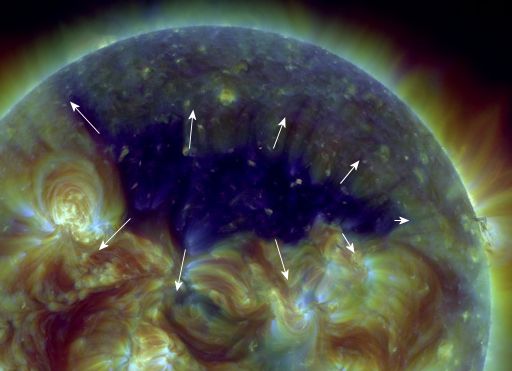
                        -Opening up like a zipper almost a million kilometers long, a vast coronal hole has appeared in the sun's northern hemisphere. Coronal holes are places in the sun's upper atmosphere where the magnetic field opens up and allows solar wind to escape. A broad stream of solar wind flowing from this particular coronal hole should reach Earth on July 19-20.

                        -In addition, NOAA forecasters say a CME could hit Earth's magnetic field late on July 18th. The combined impact of the CME and the incoming solar wind stream could cause some stormy space weather around Earth in the days ahead. NOAA forecasters estimate a 65% chance of polar geomagnetic storms on July 19-20.


                        Astro Picture of the Day:
                        July 19, 2013
                        Source:
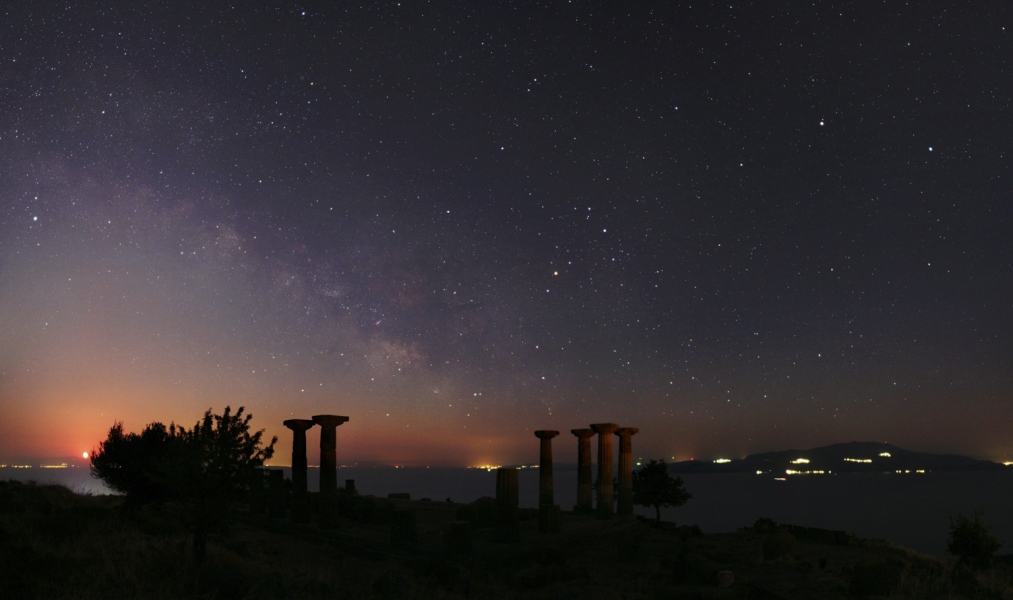
                        Take a picture of Saturn in the sky tonight. You could capture a view like this one. Recorded just last month looking toward the south, planet Earth and ruins of the ancient temple of Athena at Assos, Turkey are in the foreground. The Moon rises at the far left of the frame and Saturn is the bright "star" at the upper right, near Virgo's alpha star Spica (picture with labels). If you do take a picture of Saturn or wave at Saturn and take a picture, you can share it online and submit it to the Saturn Mosaic Project. Why take a picture tonight? Because the Cassini spacecraft will be orbiting Saturn and taking a picture of you.

                        1st in Kommisar's 2009 SM Tournament
                        1st in I Love You`s 2009 New Year`s Tournament
                        3rd in EnR's Mashfest '08 tournament
                        5th in Phynx's Unofficial FFR Tournament
                        9th in D3 of the 2008-2009 4th Official FFR Tournament
                        10th in D5 of the 2010 5th Official FFR Tournament
                        10th in D6 of the 2011-2012 6th Official FFR Tournament

                        FMO AAA Count: 71
                        FGO AAA Count: 10

                        Bluearrowll = The Canadian player who can not detect awkward patterns. If it's awkward for most people, it's normal for Terry. If the file is difficult but super straight forward, he has issues. If he's AAAing a FGO but then heard that his favorite Hockey team was losing by a point, Hockey > FFR
                        PS: Cool AAA's Terry
                        - I Love You


                        An Alarm Clock's Haiku
                        beep beep beep beep beep
                        beep beep beep beep beep beep beep
                        beep beep beep beep beep
                        - ieatyourlvllol

                        Comment

                        • Bluearrowll
                          ⊙▃⊙
                          FFR Simfile Author
                          • Nov 2007
                          • 7376

                          #612
                          Re: Terry's Astronomy Thread.

                          What's in the sky tonight?
                          July 20, 2013
                          -Look upper left of the Moon after dusk, by roughly three fists at arm's length, for Altair, the bright eye of Aquila the Eagle. A little less far to the Moon's right is Antares, the fiery heart of Scorpius.

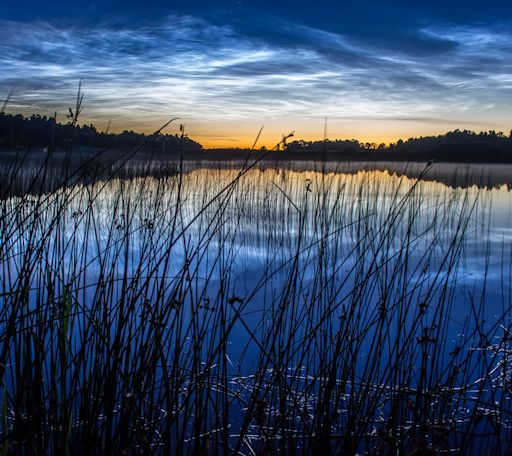
                          -Earth's "noctilucent daisy" is glowing brighter than ever. Seeded by meteor smoke, noctilucent clouds are surrounding the north pole in a luminous circle visible from ground and space alike. Tadas Janušonis photographed this display on July 18th from Vabalninkas in the Birzai district of Lithuania:


                          News Posted Today:
                          July 19, 2013
                          Wave at Saturn — But Will Cassini See You?


                          Astro Picture of the Day:
                          July 20, 2013
                          Source:
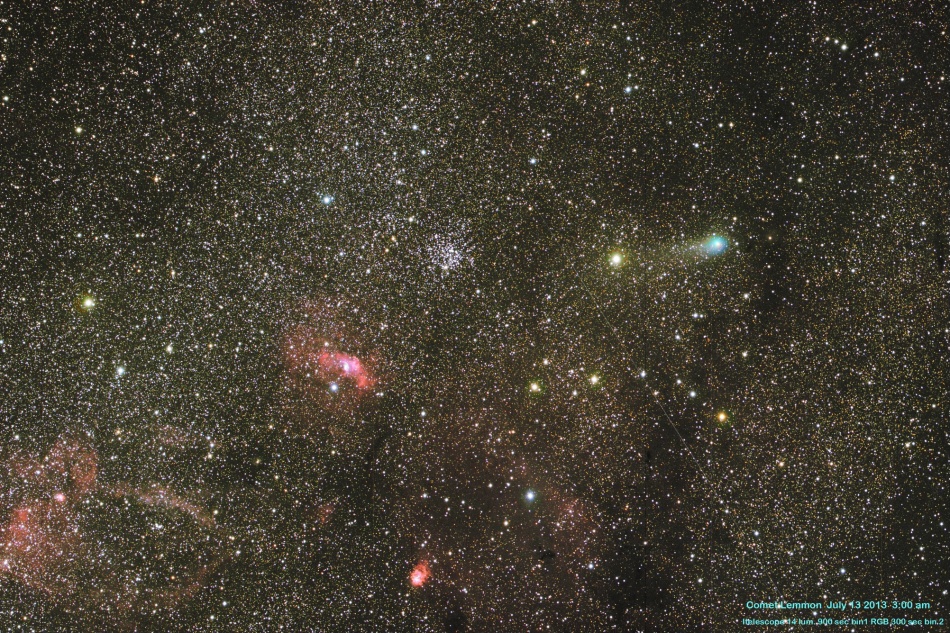
                          Now sweeping high above the ecliptic plane, Comet Lemmon has faded dramatically in planet Earth's night sky as it heads for the outer solar system. Some 16 light-minutes (2 AU) from the Sun, it still sports a greenish coma though, posing on the right in this 4 degree wide telescopic view from last Saturday with deep sky star clusters and nebulae in Cassiopeia. In fact, the rich background skyscape is typical within the boundaries of the boastful northern constellation that lie along the crowded starfields of the Milky Way. Included near center is open star cluster M52 about 5,000 light-years away. Around 11,000 light-years distant, the red glowing nebula NGC 7635 below and left of M52 is well-known for its appearance in close-up images as the Bubble Nebula. But the fading Comet Lemmon is not the only foreground object on the scene. A faint streak on the right is an orbiting satellite caught crossing through the field during the long exposure, glinting in the sunlight and winking out as it passes into Earth's shadow.
                          1st in Kommisar's 2009 SM Tournament
                          1st in I Love You`s 2009 New Year`s Tournament
                          3rd in EnR's Mashfest '08 tournament
                          5th in Phynx's Unofficial FFR Tournament
                          9th in D3 of the 2008-2009 4th Official FFR Tournament
                          10th in D5 of the 2010 5th Official FFR Tournament
                          10th in D6 of the 2011-2012 6th Official FFR Tournament

                          FMO AAA Count: 71
                          FGO AAA Count: 10

                          Bluearrowll = The Canadian player who can not detect awkward patterns. If it's awkward for most people, it's normal for Terry. If the file is difficult but super straight forward, he has issues. If he's AAAing a FGO but then heard that his favorite Hockey team was losing by a point, Hockey > FFR
                          PS: Cool AAA's Terry
                          - I Love You


                          An Alarm Clock's Haiku
                          beep beep beep beep beep
                          beep beep beep beep beep beep beep
                          beep beep beep beep beep
                          - ieatyourlvllol

                          Comment

                          • Bluearrowll
                            ⊙▃⊙
                            FFR Simfile Author
                            • Nov 2007
                            • 7376

                            #613
                            Re: Terry's Astronomy Thread.

                            New Feature Added: Noctilucent Cloud Tracker for the Northern Hemisphere.

                            What's in the sky tonight?
                            July 21, 2013
                            -As twilight fades away, spot Venus low in the west-northwest. Look 1¼° to its lower left for much fainter Regulus. Bring binoculars.

                            -Venus (magnitude –3.9) shines brightly low in the west-northwest during evening twilight. In a telescope it's still small (12 arcseconds) and gibbous (85% sunlit).

                            -Solar activity is low. The biggest sunspot on the Earthside of the sun, AR1783, has been quiet for days even though it has a 'beta-gamma' magnetic field that harbors energy for M-class solar flares. NOAA forecasters estimate a slim 10% chance that AR1783 will break the quiet with an M-flare on July 21st.

                            Astro Picture of the Day:
                            July 21, 2013
                            Source:
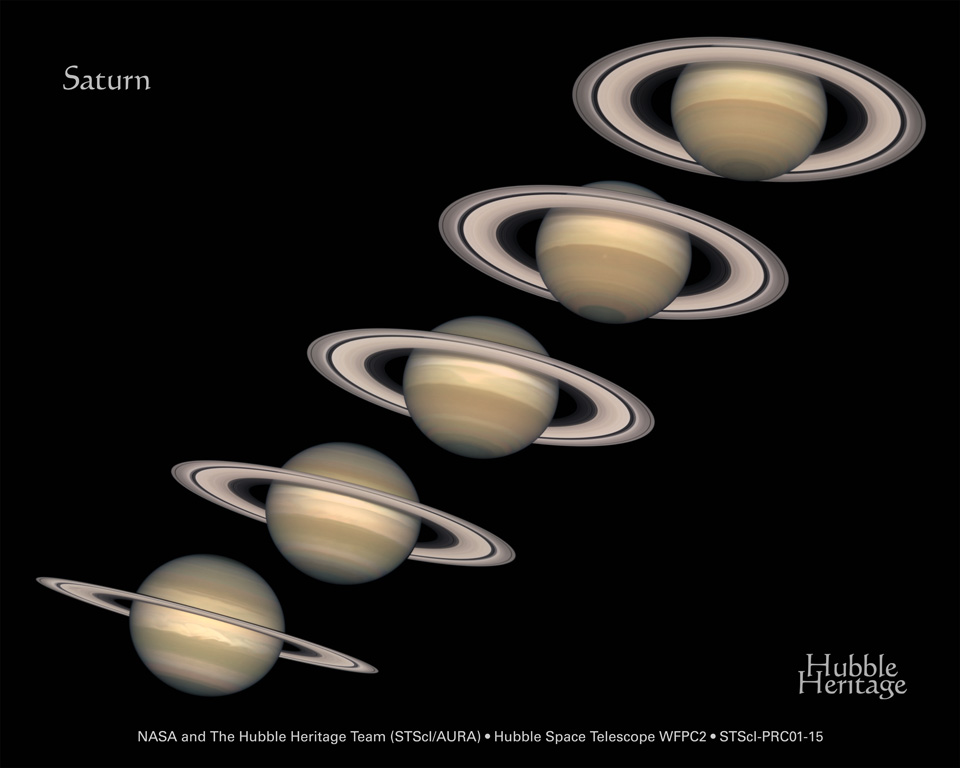
                            Since Saturn's axis is tilted as it orbits the Sun, Saturn has seasons, like those of planet Earth ... but Saturn's seasons last for over seven years. So what season is it on Saturn now? Orbiting the equator, the tilt of the rings of Saturn provides quite a graphic seasonal display. Each year until 2016, Saturn's rings will be increasingly apparent after appearing nearly edge-on in 2009. The ringed planet is also well placed in evening skies providing a grand view as summer comes to Saturn's northern hemisphere and winter to the south. The Hubble Space Telescope took the above sequence of images about a year apart, starting on the left in 1996 and ending on the right in 2000. Although they look solid, Saturn's Rings are likely less than 50 meters thick and consist of individually orbiting bits of ice and rock ranging in size from grains of sand to barn-sized boulders.
                            Last edited by Bluearrowll; 07-21-2013, 07:50 AM.
                            1st in Kommisar's 2009 SM Tournament
                            1st in I Love You`s 2009 New Year`s Tournament
                            3rd in EnR's Mashfest '08 tournament
                            5th in Phynx's Unofficial FFR Tournament
                            9th in D3 of the 2008-2009 4th Official FFR Tournament
                            10th in D5 of the 2010 5th Official FFR Tournament
                            10th in D6 of the 2011-2012 6th Official FFR Tournament

                            FMO AAA Count: 71
                            FGO AAA Count: 10

                            Bluearrowll = The Canadian player who can not detect awkward patterns. If it's awkward for most people, it's normal for Terry. If the file is difficult but super straight forward, he has issues. If he's AAAing a FGO but then heard that his favorite Hockey team was losing by a point, Hockey > FFR
                            PS: Cool AAA's Terry
                            - I Love You


                            An Alarm Clock's Haiku
                            beep beep beep beep beep
                            beep beep beep beep beep beep beep
                            beep beep beep beep beep
                            - ieatyourlvllol

                            Comment

                            • Bluearrowll
                              ⊙▃⊙
                              FFR Simfile Author
                              • Nov 2007
                              • 7376

                              #614
                              Re: Terry's Astronomy Thread.

                              What's in the sky tonight?
                              July 22, 2013
                              - Twinkly Regulus is now 1¼° below Venus at dusk.

                              -Full Moon (exact at 2:16 p.m. EDT). The Moon travels across the sky tonight in western Capricornus.


                              Astro Picture of the Day:
                              July 22, 2013
                              Source:
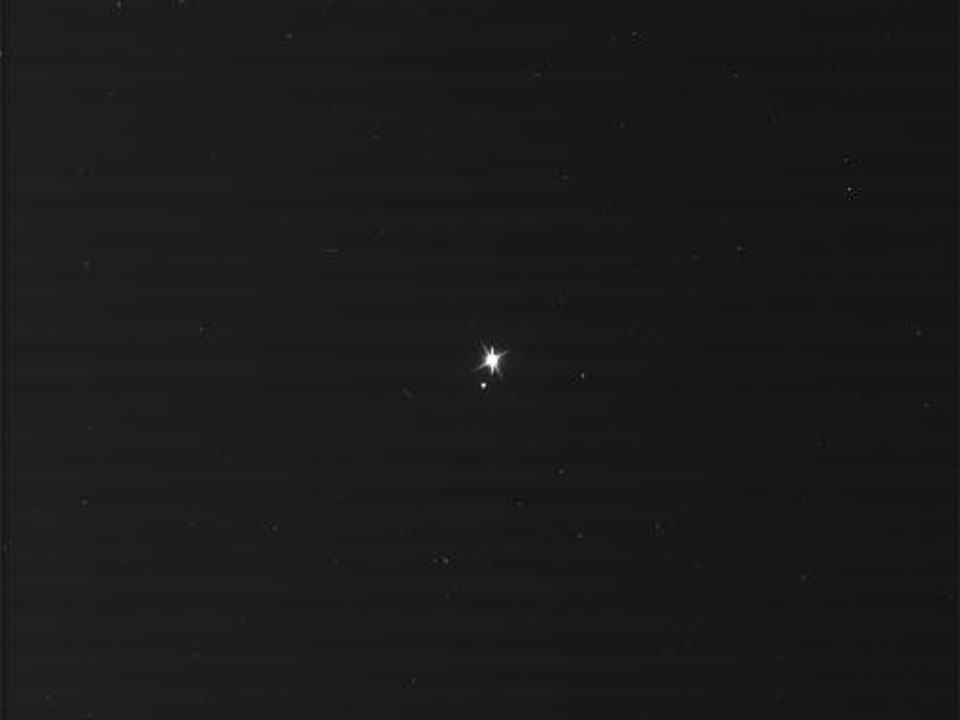
                              You are here. Everyone you've ever known is here. Every human who has ever lived - is here. Pictured above is the Earth-Moon system as captured by the Cassini mission orbiting Saturn in the outer Solar System. Earth is the brighter of the two spots near the center, while the Moon is visible to its lower left. The unprocessed image shows several streaks that are not stars but rather cosmic rays that struck the digital camera while it was taking the image. The image was snapped by Cassini on Friday and released on Saturday. At nearly the same time, many humans on Earth were snapping their own pictures of Saturn.
                              1st in Kommisar's 2009 SM Tournament
                              1st in I Love You`s 2009 New Year`s Tournament
                              3rd in EnR's Mashfest '08 tournament
                              5th in Phynx's Unofficial FFR Tournament
                              9th in D3 of the 2008-2009 4th Official FFR Tournament
                              10th in D5 of the 2010 5th Official FFR Tournament
                              10th in D6 of the 2011-2012 6th Official FFR Tournament

                              FMO AAA Count: 71
                              FGO AAA Count: 10

                              Bluearrowll = The Canadian player who can not detect awkward patterns. If it's awkward for most people, it's normal for Terry. If the file is difficult but super straight forward, he has issues. If he's AAAing a FGO but then heard that his favorite Hockey team was losing by a point, Hockey > FFR
                              PS: Cool AAA's Terry
                              - I Love You


                              An Alarm Clock's Haiku
                              beep beep beep beep beep
                              beep beep beep beep beep beep beep
                              beep beep beep beep beep
                              - ieatyourlvllol

                              Comment

                              • Bluearrowll
                                ⊙▃⊙
                                FFR Simfile Author
                                • Nov 2007
                                • 7376

                                #615
                                Re: Terry's Astronomy Thread.

                                What's in the sky tonight?
                                July 23, 2013
                                -Look northwest after dark for the Big Dipper, hanging diagonally. Its handle is on the upper left. Follow the curve of the handle on around leftward, for a little more than a Dipper-length, to land on bright Arcturus in the west.

                                -Solar activity has shifted from low to very low. None of the sunspots on the Earthside of the sun are actively flaring. NOAA forecasters expect this situation to continue for the next 24 hours. They estimate a slim 10% chance of M-class flares and no more than a 1% chance of X-flares on July 23rd.

                                Astro Picture of the Day:
                                July 23, 2013
                                Source:
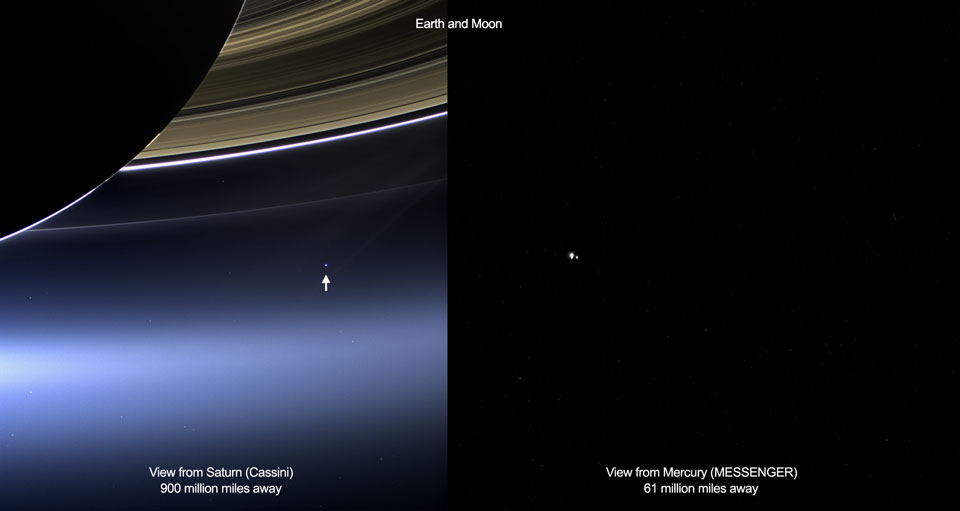
                                In a cross-Solar System interplanetary first, our Earth was photographed during the same day from both Mercury and Saturn. Pictured on the left, Earth is the pale blue dot just below the rings of Saturn, as captured by the robotic Cassini spacecraft now the gas giant. Pictured on the right, the Earth-Moon system is seen against a dark background, as captured by the robotic MESSENGER spacecraft now orbiting Mercury. In the MESSENGER image, the Earth (left) and Moon (right) shine brightly with reflected sunlight. MESSENGER took the overexposed image last Friday as part of a search for small natural satellites of the innermost planet, moons that would be expected to be quite dim. The picture of Earth is only one footprint in a mosaic of 33 footprints covering the entire Saturn ring system. Researchers are working on the ensemble now, and they expect it to be ready in a few weeks.
                                1st in Kommisar's 2009 SM Tournament
                                1st in I Love You`s 2009 New Year`s Tournament
                                3rd in EnR's Mashfest '08 tournament
                                5th in Phynx's Unofficial FFR Tournament
                                9th in D3 of the 2008-2009 4th Official FFR Tournament
                                10th in D5 of the 2010 5th Official FFR Tournament
                                10th in D6 of the 2011-2012 6th Official FFR Tournament

                                FMO AAA Count: 71
                                FGO AAA Count: 10

                                Bluearrowll = The Canadian player who can not detect awkward patterns. If it's awkward for most people, it's normal for Terry. If the file is difficult but super straight forward, he has issues. If he's AAAing a FGO but then heard that his favorite Hockey team was losing by a point, Hockey > FFR
                                PS: Cool AAA's Terry
                                - I Love You


                                An Alarm Clock's Haiku
                                beep beep beep beep beep
                                beep beep beep beep beep beep beep
                                beep beep beep beep beep
                                - ieatyourlvllol

                                Comment

                                Working...