


From FFR submission experience, I have decided to make a guide on what is not recommended in FFR file submissions.
Things to keep in mind about FFR are:
- Combo based scoring (this is a big one)
- The game runs at 30 FPS, meaning that anything above 150 bpm 16ths risks being 2 frames apart, anything above 225 bpm 16th notes risks being 1 frame apart and anything above 450 bpm 16ths risks being zero frames apart.
- FFR does not have chord cohesion, meaning that a jump does not register after you hit the second note of the jump. This is what causes "splitting" - you can get a perfect and a good on a single jump from hitting it as a gallop.
- BOOS. Nobody likes boos when they're going for score.
1. Don't put any arrow in the same column above 225 bpm 16th speed.
Anything above 225 bpm 16ths risks a 1-frame placement. Files that lucked out from this are Big Blue (226 BPM 16th minijacks), Sparkle Downer (293.44 BPM 16th minijack), and Over The Ocean (around 255 bpm 16th minijack). Don't test your luck with the converter. This of course also causes a huge problem when you have a longer jack (Crowdpleaser being the best example, the 64th trill is a massive 2 frame jack glut with a 1 framer in between, making it a lot more harder).
Sparkle Downer had a very lucky break.
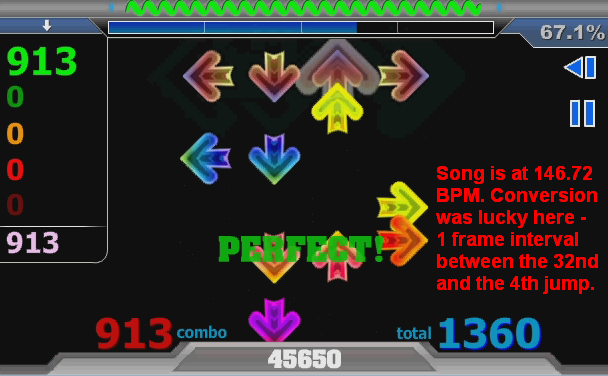
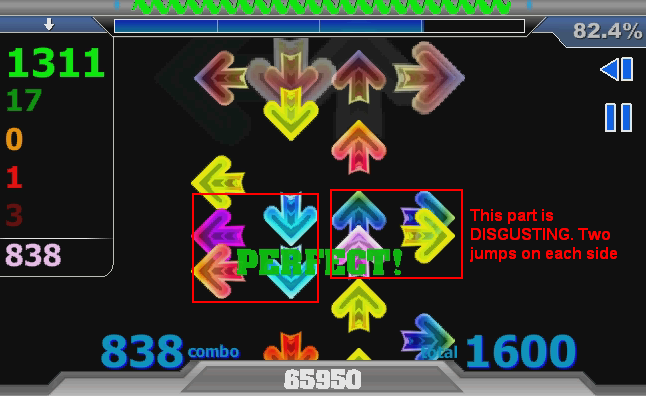
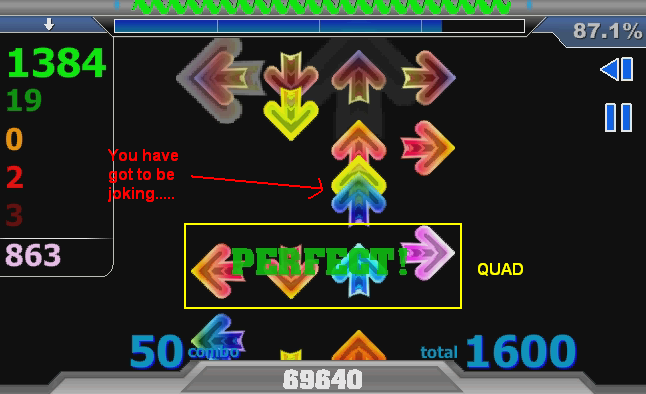
RATO, which is *only* 240 bpm 16th minijacks, wasn't quite so lucky. Only 15 bpm over and it made this mess.
2. Check for hidden jacks/severe one-hand bias.
I'm going to use hi19hi19's post here from the batch thread since it basically explains this very effectively.
Even if you're going for jumpstream, jumpstream *CAN* contain annoying jacks that are "hidden". Here's an example, with the light blue rectangle showing the jack that exists:
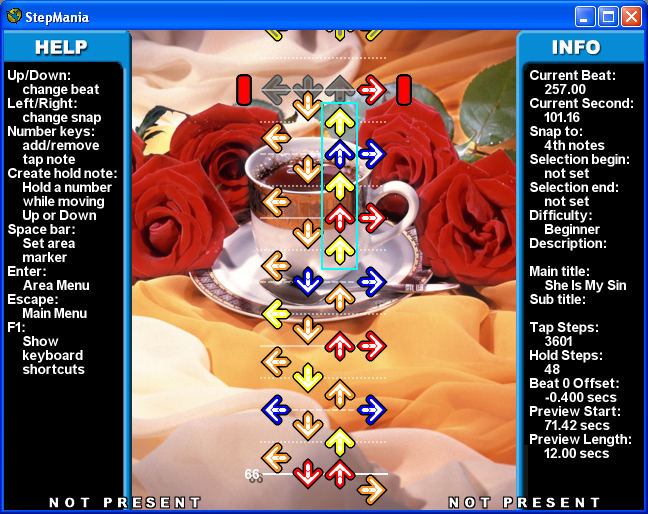
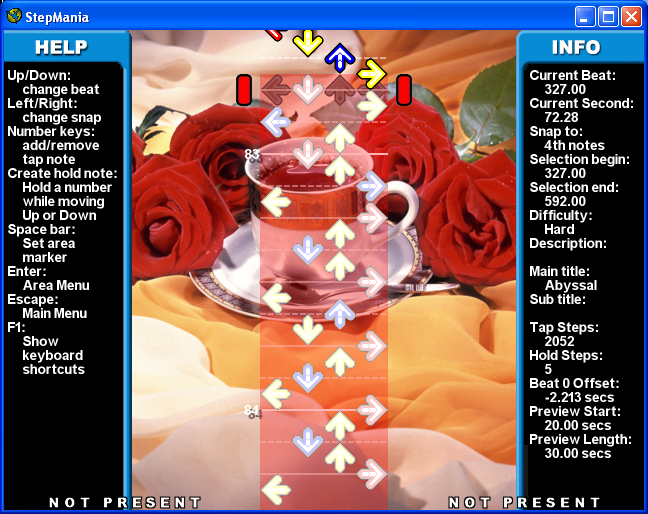
One-hand bias refers to how much stress a file puts on awkward movements from one hand. An example is my Abyssal file which had "stream" that didn't play like a stream - instead, it played like a lot of awkward minijacks and gallops.
Notice how in the other song there were "hidden" jacks, there are minijacks here which make for very awkward transitions. A fluent stream is not heavy with movements stressed on one hand. In this picture, you can see there is a lot more going on with the right hand than there is with the left.
3. Combo Based Scoring and Boos
Files with jackhammers put more importance on how much you can keep up with the jacks in combo based scoring. Jacks that are too fast, too long, or a combination of both will make comboing those parts a huge burden - and not being able to combo them ruins your chances of getting a much better score.
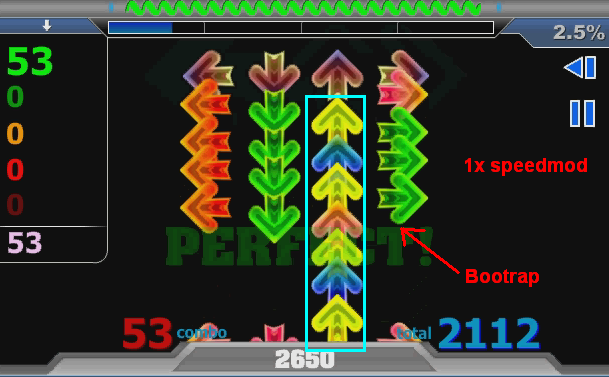
Keeping boos in mind is also important. This picture of do i smile is an example of a section that has a hidden long jack, is pretty fast/annoying to combo, and has has a bootrap along with an awkward start.
The 4th note makes the "jumptrill" weird because you can't actually hit a jump until you hit the quarter note, otherwise your jumps will split averages on the up arrows after. The way this part is stepped makes the player want to think it's a jumptrill leading into a 4-note 16th jack, but in really it's actually a pretty long jack. And it's pretty fast too, which makes it a lot more irritating to transition from a jumptrill to the rest of the jack without getting a boo.
There is still more that can be added to this, but for now this is a good start.
Things to keep in mind about FFR are:
- Combo based scoring (this is a big one)
- The game runs at 30 FPS, meaning that anything above 150 bpm 16ths risks being 2 frames apart, anything above 225 bpm 16th notes risks being 1 frame apart and anything above 450 bpm 16ths risks being zero frames apart.
- FFR does not have chord cohesion, meaning that a jump does not register after you hit the second note of the jump. This is what causes "splitting" - you can get a perfect and a good on a single jump from hitting it as a gallop.
- BOOS. Nobody likes boos when they're going for score.
1. Don't put any arrow in the same column above 225 bpm 16th speed.
Anything above 225 bpm 16ths risks a 1-frame placement. Files that lucked out from this are Big Blue (226 BPM 16th minijacks), Sparkle Downer (293.44 BPM 16th minijack), and Over The Ocean (around 255 bpm 16th minijack). Don't test your luck with the converter. This of course also causes a huge problem when you have a longer jack (Crowdpleaser being the best example, the 64th trill is a massive 2 frame jack glut with a 1 framer in between, making it a lot more harder).
Sparkle Downer had a very lucky break.
RATO, which is *only* 240 bpm 16th minijacks, wasn't quite so lucky. Only 15 bpm over and it made this mess.
2. Check for hidden jacks/severe one-hand bias.
I'm going to use hi19hi19's post here from the batch thread since it basically explains this very effectively.
Even if you're going for jumpstream, jumpstream *CAN* contain annoying jacks that are "hidden". Here's an example, with the light blue rectangle showing the jack that exists:
One-hand bias refers to how much stress a file puts on awkward movements from one hand. An example is my Abyssal file which had "stream" that didn't play like a stream - instead, it played like a lot of awkward minijacks and gallops.
Notice how in the other song there were "hidden" jacks, there are minijacks here which make for very awkward transitions. A fluent stream is not heavy with movements stressed on one hand. In this picture, you can see there is a lot more going on with the right hand than there is with the left.
3. Combo Based Scoring and Boos
Files with jackhammers put more importance on how much you can keep up with the jacks in combo based scoring. Jacks that are too fast, too long, or a combination of both will make comboing those parts a huge burden - and not being able to combo them ruins your chances of getting a much better score.
Keeping boos in mind is also important. This picture of do i smile is an example of a section that has a hidden long jack, is pretty fast/annoying to combo, and has has a bootrap along with an awkward start.
The 4th note makes the "jumptrill" weird because you can't actually hit a jump until you hit the quarter note, otherwise your jumps will split averages on the up arrows after. The way this part is stepped makes the player want to think it's a jumptrill leading into a 4-note 16th jack, but in really it's actually a pretty long jack. And it's pretty fast too, which makes it a lot more irritating to transition from a jumptrill to the rest of the jack without getting a boo.
There is still more that can be added to this, but for now this is a good start.








Comment