

Re: Terry's Astronomy Thread.
What's in the sky tonight?
May 20, 2012
Astro Picture of the Day:
May 20, 2012
 Source:
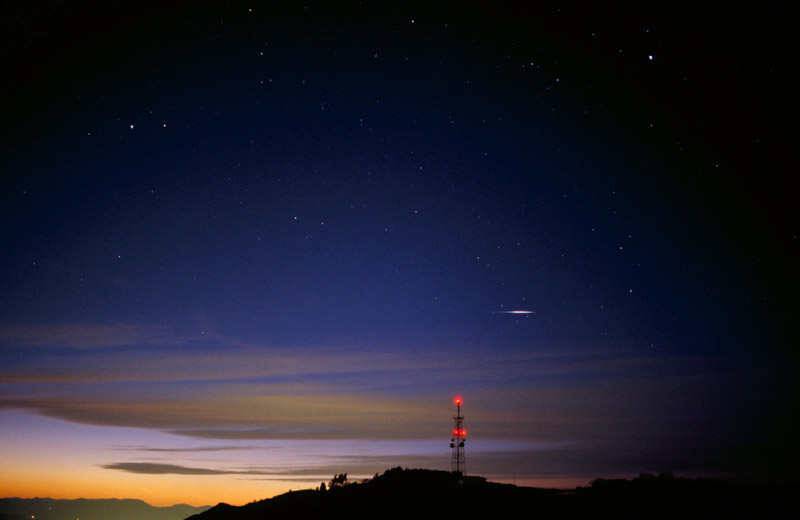
Did you see that flash? Lasting only about 15 seconds, it's possible that nobody you ask can confirm it, but what you might have seen is sunlight reflecting off an orbiting Iridium satellite. Satellites of all types have been providing streaks and glints visible only since the launch of Sputnik I in 1957. Of these, flares from any of the 66 Iridium satellites can be particularly bright, sometimes even approaching the brightness of the Moon. If the Iridium satellites are programmed to re-enter the Earth's atmosphere, they might provide even brighter flares as they burn up. Pictured above, the streak from an Iridium satellite punctuates a picturesque sunset in San Sebastian, Spain. Then again, that sky-flash you saw? If it lasted only a second or two, it might have been a meteor.
What's in the sky tonight?
May 20, 2012
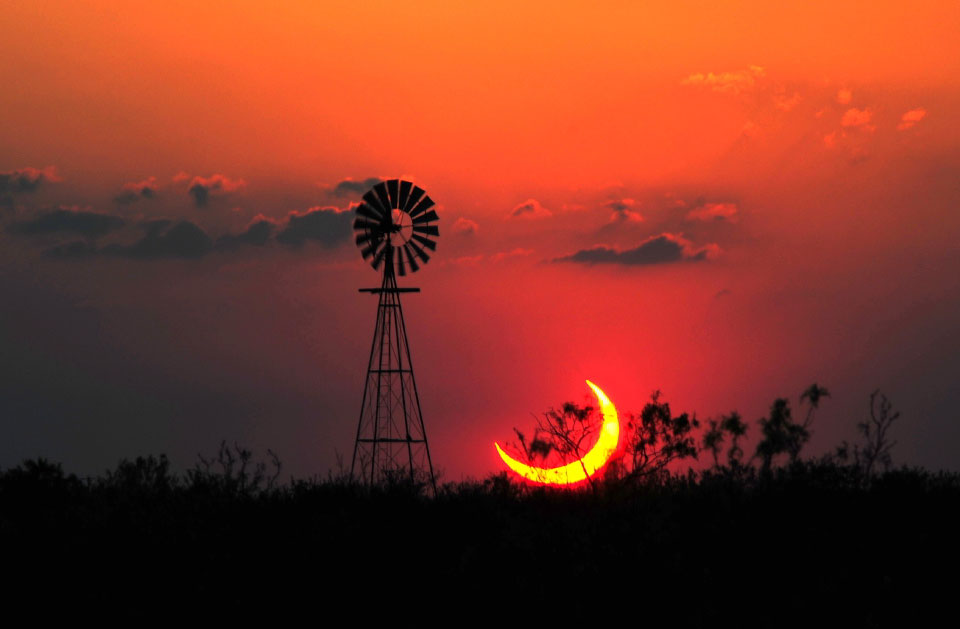
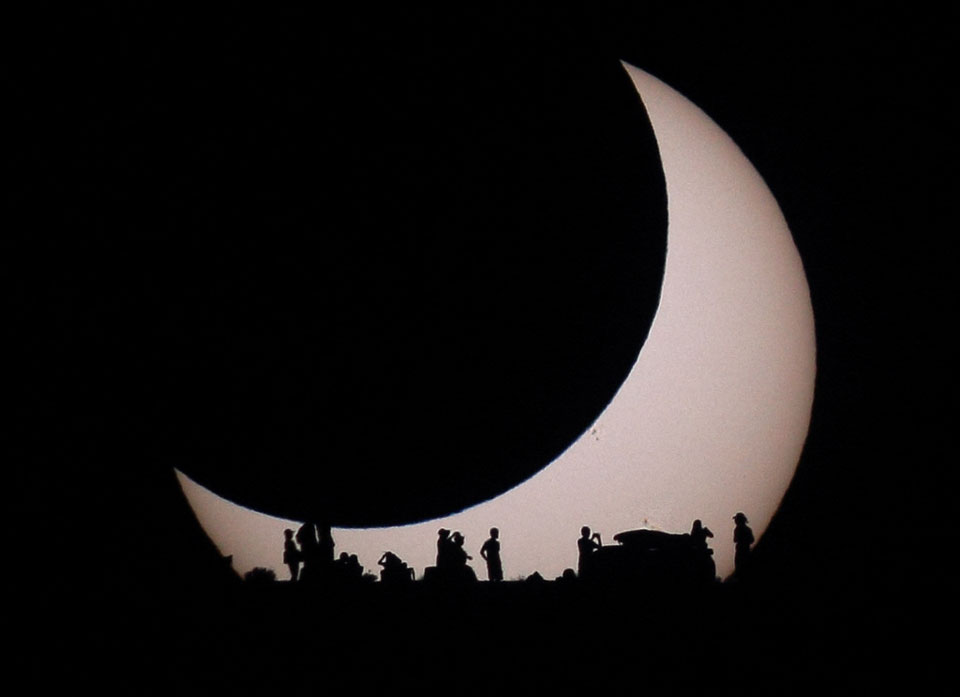
-Partial/annular eclipse of the Sun! This afternoon, all but easternmost North America will experience at least a partial eclipse of the Sun. So will the Pacific and (on the morning of May 21st local date) the eastern half of Asia. The eclipse will become annular — with the rim of the Sun a brilliant ring surrounding the dark silhouette of the Moon — along a path from south China and parts of Japan across the Pacific to the California-Oregon coast and from there southeastward to end at sunset in Texas. Go here to read more about the eclipse. Also see the Upcoming Events tab in the main post for more specific information.
-Arcturus shines high in the southeastern sky after dark. Vega, equally bright, shines lower in the northeast. A third of the way from Arcturus to Vega, look for dim Corona Borealis, the Northern Crown, with its one modestly bright star, Alphecca. Two thirds of the way from Arcturus to Vega is the dim Keystone of Hercules.
-New Moon (exact at 7:47 p.m. Eastern Daylight Time).
-Arcturus shines high in the southeastern sky after dark. Vega, equally bright, shines lower in the northeast. A third of the way from Arcturus to Vega, look for dim Corona Borealis, the Northern Crown, with its one modestly bright star, Alphecca. Two thirds of the way from Arcturus to Vega is the dim Keystone of Hercules.
-New Moon (exact at 7:47 p.m. Eastern Daylight Time).
Astro Picture of the Day:
May 20, 2012
Did you see that flash? Lasting only about 15 seconds, it's possible that nobody you ask can confirm it, but what you might have seen is sunlight reflecting off an orbiting Iridium satellite. Satellites of all types have been providing streaks and glints visible only since the launch of Sputnik I in 1957. Of these, flares from any of the 66 Iridium satellites can be particularly bright, sometimes even approaching the brightness of the Moon. If the Iridium satellites are programmed to re-enter the Earth's atmosphere, they might provide even brighter flares as they burn up. Pictured above, the streak from an Iridium satellite punctuates a picturesque sunset in San Sebastian, Spain. Then again, that sky-flash you saw? If it lasted only a second or two, it might have been a meteor.










Comment