

Re: Terry's Astronomy Thread.
Daily Suspicious0bserver's Weather Post:
September 15, 2014
What's in the sky tonight?
September 15, 2014

Astro Picture of the Day:
September 15, 2014
Source:
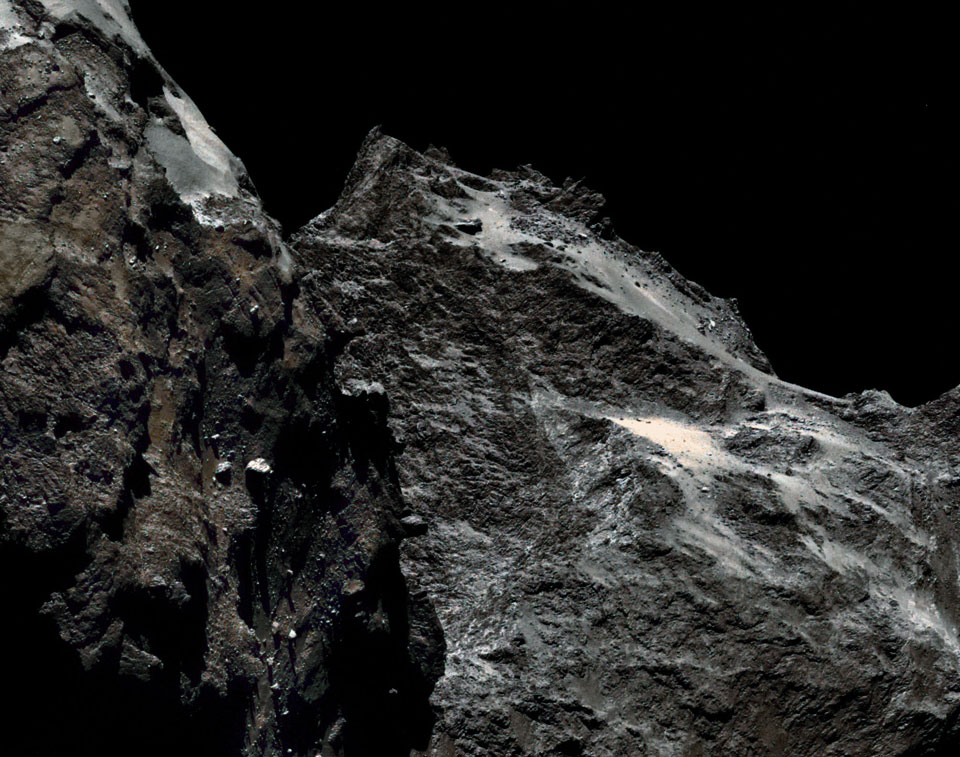
Spacecraft Rosetta continues to approach, circle, and map Comet Churyumov-Gerasimenko. Crossing the inner Solar System for ten years to reach the vicinity of the comet last month, the robotic spacecraft continues to image the unusual double-lobed comet nucleus. The reconstructed-color image featured, taken about 10 days ago, indicates how dark this comet nucleus is. On the average, the comet's surface reflects only about four percent of impinging visible light, making it as dark as coal. Comet 67P/Churyumov–Gerasimenko spans about four kilometers in length and has a surface gravity so low that an astronaut could jump off of it. In about two months, Rosetta is scheduled to release the first probe ever to attempt a controlled landing on a comet's nucleus.
Daily Suspicious0bserver's Weather Post:
September 15, 2014
What's in the sky tonight?
September 15, 2014
-Last-quarter Moon (exactly last-quarter at 10:05 p.m. EDT). The Moon rises around midnight tonight under the horn-tips of Taurus. It stands high in the south over Orion by Tuesday's dawn.
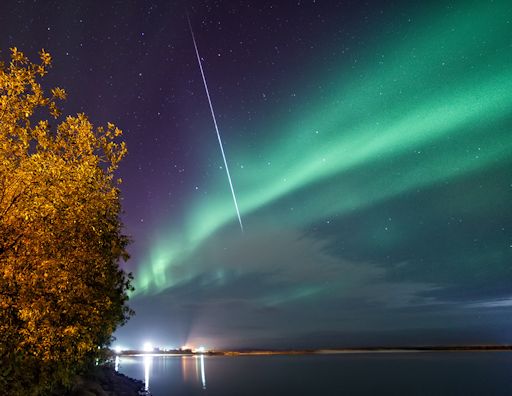
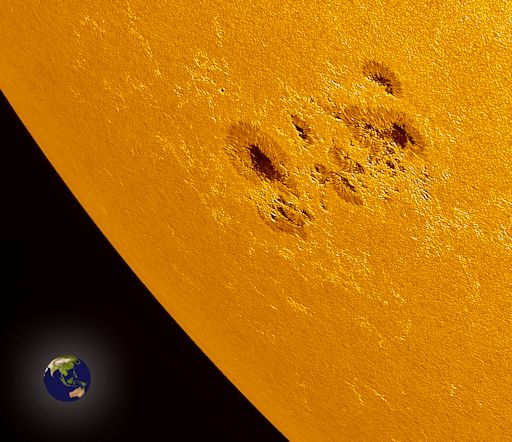
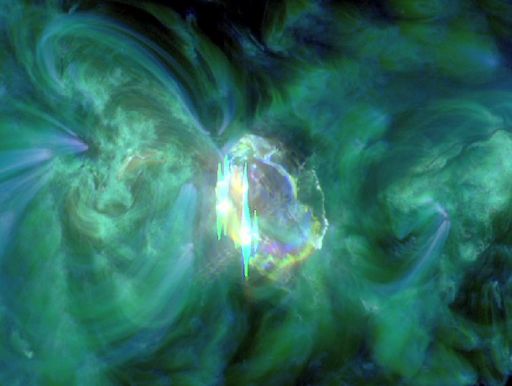
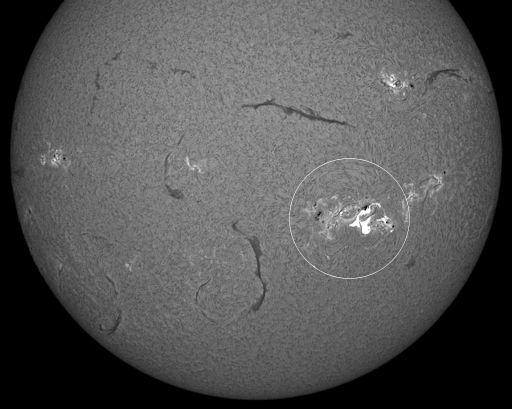
-Another CME is en route to Earth. It was launched in our direction three days ago by the eruption of a magnetic filament near the center of the solar disk. The impact won't be as effective as the double-whammy of Sept. 12th, described below. Nevertheless, NOAA forecasters estimate a 40% chance of polar geomagnetic storms on Sept. 16th when the CME arrives. High-latitude sky watchers should remain alert for auroras.
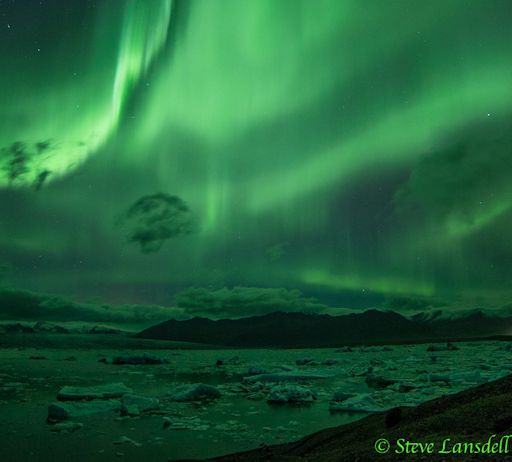
-At the peak of the September 11-12 storm, observers in Scandinavia witnessed stunning coronas and even a rare aurora-rainbow ensemble. A hint of auroras were even photographed in Arizona. The below image was taken by Kjetil Skogli of Tromsø Norway. His comments: "During a workshop I had for group of photographers we experienced a rare combination late evening. Northern lights above a rainbow. It was rainy in the lower part of a valley and we had the moon behind us. The rainbow stayed there for hours. For me this was the third time I experienced this during my 11 years as a Aurora photographer Every time it has been in the same valley." Link to image: http://spaceweathergallery.com/indiv...load_id=101791
-Another CME is en route to Earth. It was launched in our direction three days ago by the eruption of a magnetic filament near the center of the solar disk. The impact won't be as effective as the double-whammy of Sept. 12th, described below. Nevertheless, NOAA forecasters estimate a 40% chance of polar geomagnetic storms on Sept. 16th when the CME arrives. High-latitude sky watchers should remain alert for auroras.
-At the peak of the September 11-12 storm, observers in Scandinavia witnessed stunning coronas and even a rare aurora-rainbow ensemble. A hint of auroras were even photographed in Arizona. The below image was taken by Kjetil Skogli of Tromsø Norway. His comments: "During a workshop I had for group of photographers we experienced a rare combination late evening. Northern lights above a rainbow. It was rainy in the lower part of a valley and we had the moon behind us. The rainbow stayed there for hours. For me this was the third time I experienced this during my 11 years as a Aurora photographer Every time it has been in the same valley." Link to image: http://spaceweathergallery.com/indiv...load_id=101791
Astro Picture of the Day:
September 15, 2014
Spacecraft Rosetta continues to approach, circle, and map Comet Churyumov-Gerasimenko. Crossing the inner Solar System for ten years to reach the vicinity of the comet last month, the robotic spacecraft continues to image the unusual double-lobed comet nucleus. The reconstructed-color image featured, taken about 10 days ago, indicates how dark this comet nucleus is. On the average, the comet's surface reflects only about four percent of impinging visible light, making it as dark as coal. Comet 67P/Churyumov–Gerasimenko spans about four kilometers in length and has a surface gravity so low that an astronaut could jump off of it. In about two months, Rosetta is scheduled to release the first probe ever to attempt a controlled landing on a comet's nucleus.






Comment